Most of the attention on Meta Connect 2026 went to the glasses and the VR headset, but the announcement with the longest reach was quieter: Meta's Muse assistant is being pushed from answering questions to taking actions. Meta said Muse will work with retailers including Walmart and Instacart to make purchases on a user's behalf, and it introduced the Muse Charm, a keychain-sized device built to carry the agent even when you are not wearing glasses. The step from an assistant that tells you things to an agent that does things is small in a demo and large in its implications.
 Meta
Meta Anthropic
 OpenAI
What actually changed
For most of its existence, a voice assistant has been a retrieval tool: you ask, it answers, and any real action is left to you. The Connect announcements move Muse across the line that separates that from agency. Meta described Muse handling contextual help, real-time translation across new languages and voice-guided navigation, all assistant-grade features. The new part is the last one: placing an order at a retailer without you opening an app, tapping through a checkout or confirming each field.
From answering to acting
Muse's capabilities across Meta's wearables. The last step, buying on your behalf, is the one that turns an assistant into an agent.
Voice questions, contextual help about what you see or hear.
Real-time translation across new languages, hands-free.
Voice-guided and landmark-based directions.
Place orders with retailers including Walmart and Instacart on your behalf.
The green step is agentic: the assistant completes a transaction rather than just returning information.
That final capability is a different kind of software. Answering a question wrong wastes a few seconds. Buying the wrong thing, or being tricked into buying something, spends money and creates a dispute. Meta pairing Muse with named retailers like Walmart and Instacart is how it bounds that risk at launch: a small set of trusted partners with structured catalogs is far easier to act against safely than the open web. It is the same pattern the payments industry is building toward, where agent purchases run through defined protocols and scoped credentials rather than by having an agent drive a checkout page like a human.
The Muse Charm is the interesting hardware
The Muse Charm is the piece worth watching. Described as a keychain-sized device housing the Muse agent, with a small display, speakers, microphones and a fingerprint sensor, it is Meta's admission that not everyone wants an AI on their face. Meta shared limited detail and promised more later in 2026, but the concept is a deliberate unbundling: separate the assistant from the glasses so it can travel on a keychain, in a pocket or clipped to a bag.
Answering a question wrong wastes a few seconds. Buying the wrong thing spends money and creates a dispute.
On why an acting agent is a different kind of software
The fingerprint sensor is the detail that signals intent. Biometric authentication on a small companion device is what you add when the device is meant to authorize things, payments and account actions, not just answer questions. A charm that can confirm it is really you is a charm built to be trusted with an agent that spends money. Whether people want a dedicated fourth device, alongside a phone, a watch and glasses, is the open question, and Meta's own hedging on detail suggests it knows the concept still has to prove itself.
The trust problems this creates
Handing an agent the ability to buy things surfaces a set of problems the industry has not solved. The first is manipulation: an agent that reads product pages, listings or messages can be targeted by content crafted to steer it toward an unwanted purchase, a form of prompt injection with a direct financial cost. The second is authorization and error: how a user sets spending limits, reviews what the agent intends to buy, and reverses a mistake when no human approved the order in the usual way. The third is data and neutrality: an agent that shops for you learns a great deal about you, and its choices among retailers and products are commercially valuable, which raises the question of whether it is optimizing for the user or for Meta's partnerships.
None of these are unique to Meta. They are the standing questions of agentic commerce, the same ones payment providers and other AI companies are wrestling with. What Connect did was attach them to a mass-market consumer brand and a wearable people are meant to use casually, which raises the stakes on getting the controls right.
The takeaway
The Muse announcements matter more than the hardware they arrived with, because they move Meta's assistant into the category of software that acts in the world with real consequences. The Muse Charm, with its fingerprint sensor and its unbundling of the agent from the glasses, is a bet that people will want a trusted, always-present agent that can authorize actions on their behalf. Whether that bet pays off depends less on the device and more on whether the controls around an acting agent, spending limits, transparent intent, easy reversal and genuine neutrality between retailers, are strong enough to earn that trust. For anyone building agents that transact, the lesson is that the hard part is not teaching the agent to buy; it is keeping the user in control and the agent working for them rather than for a platform's commercial partners. Building agents that stay accountable to the user and portable across services, rather than locked to one company's store, is the principle Metir AI applies to agentic work.
Sources:
- Everything announced at Meta Connect 2026 | Engadget
- Meta Connect 2026 LIVE: new VR glasses, Muse Charm, Ray-Ban Meta gen 3, audio-only smart glasses | Tom's Guide
- Meta Connect 2026 live: Updates from Mark Zuckerberg's keynote on AI glasses, VR and more | Engadget
- Meta just picked a side in a big debate over the future of AI | CNN Business
Image credits
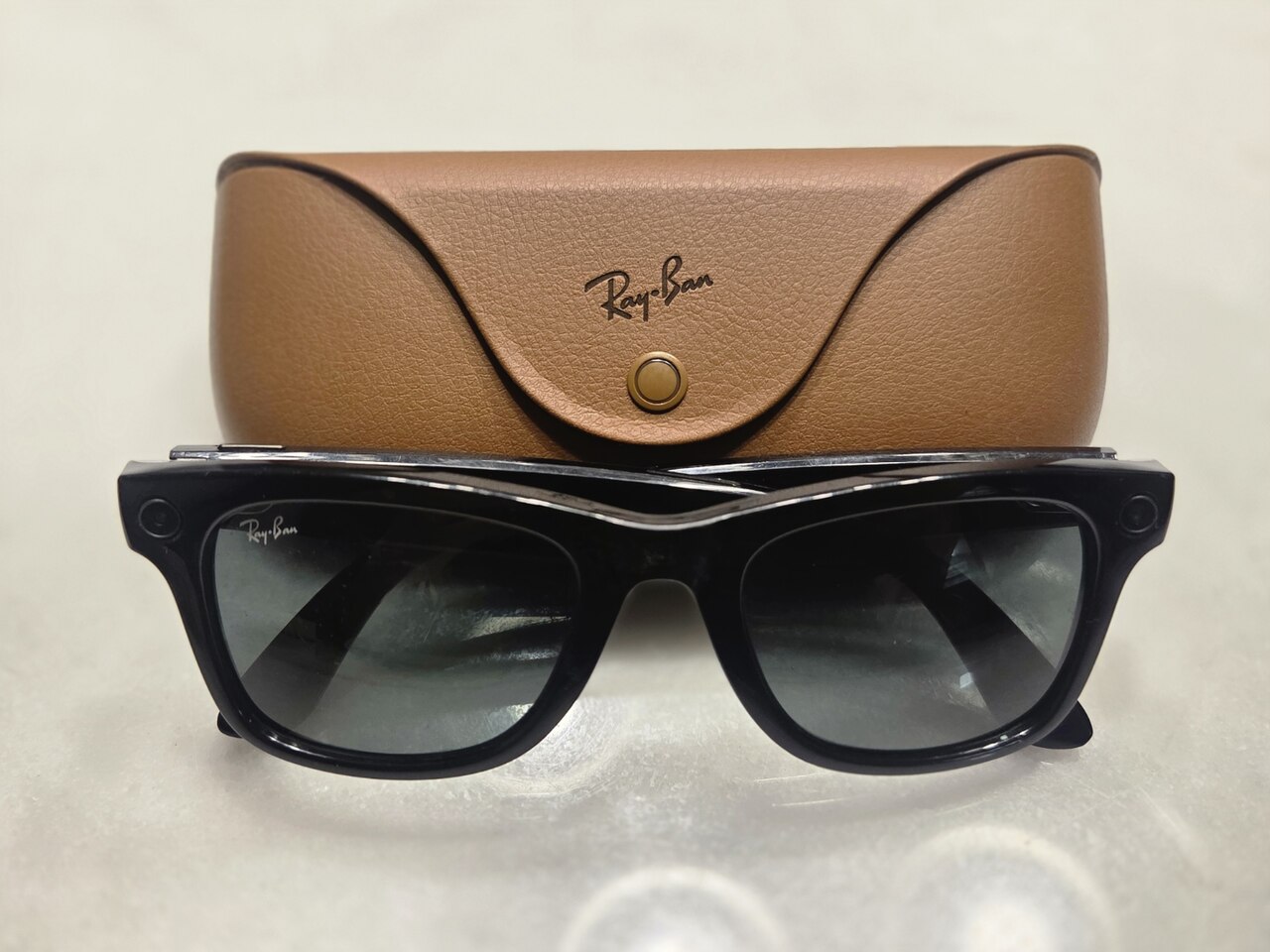
- Hero and in-body figure: "Ray-Ban Meta Gen 1 smart glasses with charging case" by Wikimedia Commons contributor, licensed under CC BY 4.0. Source: Wikimedia Commons. Reviewed before publication; the Muse agent runs on Meta's glasses, so this honestly illustrates the wearable the agent lives on. The photo shows an earlier generation, as the caption notes. Licence permits editorial and commercial reuse with attribution.