On July 28, 2026, Meta and BlackRock announced a joint venture to develop and own a data-center campus in El Paso, Texas, with total development costs of roughly $14 billion. The number is large, but the more revealing detail is the ownership split: BlackRock-managed funds will control 80% of the venture, and Meta will keep just 20% of a facility it is building and will be the first sole tenant of. That structure, a company developing a data center it will use while handing most of the ownership to an asset manager, is becoming one of the defining financial patterns of the AI buildout. This piece walks through how the deal is actually put together, why a company as cash-rich as Meta would want a structure like this, what it signals about the sustainability of AI capital spending, and where the risks in the arrangement sit.
 Meta
MetaHow the deal is structured
The headline is a 1-gigawatt data center in El Paso, expected to come online in 2028, with Meta as its initial sole tenant. Underneath that, the capital arrangement is where the interesting engineering is.
Meta builds it, then owns a fifth of it
The structure lets Meta develop a data centre it will use, while moving most of the ownership, and the balance-sheet weight, to BlackRock-managed funds.
Contributes about $2.3B of land and partly built assets, takes a one-time distribution of roughly $1B, and is the initial sole tenant.
Put in roughly $4.9B of cash, alongside about $12.5B of debt financing, through vehicles including Global Infrastructure Partners and HPS.
Total development cost is about $14B for 1 gigawatt of capacity, expected online in 2028. Meta consolidates the compute it needs without carrying the full asset on its own books.
At financial close, Meta transfers land and partly built construction assets worth about $2.3 billion into the venture, while BlackRock puts in roughly $4.9 billion in cash. Because those contributions would not by themselves produce an 80/20 split, Meta also takes a one-time distribution of about $1 billion to align the ownership stakes. Crucially, a large portion of BlackRock's side is not equity at all: the venture is funded in part through roughly $12.5 billion in debt financing. BlackRock's investment runs through vehicles including Global Infrastructure Partners and HPS Investment Partners, both now part of BlackRock, which is precisely the kind of infrastructure-and-private-credit machinery that has moved to the center of AI data-center funding.
Debt does most of the heavy lifting
Disclosed capital sources for the venture, in billions of dollars. A portion of BlackRock's investment is funded through debt, not equity.
Total development cost is about $14B. The mix of equity and roughly $12.5B in debt is what keeps most of the spend off Meta's own balance sheet.
The result is that a facility Meta conceived, sited, and will fill with its own workloads ends up mostly owned by outside funds and mostly financed by debt, with Meta holding a minority equity stake and a tenant's lease.
Why a cash-rich company borrows this way
Meta is not short of money. It generates tens of billions in free cash flow and could, in principle, build El Paso on its own balance sheet. That it chose not to is the point, and there are several overlapping reasons a structure like this appeals even to a company that could self-fund.
The first is balance-sheet treatment. By holding a 20% stake in a separately owned venture rather than 100% of the asset, Meta keeps most of the roughly $14 billion, and the $12.5 billion of associated debt, off its own books, while still securing the compute through a tenancy. For a company already guiding to as much as $145 billion of capital expenditure in 2026, moving even individual multi-billion-dollar builds into ventures like this changes how the total spend looks to investors who have grown wary of the AI capex race.
A facility Meta conceived, sited and will fill with its own workloads ends up mostly owned by outside funds and mostly financed by debt.
The second is risk-sharing. AI data centers are enormous bets on demand that has to materialize years out, and on hardware whose value depreciates quickly. Bringing in BlackRock-managed capital spreads that exposure to investors, including pension and infrastructure funds, that are actively seeking long-dated, contracted cash flows. The third is simply capacity: partnering with the world's largest asset manager unlocks pools of debt and institutional equity that let the overall buildout proceed faster and larger than any single corporate balance sheet would comfortably allow. None of these motives is unique to Meta; they are why this template is spreading across the industry.
The trend this deal belongs to
The El Paso venture is not an isolated financial curiosity; it is one instance of a pattern that has taken over AI infrastructure funding in 2026. Across the industry, the money for data centers is increasingly coming from a blend of corporate equity, infrastructure funds and private credit, structured into separate ownership vehicles rather than sitting directly on the operating companies' balance sheets. The same week's news flow included far larger versions of the same idea, from chipmakers taking equity stakes in the customers that buy their hardware to multi-hundred-billion-dollar financing arrangements tied to compute leases.
What unites these deals is a recognition that the AI buildout is now too capital-intensive to be funded the old way, out of retained earnings, and too uncertain to be concentrated on any single balance sheet. Asset managers and private-credit funds have stepped into that gap, and the AI data center has quietly become one of the largest new asset classes in infrastructure finance. Meta and BlackRock's venture is a clean, relatively transparent example of the template, which is part of why it is worth studying: it shows the mechanics that larger and more tangled deals share.
Where the risk actually sits
The structure is elegant, and elegance is not the same as safety. The central risk in these arrangements is that a great deal of debt is being placed against assets whose value depends on two things holding: sustained demand for AI compute, and the durability of the hardware that fills the buildings. Data-center shells and power hookups are long-lived; the AI accelerators inside them are not, and they can lose value quickly as new generations arrive. Debt sized against a facility whose economics assume years of full, well-priced utilization is a bet that the demand curve of 2026 still looks like the demand curve of 2030.
There is also a concentration point worth naming. When the same small set of very large tenants underwrites the leases that justify the debt that funds the buildings, the apparent diversification of bringing in outside investors can be thinner than it looks, because the cash flows still trace back to a handful of AI-spending giants. For an individual deal like El Paso, with Meta as a creditworthy anchor tenant, that risk is manageable. For the system as a whole, if AI revenue growth disappoints while the debt-funded capacity keeps coming online, the losses would land partly on infrastructure and credit investors who bought into the AI story at one remove. This is not a prediction that it goes wrong; it is a description of where the exposure has been moved to.
The layer the financing is ultimately for
All of this capital, whoever ends up owning and lending against it, is building capacity to run AI models, and a rack of accelerators in El Paso does not care which model it serves. The economic value created by the buildout is decided one layer up, in the software and workflows that choose which model runs which task and how efficiently. That is the layer Metir AI works in, giving teams model-agnostic access to leading systems in a single workspace rather than tying them to one provider's stack. Whichever companies finance and own the physical compute, the organizations actually using AI benefit most when they can route their work to the best available model, which keeps the value of the infrastructure from being captured by any single vendor above it.
The takeaway
Meta and BlackRock's El Paso venture is a small window onto a large shift in how the AI era is being paid for. The technically interesting part is not the $14 billion; it is the decision by a company that could self-fund to instead own only 20% of the asset, keep most of the cost and debt off its balance sheet, and secure the compute as a tenant. That structure lets the buildout go faster and spreads its risk beyond the tech giants, which is genuinely useful. It also moves a growing pile of debt onto a bet that AI demand and hardware value both hold up for years, and it concentrates the underlying cash flows in a few large tenants. Both things are true at once, and watching how these ventures perform as the first gigawatts come online in 2028 will say more about the durability of the AI capex cycle than any single quarter's guidance.
Sources:
- Meta, BlackRock partner on $14 billion El Paso data center | CNBC
- Meta, BlackRock Plan to Invest in $14 Billion Data Center | Bloomberg
- Meta Announces New Strategic Venture with BlackRock to Develop Data Center in El Paso | PR Newswire
- Meta and BlackRock form $14 billion El Paso data center venture | Yahoo Finance
- Meta just bumped its 2026 capex forecast up to as much as $145 billion for the AI boom | Yahoo Finance
- Nvidia's $750 Billion Deals Revive Fear of AI Circular Financing | Bloomberg
Image credits
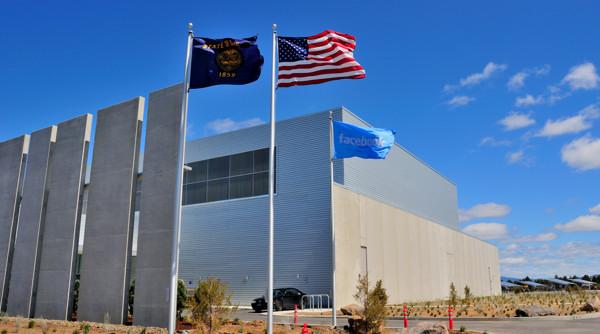
Header image: Meta Platforms headquarters at 1 Hacker Way in Menlo Park, California, photographed by LPS.1 via Wikimedia Commons, released under CC0. In-body photograph: the exterior of an existing Meta data center, by Intel Free Press via Wikimedia Commons, licensed under CC BY 2.0. The El Paso campus is still under construction and not yet photographed, so the images show Meta's headquarters and an existing data center rather than the specific facility in the deal.