In a lightning-fast deal that took just 10 days to complete, Meta acquired Manus—a Singapore-based AI agent startup—for more than $2 billion in late December 2025. This marks Meta's third-largest acquisition ever, after WhatsApp and Scale AI, and signals Mark Zuckerberg's determination to dominate the emerging AI agent market.
The acquisition is a watershed moment in the AI industry. While companies have spent billions building language models, Manus represents the next evolution: AI agents that don't just answer questions—they execute tasks autonomously. Here's what you need to know about this deal and why it matters.
What is Manus? The AI Agent Everyone's Been Talking About
Manus isn't your typical chatbot. While tools like ChatGPT and Claude answer questions and generate text, Manus is a general-purpose AI agent designed to complete tasks and deliver results. Think of it as the difference between asking for directions and having someone drive you there.
Launched in March 2025, Manus operates in a complete sandbox environment—essentially a virtual computer with internet access, a persistent file system, and the ability to install software and create custom tools. This allows it to autonomously handle complex, multi-step tasks including market research, coding, data analysis, and workflow automation.
Manus's Impressive Performance
What sets Manus apart is its real-world performance. On the GAIA benchmark—designed to test AI agents on practical problem-solving—Manus achieved scores of 86.5%, 70.1%, and 57.7% across varying difficulty levels. These scores consistently outperformed OpenAI's Deep Research agent (74.3%, 69.1%, and 47.6% respectively).
For context, humans score 92% on GAIA tests, while GPT-4 with plugins only manages 15%. Manus's performance puts it in a league with the most capable AI systems available.
From Beijing to Singapore to Meta
Manus's journey is itself remarkable. The company's parent, Butterfly Effect, was founded in Beijing in 2022 before relocating to Singapore in mid-2025. Just eight months after launching its first AI agent, Manus had achieved an annualized revenue run rate exceeding $125 million—extraordinary traction for an early-stage startup.
As part of the Meta deal, Manus committed to winding down its remaining business operations in China, ensuring "there will be no continuing Chinese ownership interests" after the transaction.
Meta's Superintelligence Group: The $70 Billion AI Bet
To understand why Meta paid $2 billion for Manus, you need to understand Meta Superintelligence Labs—arguably the most ambitious corporate AI research initiative in history.

The Formation of MSL
Meta formed its Superintelligence Group in June 2025 amid internal dissatisfaction with the Llama 4 model's performance. The new unit consolidated Meta's various AI teams working on foundation models like Llama, consumer products, and fundamental AI research under one roof.
CEO Mark Zuckerberg appointed Alexandr Wang as Chief AI Officer after investing $14.3 billion in Scale AI—bringing both funding and talent into the Meta ecosystem.
Massive AI Infrastructure Investment
Meta's commitment to AI is staggering. The company invested over $40 billion in AI research and development during 2024, with plans to increase spending by 25% in 2025. Total capital expenditures could reach $72 billion in 2025, primarily for building data centers and hiring researchers.
In October 2025, Meta announced a $27 billion deal with Blue Owl Capital to fund the massive Hyperion data center in rural Louisiana—a facility designed to train the next generation of AI models.
The $70 billion committed to Meta Superintelligence Labs represents the largest single AI research initiative in corporate history, dwarfing even OpenAI's fundraising efforts.
Why Manus Fits Meta's AI Strategy
Meta's acquisition of Manus addresses a critical gap in its AI portfolio: agentic capabilities.
The Shift to AI Agents
While Meta's Llama models are competitive in text generation, the AI industry is rapidly shifting toward agents—systems that can autonomously execute tasks rather than simply respond to prompts. OpenAI, Google, Microsoft, and Anthropic are all racing to develop agent capabilities.
Manus brings Meta battle-tested agent technology that already works in production. Rather than building from scratch, Meta can integrate Manus's proven architecture into its product ecosystem.
Integration with Meta's Products
Meta stated that the acquisition aims to "accelerate AI innovation for businesses and integrate advanced automation into its consumer and enterprise products, including its Meta AI assistant." Imagine Manus's autonomous capabilities powering:
- Meta AI Assistant: Executing complex tasks across Facebook, Instagram, and WhatsApp
- Business Tools: Automating workflows for Meta's 200+ million business users
- Developer Platform: Providing AI agents as a service through Meta's infrastructure
Talent Acquisition
Perhaps equally important, Meta acquired Manus's engineering team—experienced in building and scaling AI agents in production. In the war for AI talent, acquiring a proven team is often more valuable than the technology itself.
What This Means for the AI Race
Meta's Manus acquisition signals several important shifts in the AI landscape.
The Agent Era Has Arrived
For years, AI agents existed primarily as research concepts and demos. Manus's rapid revenue growth—$125 million run rate in just eight months—proves there's real market demand. Meta's willingness to pay $2 billion validates that agents are the next frontier.
Consolidation in AI
We're entering a phase where tech giants acquire promising AI startups rather than letting them mature into independent competitors. Microsoft's close partnership with OpenAI, Google's acquisition of DeepMind, Amazon's investments in Anthropic, and now Meta acquiring Manus—the pattern is clear.
Gartner's December 2025 report named Microsoft and Google as leaders in enterprise AI, with their "expansive partner and platform ecosystems" creating formidable competitive moats. Meta's aggressive M&A strategy is an attempt to close that gap.
Speed as Competitive Advantage
The fact that Meta struck this deal in approximately 10 days reveals how fast the AI race has become. Companies can't afford lengthy negotiations when breakthrough technologies might be acquired by competitors. Meta moved decisively—and paid a premium—to secure Manus before rivals could make competing offers.
Challenges and Questions Ahead
While the Manus acquisition strengthens Meta's AI position, significant questions remain.
Integration Complexity
Integrating Manus's technology across Meta's vast product portfolio won't be simple. The company must balance autonomous agent capabilities with safety, privacy, and user experience considerations across billions of users.
Competitive Pressure
OpenAI, Google, and Microsoft continue advancing their own agent capabilities. OpenAI's rumored operator product, Google's Gemini agents, and Microsoft's Copilot Studio all represent formidable competition. Meta is playing catch-up in a rapidly evolving market.
The Chinese Connection
Despite Manus's commitment to wind down Chinese operations, the company's Beijing origins have raised national security questions. Meta will need to navigate regulatory scrutiny as it integrates technology developed partly in China.
What This Means for Metir AI Users
At Metir AI, we're watching these developments closely because they directly impact the tools available to our users. Meta's investment in AI agents validates the importance of ambient AI—systems that work autonomously to extend your capabilities rather than requiring constant interaction.
Our platform already integrates multiple AI models, including Meta's Llama, alongside OpenAI, Anthropic, Google, and others. As Meta integrates Manus's agent capabilities into its ecosystem, Metir AI users will benefit from accessing these advanced autonomous features through our unified interface.
The ability to swap models mid-chat and access the best AI for each specific task becomes even more valuable as agents evolve. You're not locked into a single vendor's approach—you can leverage Meta's agent capabilities, Anthropic's reasoning models, or OpenAI's GPT-4 based on your specific needs.
The Road Ahead
Meta's acquisition of Manus for $2 billion is more than just another tech deal—it's a clear signal about where AI is headed. The era of pure language models is evolving into the age of autonomous agents that execute tasks, automate workflows, and extend human capabilities.
With Meta Superintelligence Labs backed by $70 billion in funding, the Manus acquisition providing proven agent technology, and integration across Meta's massive user base, the company is positioning itself as a major force in the AI agent market.
The race to AGI is intensifying, and Meta just made a bold move. Whether this acquisition helps Meta catch up to OpenAI and Google—or falls short despite the massive investment—will shape the AI landscape for years to come.
One thing is certain: AI agents are no longer a future concept. They're here, they're valuable, and the biggest tech companies in the world are betting billions that they'll transform how we work.
Stay informed about the latest AI developments with Metir AI. Access multiple AI models including Meta's Llama, OpenAI's GPT-4, Anthropic's Claude, and more—all in one platform. Learn more about Metir AI and join the ambient AI revolution.
Sources:
- Meta acquires intelligent agent firm Manus
- Meta just bought Manus, an AI startup everyone has been talking about
- Everyone in AI is talking about Manus. We put it to the test.
- Meta Superintelligence Labs: What We Know So Far
- Manus AI: Capabilities, GAIA Benchmark, Use Cases & More
Image credits
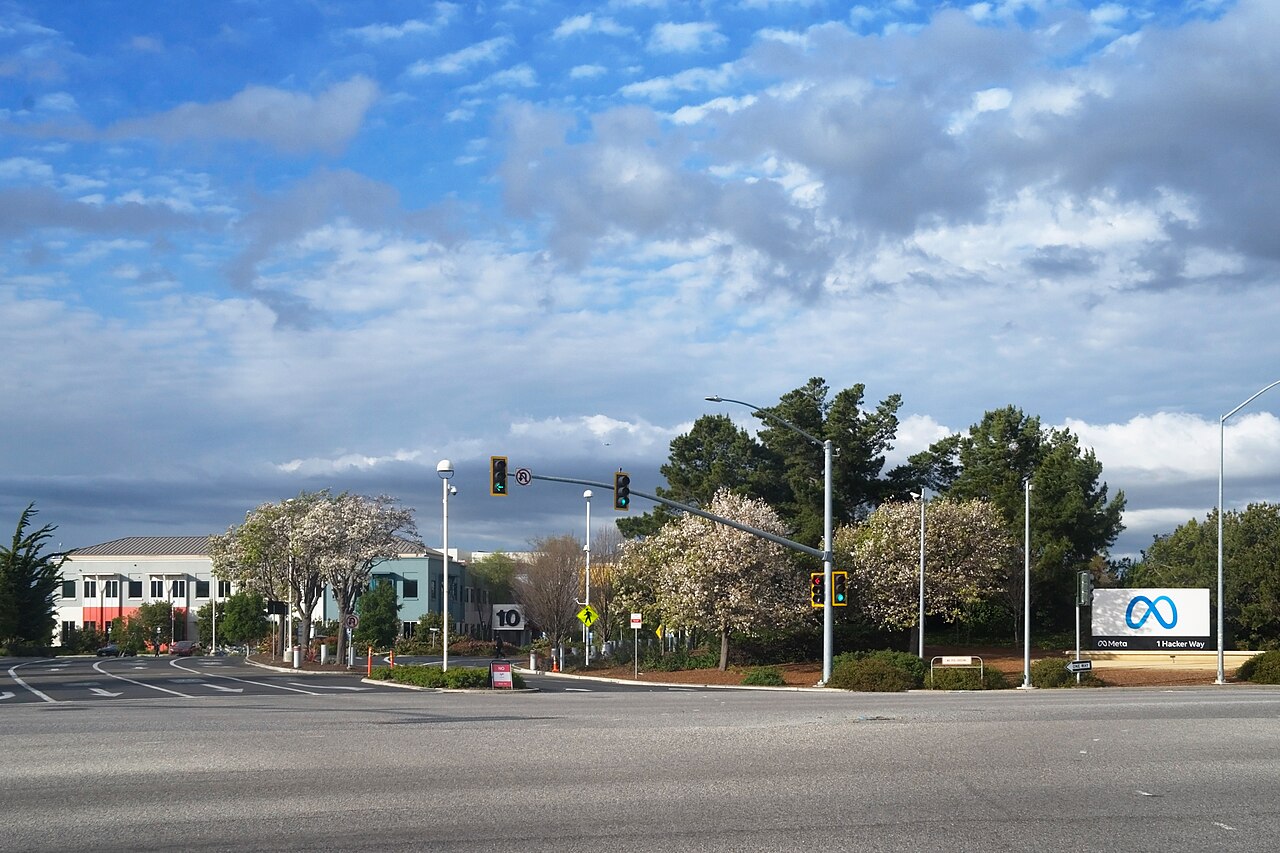
Header image: Meta Platforms headquarters signage at 1 Hacker Way, Menlo Park, California, by LPS.1 via Wikimedia Commons, released under CC0 1.0. In-body photograph of Mark Zuckerberg at F8 2019 by Anthony Quintano via Wikimedia Commons, licensed under CC BY 2.0.