
McKinsey's "State of AI: Global Survey 2026" surfaced in late August 2026 with a finding that reframes a decision every enterprise software buyer used to make in isolation: 32% of organizations say they decided against buying at least one off-the-shelf software product or feature, choosing instead to build it in-house using agentic coding tools. That is not a fringe result. It is close to a third of the global survey base, reporting a genuine substitution of internal engineering for a vendor contract.
The number is easy to over-read in either direction. Read as "enterprise software is dying," it goes too far. Read as "a real and growing minority of build-vs-buy decisions are flipping," it matches what McKinsey actually measured, and what a closer look at who is doing it, and what it costs, supports.
What the build vs buy survey actually found
McKinsey's build-vs-buy question sat inside a broader survey about enterprise AI adoption in 2026, and it was paired with a second, related finding: among organizations with more than $1 billion in annual revenue, 40% now say they are scaling AI agents in one or more business functions, up from 27% the year before. Smaller organizations reported 22% doing the same, unchanged from the prior year. McKinsey frames the overall picture as a "two-speed race," with a small tier of high performers and large enterprises accelerating while the median organization holds roughly steady.
Skipping a purchase is not the same claim as successfully replacing the software. The honest reading of this survey is a shift in progress, not a settled verdict.
Metir AI analysis
That two-speed framing matters for how to read the 32% headline. It is not evenly distributed. Nearly half, about 50%, of McKinsey's "high performers" (the roughly 6% of respondents who attribute at least 5% of their EBIT to AI and describe the impact as significant) say they are skipping software purchases to build instead, compared with about 31% of everyone else. By industry, technology leads at 41%, followed by healthcare payers and providers at 39%, with professional services and energy tied at 38%.
Who is skipping a software purchase to build instead
Share of organizations that decided against buying at least one software product or feature, choosing to build it in-house with agentic coding tools. Green: AI-performance tier. Blue: sector. Gray: the global average.
Source: McKinsey, "The State of AI: Global Survey 2026." High performers = the ~6% of respondents attributing at least 5% of EBIT to AI.
Why agentic coding tools change the calculus
The classic build-vs-buy decision has always weighed the cost of custom development against a vendor's license fee, and for most point features the license usually won, because writing and maintaining software in-house was expensive relative to buying a finished product. Agentic coding tools shift that math by lowering the marginal cost of producing a working internal tool: a small team can now direct an AI agent to scaffold, write, test and iterate on a feature that would previously have required a dedicated engineering project, often in a fraction of the time.
That effect is concentrated exactly where McKinsey's own data says it is: among organizations that already have deep engineering capacity and AI maturity. High performers and technology and healthcare firms are the groups most likely to have both the internal technical talent to direct an agent effectively and the existing infrastructure to absorb a newly built tool. A team without in-house engineers to review, deploy and own an agent-built feature is not well positioned to act on this shift, regardless of how good the coding tool is, which is a large part of why the median organization has not moved.
Large enterprises are pulling away on agent scaling
Share of organizations scaling AI agents in one or more functions. Large enterprises jumped 13 points in a year; smaller organizations did not move.
Source: McKinsey, "The State of AI: Global Survey 2026." "Large enterprises" = organizations with more than $1 billion in annual revenue.
The hidden cost of build
The survey's own framing carries a caveat worth taking as seriously as the headline number: deciding not to buy a piece of software is not the same claim as having successfully replaced it. Building in-house does not remove cost, it relocates it. A license fee is a known, budgeted, recurring line item that comes with a vendor's support team, security patching, uptime guarantees and roadmap. An internally built feature instead carries ongoing run cost, the engineering time to maintain and extend it, the security burden of a tool now owned entirely by the buyer's own team, and the integration work of keeping it working as everything around it changes.
Code an AI agent produces still needs a human owner: someone has to review it, someone has to be accountable when it breaks, and someone has to decide whether it is actually cheaper over a three-year horizon than the subscription it replaced. McKinsey's own quoted framing describes leading organizations treating operating costs as a design constraint on these decisions, not a reason to stop building, but a reason to build selectively. None of the public reporting on this survey claims to have measured whether the software these organizations built has actually held up in production at the same reliability as what it replaced. A self-reported decision not to buy is a real signal of intent; it is not an audited outcome.
What it means for the software market, and for reading this survey
If the trend holds, the pressure falls hardest on vendors selling narrow, easily replicated features rather than deep platforms. A single-purpose internal tool, a custom dashboard, a workflow automation, an integration glue layer, is exactly the kind of software an agentic coding tool can approximate quickly. A platform with deep data model integration, compliance certifications, a support organization and years of edge-case handling is a much harder target for an internal team to match, agent-assisted or not. The more durable read of this survey is a squeeze on commodity software features, not a broad retreat from buying software.
It is also worth reading the survey the way McKinsey itself would want a rigorous reader to: as a large, global, self-reported poll of run-rate intent rather than an audited measurement of outcomes. A third of respondents describing a decision they made is real evidence of a shift in behavior. It is not proof that the resulting software works as well, costs less over its full lifecycle, or scales as safely as what it replaced. Both things can be true at once, and the responsible way to use a number like 32% is as a signal to watch, not a verdict to repeat.
The same underlying capability that lets a team build software in-house, an AI agent directing itself through a coding task, is only as good as the model behind it, and the fastest-moving teams are increasingly reluctant to bet an entire build strategy on a single model from a single vendor. That is a large part of why platforms like Metir AI give teams access to many leading models rather than one, so the model choice behind an internal build can change as the frontier moves without re-platforming the whole workflow.
Sources:
- The State of AI: Global Survey 2026 | McKinsey & Company
- Enterprises bet on agents to boost software productivity | CIO Dive
- McKinsey Report: Enterprise AI Is Becoming a Two-Speed Race | HPCwire
- Build vs. buy shift: 32% of enterprises now build software with AI instead of buying it | Yahoo Finance
Image credits
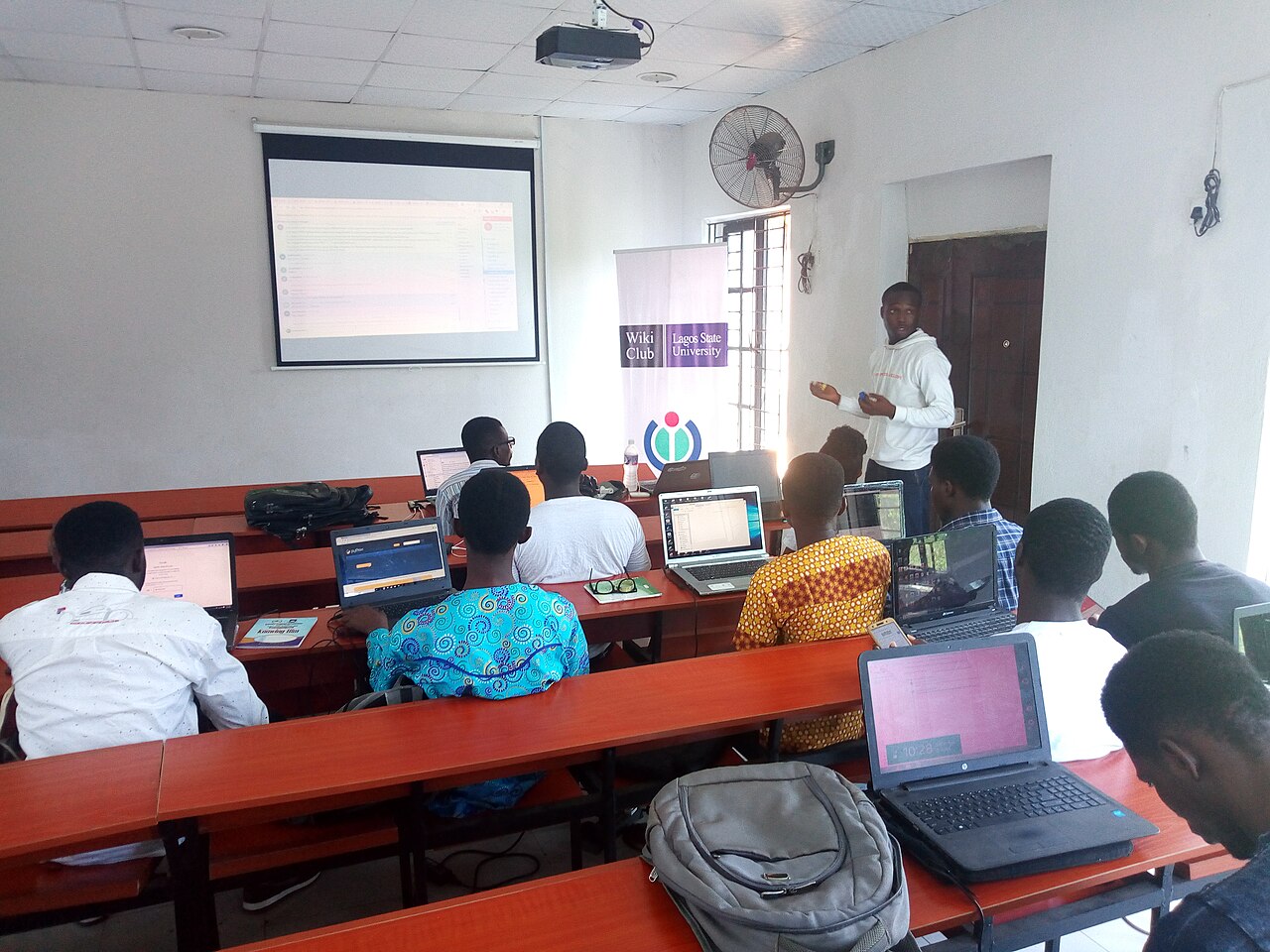
Header image: McKinsey & Company's Rome office building at Via Boncompagni, Rome, Italy, via Wikimedia Commons, licensed under CC BY-SA 4.0. The photo shows a real McKinsey office building; it does not depict the State of AI 2026 survey itself. In-body photograph: developers writing and reviewing code on laptops at a coding meetup at Lagos State University, Lagos, Nigeria, by User:Oluphisayo via Wikimedia Commons, licensed under CC BY-SA 4.0. It illustrates hands-on software development generally and does not depict any organization named in the survey.