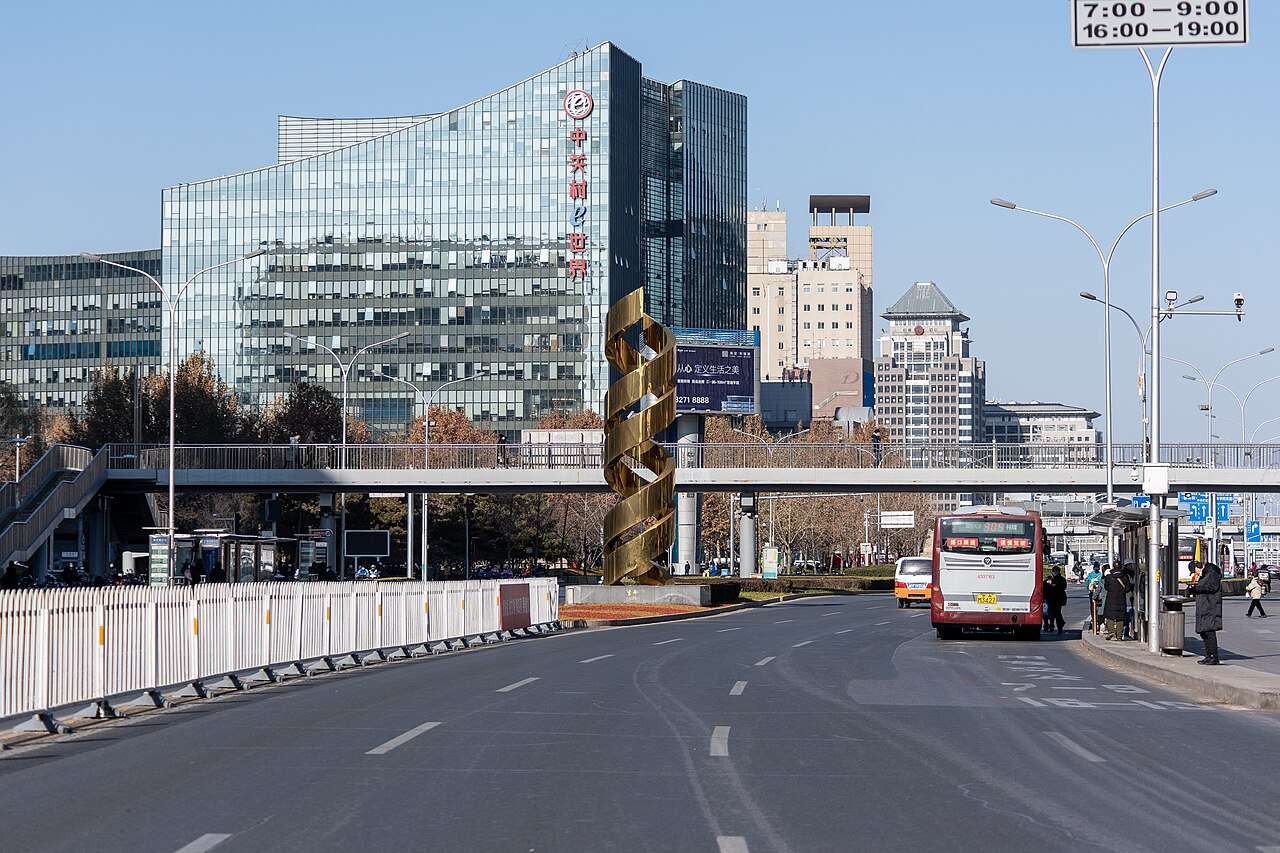
Moonshot AI has released Kimi K3.1 Pro, the first model in a K3.1 series that it describes as its most capable "3T-class" open-weight model to date. According to Moonshot's announcement, the model is a post-trained version of Kimi K3 with substantially more post-training compute, a 1 million token context window, and full weights due by November 4, 2026. AI Weekly's October 23 roundup also lists the release.
The benchmark table is the part most readers will quote. The more useful reading sits in three places: how close the model is to the proprietary leaders, what the hallucination figure measures, and what Moonshot chose to remove from the model before publishing weights.
 Moonshot AI
 Anthropic
 OpenAI
What was released
| Item | Detail (per Moonshot) |
|---|---|
| Model | Kimi K3.1 Pro, post-trained from Kimi K3 |
| Variant | Kimi K3.1 Pro Highspeed, 2 to 3 times the speed of K3.1 Pro |
| Scale | "3T-class"; no active-parameter count given |
| Context | 1 million tokens |
| API model IDs | kimi-k3.1-pro and kimi-k3.1-pro-highspeed |
| Weights | Full release by November 4, 2026 |
| Surfaces | Kimi.ai, mobile apps, Kimi Work, Kimi Code, API |
Moonshot's page lists no per-token prices, so this post does not compare cost. Kimi Enterprise administrators must switch the model on, and access is off by default at launch.
The benchmark picture
BenchCAD with tools: K3.1 Pro against named rivals
Score on Moonshot's BenchCAD (with tools), as published in the K3.1 Pro announcement. Highlighted bar is Kimi K3.1 Pro.
Source: Moonshot AI, Kimi K3.1 Pro announcement. Scores are vendor-reported and use differing harnesses per the post's footnotes.
On Terminal-Bench 4.0, Moonshot reports 65.7% for K3.1 Pro against 66.4% for Claude Opus 5.5 and 58.2% for GPT-6 Astra. By our arithmetic from those figures, the gap to Opus 5.5 is 0.7 points and the lead over GPT-6 Astra is 7.5 points. A sub-one-point gap on a single benchmark is within the range that differing harnesses can produce, and Moonshot's own footnotes say the comparisons use differing harnesses and a mix of third-party and leaderboard scores.
| Benchmark | K3.1 Pro | Reference points |
|---|---|---|
| Terminal-Bench 4.0 | 65.7% | Opus 5.5 66.4%, GPT-6 Astra 58.2% |
| BenchCAD (with tools) | 92.7% | Opus 5.5 96.2%, GPT-6 Astra 95.9%, Fable 5.1 92.6% |
| BenchCAD (without tools) | 72.8 | Opus 5.5 73.0, Fable 5.1 60.6 |
| Kimi Code Bench 3.0 long-horizon | 61.2% | K3 55.95% |
| Internal Financial Research | 70.4 | K3 58.8 |
| Internal Business Operation | 37 | K3 8.9 |
Two readings are worth separating. Against the earlier K3, the gains are large on tasks Moonshot built itself: Financial Research rose 11.6 points and Business Operation rose about 4.2 times (37 against 8.9). Against other labs, the picture is mixed: K3.1 Pro leads GPT-6 Astra on Terminal-Bench but trails both Opus 5.5 and GPT-6 Astra on BenchCAD with tools. The internal benchmarks cannot be reproduced outside Moonshot, so they show direction rather than a ranking.
A lab-built benchmark shows where a lab invested. A shared benchmark shows where the model stands.
The hallucination figure, read carefully
Moonshot reports that its claim-level hallucination rate on an internal test, Kimi Hallu Bench Hard, fell from 23.4% for K3 to 8.3% for K3.1 Pro. By our arithmetic that is a relative reduction of about 65%. Moonshot adds that the share of responses with at least one factual error fell to 42.4% of K3's rate.
The company is explicit about the limits: the page says this is a stress test with deliberately hard prompts and does not reflect typical daily error rates. With tools enabled, K3.1 Pro scores 8.3 against 5.5 for GPT-6 Astra, 15.0 for Opus 5.5 and 23.3 for Fable 5.1, on a scale where lower is better. Without tools, the scores are 5.4, 4.2, 6.8 and 11.4 respectively. Because the benchmark is Moonshot's own, the safest takeaway is the K3 to K3.1 improvement, not the cross-lab order.
The open-weight decision: removing cyber data
The most unusual part of the release is the safety framing for the weights. Moonshot says cyber-related data was removed from both mid-training and the reinforcement-learning environment mix for the open-weight release, while general coding tasks were kept.
| Checkpoint | xdev-bench-hard (pass@3) |
|---|---|
| Kimi K3 | 33.3% |
| Checkpoint without the cyber measures | 90.5% |
| Final K3.1 Pro | 81.0% |
The figures show two things at once. The removal cut the measured score by 9.5 points (our arithmetic, 90.5 minus 81.0), so the measures had a measurable effect. But the final model still scores far above K3, which means the capability was not removed, only reduced. Moonshot states that K3.1 Pro's cyber capability remains behind frontier proprietary models that have been public for at least three months, and sets two stated principles: do not release weights that extend the absolute cyber-capability frontier, and progressively raise the cyber capability available in open weights for defensive use.
That second principle is a policy position, not a verified outcome. Whether a trailing-edge rule holds as the proprietary frontier moves is something outside observers can only test once the weights are public and independent evaluations arrive.

Why this release matters beyond the leaderboard
- Scale shapes who can use open weights. A "3T-class" model with a 1 million token window is far beyond a single workstation, so self-hosting is an infrastructure decision and most users will still reach the model through hosted APIs.
- Release timing tests the commitment. Moonshot promised weights by November 4, about twelve days after the October 23 launch coverage. The date is checkable, which is a stronger commitment than an unspecified "coming soon".
- A cyber-limited release sets a template. If other labs adopt similar data removal, comparisons of open and proprietary models will need to account for deliberately withheld capabilities, not just scale.
What to watch before drawing conclusions
- Independent evaluation. Terminal-Bench and BenchCAD results from outside Moonshot will show whether the 0.7-point gap holds.
- The weights themselves. The November 4 date, the licence terms and the actual parameter count are all still to be confirmed.
- Pricing. No price is published on the announcement page, so cost per task is unknown.
- Cyber evaluation by third parties. The xdev-bench-hard numbers are Moonshot's own.
For teams that route work across several models, releases like this are a reason to keep model choice a configuration setting rather than a code dependency: Moonshot's own table shows vendors trading places from one benchmark to the next. Platforms such as Metir are built around that pattern, but the same logic applies to any stack.
Sources:
Image credits
- Header image: Zhongguancun Street in Beijing's Haidian district by N509FZ via Wikimedia Commons, licensed under CC BY-SA 4.0. The photograph shows the technology district where Moonshot AI is based, not the company's offices.
- In-body screenshot: the Kimi chat interface on the earlier K2 model, by VulcanSphere via Wikimedia Commons, released into the public domain.