
Japan has thrown its weight behind Noetra, a cross-industry consortium tasked with building the country's own large-scale AI infrastructure and homegrown models, with a particular focus on physical AI and robotics. The government is providing more than 380 billion yen, about $2.33 billion, for the first year alone, part of a program that could reach roughly 1 trillion yen, about $6.2 billion, over five years. Backing comes from 44 companies including SoftBank, Honda and Sony.
The scale is notable, but the framing is what makes this a distinctive story. Noetra is not chasing the frontier chatbot leaderboard. It is a bet that the next contested layer of AI is the physical one, robots and machines that act in the world, and that a country with a deep industrial base has a reason to build that layer at home rather than rent it.
What Noetra actually is
Noetra is structured as a national initiative spanning Japan's manufacturing, electronics, automotive and technology sectors. The consortium plans to procure 27,500 Nvidia Rubin GPUs and stand up a 140-megawatt AI factory, with construction beginning in April 2027 and operations targeted for June 2028. The state money flows through NEDO, Japan's New Energy and Industrial Technology Development Organization, with 387.3 billion yen committed for fiscal 2026 and the possibility of up to 1 trillion yen across the full program.
Tokyo's state backing for a national AI factory
Government funding routed through NEDO to the Noetra consortium, in US dollars. The first-year tranche is a down payment on a five-year commitment.
Yen-to-dollar conversions per July 2026 reporting. The consortium plans to procure 27,500 Nvidia Rubin GPUs for a 140-megawatt AI factory, with backing from 44 companies including SoftBank, Honda and Sony.
The consortium's stated ambition reaches well beyond a single data center. Japan aims to deploy 10 million AI-enabled robots by 2040 across manufacturing, shipbuilding and nursing, sectors where the country faces acute labor shortages from an aging population. Noetra's chief executive has framed the effort in stark terms, calling it a "last chance" for Japan to stay relevant in a field increasingly defined by American and Chinese labs.
Why "physical AI" is the deliberate wager
The choice to center robotics and physical AI rather than another general-purpose language model is strategic, not incidental. The largest language models are dominated by a handful of US and Chinese labs with enormous compute and data advantages, and matching them head-on would be expensive and probably futile. Physical AI is a different contest. It rewards exactly what Japan already has: world-leading industrial robotics, precision manufacturing, and decades of automation know-how in factories and on assembly lines.
A country rarely wins a race it enters late. Japan is choosing a different race, one where its industrial base is an asset rather than a handicap.
Metir AI analysis
Physical AI also has a demographic logic behind it. Japan's population is shrinking and aging faster than almost any other advanced economy, which turns automation from a productivity nicety into a structural necessity. Robots that can work in factories, shipyards and care settings are not a speculative bet on future demand; they address a labor gap the country is already living with. That gives Noetra a home market and a clear application, which is more than many national AI programs can claim.
The Nvidia dependency at the center
There is an unavoidable tension in a sovereignty play built on 27,500 Nvidia GPUs. The point of Noetra is self-sufficiency and secure access to cutting-edge technology, yet its compute foundation is imported American silicon, and its timeline is pinned to Nvidia's Rubin generation. Analysts have noted that Japan's AI "winners," from SoftBank to NTT to Sakana AI, tend to share the same Nvidia dependency, which complicates any clean narrative of technological independence.
 Nvidia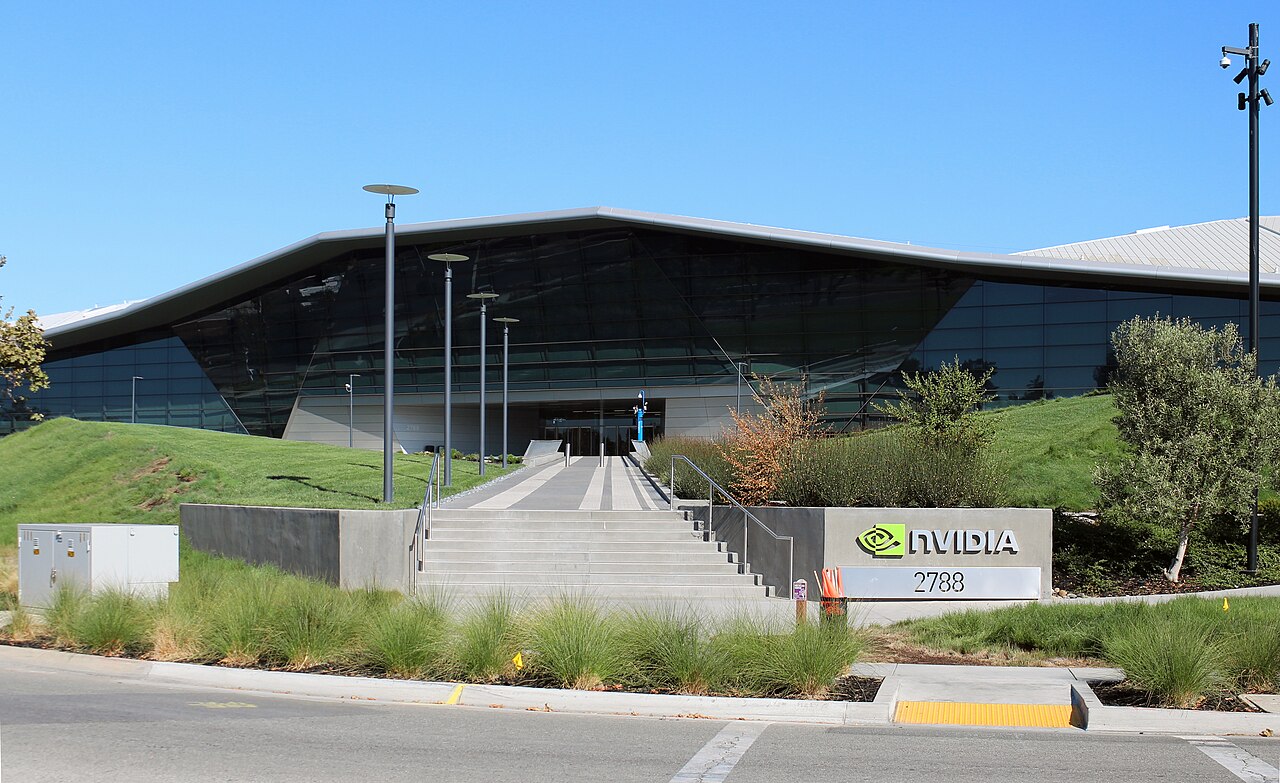
This is the honest limit of most sovereign-AI programs in 2026. Sovereignty at the model and application layer is achievable and is arguably where the strategic value sits, but sovereignty at the silicon layer remains out of reach for nearly everyone outside the United States and, increasingly, China. Noetra's realistic goal is not to escape that dependency but to build the models, data, and industrial applications on top of it that Japan controls, and to secure reliable access to the hardware in the meantime.
The broader sovereign-AI pattern
Noetra is one instance of a global move toward treating AI capability as national infrastructure rather than a purely commercial market. Governments in Europe, the Gulf, India and elsewhere have announced their own compute buildouts and model programs, driven by the same anxieties: that depending entirely on a few foreign providers is a strategic vulnerability, and that AI access is becoming a lever of geopolitical influence. What distinguishes Noetra is its specificity. Rather than a vague pledge to build sovereign capability, it names a sector, robotics, a market, and a concrete deployment target for 2040.
For organizations rather than nations, the same instinct scales down to a practical principle: avoid single points of dependence where you can, and keep the ability to move between providers as the landscape shifts. That portability logic is why model-agnostic platforms such as Metir AI give teams access to models from multiple providers side by side, so a change in pricing, availability or policy from any one vendor does not strand the work built on top of it.
Looking ahead
The real test of Noetra will not arrive until 2028, when the AI factory is meant to come online, and 2040, when the 10-million-robot target either materializes or does not. The near-term questions are whether the 44-company consortium can coordinate at the speed the field demands, whether the Rubin procurement stays on schedule, and whether the homegrown models Noetra produces are competitive enough to matter. What the launch already demonstrates is a clear strategic read: that for a country like Japan, the smarter bet is not to out-scale the frontier labs on language models, but to build the physical-AI layer where its existing strengths still count.
Keep your options open across every model
Noetra's sovereignty play is, at its core, about not being locked into a single source of critical capability. The same principle applies to how teams build with AI. With Metir AI you can access leading models from OpenAI, Google, Anthropic and others in one workspace and route each task to whichever fits best, so no single provider decision boxes you in. Try Metir AI free.
Sources:
- Nvidia and Japan unveil world's first national AI infrastructure, Noetra consortium to build a 140MW Rubin AI factory with 27,500 GPUs | Tom's Hardware
- Robot AI company Noetra is 'last chance' for Japan, CEO says | Yahoo Finance / Reuters
- Noetra plans 140MW data center to fuel Japan's physical AI push | Light Reading
- Japan Stakes $6.2 Billion on Physical AI Factory Built on NVIDIA Vera Rubin | Tech Times
- Tech Giants and Financial Pillars Unite in 44-Company Coalition to Fund Japan's 'Sovereign AI' Infrastructure | Fintech Observer
- Japan's AI 'Winners' Share a Common NVIDIA Dependency | BigGo Finance
Image credits
Header image: the Minato City skyline in Tokyo, Japan, with Tokyo Tower, by David Kernan via Wikimedia Commons, licensed under CC BY 4.0. In-body photograph of Nvidia's headquarters in Santa Clara, California, by Coolcaesar via Wikimedia Commons, licensed under CC BY-SA 4.0. Neither photo depicts the Noetra project or its AI factory directly.