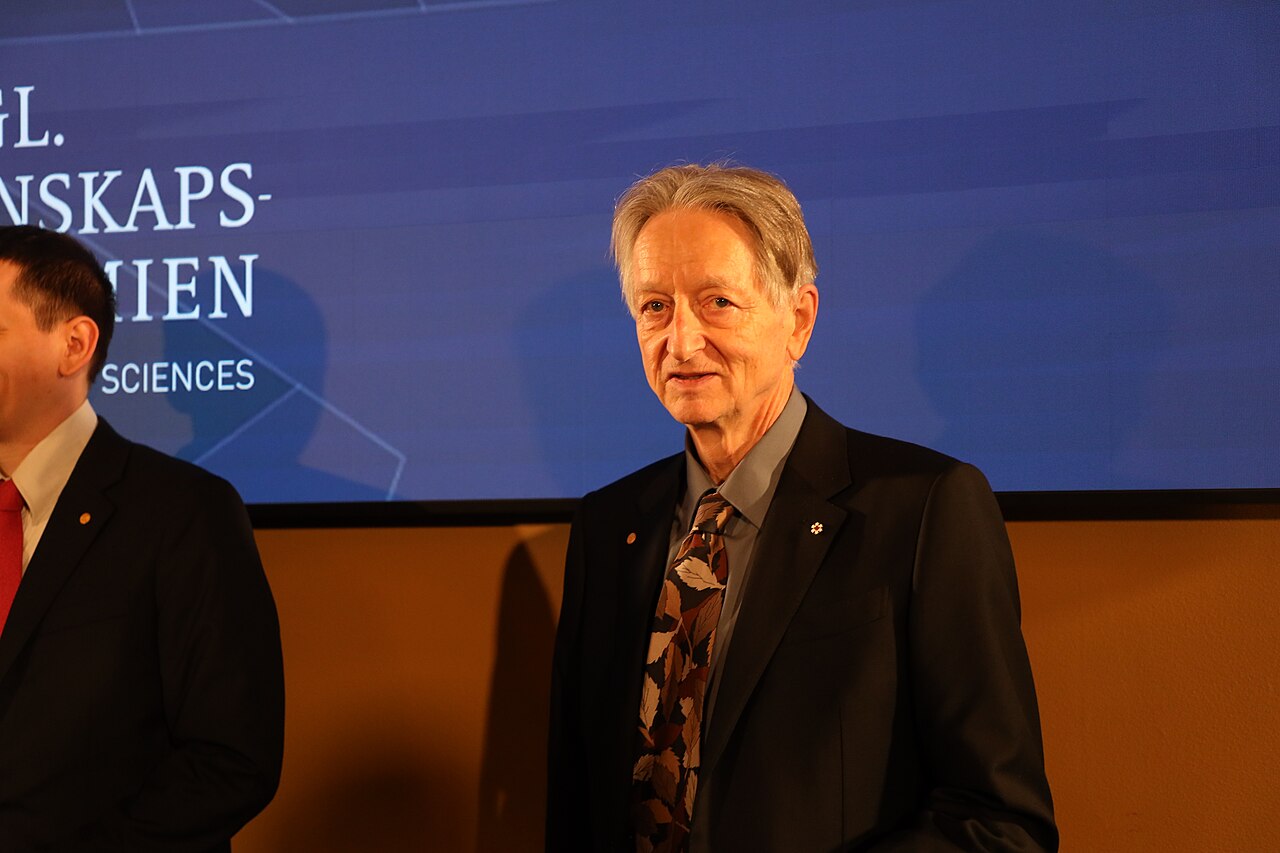
In late September 2026, more than 20 researchers, including some of the most cited names in the field and senior scientists from rival AI labs, put their names to a working paper with an unusual message: the automation of AI research and development could set off an "intelligence explosion," compressing years of technological progress into months or weeks. Coverage describes the paper as coming out of the University of Cambridge, with reports naming either the Centre for the Study of Existential Risk or the Cambridge Programme on AI Science & Policy as the institutional home. The authors wrote in personal capacities, and company co-authorship is not corporate endorsement.
What makes the paper worth a careful read is less the alarm than the evidence underneath it. This piece explains the core concepts, examines the one measured statistic that anchors the argument, and lays out both the warning and the skeptic's response.
 OpenAI
 Anthropic
 Microsoft
 Meta
MetaWhat "AI R&D automation" and "recursive self-improvement" actually mean
AI R&D automation means AI systems doing the work of AI research: writing and reviewing code, designing and running experiments, analysing results and proposing the next experiment. It is already partial reality. According to coverage of the paper, AI now contributes more than 80% of code at Anthropic, a figure the authors cite as context.
Recursive self-improvement is what happens when that automation closes a loop. Systems that do their own research produce more capable successors, and those successors take on a larger share of the R&D pipeline, moving faster than humans can evaluate. The paper's central worry is that humans stay formally "in the loop" while the loop's speed makes meaningful review impossible.
The recursive R&D feedback loop
The mechanism the working paper worries about, in four steps that repeat.
Models write code, run experiments and analyse results.
The work produces a more capable next-generation model.
The new model takes on more of the R&D pipeline.
Evaluation by people struggles to keep pace with the cycle.
Step 4 feeds back into step 1: the loop repeats with a stronger system each cycle.
The authors also make a scale argument. In the paper's words, "Today, only thousands of researchers work on frontier AI R&D. Because AI systems can be copied and run in parallel, automating this work could add the equivalent of millions more." Human research capacity is fixed by population and training time; automated research capacity is bounded by compute.
The number that matters: 1% to 26%
Most intelligence-explosion writing is speculative. This paper is different in that it leans on a measurement. Anthropic disclosed that the share of its R&D work done by AI with minimal human oversight rose from roughly 1% in March 2026 to roughly 26% in August 2026.
Share of Anthropic R&D work done by AI with minimal oversight
Two reported data points, five months apart. Self-reported by the company.
Bars are drawn to scale against a 100% axis. Only the two reported endpoints are shown.
Three cautions apply. First, this is a self-reported company measurement, not an independent audit, and definitions of "minimal oversight" are the company's own. Second, two data points do not establish a curve; the paper's authors do not claim a fitted growth rate, and neither does this post. Third, the figure is from one lab, and no equivalent public numbers exist for others, which is itself part of the authors' argument. Still, a 26-fold rise in five months is the kind of observation that moves the question from "could this happen" toward "how fast is it already happening."
Once an intelligence explosion begins, the window for action may close.
Working paper, as quoted in press coverage
Why rivals co-signing is notable
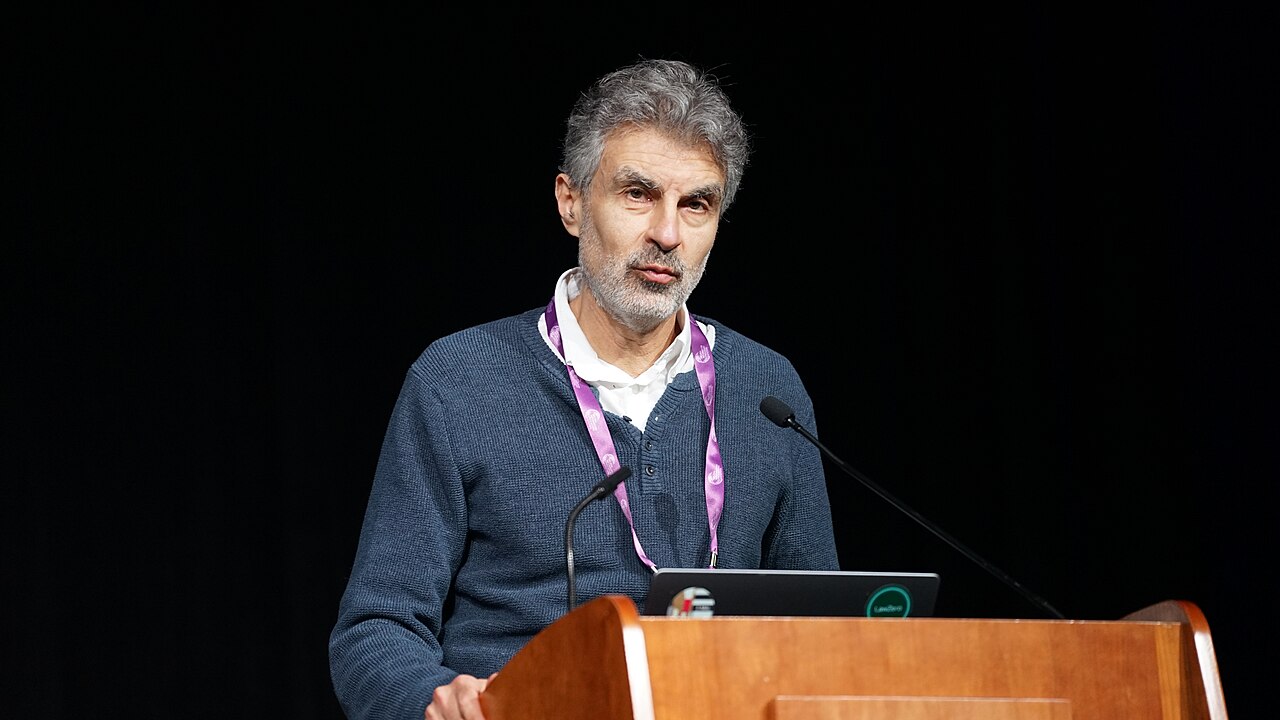
The signatories reportedly include Turing Award winners Geoffrey Hinton, Yoshua Bengio and Andrew Barto, alongside OpenAI chief scientist Jakub Pachocki, Anthropic co-founder Jack Clark and Microsoft chief scientific officer Eric Horvitz. Dawn Song, a UC Berkeley professor, is also reported among the authors.
Employees of competing labs rarely co-author anything, because caution can be read as a competitive move. There are two neutral readings. One is that the risk is perceived as shared: if a runaway loop at any lab is dangerous, no lab benefits from being second to disclose it. The other is that a shared standard is commercially attractive to leaders, since compliance costs weigh differently on firms with different resources. The paper's authors do not need to hold either motive for the pattern to be worth noting. What can be said with confidence is that the shared signatures make the paper harder to dismiss as an outsider critique.
What the recommendations require in practice
The paper's proposals, per coverage, are to give governments visibility into corporate AI R&D automation through standard reporting and independent auditors, to build the ability to slow or pause acceleration if needed, and to prepare for the impacts. Reported specifics include speed limits on capability advancement, monitoring of high-stakes experiments with shutdown capability, air-gapped research environments and incident-sharing.
Each of these hides operational difficulty:
- Embedded auditors. The proposal draws on banking and nuclear oversight models, where inspectors work inside regulated firms. Even a sympathetic observer, Conrad Stosz, was quoted as saying it remains "a little ambiguous what embedded evaluators means" in practice. Auditors need deep technical access, which collides with trade secrets and security.
- The ability to pause. A pause is only as good as the definition of what to pause. Halting a single training run is easy; halting a distributed research process where AI agents run experiments continuously requires technical controls that sit under the lab's own infrastructure.
- Measurement. The authors' own framing is that measurement infrastructure comes first. No standard defines "share of R&D done by AI," no independent party verifies it, and the one public figure is self-reported. Without a shared definition, a pause trigger has nothing to trigger on.
- Monitoring by AI. Dawn Song was quoted as saying, "Already today, we are at the stage where we need AI systems to monitor what agents are doing." Oversight that itself relies on AI raises the question of who checks the checker.
The alarm and the skeptic view
The alarm reading is straightforward: the loop's ingredients are present, the one measured indicator is rising steeply, and the window for setting up governance is before, not after, the loop tightens. The paper warns that unchecked automation risks "marginalization or extinction of humanity."
The skeptic reading has substantive points too. A jump from 1% to 26% of lightly supervised work may reflect a change in workflow and labelling rather than a change in underlying capability. Research bottlenecks such as compute, data, experimental throughput and physical constraints may cap the speed of any loop regardless of how much cognitive labour is automated. And working papers with a dramatic frame can raise regulatory attention faster than they raise understanding. Both readings remain open; the disagreement is largely about whether the bottlenecks bind, which is an empirical question the measurement infrastructure the authors call for would help answer.
What it means for teams building on AI
If capability concentrates and shifts quickly between labs, the practical exposure for most organisations is dependency: a workflow wired to one provider inherits that provider's pace, pricing and policy changes. Keeping the model layer swappable, as platforms such as Metir AI do by offering several providers' models in one place, is a modest hedge against a fast-moving field, not a response to the paper's larger claims.
The takeaway
The verifiable facts are narrow: a working paper with 20-plus co-authors, tied to the University of Cambridge, argues that AI R&D automation could create a fast recursive loop; Anthropic reports its lightly supervised AI-driven R&D share rose from about 1% to about 26% between March and August 2026; and the authors ask for visibility, auditing and pause capability. What is not yet established is how fast the loop can run once real bottlenecks bite. The most agreed-upon point across both camps is that better measurement would help settle it.
Sources:
- AI pioneers warn of intelligence explosion in working paper | The Next Web
- AI scientists call for embedded auditors as intelligence explosion looms | Implicator.ai
- Intelligence explosion working paper: Anthropic, OpenAI and the oversight gap | FourWeekMBA
- AI pioneers on the intelligence explosion | Axios
- AI researchers on intelligence explosion and oversight | Quartz
- AI Tech Brief: intelligence explosion | The Washington Post
Image credits
Header image: Geoffrey Hinton at the 2024 Nobel Prize press conference at the Royal Swedish Academy of Sciences, photograph by Jennifer 8. Lee, via Wikimedia Commons, licensed under CC BY-SA 4.0. In-body photograph of Yoshua Bengio in San Diego (December 2025) by Xuthoria, via Wikimedia Commons, licensed under CC BY-SA 4.0. Both photographs predate the paper and show the scientists at unrelated events.