For a decade, humanoid robots were a video genre. A machine did a backflip, folded a shirt, or walked over rubble, the clip went viral, and very little followed. In 2026 the genre quietly changed. The most consequential humanoid story of the year is not a demo at all. It is a BMW production report showing that a Figure robot contributed to building more than 30,000 vehicles on a live line, doing the same unglamorous task, over and over, for the better part of a year.
That shift, from choreographed demo to repetitive paid work, is the real news. This piece separates what has genuinely crossed into commercial deployment from what remains a target, and asks what actually changed to make factory-floor humanoids credible now.
What has actually shipped
The clearest proof point is at BMW Plant Spartanburg in South Carolina. Beginning in October 2024, a Figure 02 robot was placed on a live production line where it inserted sheet-metal parts for the welding process. Over an eleven-month deployment it supported the production of more than 30,000 BMW X3 vehicles. The task is narrow and repetitive by design, which is exactly the point: this was not a robot improvising, it was a robot reliably doing one well-defined job inside a real manufacturing flow.
From there, BMW has moved forward on two fronts. At Spartanburg it is adopting the next-generation Figure 03, aimed at logistics sequencing, picking parts and sorting them into a sequencing trolley, with new hardware including tactile-sensor hands, palm cameras and wireless charging. In Europe, at Plant Leipzig, it has begun piloting physical AI in production for the first time, though the Leipzig pilot uses a wheeled humanoid from Hexagon rather than a Figure unit.
From demo to day job: the humanoid production timeline
Selected, publicly documented milestones on the path from prototype to repetitive factory work.
- Oct 2024First live line
A Figure 02 robot begins inserting sheet-metal parts for welding on a live production line at BMW Plant Spartanburg, South Carolina.
- 202530,000+ vehicles
Over an 11-month deployment the robot contributes to production of more than 30,000 BMW X3 vehicles in the body shop.
- 2026Figure 03 and Europe
BMW moves to the next-generation Figure 03 for logistics sequencing at Spartanburg and pilots physical AI in Europe at Plant Leipzig.
- Summer 2026Tesla Optimus at Fremont
Elon Musk tells Tesla investors that Optimus production will begin at Fremont in late July or August, on a line designed for an eventual one million robots a year, while warning early output will be slow.
Sources: The Robot Report, BMW Group press releases, Electrek. Figures reflect the Figure 02 Spartanburg deployment and reported Tesla statements; they are not a projection of total industry deployment.
What is still a target, not a result
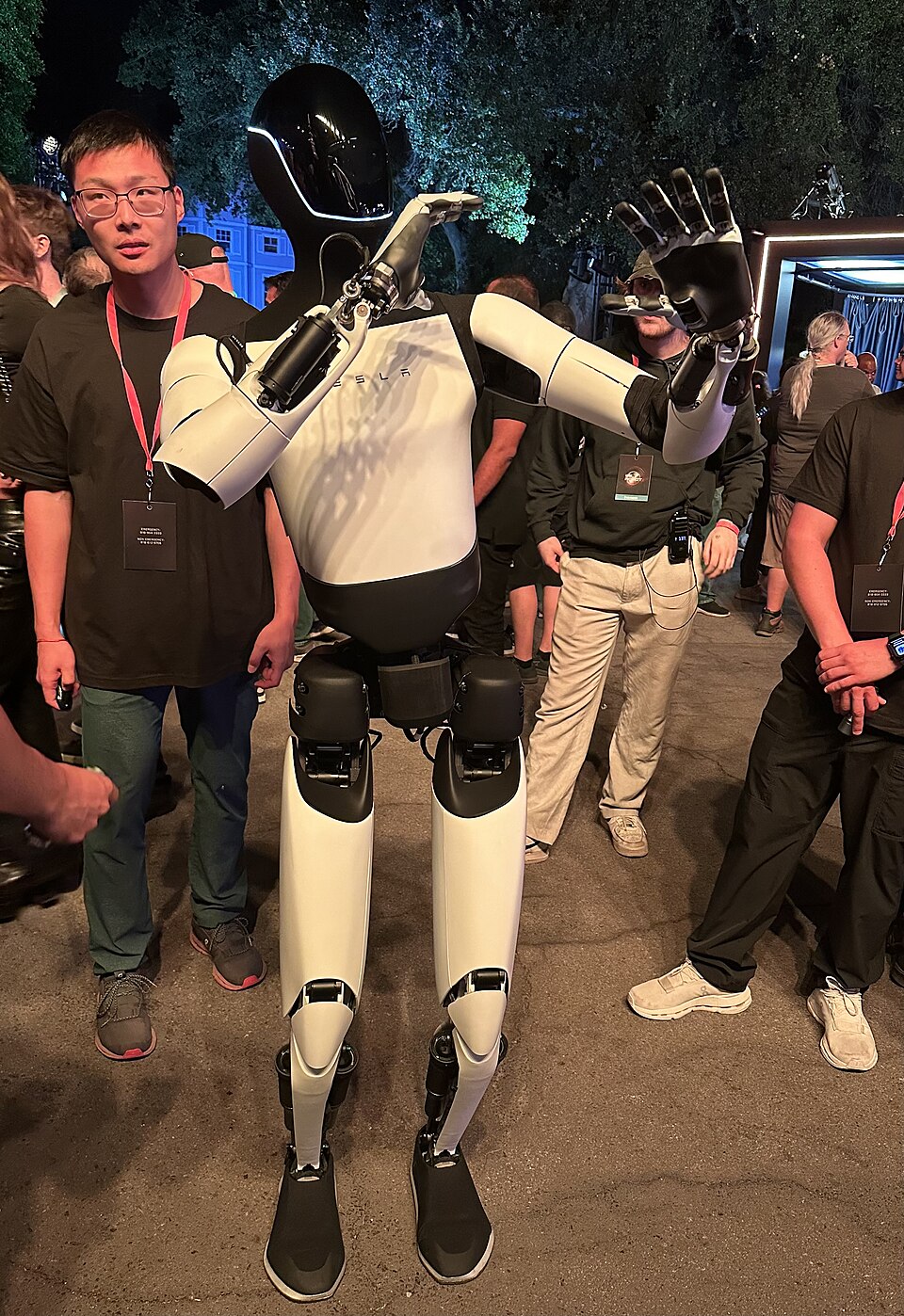
The honest counterweight to the BMW story is that most of the headline humanoid ambitions remain forward-looking. Tesla is the largest example. On its Q1 2026 earnings call, Elon Musk told investors that Optimus production would begin at Fremont in late July or August, on a converted line eventually designed for one million robots per year. Those are real commitments from a serious company, but they are plans, and Musk himself cautioned that initial output would be slow and hard to predict given that Optimus has thousands of unique parts and an entirely new production line.
New entrants add momentum without adding proof. In July, a former Tesla Optimus scientist unveiled a Paris-based startup, UMA, planning a lightweight humanoid and reporting conversations with dozens of potential customers. Interest and pipeline are not the same as deployed, load-bearing work, and it is worth holding that distinction firmly.
The gap that matters in 2026 is not demo versus reality. It is one narrow job done reliably for months versus a general-purpose worker that can be dropped into anything. Only the first has arrived.
Why factory floors first
The pattern in the credible deployments is not random. Humanoids are landing first in structured industrial settings for reasons that explain both the progress and its limits.
A factory line is a forgiving environment for a machine. The lighting is controlled, the parts arrive in known positions, the task repeats thousands of times, and success is easy to define and measure. That is the opposite of a home or a busy public space, where conditions are unpredictable and the failure modes are unbounded. A robot that struggles with novelty can still excel at a narrow, repeated task in a controlled setting, which is precisely where the BMW deployment sits.
The economics point the same way. Automotive plants already run hundreds of fixed, single-purpose robots. The appeal of a humanoid is not that it does something fixed robots cannot, but that its human form fits workstations, tools and spaces already built for people, and it can in principle be reassigned to a new task without re-engineering the line. Whether that flexibility pays off at scale is the open commercial question, and it is why measured, task-by-task expansions, adding fastener work or inspection to an existing panel-loading role, are more informative than fleet-size announcements.
The AI part of physical AI
It is worth being precise about what has improved, because the robotics story is often told as a hardware story when the recent unlock is as much about software. Actuators, batteries and hands have advanced, but the harder problem was always control and perception: turning camera and sensor input into reliable action in the physical world. Progress in the AI models that map perception to motion, the same broad advance in learned, general-purpose models reshaping the software world, is a large part of why a humanoid can now hold a real job rather than perform a scripted routine.
That framing also sets realistic expectations. The models that make a robot dependable at one factory task are not yet the models that make it a general household helper. The perception and reasoning good enough for a controlled line are not yet good enough for an uncontrolled home, which is why the credible 2026 deployments cluster in manufacturing and logistics rather than the consumer settings the marketing videos imply.
The bigger picture
The useful way to read humanoid robotics in 2026 is as a field crossing its first real threshold rather than clearing the final one. One robot doing one narrow job at BMW, for months, contributing to tens of thousands of vehicles, is a genuine milestone: it moves the conversation from can a humanoid do this once to can a humanoid do this reliably, on the clock, at cost. The answer, in at least one structured setting, is now yes.
Everything past that, general-purpose home robots, million-unit fleets, humanoids that learn new jobs on the fly, remains a target with real money and real engineering behind it but no comparable proof yet. Holding those two facts at once, real deployment in narrow settings, unproven ambition everywhere else, is the accurate picture. It is less thrilling than the backflip videos and considerably more important, because durable technology shifts are usually built exactly this way: one reliable, repeated, boring task at a time.
Sources:
- BMW Group deploys Figure 03 humanoid after tests with previous version | The Robot Report
- BMW Group advances the use of physical AI in production with Figure 03 project in Spartanburg | BMW Group Press
- BMW Group to deploy humanoid robots in production in Germany for the first time | BMW Group Press
- Tesla pushes Optimus V3 production at Fremont | Electrek
- Ex-Tesla Optimus scientist unveils European humanoid robot startup | Electrek
Image credits
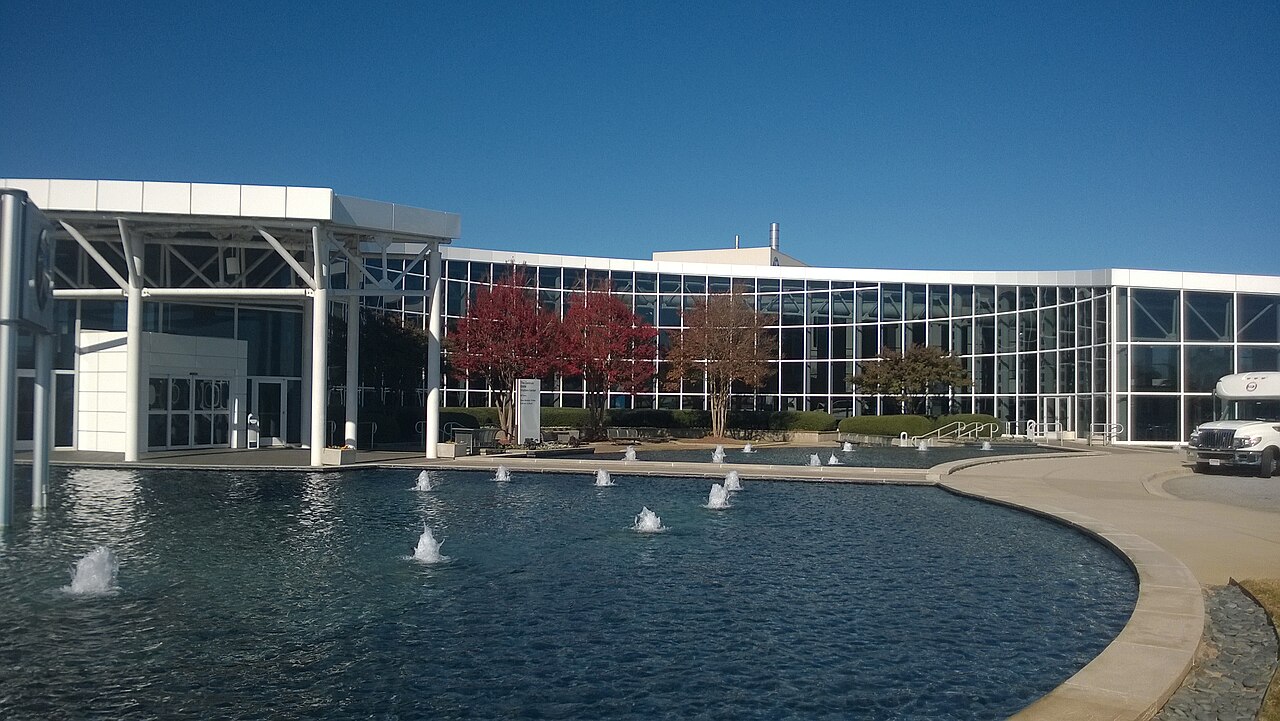
Header image: the BMW Zentrum at BMW's Spartanburg, South Carolina manufacturing complex, by Porsche997SBS via Wikimedia Commons, licensed under CC BY 3.0. In-body photograph of a Tesla Optimus humanoid robot by Steve Jurvetson via Wikimedia Commons, licensed under CC BY 2.0.