On October 5, 2026, Huawei and Qualcomm announced a broad, multi-year patent license agreement, a rare formal truce between two companies that sit on opposite sides of the US-China technology divide. The Huawei Qualcomm patent license deal pairs cross-licenses of both portfolios, across 5G, compute, AI and networking, with Qualcomm's purchase of certain Huawei US patents. Reuters reported that it is the first licensing deal between the two to cover 5G technologies.
The financial terms were not disclosed, and the transaction still needs regulatory approvals before it can be completed. What is public is enough to show how patents, rather than chips, are becoming a channel through which technology value moves between the two ecosystems.
What the Huawei Qualcomm patent license deal covers
According to Huawei's announcement, issued from Shenzhen, the agreement has two parts. First, the companies cross-license their patent portfolios across 5G, compute, AI and networking. Second, Qualcomm is buying select Huawei US patents in compute, AI, networking and related fields. Both companies said the agreement reflects respect for intellectual property rights and FRAND principles, meaning licensing on fair, reasonable and non-discriminatory terms.
Bloomberg Law reported that the scope reaches technologies for 5G devices, AI services, and near-packaged and co-packaged optics, and that Qualcomm agreed to license patents underpinning Huawei's LogicFolding chipmaking technique, which Huawei positions as a way to raise chip performance. Reuters reported that once completed, the deal will take the total value of Huawei's patent licensing agreements to more than $6.9 billion. That figure is an aggregate across all of Huawei's licensing arrangements, not the undisclosed value of this single deal.
Nikkei Asia reported that, once the new arrangement takes effect, Qualcomm would become a net payer to Huawei for the first time. The companies have not confirmed the direction or size of any payments, so that detail rests on a single outlet's reporting.
This agreement not only demonstrates the value of Huawei's innovations, but also recognizes Qualcomm's foundational contributions to modern communication technologies.
Alan Fan, Huawei Chief Intellectual Property Officer
How the relationship got here
The two companies have a long licensing history. Reuters noted that Huawei made its first licensing payment to Qualcomm in 2001 and received its first licensing income from Motorola in 2011. In 2018, Huawei halted royalty payments while negotiations continued, and on August 3, 2020, Qualcomm announced a settlement: a long-term global patent license in which Huawei paid Qualcomm 1.8 billion dollars, covering royalties owed for 2019 plus the first half of 2020. The agreement also gave Huawei rights to certain Qualcomm patents.
That arrangement later lapsed. In its fiscal 2025 filing, Qualcomm said its licensing revenue no longer included royalties from Huawei beginning in the second quarter of fiscal 2025 because the license agreement had expired. Qualcomm's licensing unit still reported 5,582 million dollars in fiscal 2025 revenue, roughly flat against 5,572 million dollars the year before, after signing long-term licenses with two Chinese phone makers and Transsion.

Why licensing matters more to Huawei now
Huawei's intellectual property business has grown into a measurable revenue line. Reuters reports it has generated positive revenue since 2021. At its 2025 innovation and intellectual property forum, Huawei said it earned around 630 million dollars from patent licensing in 2024, held 233 patent license agreements according to trade press coverage, and counted 48 Fortune Global 500 companies as licensees, directly or indirectly. Its chief legal officer, Liuping Song, has said that Huawei's open approach to innovation is "in our DNA", and the company has said it paid nearly three times more in patent royalties than it received over the years.
Context from Reuters is also relevant: US trade restrictions in place since 2019 have limited Huawei's access to advanced chips and key software, which raises the strategic value of monetizing and trading intellectual property. Reuters also noted a recently announced Huawei licensing agreement with HP Inc, so the Qualcomm deal fits a visible pattern of IP-led partnerships.
The AI chip angle
The deal's language on compute, AI and optics is where the AI hardware story sits. Huawei's Ascend line is the center of its domestic AI accelerator strategy, and our earlier coverage of why China's AI chip prices are rising amid a memory shortage describes the supply constraints that shape that market. A patent license does not change those constraints: it does not lift export controls, and no change to US export restrictions was announced alongside the deal.
What a cross-license can do is reduce legal friction. Companies building chips, packaging and networking gear in the same technical areas often hold overlapping patents, and a license lets each operate without the risk of infringement claims over the covered technologies. Whether Qualcomm gains practical access to specific Huawei techniques such as LogicFolding, or simply secures freedom to operate, has not been detailed publicly.
What to watch next
- Regulatory approval. The patent sale component is subject to regulatory approvals, and Nikkei Asia highlighted US regulatory review as a factor. Timing and conditions have not been disclosed.
- Disclosed financial terms. Qualcomm's next earnings filing may show whether and how the deal appears in its licensing segment, and Huawei's annual IP forum may update its revenue figures.
- Other licensing partners. The sequence of Huawei deals, including HP Inc and now Qualcomm, suggests more agreements could follow, though none has been announced.
Key takeaways
The agreement is best read as a negotiated settlement of overlapping intellectual property across 5G and AI-adjacent technologies, not as a change in chip trade policy. The verified facts are the scope, the multi-year term, the patent purchase, the FRAND framing and the pending regulatory approval. The payment direction and total value of this specific deal remain unconfirmed.
Sources:
- Huawei and Qualcomm Announce Broad Patent License Agreement (Huawei, October 5, 2026)
- Huawei and Qualcomm Announce Broad Patent License Agreement (Globe and Mail, Newsfile)
- Huawei agrees to a multi-year patent licensing deal with Qualcomm (Reuters via Investing.com)
- Qualcomm Licenses Patents on Huawei's LogicFolding Chip Tech (Bloomberg Law)
- Qualcomm Huawei patent deal covers 5G, AI and US patents (TBreak, citing Nikkei Asia)
- Huawei, Qualcomm sign multi-year patent licensing deal (Silicon Republic)
- Qualcomm Strikes Long-Term Licensing Deal to End Huawei Dispute (Electronic Design, August 2020)
- Qualcomm Form 10-K, fiscal 2025 (SEC)
- Advancing Innovation with Openness (Huawei, 2025 IPR forum)
- Huawei earned $630 million revenue from patent licensing in 2024 (Huawei Central)
Image credits
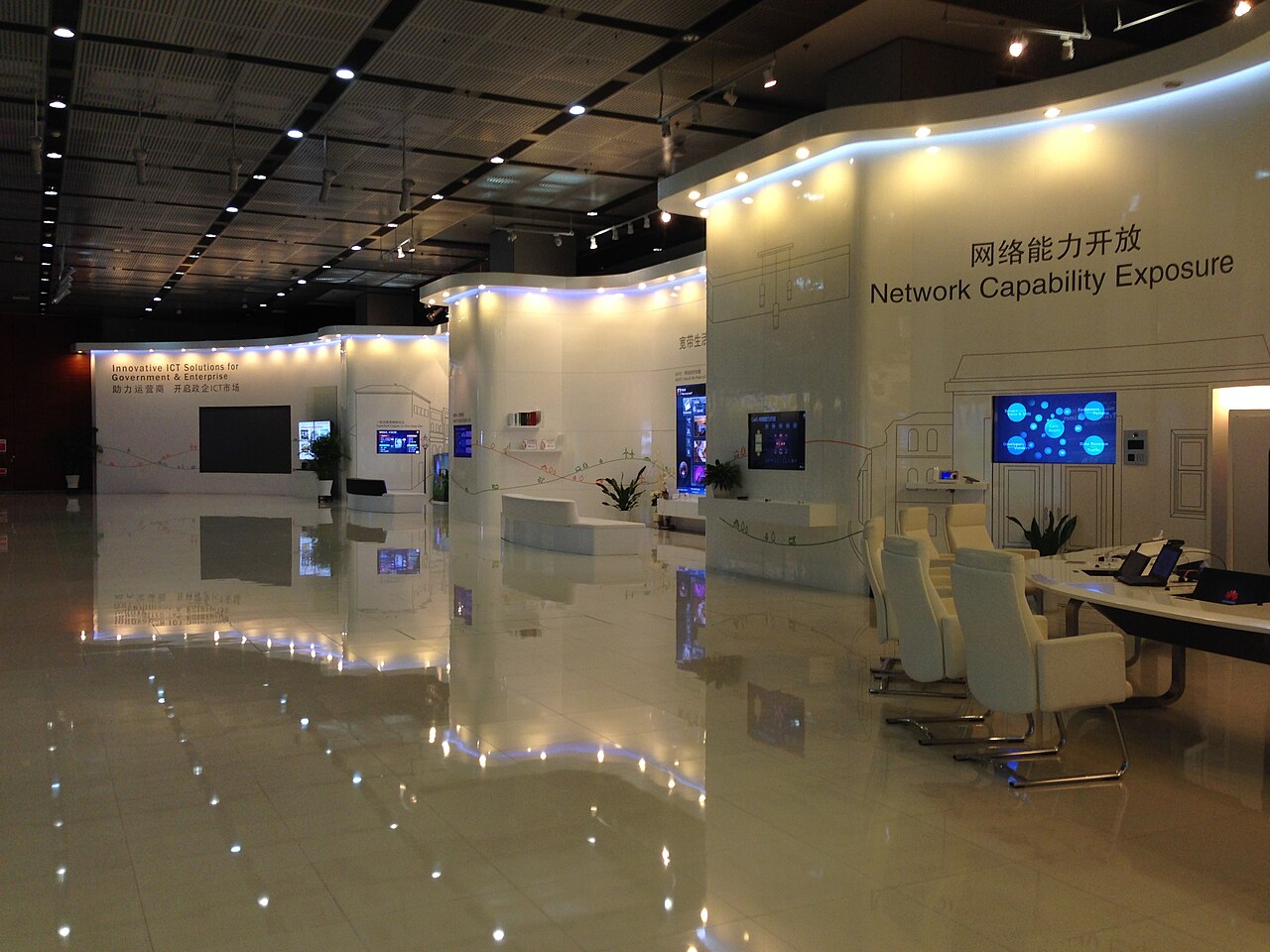
- Hero: showroom hall at a Huawei site in Shenzhen ("Sidejo de Huawei en Ŝenĵeno 09"), photo by RG72, CC BY-SA 4.0, via Wikimedia Commons.
- In-body panorama: exhibition hall at a Huawei site in Shenzhen ("Sidejo de Huawei en Ŝenĵeno 04"), photo by RG72, CC BY-SA 4.0, via Wikimedia Commons.