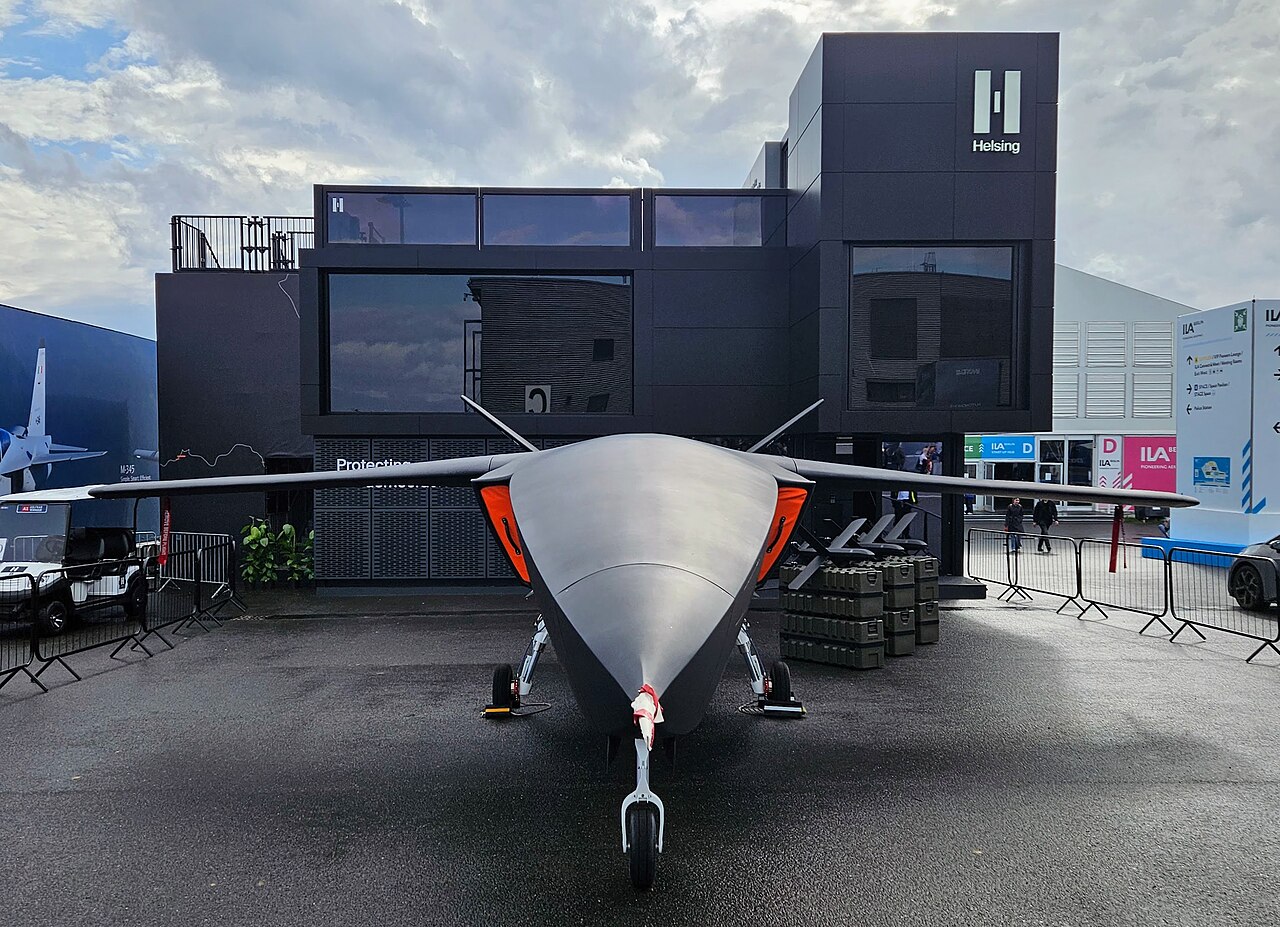
On July 13, 2026, Helsing, a Munich-based defense-technology company founded only in 2021, announced a $1.8 billion Series E at an $18 billion valuation. It is the largest funding round ever raised by a European defense startup, and the investor list reads like a roster of the world's largest financial institutions. The round is worth understanding not as a one-off headline but as a marker of a broader shift: defense has moved from the margins of the technology world to one of its most heavily funded frontiers, and artificial intelligence is the reason. This piece looks at what Helsing does, why capital is flowing into AI-first defense at this scale, and the genuinely difficult questions the category raises that a funding announcement does not resolve.
What Helsing is
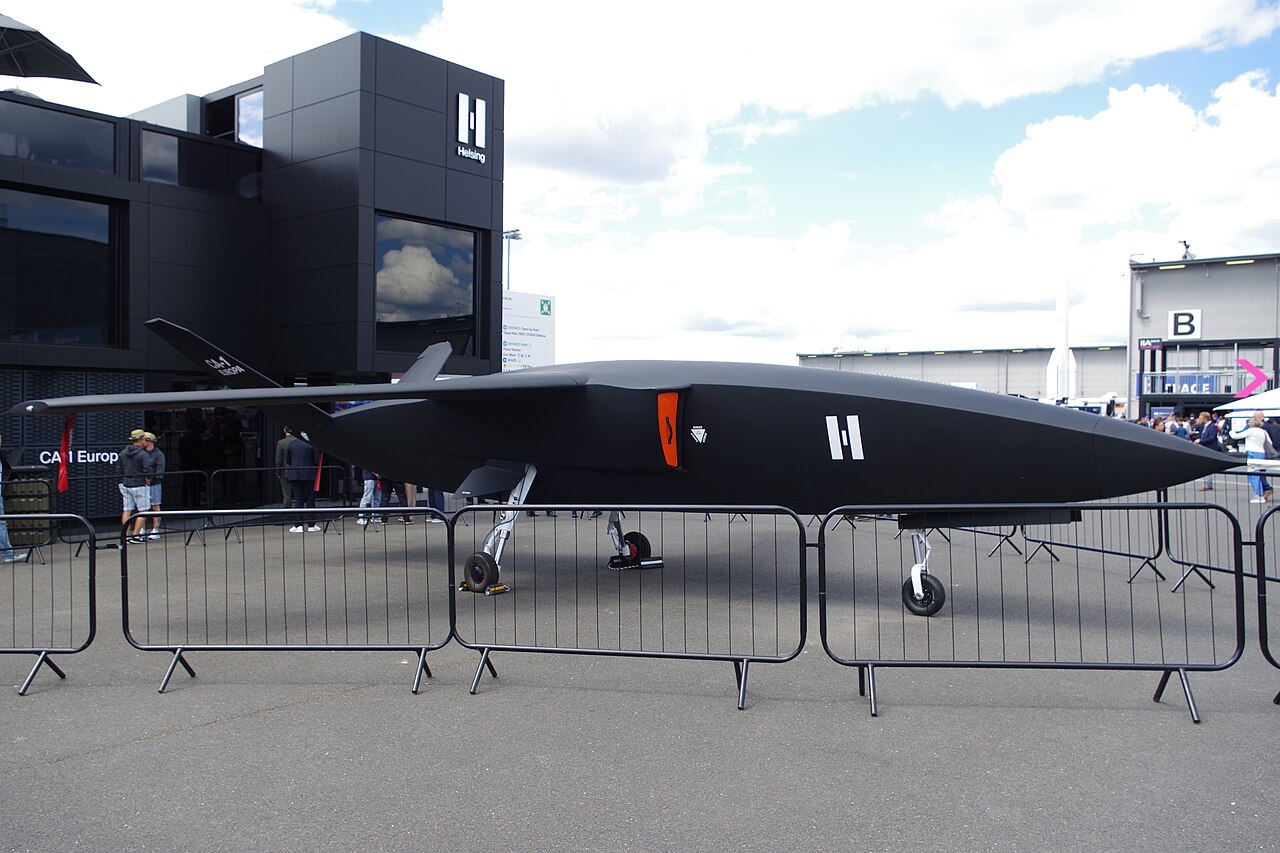
Helsing describes itself as a defense AI company, and the distinction from a traditional defense contractor is the point. Rather than building a single weapons platform and selling it for decades, Helsing builds software and AI systems intended to be integrated into the defense capabilities of partner nations: processing sensor data, coordinating autonomous and crewed systems, and turning the flood of information on a modern battlefield into decisions faster than a human operator could alone. It has expanded from software into hardware over time, including strike drones and other autonomous systems, but the core asset is the intelligence layer that sits across them.
That software-first posture is exactly why investors are willing to value it like a technology company rather than a manufacturer. Defense primes have historically traded at industrial multiples because their economics look industrial: long procurement cycles, physical production, thin margins on hardware. A company whose central product is AI software that improves with data and deployment is being underwritten on a different curve, one that looks more like enterprise software than like a shipbuilder.
 NVIDIA
The round in context
The scale of the raise is easier to grasp against the other large AI rounds that closed the same week.
The biggest AI rounds of the week, to scale
Selected disclosed AI-related venture rounds during the week of July 13, 2026. Helsing's raise was several times larger than the next-biggest deal.
Disclosed round sizes, week of July 13, 2026. Not exhaustive; selected to show relative scale.
Even in a period of unusually large AI financings, Helsing's round stood out, several times bigger than the next-largest deal. The company said demand significantly exceeded the allocation, and the investor group spanned growth funds, a sovereign pension manager and multiple global banks. That composition is itself a signal. When pension capital and bulge-bracket banks anchor a defense-technology round, it reflects a view that this is a durable, policy-backed category rather than a speculative bet, because those investors answer to mandates that are cautious by design.
The valuation trajectory tells a similar story of speed.
A fast climb for a five-year-old company
Helsing's reported valuation at its two most recent financing milestones. Founded in 2021, it is now among Europe's most valuable defense companies.
The June 2025 figure was reported in euros and the July 2026 figure in US dollars, so the bars are not a like-for-like currency comparison.
A company reaching an $18 billion valuation five years after founding is remarkable in any sector; in defense, where incumbents are measured in decades, it is close to unprecedented. The obvious caveat is that private valuations reflect what the marginal investor will pay in a hot round, not a settled market price. The figure is real, but it prices in years of expected growth that have not yet been delivered.
Why defense AI, and why now
Three forces are converging, and separating them helps explain why this is a category rather than a single company's success.
The first is geopolitical. European governments have committed to sustained increases in defense spending, and much of that new budget is explicitly aimed at modernization rather than legacy hardware. That creates a large, policy-guaranteed demand pool for exactly the kind of software and autonomy Helsing sells, with sovereignty concerns pushing European nations toward European suppliers.
The second is technical. The same advances that made AI useful in commercial settings, better perception from sensor data, faster reasoning over complex inputs, and increasingly capable autonomous coordination, map directly onto defense problems. The battlefield is, in an abstract sense, a very demanding data-and-decisions environment, and the tools that improved logistics and analytics elsewhere transfer to it.
The third is structural. A generation of engineers who would once have avoided defense work has become more willing to build in the sector, and a wave of venture capital that once steered clear of it on ethical or return grounds has re-entered. Helsing is the largest European expression of a pattern also visible in the United States, where AI-first defense firms have reached valuations that rival or exceed established primes.
A company whose central product is AI software that improves with data is being underwritten on a software curve, not a shipbuilder's.
The questions the money does not answer
A neutral analysis has to be equally clear about what a large round does not settle, and defense AI carries harder questions than most technology categories.
The most consequential is the role of autonomy in lethal decisions. As AI systems take on more of the sensing, targeting and coordination in military operations, the question of where a human sits in the loop becomes central, and it is an active, unresolved debate among governments, militaries and ethicists. Companies in the space, Helsing included, generally emphasize human oversight, but the boundary between decision-support and decision-making is exactly where the technology, the law and the ethics are still being worked out. A funding round does not resolve that; it raises the stakes of getting it right.
There is also a commercial question beneath the valuation. Defense procurement, even in a modernization push, moves on government timelines, with long qualification cycles and political dependencies. A software-style valuation implies software-style growth, and it remains to be seen whether the category can compound at that rate against the friction of how defense actually buys. The valuation is a bet that it can.
What it signals for the wider AI landscape
Beyond defense, Helsing's round is a useful lens on where AI value is accruing. For much of the last two years, the largest rounds went to the frontier model labs and the infrastructure beneath them. Increasingly, capital is also flowing to the application layer, to companies that take AI capability and apply it deeply to a specific, high-stakes domain: defense here, biology and health elsewhere. That broadening matters because it suggests investors believe durable value will be captured not only by whoever trains the best general model, but by whoever integrates AI most effectively into a particular industry's workflows and constraints.
That application-layer thesis has a practical corollary for anyone building with AI, in any sector. The domain expertise and the workflow integration are the durable moat; the underlying model is an input that will keep changing as the frontier moves. Teams that keep the model layer flexible, able to adopt whatever system best fits a given task rather than committing to one, preserve the ability to ride those improvements without re-platforming. A model-agnostic workspace such as Metir AI reflects the same principle at the individual and team level: treat the model as a swappable component and invest your effort where the lasting value is, in how the work actually gets done.
The bigger picture
Helsing's $1.8 billion round is the clearest sign yet that AI-first defense has become a first-tier technology category, funded at a scale that puts it alongside the largest software financings of the year. The forces behind it, rising defense budgets, transferable AI capability and a shift in who is willing to build and fund in the sector, are structural rather than fleeting. So are the questions it raises about autonomy, oversight and the pace of government procurement. Both things are true at once, and the honest position is to hold the scale of the opportunity and the weight of the questions in the same view, because the category will be defined by how that tension is resolved, not by the size of any single round.
Sources:
- Helsing raises US$1.8bn in Series E | Helsing
- Europe's Anduril rival Helsing raises $1.8 billion at $18 billion valuation | CNBC
- Helsing raises $1.8 billion in Europe's biggest defense-startup round | Defense News
- European defencetech leader Helsing secures $1.8B Series E at $18B valuation | Tech.eu
- German defense company Helsing raises $1.8 billion | Axios
- The Week's 10 Biggest Funding Rounds | Crunchbase News
Image credits
Header image: Helsing CA-1 Europa mock-up in front of the Helsing stand at ILA Berlin 2026, by Oddlief via Wikimedia Commons, licensed under CC BY 4.0. In-body side view of the same CA-1 Europa mock-up by Andre Gerwing via Wikimedia Commons, licensed under CC BY-SA 4.0.