On August 6, 2026, Hadrian, a startup that builds automated factories to mass-produce precision parts for the defense industry, closed a $1.37 billion Series D at a $7.87 billion post-money valuation. The round was led by a consortium of large institutional investors, with JPMorgan among those involved and participation from a long list that reportedly included Andreessen Horowitz, Founders Fund, CapitalG, Lux Capital, Altimeter, Apollo, and T. Rowe Price. It roughly quintupled Hadrian's valuation from a mark near $1.6 billion not long before, and lifted total funding past $1.9 billion. The headline is the number. The more useful questions are what the money is buying, why so much of it is chasing defense manufacturing right now, and whether the valuation is anchored to anything a reader can verify.
What Hadrian actually builds
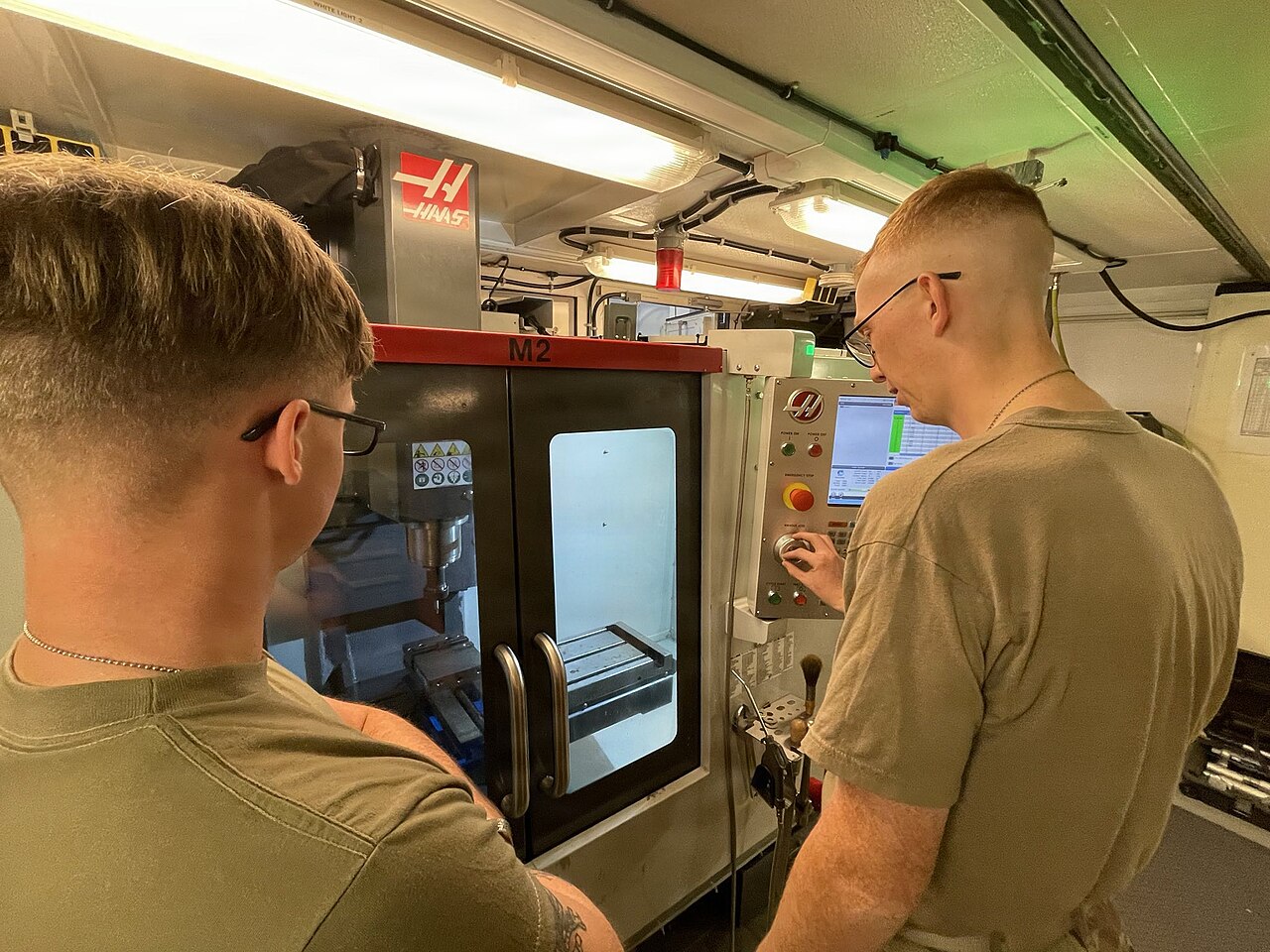
Strip away the framing and Hadrian is an industrial company with a software thesis. It operates highly automated plants that combine robotics, computer-controlled machining, and software to produce precision metal parts. The parts are unglamorous and essential: components for munitions, shipbuilding, aviation, submarines, and autonomous systems. Hadrian sells this as "Factories-as-a-Service," meaning defense primes and the government order finished parts rather than building and staffing factories themselves.
The bottleneck Hadrian targets is not a lack of designs or demand; it is people. Precision manufacturing has historically depended on skilled machinists, a workforce that has aged and shrunk while the defense industrial base's needs have grown. By pushing automation and software into roles that traditionally required years of trade experience, Hadrian's bet is that it can stand up capacity faster and scale it higher than a labor-constrained supply chain can. That is the sense in which this is an "AI and robotics" company: the intelligence is aimed at the factory floor, not at a chatbot.
What Hadrian actually sells
The pitch is a manufacturing platform, not a product. Automation and software stand in for scarce skilled machinists, and the capacity is rented out to the defense industrial base.
The AI-and-robotics framing is real, but the core bet is industrial: that automated plants can produce defense parts faster and at higher volume than a labor-constrained supply chain.
Why capital is flooding defense manufacturing
Hadrian's round is not an isolated event; it is one data point in a broad reallocation of private capital toward defense and hard technology. Several forces are converging.
The first is geopolitics. Sustained conflict and rising great-power tension have exposed how thin Western munitions and industrial capacity had become after decades optimized for efficiency over resilience. Governments now want surge capacity, and are signaling long-term demand through procurement. That converts what used to look like a slow, low-margin sector into one with a visible, growing order book.
The second is a shift in what investors are willing to fund. For years, defense was considered off-limits or unattractive by much of venture capital. That taboo has faded, and a cohort of firms has built theses explicitly around national security. The same week as Hadrian's raise, another defense manufacturer drew a nine-figure check, and larger players in the category have been discussed at valuations an order of magnitude higher. Capital tends to move in herds, and the herd has turned toward this sector.
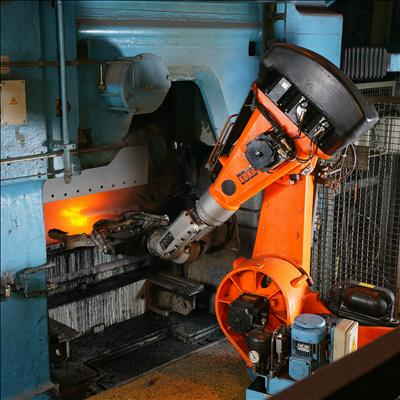
The third is the automation story itself. If software and robotics really can compress the cost and lead time of precision manufacturing, the addressable prize is enormous, because it is not one weapon system but the throughput of the entire industrial base. Investors are paying for that option, not just for current output.
The intelligence here is pointed at the factory floor, not at a chatbot. The bet is industrial before it is algorithmic.
Does the valuation math hold?
This is where analysis has to be careful and honest, because the inputs are limited.
A roughly five-fold valuation step in a short period is striking, and Hadrian is far from alone in it; steep markups have become the norm in hot defense-tech rounds. What a reader cannot do from the public record is check that markup against revenue, margins, or delivered volume, because Hadrian, as a private company, has not disclosed those figures. A private valuation is not an audited market price. It reflects what the marginal investor in the latest round was willing to pay, on terms that often include protections (liquidation preferences and similar) that make a headline number an imperfect guide to the whole company's worth.
Hadrian's valuation, before and after the Series D
Reported post-money valuation, in billions of dollars. The $1.37 billion Series D closed on August 6, 2026 and roughly quintupled the company's valuation from its prior mark.
Total funding raised now exceeds $1.9 billion. Private valuations reflect what the latest investors paid, not an audited market price or a multiple of disclosed revenue.
So the disciplined reading is agnostic. The bull case is coherent: a real, growing demand signal from governments, a genuine labor bottleneck that automation can attack, and a business model that scales capacity rather than selling one product. The bear case is equally coherent: valuations in the sector are rising faster than any public evidence of revenue, manufacturing is capital-intensive and unforgiving, and building automated plants that actually hit defense-grade quality at volume is far harder than raising money to attempt it. Both can be true at once. The round proves conviction and access to capital; it does not, by itself, prove the unit economics.
The part that generalizes
For readers outside defense, Hadrian is a clean example of a wider pattern: AI and automation moving out of screens and into physical operations. The interesting frontier is increasingly software orchestrating real-world work, whether that is metal being machined or logistics being routed, rather than another consumer chat feature. The same instinct is reshaping knowledge work, where teams are wiring models into operational workflows and, sensibly, keeping those workflows portable across providers so no single vendor's roadmap dictates their own. Tools built to stay model-agnostic, such as Metir AI, sit in that broader shift toward treating AI as an operational layer rather than a destination. Hadrian is the industrial expression of the same idea.
The bigger picture
Hadrian's $1.37 billion round is best understood as a bet on two things at once: that governments will keep paying to rebuild industrial capacity, and that automation can supply it faster than the old labor-bound model. Both premises are plausible, and neither is proven by a financing. The valuation reflects genuine demand and a crowded, momentum-driven market in equal measure, and the figures that would let an outsider judge whether it is earned are not public. The honest conclusion is that the raise tells us the capital markets have decided defense manufacturing is a priority, which is itself significant, while leaving the harder question, whether this particular company converts that capital into durable output, open until the parts, and the numbers, are on the table.
Sources:
- Defense tech Hadrian raises $1.37B at $8B valuation | TechCrunch
- Hadrian Secures $7.87 Billion Valuation in JPMorgan-Led Funding Round | Bloomberg
- Defense startup Hadrian raises $1.37B at $7.9B valuation amid Pentagon demand | Seeking Alpha
- Defense-tech startup Hadrian raises $1.37B at nearly $8B valuation to scale AI-powered factories | Tech Startups
Image credits
Header image: service members operating a computer-controlled (HAAS) machining center, in the public domain via Wikimedia Commons (U.S. military work). In-body photograph of an industrial robot arm in an automated foundry, in the public domain via Wikimedia Commons.