On October 14, 2026, xAI released Grok Voice 3.0, a speech-to-speech model that handles spoken conversation end to end instead of chaining separate transcription, reasoning and text-to-speech steps. The announcement says it ranks first on Artificial Analysis's Speech-to-Speech Index with a score of 86.9, runs with latency under one second, and costs $0.08 per minute in the Voice Agent API, the same price as Grok Voice 2.0. It also reports production figures from Starlink call centers and Tesla vehicles. This article separates what is independently measured from what the vendor reports, and looks at where the benchmark picture is mixed.
 xAI
xAI Tesla
Tesla OpenAI
 Gemini
What was released
Grok Voice 3.0 is described by xAI as its most capable speech-to-speech model. It is available in the Voice Agent API now, and agents that use the grok-voice-latest alias were switched over automatically with no code changes. xAI says the model powers millions of conversations a day across Tesla and SpaceX and the voice mode of Grok Bot. The xAI page now identifies the company as SpaceXAI, reflecting the company's new place within SpaceX.
Speech-to-speech matters because a conventional voice agent adds delay at each hand-off: audio to text, text to a language model, text back to audio. A model that consumes and produces audio directly can respond faster and handle interruptions more naturally, which is why latency and turn-taking are central to the benchmarks below. For background on how rivals approached the same design, see our coverage of Google's Gemini 3.8 Live and OpenAI's GPT-Live-1.
The benchmark table
xAI cites Artificial Analysis testing dated October 13, 2026 for the comparison. The figures below are those published in the announcement.
| Benchmark | Grok Voice 3.0 | Grok Voice 2.0 | GPT-Live-1 (Astra, Medium) | Gemini 3.8 Live (Ext. Thinking, High) |
|---|---|---|---|---|
| AA Speech-to-Speech Index | 86.9 | 81.3 | 83.2 | 82.6 |
| Big Bench Audio | 98.5% | 97.2% | 90.1% | 97.7% |
| Speech Agent Arena Elo | 1070 | 1011 | 1048 | 990 |
| Task Success Rate | 94.8% | 94.6% | 87.4% | 89.1% |
| Full Duplex Bench | 97.0% | 95.1% | 94.9% | 91.9% |
Grok Voice 3.0 against rival speech models
Three Artificial Analysis metrics, as published by xAI. Higher is better.
Source: xAI announcement of Grok Voice 3.0 (October 14, 2026), citing Artificial Analysis testing dated October 13, 2026. Vendor-presented figures.
Read as a whole, the table shows a clear lead on the composite index and a narrower lead on others. On Big Bench Audio, a speech-reasoning test, Grok Voice 3.0 scores 98.5% against Gemini 3.8 Live's 97.7%, a gap of under a point, while the gap to GPT-Live-1 is larger at 8.4 points. On task success the gap to Grok Voice 2.0 is only 0.2 points (94.8% versus 94.6%), which suggests most of the generational improvement came from elsewhere, such as speed and turn-taking rather than raw task completion.
The result that is not a clean win
The announcement also reports tau-Voice, a test of support calls that include accents, background noise and interruptions. There the scores are 71.6% for Grok Voice 3.0, 74.5% for GPT-Live-1, 68.6% for Gemini 3.8 Live and 56.5% for Grok Voice 2.0. So GPT-Live-1 is ahead by 2.9 points on this benchmark, and xAI's own framing is that the two are comparable while Grok Voice 3.0 has about 40% lower latency. The jump from 56.5% to 71.6% over its predecessor is the largest single improvement in the set. On ServiceNow's EVA-Bench, xAI reports the highest accuracy at 74% and the best combined accuracy-and-experience score, with a ServiceNow product manager saying the model "sets a new Pareto frontier on EVA-Bench."
A model can lead the composite and still trail on the test closest to a noisy real call. Both facts can be true at once.
Reading the tau-Voice result alongside the AA index
This is the central analytical point. Composite indexes reward breadth, while a deployment cares about the specific conditions it faces. A call center with heavy background noise should weight tau-Voice more than Big Bench Audio, and the two benchmarks point in slightly different directions.
Cost per task
On Big Bench Audio, Artificial Analysis cost per task as reported by xAI is $0.025 for Grok Voice 3.0, $0.030 for GPT-Live-1 and $0.055 for GPT-Realtime-2.1 at its high setting.
Cost per task on Big Bench Audio
Dollars per task as measured by Artificial Analysis and reported by xAI. Lower is cheaper.
Source: xAI announcement of Grok Voice 3.0, citing Artificial Analysis. Vendor-presented figures; configurations differ by provider.
Grok Voice 3.0 is about 17% cheaper per task than GPT-Live-1 and less than half the cost of GPT-Realtime-2.1 on this measure, by simple arithmetic on the published figures. The per-minute price of $0.08 works out to $4.80 per hour of conversation. Cost per task depends on how long the model talks and thinks, and the three systems were run at different reasoning settings, so the comparison is indicative rather than exact.
The deployment claims
xAI reports two live deployments. At Starlink, call centers handle about 20,000 customer calls a day in multiple languages, with about 70% resolved without a human, which by arithmetic is around 14,000 calls daily. xAI says one in four sales calls ends in a purchase before the caller hangs up, and that a single agent verifies customers, troubleshoots hardware, issues credits and ships replacement equipment. In Tesla vehicles, drivers use the model hands-free for simple requests such as calendar and email and larger tasks such as ordering coffee or booking dinner through Connectors and Grok Bot.
These figures come from the vendor and from internal operations of related companies, and the announcement does not provide independent verification. They are also not directly comparable to the benchmarks: "resolved without a human" depends on how a company defines resolution and how it routes difficult calls.
What to weigh when evaluating voice models
- Independent versus vendor-run. The Artificial Analysis scores are third-party measurements, but the table was selected and presented by xAI, so it is worth checking the full leaderboard for configurations that were not shown.
- Latency and accuracy trade off. Reasoning effort improves answers and slows responses; the comparison rows use different effort settings.
- Fit to your audio. Accents, noise and interruptions are what tau-Voice targets, and rankings there differ from the composite.
- Switching cost. Voice agents embed prompts, tools and escalation logic, so a lock-in to one speech model is costly if another leads next quarter.
That last point is a general argument for keeping the model layer swappable, the same logic behind model-agnostic platforms such as Metir AI, where the underlying model is a choice and not a dependency.
The takeaway
Grok Voice 3.0 combines a first-place composite score, a price held flat at $0.08 per minute and a latency claim of under one second, with a more mixed result on the noisy-call benchmark where GPT-Live-1 scores higher. The Starlink and Tesla figures show real deployment at volume but are self-reported. With xAI, OpenAI and Google all now offering speech-to-speech models, the useful comparison is no longer a single leaderboard rank but which model holds up under a specific application's audio conditions.
Sources:
- Introducing Grok Voice 3.0 | xAI
- xAI Introduces Grok Voice 3.0 Speech-to-Speech Model for Voice Agents | Unite.AI
- xAI Release Notes, October 2026 | Releasebot
- Artificial Analysis Speech-to-Speech Index, as cited by xAI
Image credits
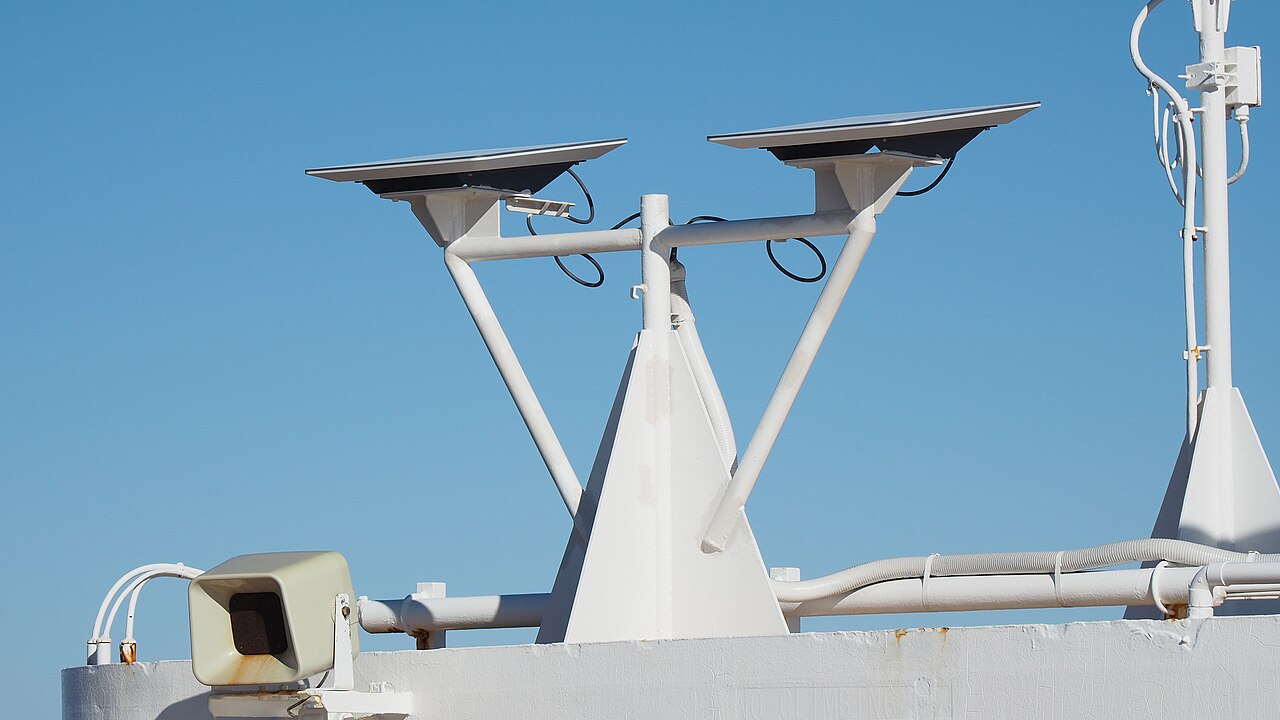
Photograph of Starlink flat-panel antennas on a ship, "Starlink Dish 20250111 101122.jpg", by Ka23_13, via Wikimedia Commons, licensed CC BY 4.0. Reviewed visually; used as an illustration of Starlink hardware only. See credits.md in the image folder.