On September 26, 2026, xAI extended its Grok assistant into one of the most sensitive corners of a person's digital life: their money. Through a new Finance integration, US users can link bank, card and investment accounts and then ask Grok about their spending, savings, holdings and cash flow, with answers grounded in real account data rather than generic advice. Elon Musk amplified the announcement the same day, and it builds on an earlier integration with Plaid, the connectivity layer that many fintech apps already use to link accounts.
The feature is a clean example of a broader shift: general-purpose AI assistants moving from answering questions to plugging directly into the systems that run daily life. That makes it worth a careful, neutral look, both at what the integration usefully does and at the questions any reader should ask before connecting a bank account to a chatbot.
 GrokxAI
What was actually launched
The mechanics are more modest than the headline. Grok is not being handed the keys to your accounts. Account linking runs through Plaid, the same permissioned connection used across the fintech world, and the access it grants Grok is read-only. You authenticate with your own bank through Plaid rather than typing bank credentials into the AI, and Grok then receives read access to account and transaction data so it can answer questions about your finances.
Read-only, brokered by Plaid: what the link actually grants
The chatbot does not receive your banking password. It receives read access to account data through Plaid's permissioned connection, the same plumbing many fintech apps already use.
Where your accounts and balances actually live.
The permissioned link layer. You authenticate with your bank, not with the AI. Credentials are not handed to a third party.
Receives read-only account and transaction data to answer questions. It can see, but on this integration it cannot move money.
Trust model as described by The Paypers and Plaid, September 2026.
The distinction the diagram draws is the one that matters most. Read access is not control. On this integration, Grok can see balances and transactions to reason about them, but seeing is a different permission from moving money, which would require separate and explicit authorization. Keeping those two capabilities apart is the single most important safety property of the current design, and it is worth understanding clearly rather than assuming the worst or the best.
Why this is genuinely useful
The upside is real and easy to state. Most personal-finance questions are annoying precisely because the data is scattered across apps and statements. "How much did I actually spend on subscriptions last quarter?" or "what is my cash position across these three accounts?" are questions that normally require exporting spreadsheets. An assistant with read access to the underlying accounts can answer them conversationally, and it can do so grounded in the user's real numbers instead of hand-waving.
The value is turning scattered account data into a plain-language answer. The risk is that the same access makes a chatbot a richer target.
The trade at the center of connected AI finance
This is the same logic that made ambient tools valuable elsewhere: the model earns its place by removing tedious retrieval, not by making decisions. For budgeting, spotting recurring charges, or getting a quick read on cash flow, a grounded assistant is a legitimately better experience than a generic chatbot guessing at your situation.
The questions worth asking before you connect
A neutral treatment has to give the concerns equal airtime, because connecting financial accounts to any AI raises real ones.
- Where does the data go, and is it used for training? The most important setting is whether the conversation and the financial data it contains are stored or used to improve models. Privacy controls that govern chat retention become far more consequential once the chat can contain your transaction history. This is a setting to check, not assume.
- Read-only is a property of today's design, not a law of nature. The current integration is read-only, which is reassuring. But the industry-wide direction is toward agents that act, not just observe, and any future move from reading balances to initiating payments would be a categorical change in risk that deserves its own scrutiny.
- Concentration and target value. An assistant that can see your full financial picture is more useful and, by the same token, a more valuable thing for an attacker to compromise. Linking accounts to any single service concentrates sensitive data behind that service's security.
None of these is a reason the feature should not exist. They are the ordinary diligence that connecting money to software has always required, now applied to a chatbot instead of a banking app.

The bigger pattern: assistants that connect, not just chat
Grok's finance feature is one instance of a trend running across every major assistant: the value is shifting from the quality of a model's answers to the breadth of what it can connect to. An assistant that can reach your accounts, calendar, files and email is more useful than one that only talks, and that connective reach is quickly becoming the competitive battleground.
That shift raises a design question that outlives any single feature: how much of your life should route through one company's assistant. Concentrating everything behind a single provider is convenient until that provider changes terms, has an incident, or simply is not the best tool for a given job. The alternative philosophy keeps the connective tissue portable, letting a person use the best model for a task without re-plumbing their whole digital life each time. A model-agnostic workspace such as Metir AI reflects that view, treating the model as a component you can swap rather than a single front door everything must pass through. Which philosophy a person prefers is a genuine choice, and it is worth making deliberately rather than by default.
The takeaway
Grok linking to bank, card and investment accounts through Plaid is a meaningful step in the shift from AI that answers to AI that connects, and its current design is more careful than the headline suggests: access is read-only and brokered by the same permissioned layer fintech already relies on. The utility is real, and so is the diligence it warrants, chiefly around data retention, the read-only boundary holding, and how much of one's financial life should sit behind a single assistant. Connected AI is genuinely more useful than the chat-only kind. It also asks more of the user, and the sensible response is to connect deliberately, check the settings, and keep the option to walk away.
Use the best model without routing your whole life through one door
Connected AI is powerful, but concentration is a risk. Metir AI keeps your work portable across the leading models in one workspace, so you can pick the right tool for each task instead of committing everything to a single assistant. Try Metir AI free.
Sources:
- Grok integrates with Plaid for financial data | The Paypers
- Grok Bot's Finance Integration Puts AI Inside Your Bank and Brokerage | 24/7 Wall St.
- Grok (chatbot) | Wikipedia
- What is Plaid and how does account linking work | Plaid
Image credits
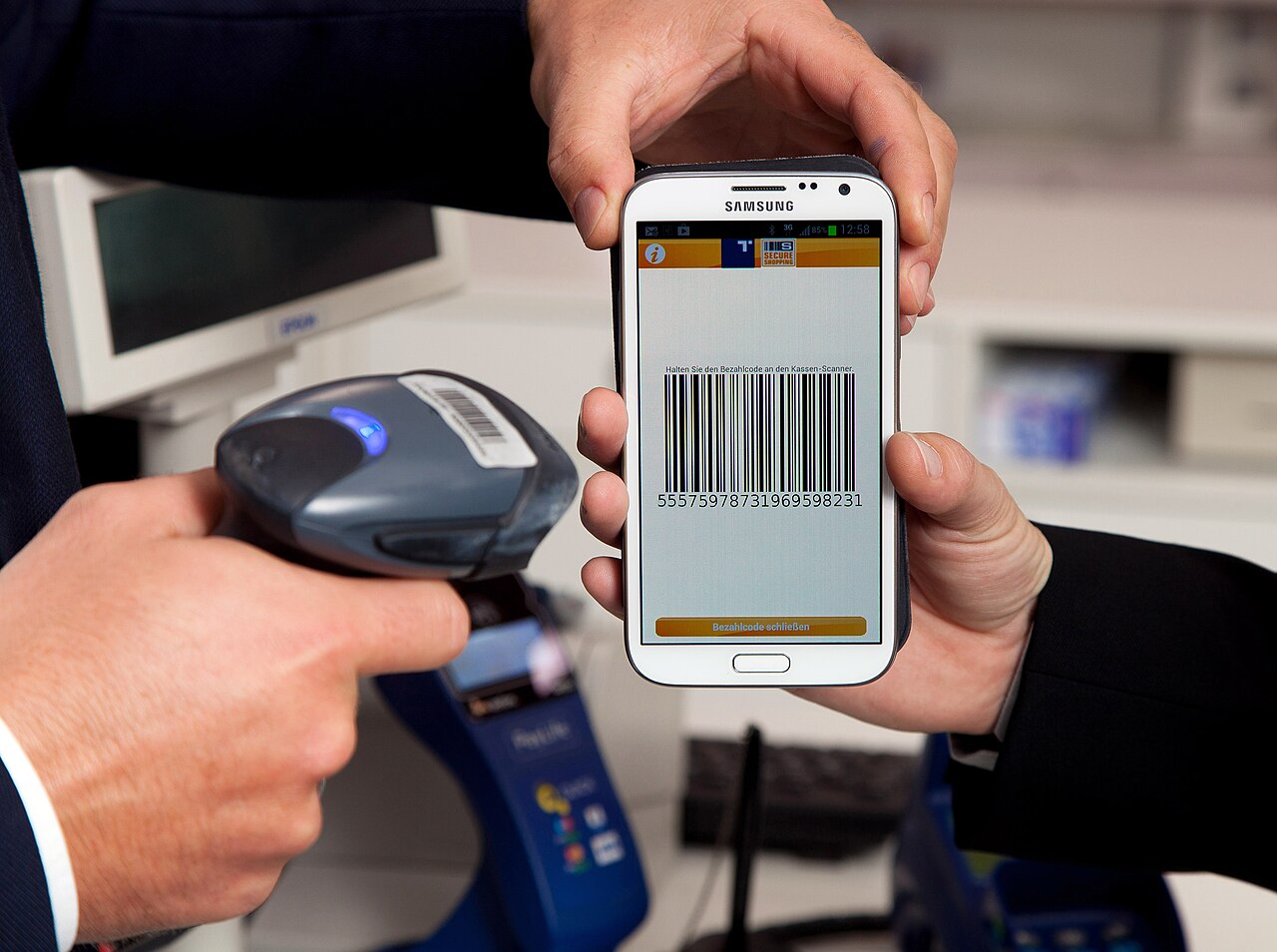
Header image: a mobile payment being made with a smartphone at a checkout, CC BY-SA 3.0, via Wikimedia Commons. In-body image: an M-Pesa mobile-money sign at a merchant, CC BY-SA 3.0, via Wikimedia Commons.