On October 23, 2026, Grok's account on X posted what it called "Episode 1 of our Odyssey series," an AI-generated retelling of Homer's epic. TechCrunch reported on October 25 that the episode runs seven minutes and was made with Grok Imagine in collaboration with Wonder Studios and director Dev Walker. This article separates what was released from what was promised, runs the production arithmetic that the available pricing allows, and notes how it was received.
 xAI
What was released
Startup Fortune reports that the clip runs 7 minutes 12 seconds, is rendered in 4K, and uses English dialogue and not Homeric Greek. It is framed as the first chapter of an ongoing series. xAI has not identified the model version used or disclosed the production cost, according to the same report. TechCrunch adds that the post invites viewers to ask for a breakdown of how it was made.
The promise it is measured against
TechCrunch says Elon Musk had earlier stated that Grok would release a full-length, "historically accurate" film version. Startup Fortune dates that statement to July and quotes the goal as a version "historically accurate and true to the art of Homer" before the end of 2026. With roughly two months left, a seven-minute first episode is a partial step toward a feature-length output, and the series framing leaves open how many episodes will follow. Neither outlet reports a release schedule.
The pricing arithmetic
Per-second API prices for Grok Imagine Video 1.5 are reported by Wavespeed, citing xAI's rate card as checked on September 10, 2026, as $0.08 at 480p, $0.14 at 720p and $0.25 at 1080p. Startup Fortune reports the same rates. We could not confirm them on an official xAI page, and the 1080p rate appears in only one independent listing, so treat the figures as reported.
Applying those rates to 432 seconds of final footage gives the chart below. This is a floor for the generation of the shipped seconds only. It excludes rejected takes, upscaling to 4K, sound, editing and the labor of Wonder Studios and the director, and it assumes the episode was produced at these list rates, which xAI has not said.
Reported list-rate price of 7 minutes 12 seconds of final footage
Illustrative arithmetic: reported Grok Imagine Video 1.5 API rates times 432 seconds. Excludes discarded takes, editing and labor.
Rates are secondary-source reports of xAI list prices; xAI has not said how Episode 1 was produced or billed.
A second constraint matters more than price. Startup Fortune reports that clips are capped at 15 seconds. At that cap, 432 seconds requires at least 29 separately generated clips (432 divided by 15 is 28.8), and any continuity between them, such as a character's face or a ship's rigging, has to be maintained by prompting, reference images and editing. That is where production effort likely concentrates, and it is the plausible subject of the "breakdown" xAI offered to publish.
The cost curve of generating a second of footage is falling faster than the cost of making it feel like a film.
Analysis: what the arithmetic does and does not show
Scale against the conventional alternative
TechCrunch notes that Christopher Nolan's live-action The Odyssey, released in July, is nearly three hours long, was shot across six countries with thousands of cast and crew, and has been a major box office success. Startup Fortune adds a reported $264.1 million global opening and a reported budget of $200 million to $250 million. By simple arithmetic, seven minutes is under 4 percent of a three-hour runtime.
The comparison is not like for like, and the numbers do not support a claim that one approach replaces the other. A reported production budget includes cast, crews and distribution, none of which an API price covers. What the comparison does show is where a generative pipeline is competing: on the cost of producing individual shots, with the harder problems of story, performance and continuity unpriced.
How it was received
TechCrunch's Anthony Ha reviewed the full episode. He found the footage better than expected and more impressive than recent AI videos Musk has posted, and said some shots could pass for real footage. He also wrote that it lacked "artistry, inspiration, or human interest," described the dialogue as stilted and the narrator's British accent as an oddity for a story set in ancient Greece, and called the result "completely airless." He concluded it is hard to imagine being interested in a full movie's worth of the same.
The review is a single critic's assessment, and early reactions to a first episode are weak evidence about a series. Still, the split it describes, strong individual shots and weak sustained narrative, matches the constraints above: generation quality is a per-clip property, while pacing and performance are properties of an assembled whole.
What to watch
- The breakdown. If xAI publishes how many clips, takes and edit hours went into Episode 1, the cost question becomes answerable.
- Further episodes. Whether later episodes show consistent characters across scenes.
- The year-end target. Whether a full-length version appears by December 31.
- Model disclosure. Which Grok Imagine version produced the footage.
For creators evaluating AI video, the practical takeaway is that several video models now compete on price per second, resolution and reference control. Because those leaders change quickly, teams often keep their workflow portable across providers, the same model-flexible approach behind platforms such as Metir AI. For xAI's own recent video model, see our look at Grok Imagine Video 1.5.
Sources:
- Grok releases the first seven minutes of its AI-generated 'Odyssey' | TechCrunch
- Grok Releases Seven Minutes of Its AI-Made Odyssey Series | Startup Fortune
- Grok Imagine Video Pricing and Cost per Clip | Wavespeed
Image credits
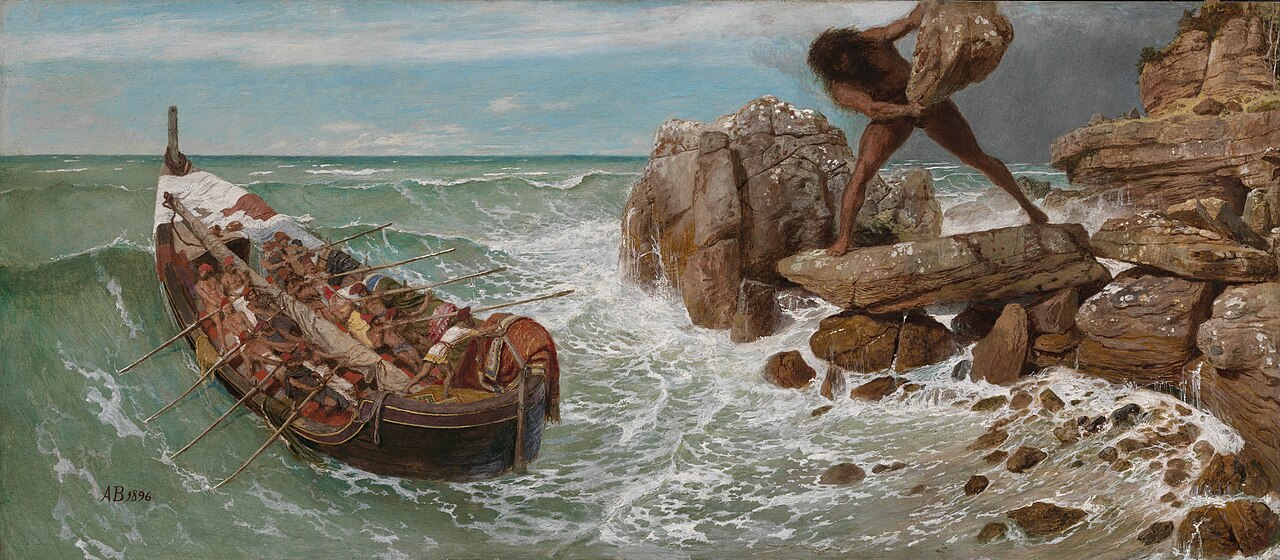
- Hero and in-body: "Odysseus and Polyphemus" (1896) by Arnold Böcklin, Wikimedia Commons, public domain. Reviewed visually before use.