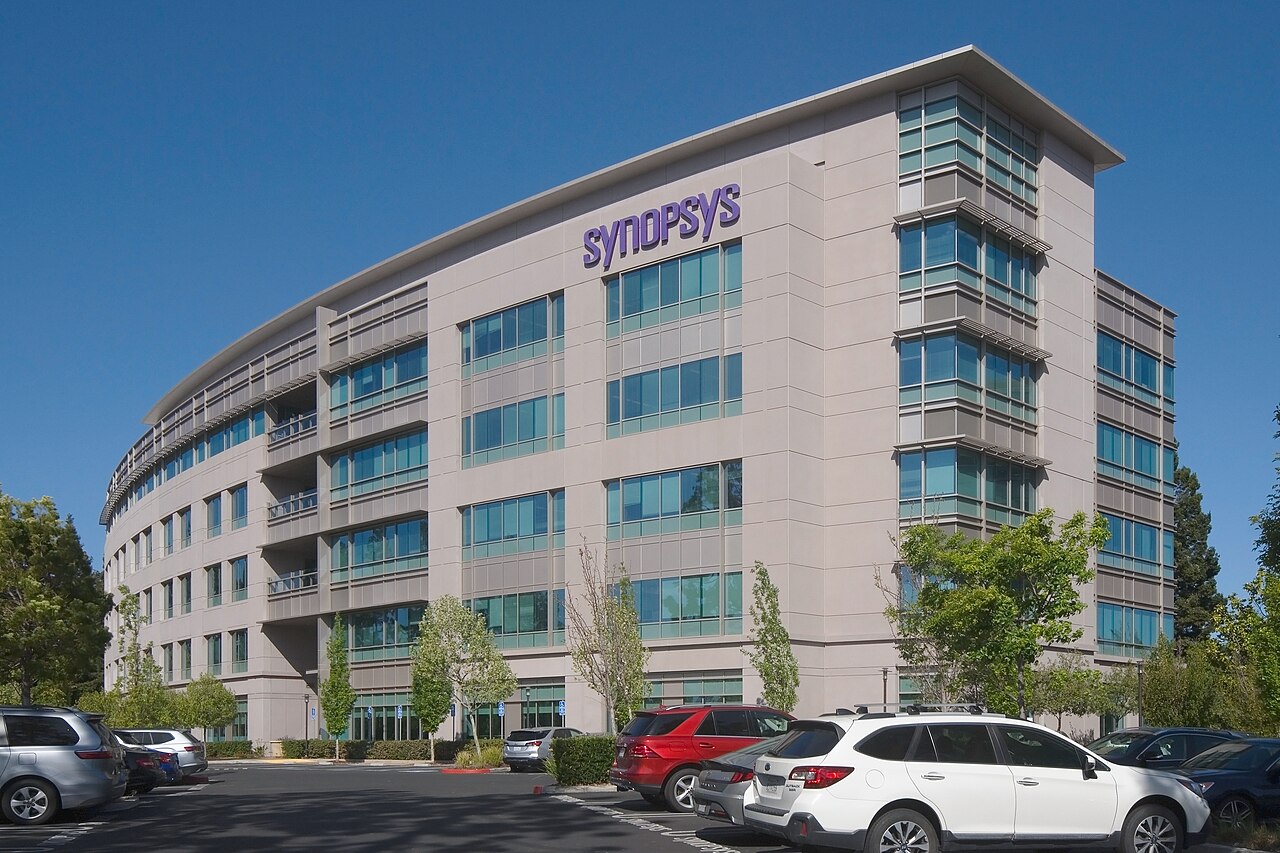
On September 30, 2026, OpenAI and Synopsys announced GPT-Synopsys, a specialized model meant to reason about chip design and verification and to directly operate Synopsys' electronic design automation (EDA) tools. The announcement matters less as a product launch, which has no stated date, than as a test of whether AI agents can handle one of the most tool-heavy workflows in engineering.
 OpenAI
What OpenAI and Synopsys announced
According to the Synopsys press release, the two companies signed a multi-year strategic agreement. OpenAI will license Synopsys' EDA tools to develop the model, the companies plan joint go-to-market work, and The Decoder reports the arrangement includes revenue sharing. No financial figures were disclosed.
Other stated details:
- GPT-Synopsys will run on OpenAI-hosted infrastructure.
- It is designed to integrate with customer agent systems and the Synopsys.ai Autopilot platform.
- Customer data is not used to train the model and is encrypted at rest and in transit.
- Early technology engagements are underway with leading semiconductor customers, who were not named.
Synopsys CEO Sassine Ghazi said the agreement will expand access to Synopsys' design capabilities. OpenAI President Greg Brockman said the work would help engineers "explore more designs and get to a working chip faster."
Why EDA is a hard domain for AI agents
Chip design is not a single prompt and answer. It is a chain of specialized tools, each producing long reports that a human reads before changing an input and running the tool again. An agent has to do the same: operate the tool, interpret the output, decide what to change, and repeat. That tool-use loop is what the announcement describes, with engineers delegating objectives and reviewing outputs.
Two features make this harder than most agent work:
- Long cycles. A synthesis, place-and-route or verification run is not instant, so each iteration is expensive and an agent cannot cheaply guess its way to an answer.
- Competing goals. Chip designers trade off power, performance and area (PPA) while closing timing and verification. Improving one number often worsens another.
Where a tool-operating model slots into the flow
Every stage is a loop: run a tool, read a long report, change an input, run again. A failure late in the flow can send work back to an earlier stage.
- Stage 1RTL and architectureDesign entryAgent loopDraft and revise RTL against a spec
- Stage 2Functional verificationSimulation, formalAgent loopWrite tests, read failures, patch RTL
- Stage 3Logic synthesisDesign Compiler classAgent loopTune constraints, read PPA reports
- Stage 4Place and routeFusion Compiler, Innovus classAgent loopAdjust floorplan, rerun, compare PPA
- Stage 5Timing and power signoffPrimeTime classAgent loopTriage violations, apply fixes, recheck
- Stage 6Physical verificationCalibre classAgent loopClear rule violations before tape-out
Illustrative. Stages follow the standard flow; agent loops are analysis, not a published GPT-Synopsys specification.
The diagram above is illustrative. Its stages follow the standard flow described in SemiAnalysis' EDA primer, which names synthesis, place and route, signoff timing and physical verification as distinct tool categories. The agent loops are our analysis of where a tool-operating model could fit, not a published GPT-Synopsys specification.

The EDA market structure
EDA is concentrated. SemiAnalysis puts the market at roughly $18 billion in 2025, with Synopsys, Cadence and Siemens EDA holding more than 85% combined. It also credits Synopsys with 84% to 85% of synthesis and more than 90% of signoff timing, while Siemens' Calibre is effectively required by foundries for physical verification.
Reported scale confirms the picture. Synopsys posted fiscal 2025 revenue of $7.054 billion, of which Ansys contributed $756.6 million after the $35 billion acquisition closed on July 17, 2025. Cadence reported fiscal 2025 revenue of $5.297 billion and a $7.8 billion backlog.
This structure explains the deal shape. The incumbent owns the tools and the workflow knowledge, while OpenAI brings the model. SemiAnalysis also notes licensing is shifting from seats toward token and capacity models, which would suit usage-driven AI tooling.
AI designing the chips AI runs on
There is a loop here. OpenAI is also working with Broadcom on AI-specific chips, so a model that speeds chip design could shorten the path to more AI hardware. Brockman framed it as "a path to better chips and better AI." Whether the model delivers measurable gains in PPA or verification closure is unproven, since no benchmarks or customer results have been published.
Vertical models as a trend
GPT-Synopsys fits a broader pattern: general frontier models paired with domain tools and domain data, sold with the incumbent software vendor. The trade-off is familiar to anyone choosing between models. A specialized model can be better inside one workflow, while a general one covers more tasks, which is why platforms such as Metir keep several models available rather than committing to one.
What to watch
- Named customers and published PPA or verification results.
- Availability and pricing, neither of which has been announced.
- Whether Cadence and Siemens EDA respond with their own model partnerships.
Sources:
- Synopsys: OpenAI and Synopsys Announce GPT-Synopsys
- The Decoder: OpenAI and Synopsys team up to build an AI model that designs chips
- SemiAnalysis: EDA Market Primer
- Synopsys 8-K, fiscal 2025 results (SEC)
- Cadence: Fourth Quarter and Fiscal Year 2025 Results
- DCD: Synopsys closes $35bn acquisition of Ansys
Image credits
- Header image: Synopsys headquarters, Mountain View, by User:LPS.1, via Wikimedia Commons, CC0.
- Silicon wafer: "Silicon wafer close view" by Le hollandais volant, via Wikimedia Commons, licensed under CC BY 4.0.