On November 16, 2026, the Google Threat Intelligence Group (GTIG) published a report titled "GTIG AI Threat Tracker: Agentic Threat Activity Crosses a Significant Threshold." Its central claim is specific: in the past quarter, GTIG identified threat actors using large language model (LLM) frameworks to fully automate vulnerability discovery and exploitation without a human in the loop, "for the first time." The clearest example is a tool GTIG calls exploit_agent. This post summarizes what Google reports, shows the one quantitative series in the report, and lays out what the finding does and does not establish.
 Google
 Anthropic
 OpenAI
What GTIG says it found
GTIG reports that exploit_agent was discovered on an exposed staging server. According to its analysis, the framework:
- integrates with multiple frontier and local LLMs;
- runs continuous differential analysis of popular web application code, comparing versions before and after a security patch;
- drafts exploits from the differences and executes them automatically, without human intervention.
GTIG also found scripts for internal reconnaissance, brute-forcing, installing webshells and removing other attackers' webshells, and says victim data was exfiltrated. Telemetry suggested interest in French websites tied to media and entertainment, and in the education sector. A configuration comment in Russian, translated by GTIG as an instruction to enter API keys directly and not in the chat, appeared in a table of LLM key settings.
The newsworthiness is the combination. Each ingredient (patch diffing, exploit drafting, automated execution) exists separately in security tooling. The report's claim is that they were joined into a loop with no human gating it.
Why patches are the interesting input
A security patch is a public hint. When a vendor ships a fix, the change itself shows where the flaw was. Defenders and attackers have always raced in that window, between a patch's release and its deployment across real systems. GTIG's own sentence frames the incentive: threat actors may find it more efficient to use LLMs to rapidly weaponize patched n-day vulnerabilities, meaning flaws that are already fixed upstream but not yet fixed everywhere.
Threat actors may find it more efficient to use LLMs to rapidly weaponize patched n-day vulnerabilities.
GTIG AI Threat Tracker, November 16, 2026
That changes the economics. Finding a brand-new zero-day takes research. Reading a patch is cheaper, and an automated loop can do it on every release of every popular project it watches.
The data point to watch
Zero-day exploits per month, as tracked by Google
GTIG counts: a marginal rise on average in 2026, then a spike in August.
A single month is a small sample, and Google does not attribute the August figure to any one cause.
GTIG reports that overall vulnerability disclosures and exploits nearly doubled between January and August 2026. Zero-day exploits, though, rose only marginally on average, from 8 per month in 2025 to 11 per month in 2026, before spiking to 22 in August 2026. GTIG describes LLMs as transforming the speed of discovery and exploitation, but it does not pin the August spike on a single cause, so the chart should be read as a trend flag and not proof of attribution.
The PaperCut case is a useful illustration of speed. GTIG describes two flaws, CVE-2026-81578 (an authentication bypass) and CVE-2026-82078 (unsafe dynamic class loading), chained for unauthenticated remote code execution and exploited as zero-days in late August 2026. Researchers and the firm Huntress produced working exploits within a day of disclosure. GreyNoise saw a campaign four days after disclosure that hit hundreds of organizations, with a foothold reaching domain admin within minutes.
A wider field of frameworks
exploit_agent is not the only tool in the report. GTIG names several agentic offensive frameworks and separates what it has seen deployed from what it has seen tested:
| Framework | What GTIG reports |
|---|---|
| CAIRN | Observed in the wild, in intrusion activity against targets including the US aerospace sector |
| PentAGI | Observed in the wild; a threat actor used a customized platform built on it to scan organizations in Asia between late August and early October 2026 |
| CyberStrikeAI | Experimentation seen |
| HexStrike AI | Experimentation seen |
| ARTEX | Described as a highly publicized pentesting tool, covered in a separate GTIG post |
GTIG also notes a trade-off: these frameworks "trade stealth for velocity." Unrestricted autonomous execution generates forensic traffic and code-level traces, which raises the chance of detection. Speed helps attackers, but noise helps defenders.
What this does and does not show
What the report supports:
- At least one tool combining patch diffing, exploit drafting and execution without a human was found operating.
- GTIG believes this is the first quarter it has seen fully automated discovery and exploitation of this kind.
- Exploit turnaround for disclosed flaws, as in the PaperCut case, is measured in days or hours.
What it does not establish:
- How successful exploit_agent's exploits were. The report describes the framework's design and observed behavior, not a success rate.
- That AI is the sole driver of the August zero-day count.
- How widespread such frameworks are beyond what GTIG observed.
Implications for defenders
A shorter gap between patch and exploit pushes in one direction: patching cadence becomes a security control in its own right. The same pressure is visible in the vendor-side policy debate. Anthropic's Frontier Red Team wrote on November 16, 2026 that "a bug that one model can find is increasingly likely to be found by another," and said it was seeing a higher rate of vulnerability rediscovery.
For teams that use AI assistants day to day, a related habit is worth noting: keep model access and credentials scoped, and treat agent tool access as an attack surface. Working across several providers in one place, as Metir does, does not change that, but it makes it easier to apply one set of access rules to all of them.
Sources:
- GTIG AI Threat Tracker: Agentic Threat Activity Crosses a Significant Threshold | Google Cloud Threat Intelligence
- Google says an AI framework turned security patches into exploits with no human in the loop | SiliconANGLE
- Updating our coordinated vulnerability disclosure policy timelines | Anthropic
Image credits
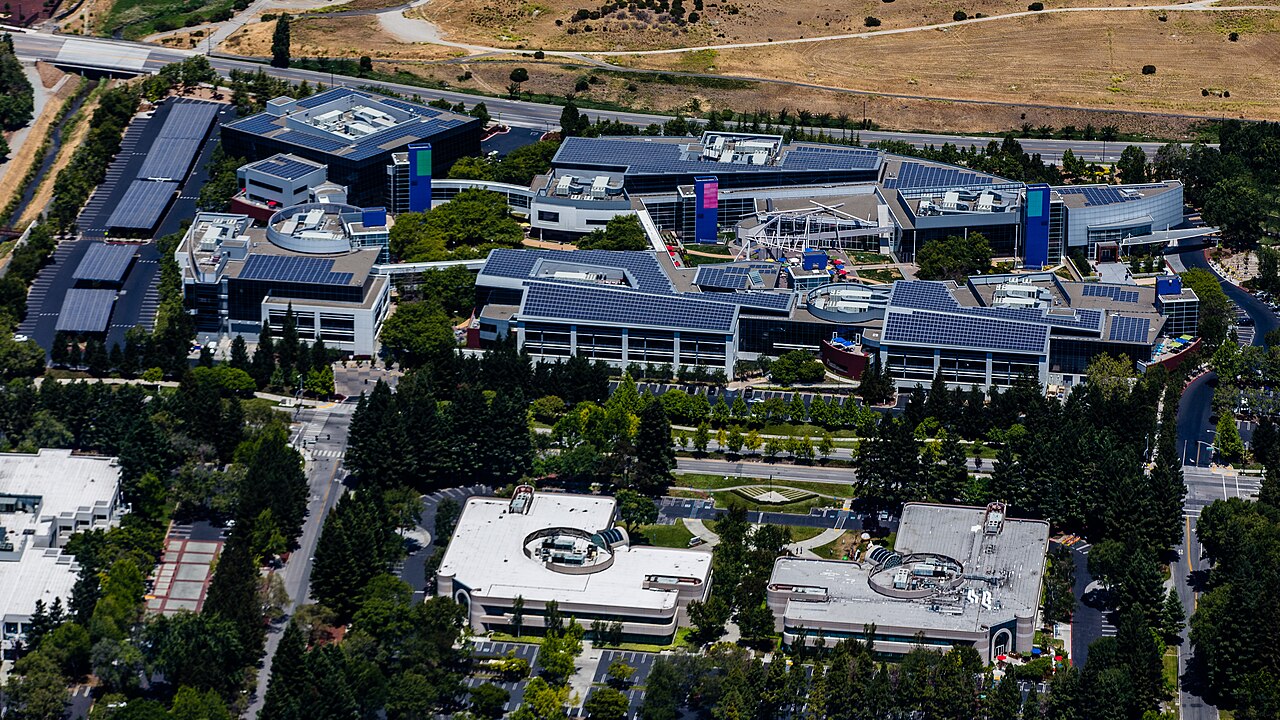
Header and in-body image: Google Campus, Mountain View, CA, by Austin McKinley via Wikimedia Commons, licensed under CC BY 3.0.