On August 20, 2026, Google DeepMind said its Gemma family of open-weight models has passed 1 billion cumulative downloads, with outside developers publishing more than 100,000 distinct Gemma variants on top of those weights. The figures were disclosed by Clement Farabet, a vice president at Google DeepMind, and product director Olivier Lacombe, in a post titled "Inside the Gemmaverse," the first time Google has put a cumulative total on Gemma adoption since the family launched in early 2024.
 Gemma
Gemma Google
 Meta
Meta Qwen
Qwen DeepSeek
What Google Actually Announced
The headline number is a download count, not a usage count or an active-deployment count. Google's post frames it as a measure of reach: 1 billion cumulative downloads of Gemma model weights since the family's debut, spanning every size and generation from the original Gemma through Gemma 4, released in April 2026. Alongside that, Google says the developer community has produced more than 100,000 distinct variants, fine-tunes and derivatives adapted to specific languages, tasks, and hardware targets, built on top of the base weights.
Gemma's cumulative downloads, reported through 2026
Google DeepMind reported 500 million-plus cumulative Gemma downloads the week Gemma 4 launched in April 2026, about 900 million by late July, and one billion as of the August 20, 2026 announcement.
Figures are as reported by Google DeepMind and press coverage; Google has not published a full download time series.
Google DeepMind had previously disclosed intermediate numbers rather than a single running total. The company said Gemma 4 drew more than 10 million downloads in its first week and pushed the family's overall count past 500 million shortly after its April 2026 launch. By late July 2026, reporting put the cumulative figure at about 900 million, with Gemma 4 alone accounting for more than 300 million of that since launch. The jump from roughly 900 million to 1 billion over the following month lines up with that trajectory rather than representing a sudden spike.
What "Downloads" Does and Doesn't Measure
A download is a weak proxy for usage. It counts every time a model's weights are pulled from a repository like Hugging Face or Kaggle, whether that pull becomes a production deployment, a one-off experiment, or a file downloaded once and never run again. It doesn't distinguish a phone-sized Gemma variant from a much larger model pulled for a data-center deployment, or a single download from a model re-fetched repeatedly by an automated pipeline.
What matters far more than the download count is what the community is building with them.
Google DeepMind, "Inside the Gemmaverse"
Google's own framing leans into that caveat, pointing to specific deployments as the more meaningful signal. India's National Health Authority integrated Gemma 4 into the Aarogya Setu 2.0 app, which has more than 100 million Android downloads of its own, to help standardize medical records. MedGemma supports clinical applications at AIIMS in India and at rural health facilities in Uganda. A Yale and Google research collaboration called C2S-Scale used a Gemma-based model to help identify a novel cancer therapy pathway in single-cell data. DolphinGemma, built by Georgia Tech and the Wild Dolphin Project, analyzes dolphin vocalizations to help predict sound sequences.
The most unusual example is in orbit. NASA's Jet Propulsion Laboratory flew a 4-bit compressed version of Gemma 3 4B aboard a Loft Orbital satellite, reported by IEEE Spectrum on July 23, 2026 as the first in-orbit demonstration of a vision-language model analyzing imagery captured by a satellite's own sensor; the system reached 88 percent accuracy on a benchmark set of nearly 8,000 images. Separately, teams at NASA, satellite startup Satlyt, and orbital-compute company Starcloud run Gemma models directly on satellites for onboard image analysis and inter-satellite routing, chosen for those jobs specifically because bandwidth and onboard compute are both scarce in orbit.
Why Google Runs an Open Line Alongside a Closed One
Gemma sits deliberately apart from Gemini, Google's flagship closed model family available only through API and consumer products. Gemma's weights are downloadable and can be fine-tuned, modified, and self-hosted under Google's usage terms, a structure it shares with Meta's Llama, Alibaba's Qwen, and models from DeepSeek and other Chinese labs, rather than with the closed approach OpenAI and Anthropic take with their flagship models.
 Gemini
The economic logic for a lab running both is not really about direct revenue from the open line. Open weights are typically a distribution and mindshare play: they lower the barrier for developers, researchers, and enterprises to build on a company's models rather than a competitor's, and each fine-tune deepens familiarity with that lab's tooling and cloud services, particularly when the eventual production system still runs on Google Cloud. A large, active developer base building on Gemma also surfaces real-world use cases and edge deployments a closed-only strategy would miss. The tradeoff is that once weights are public, a lab gives up direct control over how a model gets used, and downloads don't translate into revenue the way metered API calls do.
Google has not published a like-for-like download comparison against Llama, and Meta has reported its own adoption milestones on a different timeline and methodology, so a direct head-to-head claim isn't something either company's own disclosures support. What is fair to say is that Gemma has joined Llama, Qwen, and DeepSeek's models in a small group of open-weight families that have each individually crossed hundreds of millions to billions of cumulative downloads, evidence that the open-weight tier of the AI market has real scale, running alongside the closed-API tier where Gemini, GPT, and Claude compete.
What 100,000-Plus Variants Signals
The variant count is arguably the more interesting number of the two. A base model download is a single event; a published variant represents someone taking that base and doing enough work on it, a language fine-tune, a hardware-specific quantization, a domain adaptation for medicine or law, to think it's worth publishing back. More than 100,000 of those existing on top of one model family points to an ecosystem with genuine depth rather than a single popular download inflating the count. That said, variant counts share some of the same weaknesses: hubs like Hugging Face don't distinguish a carefully evaluated fine-tune from an abandoned upload nobody touches again, so the honest reading is that Gemma has real reach and a real derivative ecosystem, without either number proving how much of that reach converts into production systems people depend on daily.
Market Reaction
Alphabet shares (GOOGL) were reported down modestly, around 1.3%, on the day of the announcement, alongside broader bearish retail sentiment noted on Stocktwits at the time. A billion-download milestone for a free, open product isn't the kind of news that moves a stock on its own, and the modest decline is more plausibly attributable to broader market conditions on the day than to the Gemma announcement itself.
The Bigger Picture
The milestone doesn't resolve the open-versus-closed debate in AI, and it isn't designed to. What it does confirm is that the open-weight tier of the market, where Gemma now sits alongside Llama and the fast-growing Chinese open-weight labs, has become large enough that a major lab is willing to headline it the way it would a flagship product launch. For developers and teams building AI systems, that growing open-weight option set is itself the useful takeaway: strong open and closed models increasingly coexist, and the right choice can depend on the task, the deployment target, and the cost profile rather than a single default. Working across model families without being locked into any one of them, open or closed, the way a platform like Metir AI does, is one way to take advantage of that competition rather than betting on a single provider's roadmap.
Sources:
- Inside the Gemmaverse: Celebrating one billion Gemma downloads | Google Blog
- Google's Gemma Open Models Pass 1 Billion Downloads as Variants Top 100K | Unite.AI
- Google's Gemma AI Models Surpass 1 Billion Downloads As Developers Build over 100,000 Variants, GOOGL Stock Slips | Stocktwits
- Gemma Model Family Surpasses 900M Downloads | CryptoBriefing
- NASA Puts Google's Gemma Large Language Model in Orbit | IEEE Spectrum
- Google DeepMind on X: Gemma 4 first-week and family download figures
- Starcloud | Wikipedia
Image credits
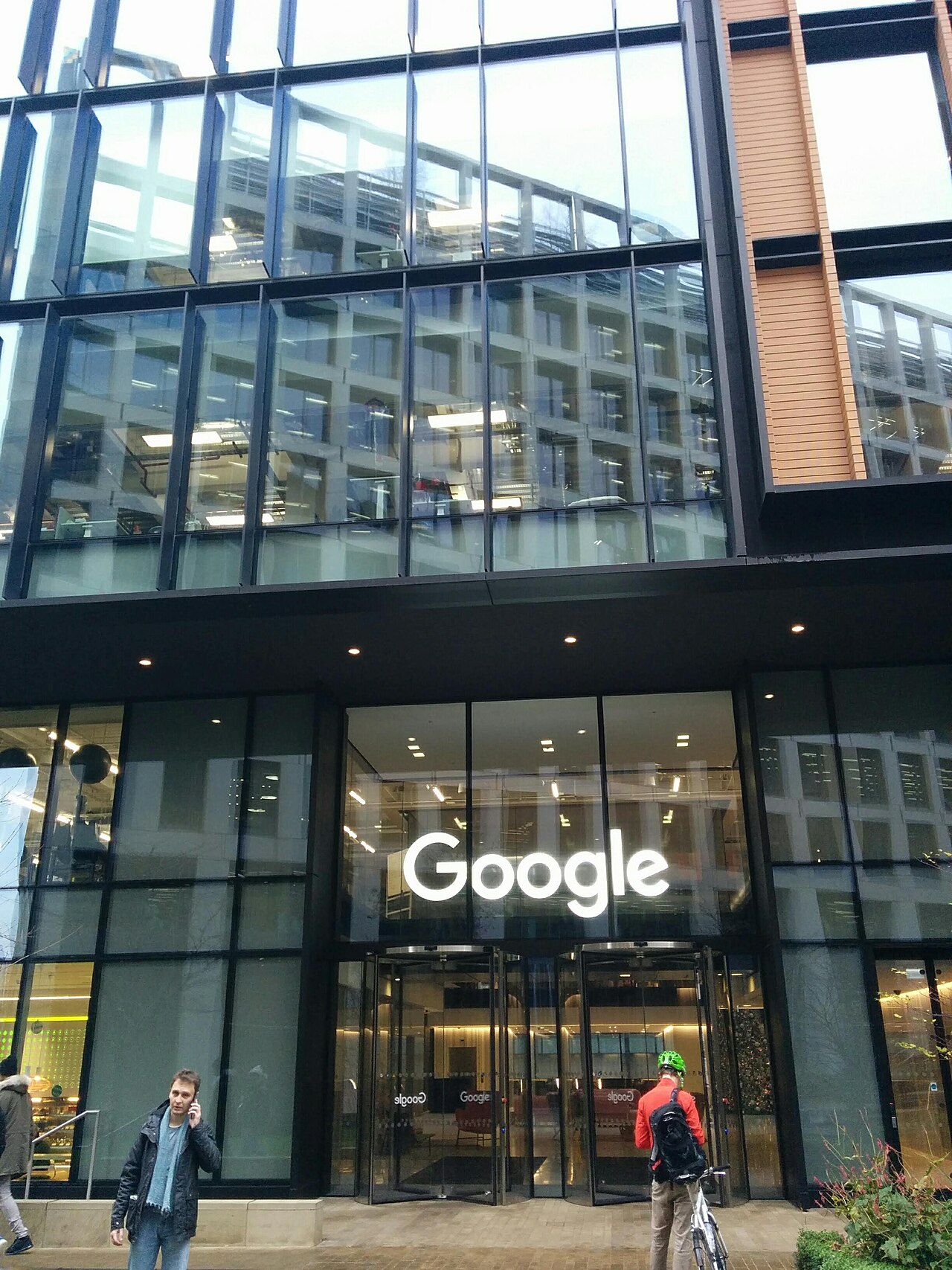
Header image: the entrance to Google DeepMind's headquarters at 6 Pancras Square, London, by Gciriani via Wikimedia Commons, licensed under CC BY-SA 4.0. In-body photograph of the Google sign at 1600 Amphitheatre Parkway, the Googleplex campus in Mountain View, California, by Hakan Dahlstrom via Wikimedia Commons, licensed under CC BY 2.0.