In the span of a few weeks in mid-2026, Google went from perennial frontier contender to the subject of a very public question: can it keep pace? Its most anticipated model, Gemini 3.5 Pro, slipped past its expected window to a reported mid-July target after what multiple outlets described as an architectural rebuild. Around the same time, several senior researchers left Google and Google DeepMind for Anthropic and OpenAI. Investors noticed, and Alphabet shed a large chunk of market value in a single session.
It is tempting to read all of this as a single narrative of decline. The more useful exercise is to separate the signals, weigh what each one actually means, and resist the pull of a tidy story. This piece does that.
What actually happened
Three threads converged. First, the model. Gemini 3.5 Pro, expected earlier in 2026, remained in limited preview into July, with reporting pointing to a mid-July target and a decision to rebuild rather than ship a version that reportedly struggled with structurally complex generation and recursive tool-calling. Its lighter sibling, Gemini 3.5 Flash, was already available, so this was a delay confined to the flagship tier, not the whole family.
Second, the people. A cluster of high-profile departures landed close together, including reporting that Gemini co-lead Noam Shazeer was heading to OpenAI and that DeepMind figures, among them John Jumper, whose AlphaFold work contributed to a 2024 Nobel Prize in Chemistry, were moving to Anthropic.
Third, the market. Alphabet shares fell sharply as investors digested the departures and the delay, wiping roughly 225 billion dollars off the company's market capitalisation in one session, according to reporting on the sell-off.
The talent question, weighed honestly
Where Google's senior AI talent went in mid-2026
Named, high-profile Google and Google DeepMind researchers reported to have moved to rival labs. This is a snapshot of publicly reported departures, not the full count.
Reported departures, mid-2026. Sources: TechCrunch, Bloomberg, Fortune. Shazeer's move to OpenAI and the DeepMind departures to Anthropic were reported across several outlets in June 2026.
A run of senior departures to direct competitors is a genuine signal. Frontier research is unusually concentrated in a small number of people, and the individuals involved worked on the training and coding capabilities at the heart of a modern model. When they move to Anthropic and OpenAI, both preparing for public listings and able to dangle equity, the loss is real and the timing is pointed.

But two caveats matter for anyone trying to read the tea leaves. The first is base rates. Google DeepMind employs a very large research organisation, and a handful of named exits, however senior, is not the same as a structural collapse of its bench. The second is direction of causation. Talented people leave strong labs as well as struggling ones, often because a rival offers more ownership, more autonomy, or a pre-IPO equity story that an established public company structurally cannot match. A departure wave is consistent with a lab in trouble, and it is also consistent with rivals simply paying up at a moment when going public makes recruiting cheap.
A departure wave is consistent with a lab in trouble. It is also consistent with rivals paying up at exactly the moment an IPO makes recruiting cheap.
The honest reading is that the departures raise the stakes of Google's next release without, on their own, settling whether Google can still ship at the frontier.
Why a delay is not automatically bad news
The delay invites the same discipline. On one reading, missing a window and rebuilding a nearly finished model is a warning sign about execution. On another, choosing not to ship a flagship that fails on complex, agentic workloads is exactly the judgement you would want from a lab that knows those workloads are where 2026 competition is decided.
The context sharpens the dilemma. This is the era of agents, where a model is judged less on a single answer and more on whether it can hold structure across long, tool-heavy chains of action. A flagship that reportedly broke down under recursive tool-calling is a flagship that would struggle precisely where buyers now look hardest. Shipping it on schedule might have protected the calendar while damaging the reputation. Delaying protects the reputation at the cost of the calendar, and hands rivals an open field for a few more weeks.
Neither choice is obviously correct. What the delay does reveal is that Google is optimising for the quality bar rather than the release date, which is a defensible priority even if it reads as weakness in the moment.
The market reaction says as much about expectations as about Google
A 225 billion dollar single-session move is enormous in absolute terms, and easy to mistake for a considered verdict on Google's AI future. It is better understood as a repricing of expectations. Alphabet had been valued partly on the assumption of frontier leadership and a steady release cadence. When two inputs to that assumption wobbled at once, the price adjusted quickly, as prices do.
That is not the same as the market concluding Google has lost the race. Markets overshoot in both directions on AI headlines, and a large one-day drop reflects how much optimism was priced in as much as it reflects new fundamental weakness. The cloud business, the distribution advantages, and the sheer depth of Google's research and infrastructure did not vanish in a session.
What builders should take from this
For teams building on top of AI, the episode is a reminder rather than a referendum. The frontier is now a multi-horse race in which any single lab can stumble on any given cycle, whether through a delayed flagship, a talent shock, or a benchmark miss. The order changes release to release.
The practical response is not to guess which lab will lead next quarter, but to avoid being hostage to the answer. A team that has wired its entire product to one provider inherits that provider's every stumble: its delays become your roadmap slips, its outages become your incidents, its price changes become your margin. A team that can route work across providers treats a delayed flagship as someone else's problem and simply sends the job to whichever model is strongest and available today.
This is the quiet case for model-agnostic infrastructure. A platform such as Metir AI brings the leading models from Google, OpenAI, Anthropic, xAI and others into one workspace, so a delay at one lab is a routing decision rather than a rewrite. The point is not to bet against Google, whose next release may well reclaim the lead, but to build so that no single lab's off week becomes yours.
The bigger picture
Read in isolation, each thread looks damning: a slipped flagship, a talent drain, a market rout. Read together and weighed against base rates, they describe a lab under real pressure that has not yet been shown to have fallen behind. The test is not the delay or the departures. It is the model Google ships next, and how it performs on exactly the agentic, tool-heavy tasks that its rivals are racing to own. Until that lands, the honest position is that the question is open, which is a more useful conclusion than the confident one the headlines invite.
Build so no single lab's off week becomes yours
The frontier lead changes hands release to release. The teams that stay steady are the ones that never hard-wired themselves to one provider. Metir AI puts the leading models together in a single workspace, so you can send each task to whichever model is strongest today and reroute the moment that changes. Try Metir AI free and build on the whole frontier, not one corner of it.
Sources:
- Google Delays Gemini 3.5 Pro to July 17 After Full Architectural Rebuild | BigGo Finance
- Gemini 3.5 Pro Targets July 17 After Full Rebuild | TechTimes
- AI researchers continue to leave Google for its rivals | TechCrunch
- As top talent leaves Google DeepMind, some question if the lab can remain at the forefront | Fortune
- Gemini 3.5 Pro Delayed to July 2026: What Developers Should Know | Bind AI
- Google Gemini 3.5 Pro Delayed to July 2026: $225B Wiped Off Alphabet | The Agent Report
Image credits
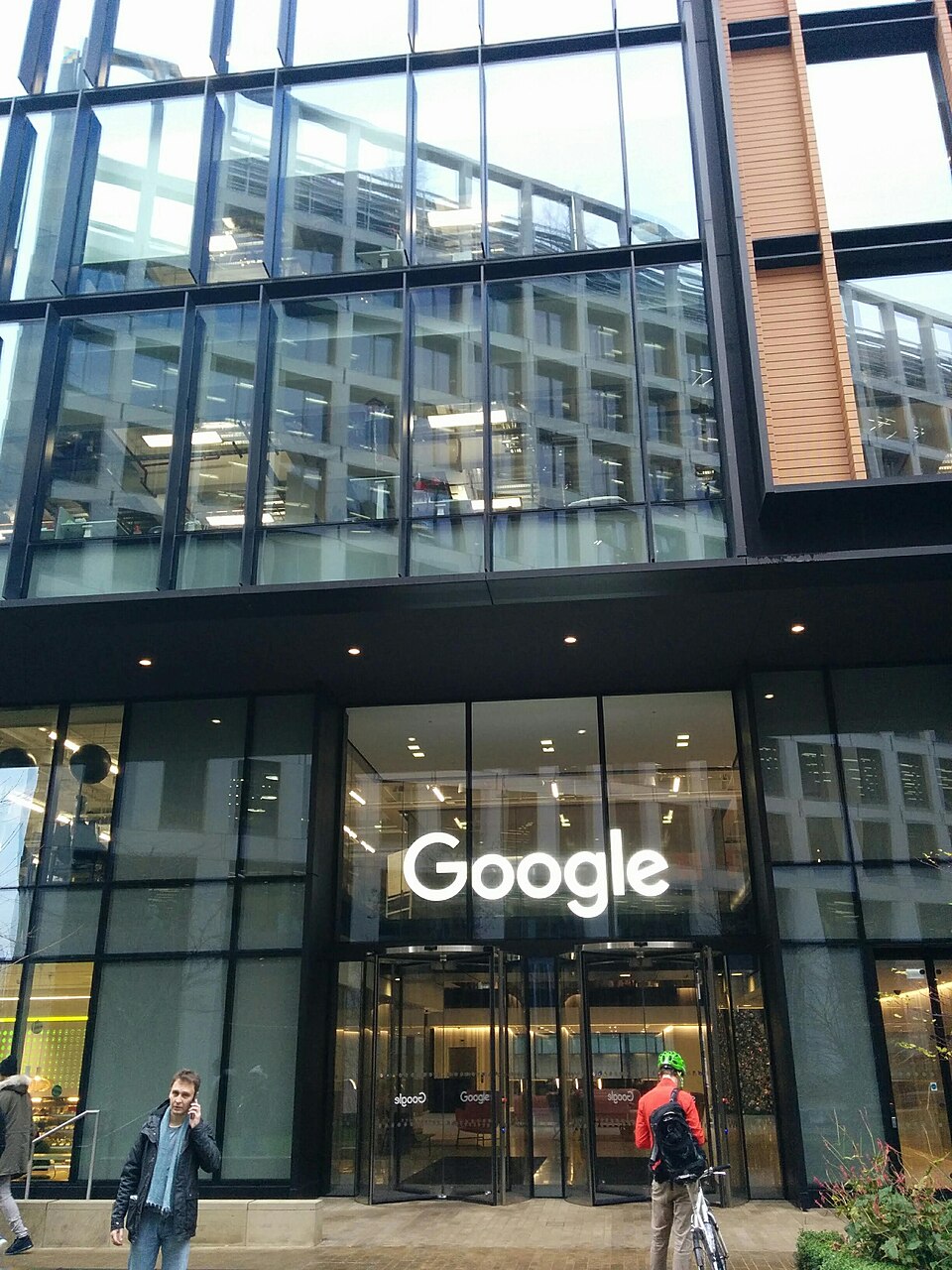
Header image: Google's building at 6 Pancras Square in London, which houses Google DeepMind, by Gciriani via Wikimedia Commons, licensed under CC BY-SA 4.0. In-body photograph of Demis Hassabis at Nobel Week 2024 by Jennifer 8. Lee via Wikimedia Commons, licensed under CC BY-SA 4.0.