
Most claims about how people use AI rest on surveys, anecdotes, or the assumptions of the people making the claim. In late July 2026, Google published something closer to measurement. Its AI and Economy ATLAS report, short for Activity, Task, Landscape and Adoption Study, analyzed 15 million de-identified interactions across the Gemini app, AI Mode and the Gemini API, spanning more than 150 countries, 140 languages, 800 occupations and 4,000 tasks. The findings complicate the dominant narrative about AI at work, and this piece walks through what the data shows, what it does not, and how to read a study a major AI vendor conducted on its own product.
 Google
 Gemini
The headline findings
The study's most striking result is how much AI use happens outside work. More than 86 percent of the interactions in the dataset occurred outside the workplace, with people using AI for household research, operating appliances, and personal administrative tasks. The image of AI as primarily a productivity tool for knowledge workers is, in this data, a minority of actual use.
Broad, shallow, and mostly assistive
Selected findings from Google's ATLAS study of 15 million Gemini interactions. AI reaches most jobs but touches only a fifth of tasks, and rarely automates them outright.
The share of workplace interactions that fully automate a task is under 10 percent; the rest augment a human who stays in the loop. Figures reflect Gemini products only.
Inside the workplace, the picture is one of broad but shallow adoption. AI use spanned 68 percent of occupations, representing roughly 90 percent of US employment, yet workers deployed AI tools for an average of only 21 percent of their core responsibilities. And of the workplace interactions analyzed, fewer than 10 percent involved complete task automation. People are reaching for AI across nearly every kind of job, but for a minority of their tasks, and mostly to assist rather than to fully automate.
Broad, shallow, and assistive
Three words capture the workplace picture: broad, shallow, and assistive. It is broad because AI use reaches across 68 percent of occupations rather than clustering in a few technical fields. It is shallow because within those jobs it touches only about a fifth of core tasks. And it is assistive because fewer than one in ten workplace interactions fully automates a task, with the rest augmenting a human who remains in the loop.
People are reaching for AI across nearly every kind of job, but for a minority of their tasks, and mostly to assist rather than to fully automate.
That combination matters for the automation debate, which often assumes a binary: either a job is automated or it is not. The ATLAS data describes a different reality, at least at this stage, in which AI is woven into many jobs at the level of individual tasks without wholesale replacing the roles that contain them. A worker who uses AI for 21 percent of their responsibilities has changed how they work without having their job eliminated. Whether that pattern is a stable equilibrium or an early waypoint on the road to deeper automation is the open question the data cannot yet answer, because a single snapshot shows the current state, not the trajectory.
The surprise in blue-collar work
One finding cut against expectations. The study found more AI use among workers in blue-collar and skilled-trade jobs than researchers had anticipated: electricians looking up wiring diagrams, auto-repair workers pulling engine maps, and similar practical lookups. The common assumption that AI adoption would concentrate among desk-bound knowledge workers turns out to understate how useful an on-demand, conversational reference is to people who work with their hands and need a specific answer quickly.
This is a useful corrective to a narrow mental model. If AI's practical value shows up wherever someone needs quick access to specialized information, then its reach extends well beyond the professions usually discussed in AI-and-work commentary. It also suggests that adoption is being driven bottom-up by individual usefulness rather than only top-down by corporate deployment, which is a different and in some ways more durable kind of adoption.
How to read a vendor's study of its own product
The value of ATLAS is that it measures real behavior at large scale rather than relying on what people say they do. The limitation is equally important to state: it measures behavior on Google's own products, analyzed and framed by Google. That does not make the findings wrong, but it does shape what they can and cannot support.
Two cautions follow. First, Gemini's user base may not be representative of AI users overall; people who reach for ChatGPT, Claude or an open-weight model for work could behave differently, and a heavily consumer-facing product mix would naturally show more non-work use. The 86 percent non-work figure is a real measurement of Gemini usage, not necessarily a universal law of AI use. Second, a vendor framing its own data has an interest in the story it tells, and a narrative of broad, assistive, non-threatening adoption is a comfortable one for a company selling AI. None of that implies the numbers are inaccurate; it means they should be read as a large, valuable, but partial window, ideally triangulated against studies from other providers and independent researchers rather than treated as the whole picture.
What the data implies for AI strategy
Set the caveats beside the findings and a practical implication emerges. If real-world AI use is broad but shallow, spread thinly across many tasks and many kinds of work rather than concentrated in a few automated workflows, then the highest-value posture for most organizations is flexibility rather than deep commitment to a single tool for a single use case. Value is being captured in many small places at once: a lookup here, a draft there, a summary somewhere else, across roles that look nothing alike.
Serving that pattern well favors access to a range of capabilities rather than a bet on one model for one narrow job, because the tasks are diverse and the best tool varies from one to the next. That is the case for a model-agnostic approach: giving people across an organization access to leading models and letting each task find the tool that fits it, which is the principle Metir AI is built around. When adoption is broad and shallow rather than narrow and deep, breadth of capability and ease of reaching the right model matter more than optimizing a single pipeline.
The takeaway
Google's ATLAS report is one of the larger empirical looks at how AI is actually used, and its picture is more textured than the headlines about automation usually allow. Most use is personal, not professional. Workplace adoption is remarkably broad across occupations but shallow within them, and overwhelmingly assistive rather than fully automating. Blue-collar workers are using AI more than expected. Those findings deserve to inform the debate, and they deserve the asterisk that they measure one vendor's products as analyzed by that vendor. Read with that balance, ATLAS suggests AI is diffusing into work and life gradually and widely, one task at a time, rather than arriving as the sudden, wholesale replacement that both boosters and doomsayers tend to describe.
Sources:
- Understanding the AI economy | Google blog
- Google ATLAS report maps 15 million Gemini interactions across 800 occupations in 150 countries | GCN
- Google launches global study of millions of AI chats to understand how people use artificial intelligence | Fox Business
- Google launches AI and Economy ATLAS report analyzing 15M user interactions | Adgully
- Google AI study finds AI used across 68% of occupations but only 21% of job tasks | AI Front Page
- Google's 15 Million Data Points Reveal: 86% of AI Interactions Are Not Work-Related | BigGo Finance
Image credits
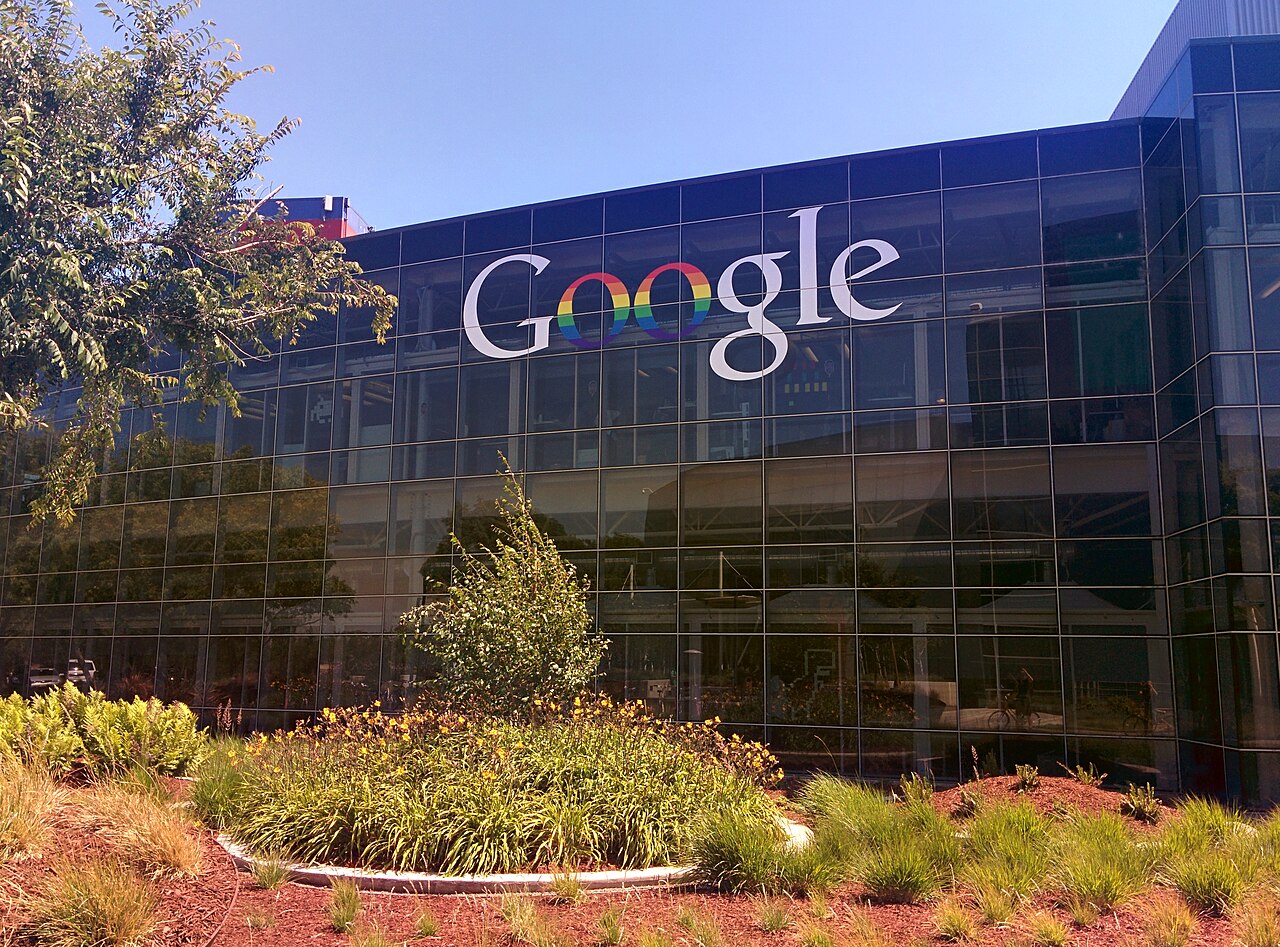
Header image: Sundar Pichai, CEO of Google and Alphabet, via Wikimedia Commons, licensed under CC BY 4.0. In-body photograph: the Googleplex, Google's headquarters in Mountain View, California, photographed by The Pancake of Heaven!, via Wikimedia Commons, licensed under CC BY-SA 3.0.