Google is retiring Google Assistant. Starting September 4, 2026, the company will begin removing Assistant from Android phones, tablets, Wear OS watches, headphones, and Android Auto, replacing it with Gemini as the default assistant. The rollout will take a few weeks to reach every device, and once it does there is no way to switch back. Assistant, which launched in 2016 to replace Google Now, is being wound down after a decade as the default voice layer on more than a billion Android devices.
This is one of the largest consumer software transitions of the year, and it is worth separating what is actually happening from the headline. Gemini is not a new coat of paint on Assistant; it is a different kind of system, a large language model built for open-ended conversation rather than a command-and-response engine. That shift brings real capability gains and a handful of concrete losses. The useful thing is to understand both, and what the swap says about where consumer AI is heading.
 Google
 Gemini
The timeline
The shutdown is not a surprise so much as the final step in a migration Google has been running for years.
A decade of Assistant, ending on a fixed date
The shutdown is the last step of a multi-year migration from Assistant to Gemini across Google's consumer surfaces.
- 2016Google Assistant launches, replacing Google Now
- 2023Google pivots consumer AI strategy toward Gemini
- 2025Assistant-to-Gemini transition on mobile begins; full sunset planned but slips
- Sep 4, 2026Assistant shutdown starts on Android and Wear OS; Gemini becomes the default
- Late 2026Gemini expands to Google TV, Google Home speakers and smart displays
Sources: 9to5Google, The Decoder, Android Headlines, TechTimes, August 2026. Rollout dates are staged and may take weeks to reach all devices.
Google began steering its consumer AI toward Gemini in 2023 and started moving Assistant users onto Gemini on mobile during 2025. A full sunset was expected earlier but slipped into 2026, according to reporting from 9to5Google. Setting a firm date, September 4, converts a gradual transition into a hard cutover: after the rollout completes on a given device, Assistant simply stops working there. Gemini is also expanding beyond phones to Google TV, Google Home speakers, and smart displays, extending the replacement across the rest of Google's consumer hardware.
This converts a gradual transition into a hard cutover: once a device migrates, Assistant simply stops working there.
On the significance of a fixed shutdown date
What you gain and what you lose
The reason the switch matters to everyday users is that it is not a clean one-for-one replacement. Gemini handles conversational, multi-step, and reasoning-heavy requests that Assistant never could, and it draws on the same model family Google is shipping across Search and Workspace. But several established Assistant features do not carry over.
What moves to Gemini, and what gets left behind
The transition is not one-for-one. Gemini adds conversational range, but a handful of established Assistant features do not carry over.
- Core voice queries and web answers
- Alarms, timers and reminders
- Calls, texts and media controls
- Navigation and Android Auto basics
- Interpreter Mode (live translation)
- Daily scheduled smart-home routines and updates
- Some legacy third-party Assistant actions
Feature mapping per Google's stated transition. Sources: 9to5Google, The Decoder, HowToGeek, August 2026.
The most cited losses are Interpreter Mode, the live two-way translation feature, and the scheduled daily smart-home routines and updates that some users had built their mornings around. Some legacy third-party Assistant actions also do not survive the transition. Meanwhile, Assistant will stick around for now in cars with "Google built-in," a carve-out that reflects how deeply the older system was embedded in automotive software. For a user whose daily use of Assistant leaned on one of the dropped features, the upgrade will feel like a downgrade in that specific slot, even as the general capability rises.
Why Google is doing it
The strategic logic is consolidation. Maintaining two parallel assistant stacks, the older intent-based Assistant and the newer model-based Gemini, is expensive and confusing, and it splits Google's engineering attention. Standardizing on Gemini lets Google apply one model family everywhere, ship improvements once, and present a single coherent assistant across phones, watches, TVs, speakers, and cars. It also aligns the consumer surface with the model Google is betting its enterprise and search futures on.
There is a cost to that tidiness. A hard cutover with no rollback and a few missing features is a friction point for a user base measured in the billions, and the transition asks people to relearn habits on a system that behaves differently. Google is judging that the long-term benefit of a single, more capable assistant outweighs the short-term disruption. Whether users experience it that way will depend heavily on how reliably Gemini handles the fast, deterministic tasks, timers, calls, home controls, that Assistant did without fuss.
Reading it in context
The Assistant shutdown is part of a broader industry move from scripted voice assistants to conversational AI models. The previous generation of assistants was built to recognize a fixed set of intents and respond predictably. The new generation is built to converse, reason, and handle open-ended requests, which is more powerful and less predictable. Google is the largest company to force this transition on a mass consumer base, but the direction is shared across the field.
There is a portability lesson buried in the switch. When a platform retires the assistant a billion people relied on and replaces it with a different system on a fixed date, it is a reminder that the interface layer people build habits and workflows around is controlled by the vendor, and can change on the vendor's schedule. The same holds for teams building on AI at work: a system wired to one provider's assistant or model inherits that provider's product decisions. Keeping workflows portable across models, the model-agnostic posture Metir AI is built around, is one way to avoid having a single vendor's roadmap dictate yours.
The takeaway
What is verifiable: Google will begin shutting down Google Assistant on Android and Wear OS on September 4, 2026, replacing it with Gemini, with the rollout taking a few weeks and no option to revert. Gemini adds conversational and reasoning ability but drops specific Assistant features, including Interpreter Mode and scheduled smart-home updates, while Assistant remains for now in cars with Google built-in. The move is a consolidation onto a single model family, and its success will be judged less on Gemini's conversational range than on whether it handles the simple, everyday tasks as reliably as the assistant it replaces.
Sources:
- Google Assistant shutting down on Android and Wear OS in September | 9to5Google
- Google will shut down Google Assistant starting September 2026 as Gemini takes over | The Decoder
- Google Assistant Shutdown: Gemini Takes Over Sept 4 | Android Headlines
- Google Assistant September 4 Shutdown Leaves Pixel 9 and Galaxy S25 on Gemini | TechTimes
- Google Assistant shuts down on Android in September, here's what's next | HowToGeek
Image credits
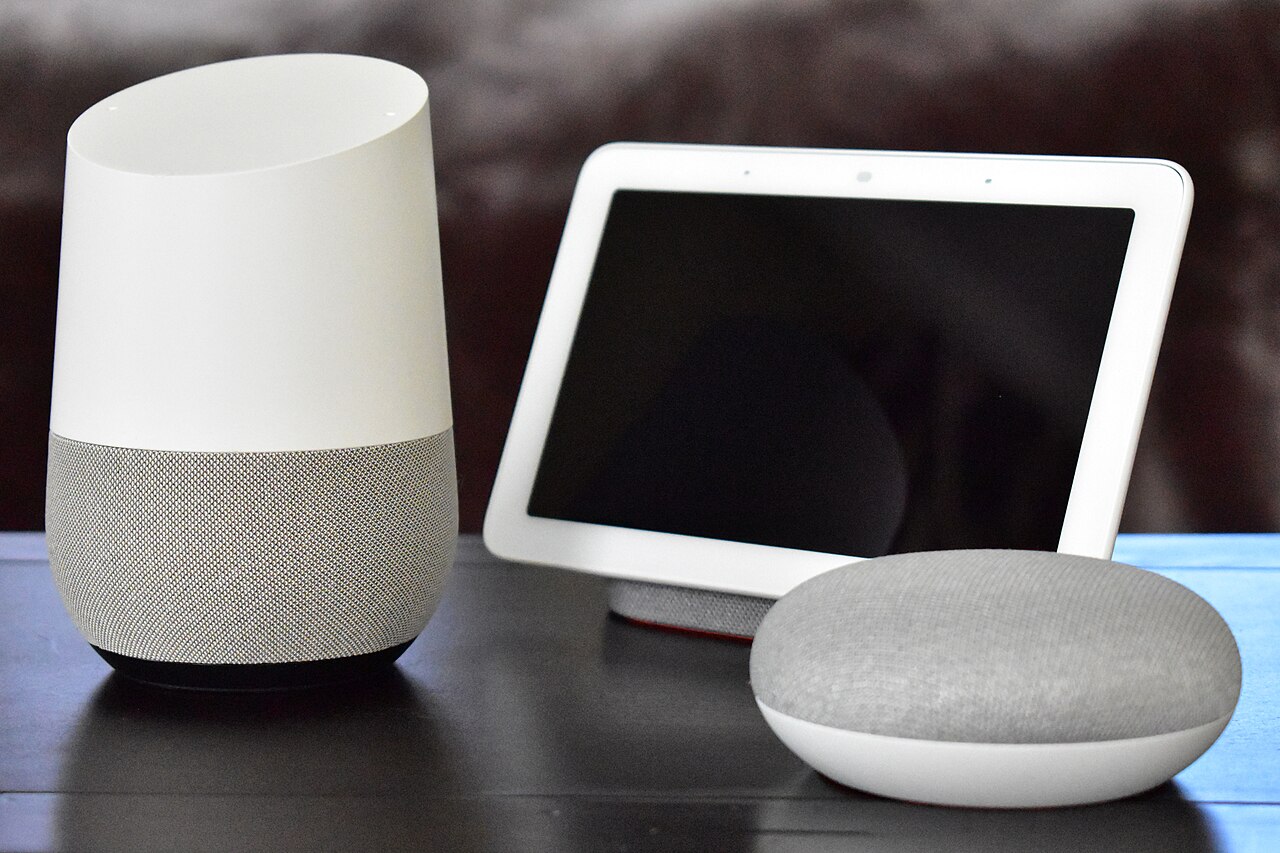
Header and in-body image: Google Home, Home Hub and Home Mini, by Y2kcrazyjoker4 via Wikimedia Commons, licensed under CC BY-SA 4.0. Shows the Assistant-era device family. Reviewed before use.