On July 30, 2026, Google DeepMind released Gemini Robotics 2, the second generation of its effort to turn the Gemini model family into a control system for physical robots. The headline capability is whole-body control: where the first generation, launched in March 2025, largely governed robot arms and grippers, this release can drive a full humanoid from its feet to its fingertips, coordinating balance, locomotion and manipulation in a single system. DeepMind also split the release into three distinct models rather than one, a design choice that says as much about where robotics is heading as any single demo. This piece walks through what the three models actually do, why the split matters, how the release fits into the broader physical-AI race, and where the honest limits of the announcement sit.
 Google
 Gemini
 NVIDIA
What was actually released
Gemini Robotics 2 is not a single model. It is a suite of three that hand work to one another, and understanding the division is the fastest way to understand the release.
One release, three models that split the job
Gemini Robotics 2 is not a single model. It is a reasoning layer, an action layer, and an on-device layer that hand work to each other.
Embodied-reasoning model that plans multi-step jobs and coordinates more than one robot at a time.
Vision-language-action model that turns what a robot sees and hears into motor commands, controlling a full humanoid from feet to fingertips.
The most efficient variant, optimised to run on the robot itself and to adapt to a new robot body with a few hours of data.
The split matters because it lets a slow, expensive reasoning model plan while a fast, cheap on-device model executes, the same tiering that shaped the last generation of language-model deployment.
The vision-language-action model, Gemini Robotics 2 itself, is the part that does the physical work. It converts what a robot sees and hears into motor commands, and this generation extends that control from bi-arm setups to complete humanoids, handling the whole body rather than just the manipulators at the end of it. In DeepMind's demonstrations it drives robots through tasks such as organizing shelves, tying bags, and replacing a lightbulb, and it can make a humanoid walk, crouch, stretch and manipulate objects to clean up a cluttered room, according to the company's blog post and coverage from MarkTechPost and The Next Web.
Gemini Robotics-ER 2, the "ER" standing for embodied reasoning, is the planning layer. It is described as the high-level brain that breaks a multi-step job into a sequence and, new in this generation, can coordinate more than one robot at a time. The third model, Gemini Robotics On-Device 2, is the efficiency play: it is optimized to run locally on a robot rather than in a data center, and DeepMind says it can adapt to a completely new robot body with only a few hours of data, a claim that, if it holds up in the field, matters more for the industry than any single manipulation demo.
Why the three-model split is the real story
The most consequential decision in this release is architectural, not physical. Splitting robot intelligence into a slow, heavy reasoning model and a fast, light execution model mirrors exactly the pattern that shaped the last two years of language-model deployment, where expensive frontier models plan and cheaper models carry out the steps. Robotics is now importing that tiering wholesale.
The logic is the same in both domains. A reasoning model that plans how to clear a cluttered room does not need to run sixty times a second; it needs to be right about the sequence. A control model that keeps a humanoid balanced while it reaches for a cup does need to run at high frequency, with low latency, ideally on the robot itself so a network hiccup does not drop it. By separating Gemini Robotics-ER 2 from the on-device model, DeepMind lets each run at the cost and cadence its job requires, instead of paying frontier-model prices for every motor command.
Robotics is importing the reasoning-model-plus-fast-executor pattern that already reshaped how language models get deployed.
That framing also clarifies what DeepMind is really trying to build: not a robot, but a foundation layer that many robots can run on. The on-device model's headline feature, adapting to a new embodiment in hours rather than months, is what a foundation-model strategy needs to be commercially real. A control system that only works on one robot body is a product. A control system that generalizes across bodies is a platform, and platforms are what the large labs are competing to own in the physical world, just as they did in text and images.
The competitive context
Gemini Robotics 2 lands in the middle of a broad push into what the industry now calls physical AI: the application of large foundation models to robots, humanoids and other machines that act in the world rather than only generating tokens. The past year has seen heavy investment across the stack, from chipmakers positioning robotics as their next demand driver to a wave of humanoid-hardware startups raising at large valuations. DeepMind's contribution sits at the intelligence layer, and its advantage is leverage: it can adapt the same Gemini foundation it already trains for text, images and video, rather than building a robot brain from scratch.
That leverage cuts against a real constraint. Language models had the open internet to train on; robots do not have an equivalent corpus of embodied experience, and collecting real-world manipulation data is slow, physical and expensive. This is why the on-device model's fast-adaptation claim is the number to watch. If a new robot body can be brought up on Gemini Robotics 2 with hours of data instead of a fresh, months-long data-collection campaign, the data bottleneck that has held robotics behind language modeling gets meaningfully smaller. If that number turns out to be softer in practice than in the demo, the bottleneck holds.
Sixteen months from first robot model to whole-body control
DeepMind has iterated on the same Gemini foundation for the physical world at roughly the cadence it uses for its language models.
DeepMind adapts Gemini into a vision-language-action model for robots, plus a separate embodied-reasoning model.
A version tuned to run locally on robots and generalise across different robot bodies.
Whole-body humanoid control, multi-robot collaboration and faster adaptation to new embodiments, shipped as a three-model suite.
The limits worth stating plainly
Robotics demonstrations reward skepticism, and this one deserves the same care as any other. What DeepMind has shown are capabilities: a humanoid tidying a room, a model coordinating multiple robots, an on-device system adapting quickly. What the announcement does not yet include is the thing that determines whether robots become useful, which is reliability under messy, unstructured, real-world conditions over long stretches, measured independently rather than in curated clips. A model that completes a task in a demonstration nine times out of ten is a research milestone; a robot that has to do it nine thousand times out of ten thousand in a warehouse is a product, and the gap between those two numbers is where most robotics ambition has historically gone to die.
There is also no independent benchmark accompanying this release in the way the language-model field has grown used to. That is not unusual for robotics, where standardized, comparable evaluations are still immature, but it does mean the claims here should be read as capability demonstrations from the vendor rather than externally verified performance. The honest position is that Gemini Robotics 2 looks like a genuine step in scope, from arms to whole bodies and from one robot to several, while the questions that decide commercial impact, reliability and true cross-body generalization, remain open.
The layer above the robot
Whichever lab ends up leading in physical control, the same structural point holds that already holds in language models: the intelligence layer is increasingly separable from both the hardware below it and the application above it. Gemini Robotics 2 is a control model, but the reasoning-plus-execution split it embodies is the same tiering that application software uses to route hard problems to expensive models and routine ones to cheap, fast models. That is the principle Metir AI applies at the software layer, giving teams model-agnostic access to leading systems and letting the right model handle each task, rather than binding a workflow to a single provider. As robotics adopts the same architecture, the value of staying flexible about which model runs which step only grows.
The takeaway
Gemini Robotics 2 is best read not as a robot launch but as an architecture statement. By shipping three models, DeepMind has drawn a clear line between reasoning, action and on-device execution, and by extending control to whole humanoid bodies it has moved past the arm-and-gripper stage that defined the first generation. The most important claim is the least cinematic one: that a new robot body can be adapted in hours, not months. If that generalization is real and durable, it is the kind of change that compounds, because it attacks robotics' deepest constraint, which has always been data rather than ambition. The demonstrations are impressive; the reliability numbers that would confirm them are what the next year will have to supply.
Sources:
- Gemini Robotics 2 brings whole-body intelligence to robots | Google DeepMind
- Google DeepMind Ships Three Physical AI Models For Whole Body Control, Dexterity And Multi Robot Collaboration | MarkTechPost
- Google DeepMind's Gemini Robotics 2 controls whole humanoids | The Next Web
- Google's Gemini Can Now Stomp Around as a Humanoid Robot | Slashdot
- Introducing Gemini Robotics and Gemini Robotics-ER (March 2025) | Google DeepMind
- Gemini Robotics | Wikipedia
Image credits
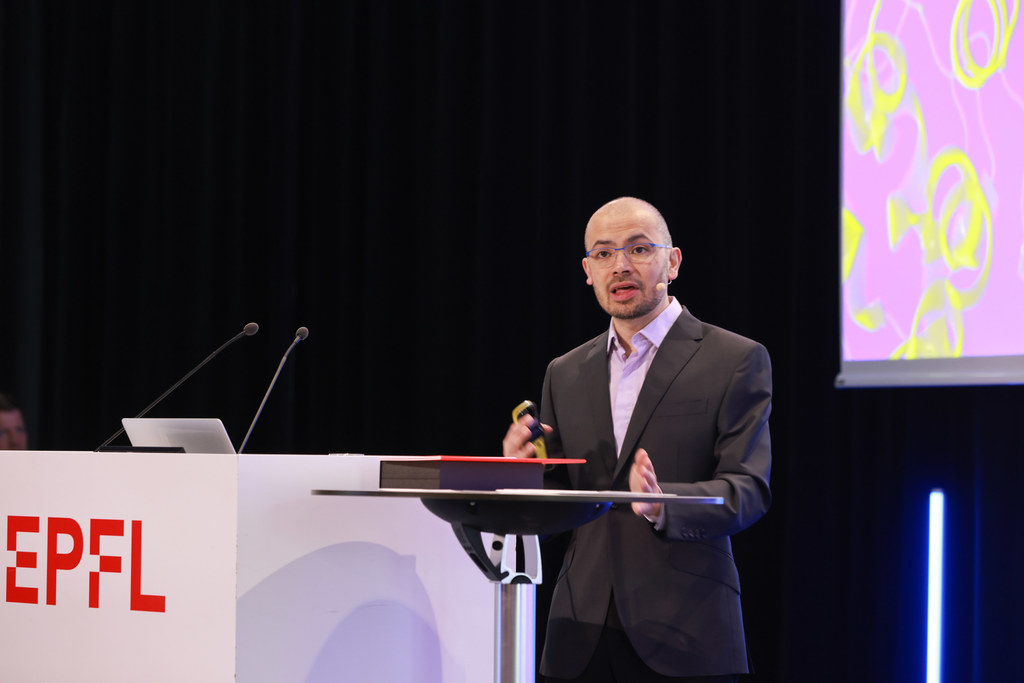
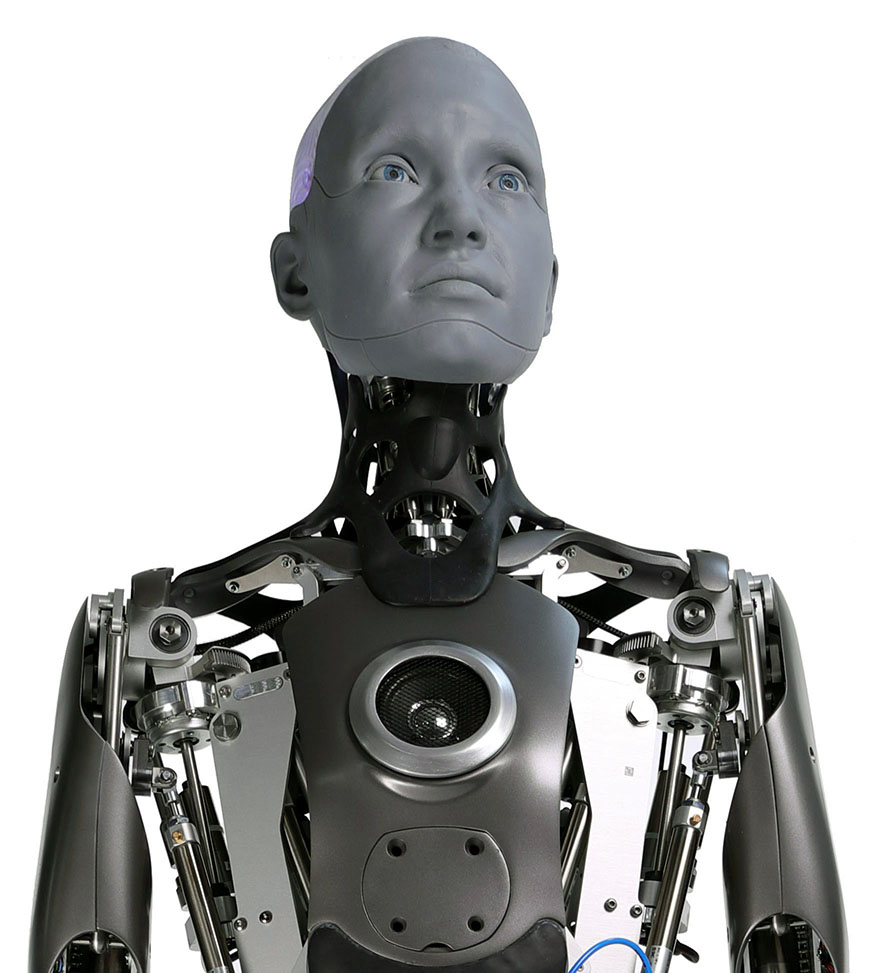
Header image: Demis Hassabis, co-founder and CEO of Google DeepMind, photographed by Alain Herzog at EPFL, via Wikimedia Commons, licensed under CC BY-SA 4.0. In-body photograph: the humanoid robot Ameca, photographed by Willy Jackson via Wikimedia Commons, licensed under CC BY-SA 4.0. Ameca is shown for illustration of the humanoid form factor and is not a Google DeepMind robot. No photograph of a robot running Gemini Robotics 2 was available under a suitable licence at publication, so the images depict DeepMind's leadership and a representative humanoid platform rather than the specific systems in the demonstrations.