Google launched the Gemini Decisions API on November 11, 2026, a new endpoint for closed-set decisions powered by a model called Gemini Decision 1 (gemini-decision-1). According to Google's announcement, it scores candidate options in a single forward pass instead of generating answer text, returns probabilities and confidence scores, and accepts up to 1,000 independent questions per request. It is priced at $0.10 per million input tokens with no output charge. This post explains how it works, works through the cost, and compares it with the similar endpoint OpenAI introduced earlier. See our OpenAI Decisions API analysis for that side.
 Google
 OpenAI
What it does differently from a chat model
A normal model generates an answer token by token. For bounded choices such as routing a query, checking a policy or grading context, that is slower and costlier than needed. Google describes the new endpoint as built for exactly these bounded choices, naming tool selection, policy checks, model routing and context grading. It evaluates options in one pass and returns calibrated numbers rather than prose, so code can send low-confidence cases to a fallback or a human reviewer.
Each request carries one shared multimodal input, which can be text, images, audio, video or PDFs up to 256K tokens, plus up to 1,000 independent questions. There are three question types:
| Type | What it asks | What comes back |
|---|---|---|
| Yes/No | Whether a condition holds, with optional true and false criteria | Probability that the condition holds |
| Choice | Pick from 2 to 255 options | The winner and normalized probabilities |
| Score | Grade against an ordered rubric starting at 0 | A weighted score and per-level probabilities |
Google's worked example is a breakroom photo plus a text note, checked in one request for spills (yes/no), the cleanup action needed (choice) and severity (score).
Speed and latency
Google reports end-to-end latency of 150 to 250 milliseconds, with median model compute of 50 to 100 milliseconds, and says latency stays nearly flat from 1 to 100 questions per request. It also says performance was tested up to 16K-token contexts, which is notably below the 256K maximum input. Treat the flat-latency claim as applying to the tested range.
Gemini Decisions API: reported latency ranges
Milliseconds. Upper bound of each reported range shown; model compute is a median range and end-to-end is the stated total.
Source: Google, Gemini Decisions API announcement, 11 Nov 2026 (company-reported).
The pricing arithmetic
The price is $0.10 per million input tokens, with $0 for output tokens, thinking tokens, audio transcription and OCR. The shared input is billed once per request, and each question adds only its own instruction and criteria tokens. That structure means cost depends on how many questions share one input.
Our illustrative arithmetic, with assumed token counts:
| Scenario | Assumption | Input tokens | Cost |
|---|---|---|---|
| One decision | 2,000-token input, 1 question of 100 tokens | 2,100 | about $0.00021 |
| Three decisions on one input | 2,000-token input, 3 questions of 100 tokens | 2,300 | about $0.00023 |
| Wide fan-out | 2,000-token input, 1,000 questions of 50 tokens | 52,000 | about $0.0052 |
These examples show the design point: after the first question, extra questions on the same input are cheap, so asking several questions at once costs little more than asking one. Token counts are our assumptions, not Google's. Google also says the endpoint is nearly 5 times cheaper than Gemini 3.5 Flash-Lite with the Interactions API across a shared benchmark suite, a company-reported comparison.
Evaluate up to 1,000 yes/no, choice, and rubric-scoring questions in a fast, single pass across text, images, audio, video, and PDFs.
Google, Gemini Decisions API announcement
How Google says it is already used
- Gemini Notebook: routes queries to the best model tier and thinking level, with everyday queries seeing up to 40% lower latency, per Google.
- Stitch: generates playable product-flow wireframes in seconds and applies voice or tap edits almost instantly.
- CC (Google Labs): selects an emoji reaction from more than 200 options without added latency.
- Google Search: acts as a safety layer for MCP tools, detecting adversarial behavior.
Comparison with OpenAI's endpoint
Our earlier post covered OpenAI's Decisions API, which shares the same headline price of $0.10 per million input tokens with no output charge. The two products therefore converge on pricing and the idea of replacing generated text with scored choices for bounded tasks. We have not seen independent head-to-head benchmarks, and Google's calibration claims are its own: it reports the lowest calibration error across its benchmark suite covering agent routing, reasoning, ranking and multimodal understanding. Calibration matters here because the confidence score is only useful if 0.9 really means about nine in ten.
Ecosystem and availability
The endpoint is available through the Gemini API and Google AI Studio, with a free tier in AI Studio for prototyping, and documentation in Python, JavaScript and REST. Google lists integrations rolling out with OpenRouter, LangChain, Vercel, LiteLLM, Pydantic AI, Pipecat, LiveKit and OpenCode, plus the google-genai SDKs. Gemini in Google Cloud support is described as coming soon. Image and video resolution can be tuned to trade visual detail against token cost.
Limits and open questions
- Closed sets only. It cannot write, explain or plan; it scores options you supply.
- Tested range. Quality claims are tested to 16K tokens, well below the maximum input.
- Vendor-reported results. Latency, cost and calibration figures come from Google.
- Prompt design still matters. The quality of the options and rubrics determines the usefulness of the scores.
What it means for builders
A growing share of AI applications make many small decisions per user action, such as which model to call, whether to allow a tool and whether retrieved context is relevant. A cheap scoring endpoint turns those into a separate component. Products that route between models, such as Metir, use this kind of decision step, and two major providers now sell it at the same input price.
Sources:
- Google: Gemini Decisions API (Nov 11, 2026)
- The Neuron: Everything that happened in AI today, Nov 12, 2026
- Metir: OpenAI Decisions API, GPT-6 Luna beta
Image credits
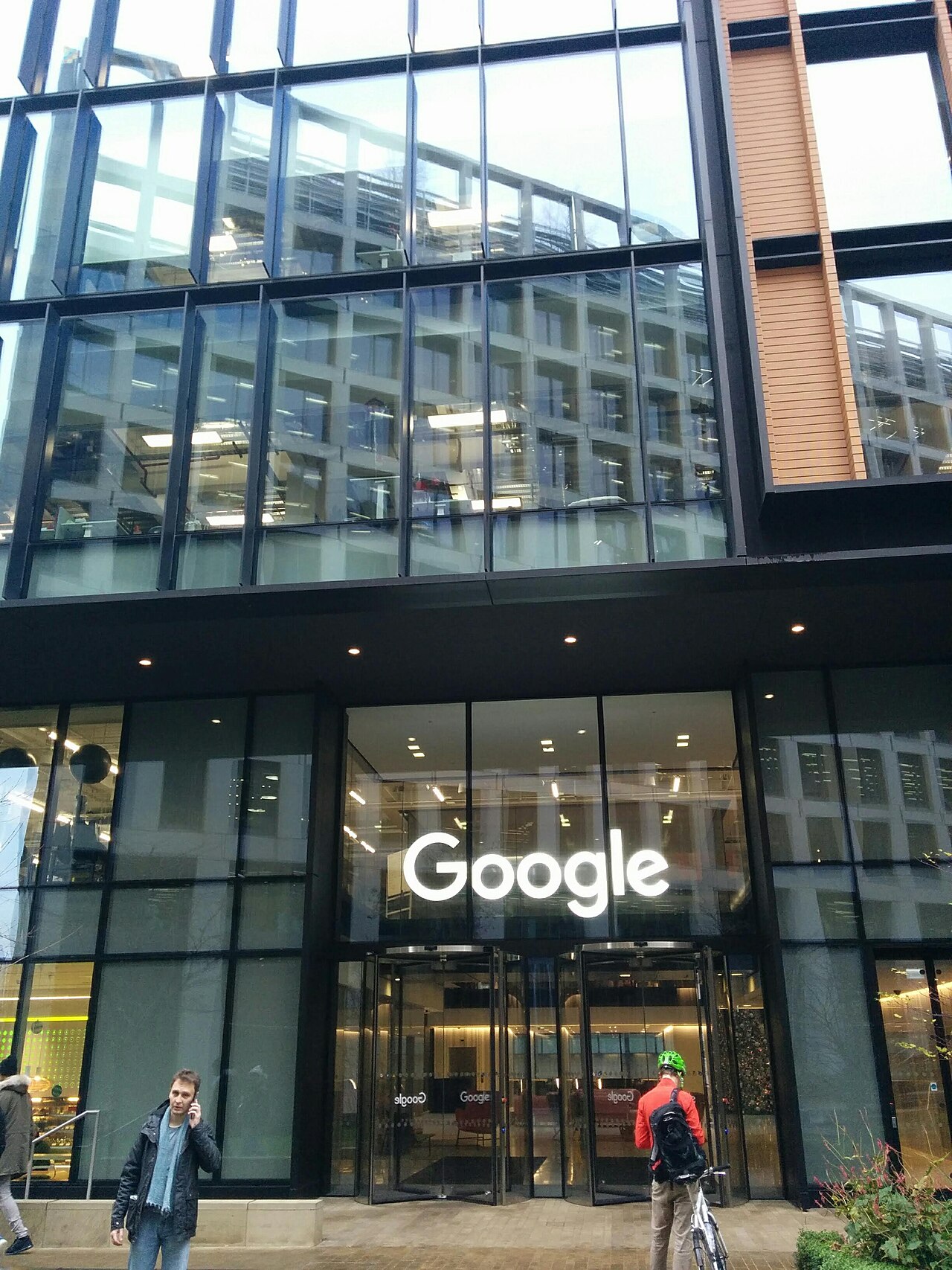
- Google and DeepMind office entrance, 6 Pancras Square, London. Author: Gciriani, Wikimedia Commons, CC BY-SA 4.0. Illustrative only.