
France's competition watchdog spent six months building its own AI agents, asking them 550 shopping questions, and logging every website they visited and cited. The resulting document, Opinion No. 26-A-05, runs past 3,700 pages once its annexes are counted, and its headline number is stark: OpenAI, Google and Anthropic together held more than 84% of the global AI agent market as of May 2026, despite a crowded field of smaller developers trying to compete.
The Autorité de la concurrence published the opinion on July 17, 2026, closing an inquiry it opened on its own initiative on January 8, 2026. It is a study, not a case against any company, and it accuses no one of breaking the law. But it is one of the most detailed public efforts yet to measure how concentrated the emerging "AI agent" layer of the internet has become, and what that concentration might mean for publishers, merchants and competition once agents, not search boxes or chat windows, become how people default to finding and buying things online.
 OpenAI
 Google
 Anthropic
What counts as an "AI agent" market, and why it is a different question than the model market
The opinion is careful to draw a line most coverage of AI competition blurs: the market for large language models is not the same as the market for AI agents built on top of them. A model is the underlying engine. An agent is the product surface, ChatGPT, Gemini, Claude and the growing list of assistants layered on them, that a person or a business actually uses to plan a trip, compare prices or get a task done end to end. The Autorité's inquiry, opened as a study of "conversational agents" in early 2026, tracks exactly this shift: tools that started as simple chatbots answering questions have evolved into systems capable of reasoning, planning, and coordinating with other agents to execute multi-step tasks with limited human oversight.
That distinction matters because the two markets can concentrate for different reasons and at different speeds. A new model can, in principle, be swapped in behind an existing product overnight. An agent, by contrast, accumulates a user's history, preferences, connected accounts and habits, the kind of switching cost that has nothing to do with which model happens to be running underneath. This is the opinion's core empirical claim: even in a market this young, barely a few years old and still adding new entrants monthly, the agent layer has already concentrated further and faster than the underlying model layer beneath it.
How the Authority actually measured this
Rather than rely solely on submissions from industry, the Autorité built its own test agents and ran them through 550 shopping-related questions between May 20 and May 30, 2026, logging exactly which websites each agent visited and which ones it actually cited back to the user. The gap between the two numbers is one of the opinion's more striking findings. ChatGPT consulted Reddit for 87.4% of discovery-type questions but cited it as a source only 1.0% of the time. Wikipedia showed up in 32.0% of queries but was cited in just 3.5%. Across the board, the ten most-visited websites accounted for 24% of all page visits but only 22% of ChatGPT's citations and 20% of Gemini's, meaning agents draw heavily on a narrow set of sources while attributing credit even more narrowly than that.
Three companies, more than 84% of the AI agent market
Global AI agent sector share, May 2026, as measured by the Autorité de la concurrence in Opinion 26-A-05.
Source: Autorité de la concurrence, Opinion 26-A-05 (17 July 2026), on the competitive functioning of the AI agents sector.
The three risks: platformisation, disintermediation, algorithmic collusion
The opinion organizes its concerns into three categories. The first is platformisation: as agents become the default way people reach information, applications and commercial offers, a small number of companies gain outsized control over visibility, ranking and access for everyone downstream, similar in shape to concerns regulators have long raised about search engines and app stores, but compressed into a much younger market. The second is disintermediation, the risk that publishers, retailers and other online businesses lose direct traffic and revenue as agents browse, summarize and increasingly transact on a user's behalf instead of sending a click through. Today, AI-agent-driven traffic to French e-commerce sites sits below 5% of the total, but the opinion's own forecast puts that figure at nearly 20% to 25% by 2030 if agentic shopping develops as expected, even though agentic commerce is not yet broadly available in France.
The third risk, algorithmic collusion, is more speculative and forward-looking: if agents start negotiating prices or terms on a user's behalf, or if a small number of agents mediate a large share of all commercial interactions, coordinated-looking outcomes could emerge without any explicit agreement between the underlying companies. The opinion treats this as a risk to monitor rather than one it has observed in practice.
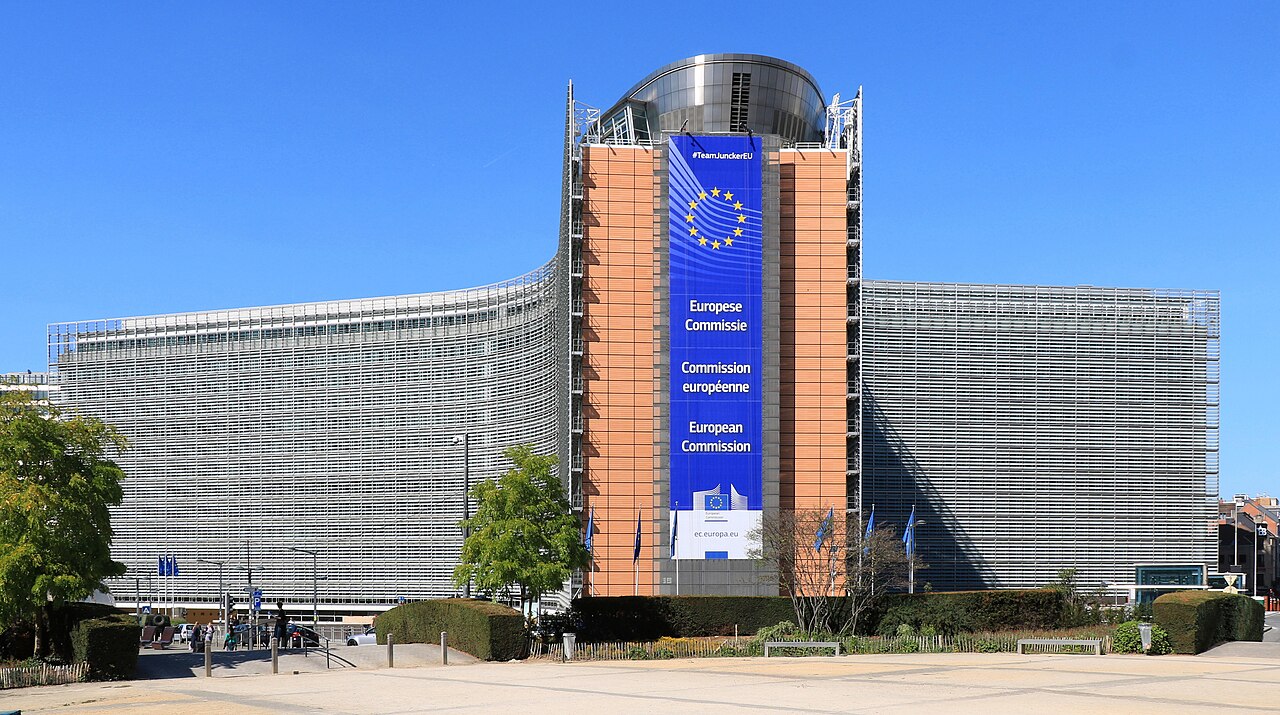
The Authority does not accuse any company of an infringement; the opinion is advisory, issued under Article L. 462-4 of the French Commercial Code.
Framing of Opinion 26-A-05, as reported by PPC Land
What the opinion actually recommends, and what it cannot do
The Autorité's central recommendation is not a new law. It calls first for full and rapid enforcement of rules that already exist, the EU's AI Act, Digital Markets Act, Digital Services Act, GDPR and Data Act, arguing the tools to police this market are largely already on the books. Layered on top of that, it recommends three more specific things: genuine interoperability, meaning the technical and contractual terms that let a third-party agent plug into a vertically integrated company's ecosystem on comparable footing, rather than being locked out or degraded; data portability, so a user can migrate from one agent to another "without any significant loss of information or functionality"; and open standards, developed through a transparent, collaborative process rather than set unilaterally by whichever companies already have scale. It also flags default placement specifically, agents pre-installed or pre-integrated into an operating system or productivity suite, such as an assistant bundled into Office 365 or Android, and calls for users to retain a genuine, low-friction path to choosing a competing agent instead.
Three risks, three remedies
How Opinion 26-A-05 frames the competitive risks of the AI agent sector alongside the direction of its recommendations.
A handful of agents become the default gateway to the web, controlling visibility, ranking and access for everyone downstream.
Technical and contractual terms that let third-party agents plug into the same ecosystems on comparable footing.
Publishers and merchants lose direct traffic as agents browse, summarize and transact on users’ behalf instead of sending clicks.
Rules ensuring content and merchant data can still be reached and switching agents does not mean losing history or functionality.
Agents negotiating prices or deals on a user’s behalf could coordinate outcomes without any explicit agreement between firms.
Standards built in the open, plus full use of existing law (AI Act, DMA, DSA, GDPR, Data Act) rather than new rules.
Source: Autorité de la concurrence, Opinion 26-A-05 (17 July 2026); Concurrences bulletin, July 2026.
It is worth being precise about what kind of document this is. An "avis" from the Autorité de la concurrence is a consultative opinion, not a binding decision. Under French law, the positions and recommendations it contains do not constitute an actionable ruling and cannot be challenged in court the way an enforcement decision can. Its influence is persuasive rather than legal: companies, lawyers and other regulators, including the European Commission, treat these opinions as an authoritative reading of where competition risk is building, and they often shape later legislation or enforcement priorities, but nothing in Opinion 26-A-05 requires OpenAI, Google or Anthropic to change anything on its own. This is the Autorité's third major opinion tracing the AI value chain, following a 2024 opinion on generative AI models further upstream, and it explicitly moves the analysis one layer downstream, from how models are trained to how agents built on them are actually distributed and used.
Reading the 84% figure as a snapshot, not a verdict
The number is real, sourced directly from the Autorité's own May 2026 measurement, and it is a legitimate signal that a new layer of the internet is concentrating quickly. But it describes a market that is only a few years old and still adding capability and competitors every quarter; a snapshot from an early, fast-moving market is not the same as evidence of a settled, durable structure. The same opinion that reports 84% also notes rising inference and orchestration costs, the average cost of a single AI agent's full task orchestration reached roughly $1.20 in 2026, up from about $0.04 for a single model response in 2023, which is itself a sign of how much more complex and expensive "agentic" behavior has become relative to plain chat, and a reminder that today's leaders are not guaranteed to be tomorrow's.
The more durable lesson sits underneath the specific percentage. The opinion's own framing, that switching costs at the agent and default layer can be stickier than switching costs at the model layer, is a structural observation, not just a competition-law one. It is also, functionally, a case for keeping options open at the point where people actually work, rather than betting everything on whichever agent happened to ship first inside an operating system or a browser. Open standards and interoperability are the fixes the opinion gestures toward institutionally; avoiding lock-in to a single default agent is the same idea applied by any individual team or user today. Metir AI's own approach, giving people model-agnostic access to leading AI systems in one workspace rather than tying them to a single provider's assistant, sits on that same logic: whichever labs end up ahead after this market matures, the safer bet in the meantime is not depending on any one of them being the default.
The takeaway
Opinion 26-A-05 does not change any law and does not find anyone guilty of anything. What it does is put a number, 84%, and a methodology, 550 test questions and 3,700 pages of analysis, behind a concern regulators across Europe have been circling for a while: that the layer where people actually interact with AI, not the models themselves, may be where competition problems show up first. Its recommendations point toward interoperability, portability and enforcing existing law rather than new legislation, and its own data shows both how concentrated the market already is and how early it still is. Both of those things can be true at once, and the next eighteen months of enforcement, or the absence of it, will say more about which one matters more than the opinion itself can.
Sources:
- AI agents: the Autorité de la concurrence issues its opinion on the competitive functioning of the AI agents sector | Autorité de la concurrence
- France flags lock-in risk as OpenAI, Google, Anthropic hold 84% of AI agents | PPC Land
- The French Competition Authority issues an opinion on the competitive functioning of the AI agents sector | Concurrences
- Agents d'IA : l'Autorité de la concurrence rend son avis sur le fonctionnement concurrentiel du secteur des agents d'intelligence artificielle | Autorité de la concurrence
- Avis 26-A-05 du 17 juillet 2026 relatif au fonctionnement concurrentiel du secteur des agents d'intelligence artificielle | Autorité de la concurrence
- Agents IA : l'Autorité de la concurrence alerte sur un marché déjà très concentré | Solutions Numériques & Cybersécurité
- Conversational agents: the Autorité starts inquiries ex officio with a view to issuing an opinion | Autorité de la concurrence
Image credits
Header image: the building at 11, rue de l'Échelle, Paris 1er, seat of the Autorité de la concurrence, photographed in 2022 by Boubloub via Wikimedia Commons, licensed under CC BY-SA 4.0. In-body photograph: the Berlaymont building in Brussels, headquarters of the European Commission, photographed by EmDee via Wikimedia Commons, licensed under CC BY-SA 4.0.