On July 16, 2026, Fireworks AI announced a $1.505 billion Series D that values the company at $17.5 billion, one of the largest rounds of the week and a notable one because Fireworks does not build a frontier model of its own. It runs other people's models, and increasingly it helps companies build smaller specialized ones. The round is a clean data point on a shift that has been building all year: as the model layer commoditizes, serious money is moving into the inference and customization layer underneath it. This piece explains what Fireworks actually does, why enterprises are paying for it, and what the raise says about where value is accruing in the AI stack.
What Fireworks actually does
Fireworks sits in a layer of the AI stack that most users never see but every AI product depends on: inference infrastructure. When an application calls a model, something has to load that model onto GPUs, run the computation efficiently, and return the result quickly and reliably at scale. That is inference, and doing it well, fast, cheap and dependable, is a hard engineering problem distinct from training the model in the first place.
Fireworks offers infrastructure that lets enterprises take general-purpose models, especially open-weight ones, fine-tune them on their own data, and serve them in production. Founded in 2022 by Lin Qiao and six co-founders who came out of Meta, where they worked on PyTorch, the company is built by people who spent years on the machine-learning infrastructure that the broader industry now runs on. Its customer list includes Uber, Shopify, Doximity, Elastic, GitLab and MongoDB, the kind of names that indicate production usage rather than experiments.
The demand signal behind the round
Tokens served per day on the Fireworks platform, in trillions. Inference volume is the operational metric that most directly tracks an inference provider's revenue.
Daily token volume rose from about 15 trillion to more than 40 trillion over roughly a year, alongside a fivefold jump in annualized revenue past the $1 billion mark.
The operational metric that matters for a business like this is token volume, the total amount of model input and output it processes. Fireworks reported that daily volume climbed to more than 40 trillion tokens from about 15 trillion over the same stretch in which its annualized revenue crossed $1 billion, a roughly fivefold increase year on year. Token volume is the closest thing an inference provider has to a direct revenue gauge, which is why investors treat that curve as the real story.
The "specialized intelligence" thesis
Fireworks framed the raise around a phrase worth unpacking: specialized intelligence. The bet is that the future of applied AI is not only a handful of giant general-purpose models accessed through their makers' APIs, but a large and growing population of smaller models, fine-tuned on specific data for specific tasks, run cost-effectively in production.
The bet is not that the giant models lose. It is that most production work does not need them, and pays for the layer that serves the right-sized model well.
The logic is straightforward economics. The largest frontier models are powerful and, per token, expensive. A great deal of real enterprise work, classification, extraction, routing, domain-specific chat, structured generation, does not need the absolute frontier of capability; it needs a good-enough model that is fast, cheap and reliable at high volume. A smaller model fine-tuned on a company's own data can match or beat a generic frontier model on that company's narrow task, at a fraction of the cost per token. Fireworks is positioning itself as the platform where companies build and serve exactly those models. The raise is, in effect, a large institutional wager that this middle layer, specialized models on shared infrastructure, is where a lot of production AI actually lands.
Why the plumbing is attracting frontier-sized money
A $17.5 billion valuation for a company that does not make a frontier model tells you something about how investors read the stack. The reasoning runs through commoditization. As capable open-weight models proliferate, from strong Chinese releases to open US efforts, the raw model becomes less of a durable moat: if several models can do the job, the differentiated value shifts to who can serve, customize and operate them best. Inference infrastructure is a picks-and-shovels position on the entire field rather than a bet on any single model winning.
The investor syndicate reflects that logic. The round was led by Atreides Management, Index Ventures and TCV, with participation from Nvidia, Lightspeed, Bessemer, Menlo Ventures, Insight Partners, Ontario Teachers' Pension Plan and Lone Pine Capital, a mix of AI specialists, crossover growth investors and a pension fund. Nvidia's presence is notable in that it appears across many layers of the AI economy at once, reinforcing that demand for GPU-served inference is the through-line connecting these bets.
The caveats
A neutral account has to note the risks around a raise like this. Inference is a competitive layer, not a monopoly one: Fireworks competes with other independent providers, with the model makers' own first-party APIs, and with hyperscalers that would like to own the same workloads. Pricing pressure is real and persistent, because serving a commodity capability tends to compress margins over time. A high valuation on strong revenue growth assumes that growth continues and that the company defends its margins as the space gets more crowded; both are plausible and neither is guaranteed.
There is also a dependency worth naming. A business built on serving open-weight and third-party models is healthy exactly as long as a rich supply of capable models keeps arriving. That supply looks abundant today, but the platform's fortunes are tied to a model ecosystem it does not control. This is not a red flag so much as a reminder that the inference layer's value is derived from the vitality of the layer above it.
What it means for people building with AI
For teams building products, the Fireworks story is a useful reframing of a decision most builders face. The instinct is to reach for the biggest, most capable model for everything. The specialized-intelligence thesis is a reminder that the cost-effective answer is often a smaller model matched to the task, and that a large, well-funded market is forming precisely to make that approach practical at scale.
The strategic principle underneath is portability. If the right model for a job can be a fine-tuned open-weight model on an inference platform for one task and a frontier API for another, then the durable advantage is the ability to route each workload to the option that fits it, without rebuilding around any one of them. A model-agnostic workspace such as Metir AI reflects the same logic at the application layer that Fireworks reflects at the infrastructure layer: treat models as interchangeable components to be matched to the job, not as a platform to be married to. The raise is one more sign that the market increasingly agrees.
The bigger picture
Fireworks raising $1.5 billion at $17.5 billion without a frontier model of its own is a marker of where value is migrating in the AI stack. As models commoditize, the differentiated, defensible positions move toward the layers that serve, customize and operate them, and investors are pricing that shift aggressively. The specialized-intelligence thesis, many right-sized models rather than one giant one for every task, is a coherent read of how a lot of production AI will actually run.
Whether Fireworks specifically holds its lead depends on execution in a crowded, margin-pressured layer, and on a model ecosystem it depends upon but does not own. The broader signal is clearer: the plumbing of AI is now a frontier-sized business, and the winners of the model race are not the only companies capturing the value the race creates.
Sources:
- Fireworks AI raises $1.5 billion Series D at $17.5 billion valuation | Quartz
- AI infrastructure startup Fireworks closes $1.5B round at $17.5B valuation | SiliconANGLE
- Fireworks Secures $1.5 Billion in Series D Funding | Fireworks AI
- Fireworks Raises a $1.5 Billion Series D to Lead the Specialized Intelligence Revolution | Business Wire
Image credits
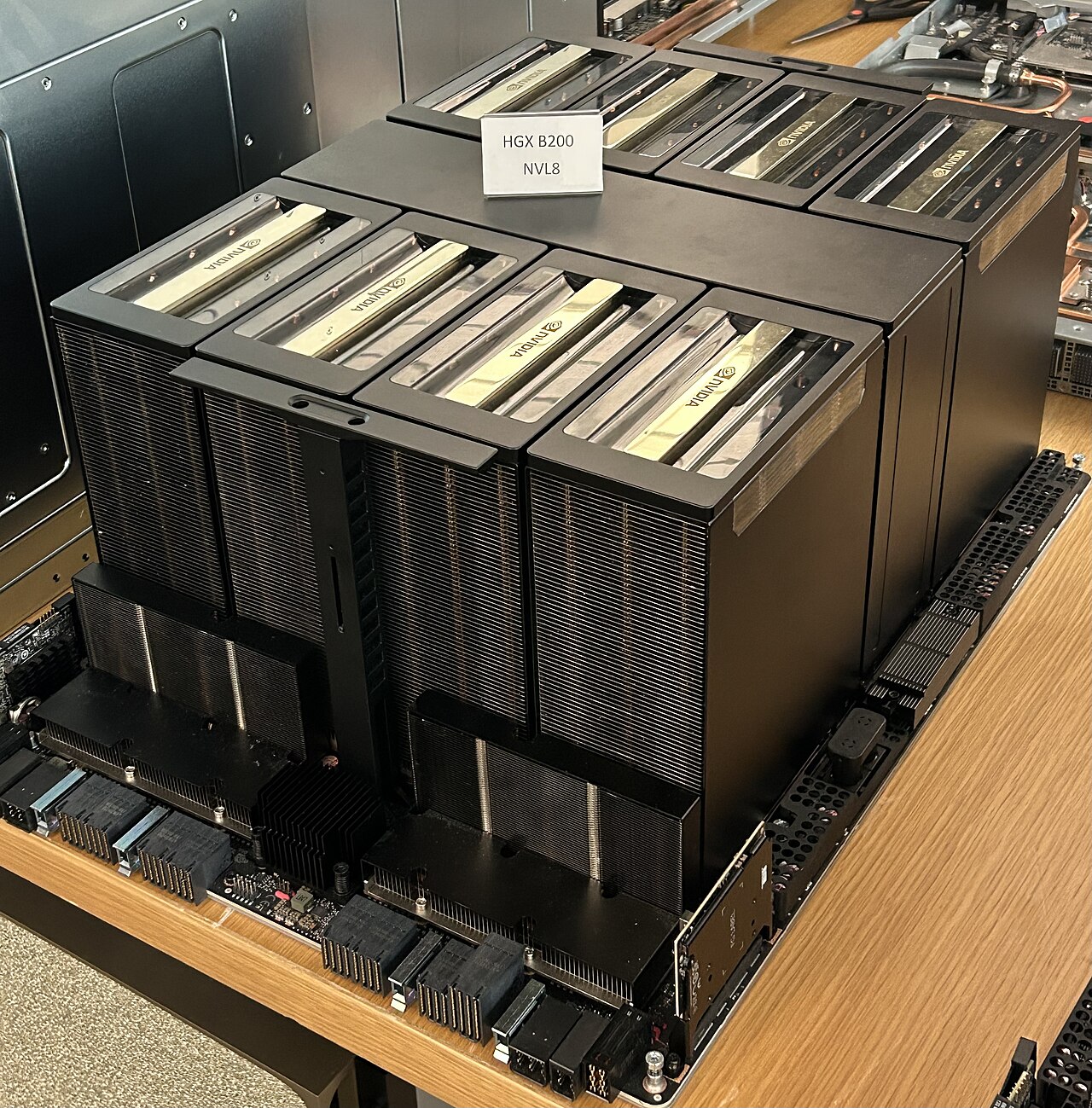
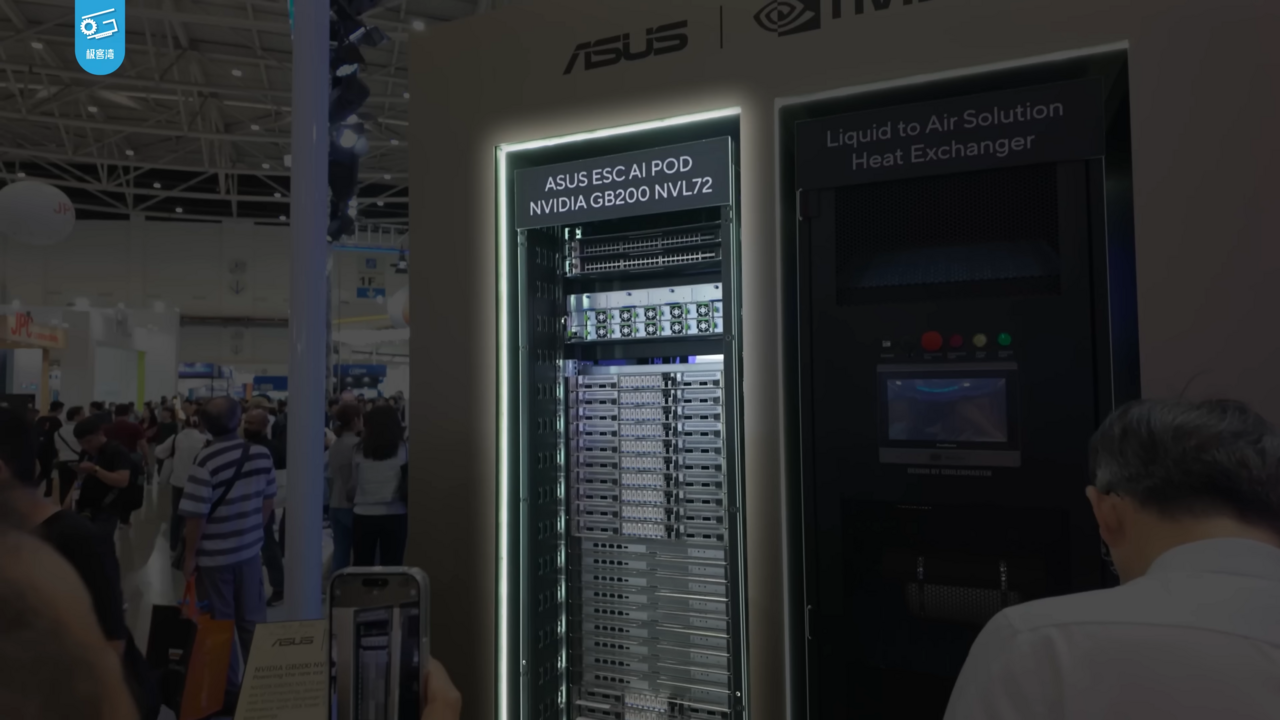
Header image: an Nvidia HGX B200 NVL8 GPU baseboard, by Pokiiri via Wikimedia Commons, licensed under CC BY-SA 4.0. In-body photograph of an Nvidia GB200 NVL72 rack at Computex 2024, by Geekerwan via Wikimedia Commons, licensed under CC BY 3.0. Neither photograph shows Fireworks AI hardware; both illustrate the class of accelerator that AI inference runs on.