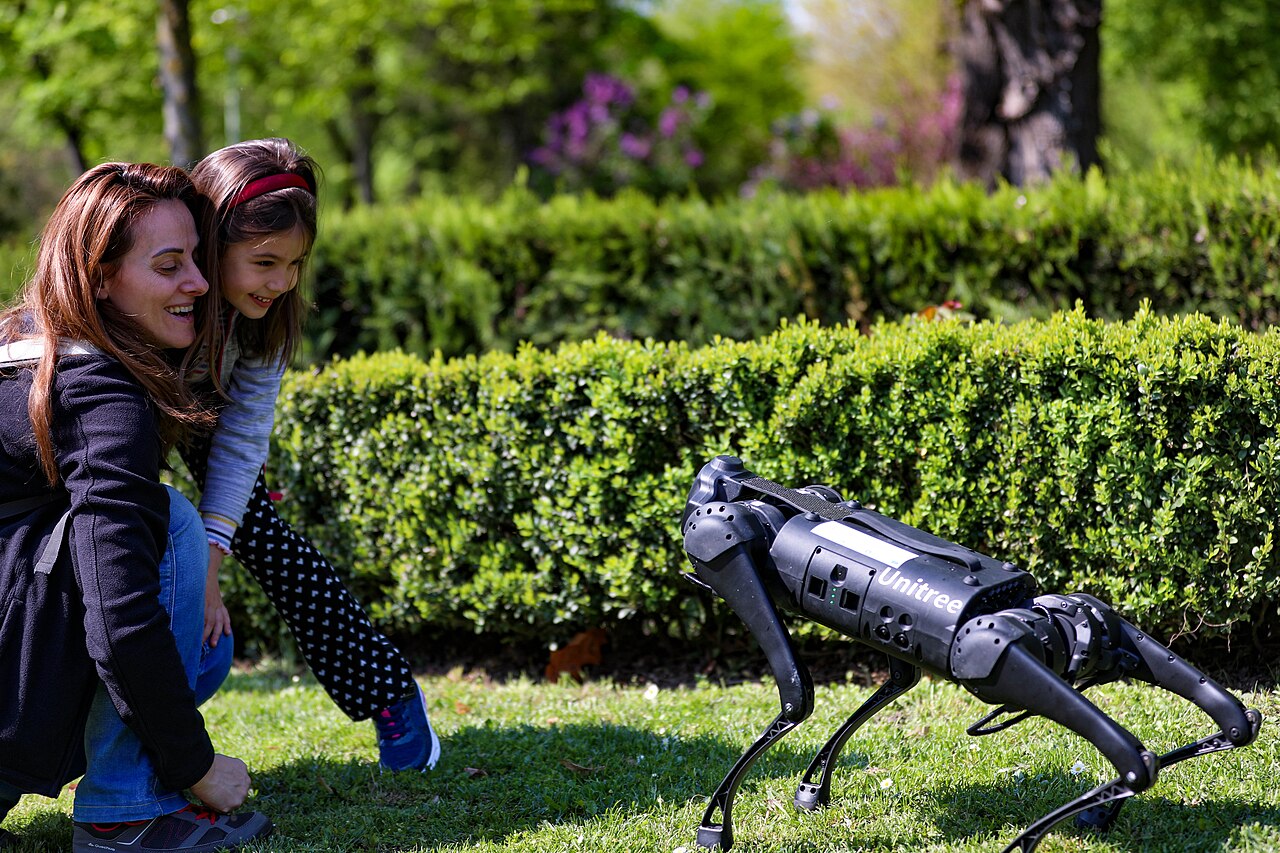
On July 28, 2026, the Federal Communications Commission moved to bar new imports and new equipment authorizations for foreign-made humanoid robots and quadruped robots, the four-legged "robot dogs" that have become common in warehouses, research labs and public demonstrations. The order, which reporting describes as targeting China specifically, also reaches certain power inverters used in renewable-energy and data-center systems. The stated basis is national security: the FCC says these connected devices "could create supply chain vulnerabilities that could disrupt US economic and national security and could create a cybersecurity risk that threatened American critical infrastructure."
That is a lot of policy packed into a single sentence, and most of what matters is in the mechanism, not the headline. This piece walks through what the FCC actually did, why it chose this particular lever, who is exposed, and the two competing readings of the move that are both defensible on the same facts.
The lever: equipment authorization, not a tariff
The FCC does not regulate imports the way the Commerce Department or US Trade Representative do. What it controls is equipment authorization, the approval process every device that emits radio-frequency signals, including WiFi, Bluetooth and cellular-connected hardware, must clear before it can legally be imported or sold in the United States. A humanoid robot or a networked quadruped is, among other things, a radio-emitting device, which is what gives the FCC jurisdiction here at all.
By moving to block new equipment authorizations for these device categories, the FCC is not imposing a tariff or an outright import prohibition in the customs sense. It is closing off the specific approval gate that new Chinese-made humanoid and quadruped robots need to pass through to legally enter the US market going forward. That is a narrower and more technical instrument than a blanket ban, and it matters because of what it implies about scope and timing.
A prospective block, not a recall
The lever is equipment authorization, the FCC approval every radio-emitting device needs before US sale. Blocking new authorizations changes what launches next, not what is already on shelves or in warehouses.
- New humanoid robot models seeking FCC equipment authorization
- New quadruped ("robot dog") models seeking authorization
- Certain power inverters used in renewable energy and data-center systems
- Applies to new models and new versions, not a specific one-time list
- Robots already granted FCC authorization can keep being imported and sold
- Existing US installations and deployed fleets are not recalled
- Robots and inverters below the FCC’s jurisdictional radio-equipment threshold
- Non-Chinese manufacturers’ new filings, which proceed as before
The FCC frames the action as an extension of its existing "Covered List" approach, used previously against Huawei and ZTE communications equipment, applied here to connected robots and inverters.
Prospective, not retroactive
The single most important detail in the order is that it is prospective. Robot models that have already cleared FCC equipment authorization can continue to be imported and sold. The block applies to new models, and new versions of existing models, seeking authorization from here forward. Nothing already deployed in a US warehouse, research lab or demonstration fleet is being recalled or disabled, and nothing already on a retailer's shelf becomes illegal to sell.
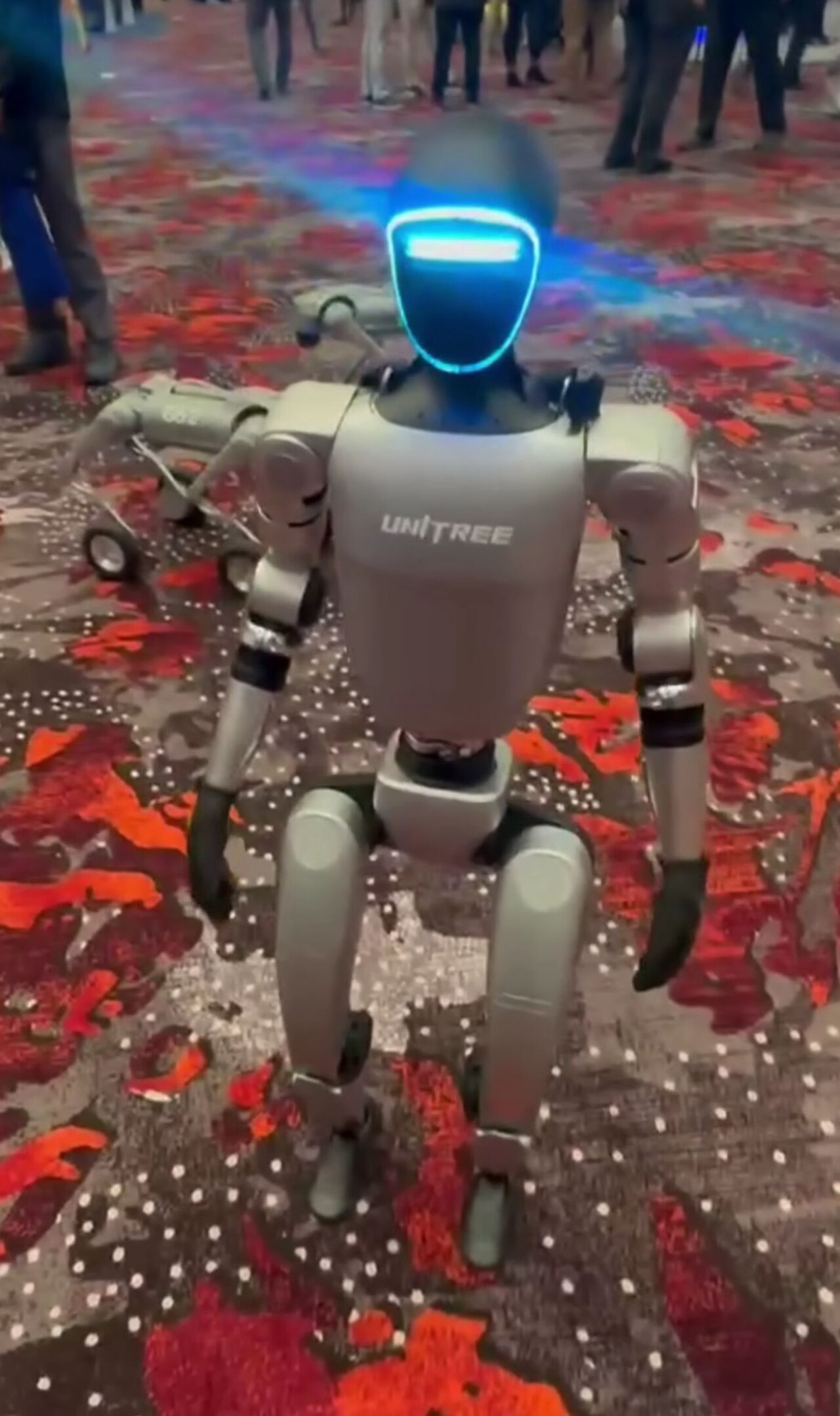
That design blunts any immediate shock to the installed base of robots already operating in the US. What it changes is the next product cycle: the newer, likely more capable successor models that Chinese manufacturers would otherwise have brought to the US market next. In an industry where product generations turn over quickly, a prospective-only rule still has real teeth, it just takes effect on a delay measured in refresh cycles rather than overnight.
Why this, why now
Connected humanoid and quadruped robots are sensor-rich, networked, camera-and-microphone-equipped mobile computers that can operate inside factories, warehouses, hospitals and, increasingly, homes. That is the frame the FCC is applying, treating them as a category of connected device analogous to the networking equipment it has restricted before, rather than as a category of consumer robotics exempt from the security scrutiny applied to routers or telecom gear.
A connected humanoid robot is, from a network-security standpoint, a mobile computer with a camera, a microphone and legs.
The framing behind the FCC's national-security rationale
The order arrives as embodied, physical AI has become one of the most closely watched investment and product categories of 2026, with humanoid and quadruped platforms moving from lab demonstrations toward genuine commercial deployment in logistics, security and industrial settings. That backdrop raises the stakes on the underlying question: whether the robots doing that work, and reporting back telemetry, video and sensor data over a network connection, should be built on foreign-made hardware whose firmware and update pathways the US government cannot fully audit.
The market China built
The reason this order is described as targeting China specifically, rather than foreign robotics broadly, is concentration. China is reported to hold roughly 85 percent of the global humanoid-robot market, a dominance built on a dense domestic supply chain for actuators, motors and batteries, plus years of state-supported investment in the category. Within that market, the Chinese firm Unitree alone is reported to hold nearly a fifth of global share, making it one of the most exposed single companies to the new rule.
Why the ban lands hardest on one country
Reported shares of the global humanoid-robot market. A near-monopoly position is exactly what turns a supply-chain concern into a single-country policy question.
Figures are approximate, as reported in coverage of the FCC action, not independently audited market-research totals.
That scale of dominance is precisely what turns a supply-chain concern into a single-country policy question rather than a general foreign-sourcing rule. Beijing has pushed back, characterizing the move as protectionism rather than a genuine security measure, a framing that lands with more force given how much of the addressable global market China's manufacturers currently hold.
Echoes of Huawei and ZTE
The FCC has used equipment-related restrictions to address Chinese national-security concerns before. Its "Covered List" approach, applied previously to Huawei and ZTE communications equipment, established the precedent that the Commission can bar devices from a company or country it deems a security risk from new authorization, effectively locking them out of legal sale in the US, without needing a separate customs or tariff action to do it. The robot and power-inverter order is reported as an expansion of that same playbook into a new device category, rather than a novel legal theory.
That continuity matters for how durable the rule is likely to be. A mechanism the FCC has already used, defended and had upheld against a major telecom-equipment maker is a mechanism it can extend to a new category with relatively little additional legal exposure. It also means the order should be read as part of a broader, ongoing campaign against Chinese-made connected technology rather than a one-off response to a single incident.
The case for, and the case against
The security case rests on a straightforward premise: a fleet of networked, camera-equipped robots operating inside US facilities is a meaningful attack surface if the hardware, firmware or update channel originates with a foreign manufacturer the US government cannot audit. On that view, closing the authorization gate before Chinese-made humanoids and quadrupeds become deeply embedded in US warehouses, hospitals and infrastructure is a reasonable precaution, and the prospective-only design shows real restraint given the government could have gone further and targeted the installed base too.
The protectionism critique starts from the same facts and reaches a different conclusion. China's manufacturers did not win 85 percent of the global humanoid market through subsidy alone; they also got there on price and iteration speed, and US and allied robotics buyers, especially research labs, small logistics operators and universities that rely on inexpensive Chinese quadrupeds, will feel the effect of a narrower, pricier supplier pool most directly. Beijing's framing of the move as protectionism, while self-interested, is not obviously wrong: a security rule that happens to close off the market leader just as domestic and allied humanoid makers are racing to catch up serves both purposes at once, and the two motives are not easy to disentangle from the outside.
Both readings are coherent, and reporting has not resolved which motive dominates. What is verifiable is the mechanism, the scope, and the market concentration that makes the order land so unevenly on one country's manufacturers.
What changes downstream
For US buyers, the near-term effect is limited. Existing fleets keep running, and currently authorized models keep shipping. The effect shows up at the next refresh: fewer new Chinese-made humanoid and quadruped options clearing US authorization means a narrower and likely pricier menu for warehouses, security teams, research labs and hobbyists who have leaned on inexpensive Chinese hardware, particularly Unitree's widely used quadruped line, to prototype and deploy.
That narrower field is also an opening for the domestic and allied side of the industry. US and allied humanoid and quadruped makers, from warehouse and logistics-focused robotics firms to the more visible humanoid programs at companies like Figure and Boston Dynamics, and Tesla's Optimus effort, are the most likely beneficiaries of a rule that keeps their most price-competitive foreign rivals out of the newest product generation. None of that is guaranteed to translate into faster US robotics progress; it could just as easily mean higher prices and slower deployment if domestic supply cannot scale to fill the gap Chinese manufacturers currently cover.
The broader lesson echoes something builders in adjacent fields have been relearning all year: physical and digital supply chains increasingly run through policy decisions as much as through price and performance. A robotics buyer today has to plan around not just cost and capability but which manufacturer's next authorization filing might get blocked. The same logic applies to software supply chains built around a single AI provider, which is part of why tools like Metir AI, which lets people work across leading models rather than depend on one vendor's roadmap, have found an audience: diversifying the stack is a hedge against exactly this kind of single-point policy risk, whether it shows up in hardware or in software.
The takeaway
The FCC's move is narrower than "the US banned Chinese robots" makes it sound, and broader than a footnote. It works through equipment authorization rather than tariffs, applies going forward rather than retroactively, and reaches power inverters as well as robots. It also lands overwhelmingly on one country's manufacturers because that country, and one firm within it, built an outsized share of the global humanoid-robot market. Whether the rule reads as a proportionate security measure or a protectionist move dressed in security language will keep being argued from the same set of facts. What is not in dispute is that the next generation of humanoid and quadruped robots reaching the US market just got a narrower field of foreign competitors to clear.
Sources:
- United States Bans Chinese Humanoid & Quadruped Robots, Citing National Security | Forbes
- US-China robot ban | CNN
- FCC bans foreign humanoid robots, expanding campaign against Chinese tech | Washington Post
- US bans foreign-made humanoid robots, targeting China, citing national security | NBC News
- FCC bans foreign humanoid robots | The Hill
- China, FCC, foreign-made robots ban, humanoids | NPR
- Humanoid robots, imports, US ban, China, national security concerns | CBS News
Image credits
Header image: A Unitree quadruped robot on display at the NATO Allies / Romanian Land Forces Day celebration, April 22, 2023, Carol I Park, Bucharest. Photo by Sgt. Amber Edwards, public domain (US military work), via Wikimedia Commons. In-body image: a Unitree G1 humanoid robot at UAV Expo 2024, photo by Sayanesy, CC0, via Wikimedia Commons.