For most of 2026, "August 2" has been the date compliance teams circled in red on the EU AI Act calendar. Then, in June, EU lawmakers pushed the Act's toughest obligations back by more than a year. The natural conclusion many organizations drew was that the pressure was off. That conclusion is only half right, and the half that is wrong is the half most likely to produce an August surprise.
The EU AI Act's high-risk rules, the ones governing AI used in hiring, credit scoring, law enforcement and similar high-stakes contexts, were delayed by the "Digital Omnibus" package that the European Parliament and Council finalized in June 2026. But a separate set of obligations, the Act's transparency requirements under Article 50, was not delayed. Those rules, covering chatbot disclosure and AI-generated content labeling, still take effect on August 2, 2026, exactly as originally scheduled.
What the Digital Omnibus actually delayed
The EU AI Act, formally Regulation (EU) 2024/1689, phases in its obligations over several years by risk category. The highest-stakes tier, Annex III "high-risk" systems, faced provider obligations under Articles 9 through 17 (risk management, data governance, technical documentation, human oversight) and deployer obligations under Article 26, originally due August 2, 2026.
In June 2026, the European Parliament formally endorsed a "Digital Omnibus" simplification package, and the Council of the EU gave its final approval on June 29. The package pushes the standalone high-risk deadline to December 2, 2027, and gives AI embedded as a safety component in regulated products, medical devices, machinery, vehicles, an even longer runway to August 2, 2028. The legislative text enters into force once published in the EU's Official Journal, a formality that follows shortly after political agreement.
The stated rationale is not that high-risk AI oversight was deemed unnecessary. It is that the technical standards and conformity-assessment infrastructure the high-risk rules depend on were behind schedule, and enforcing obligations without functioning support tools would have left companies unable to comply even in good faith.
The AI Act's three compliance dates, after the Digital Omnibus
Only the transparency date held. Both high-risk dates were pushed back so technical standards can catch up.
- August 2, 2026Article 50 transparency obligations take effectChatbot AI-disclosure, deepfake and synthetic-media labeling, and emotion-recognition/biometric-categorization notice requirements remain due on the original date.
- December 2, 2027Standalone high-risk (Annex III) obligations now dueProvider duties (Articles 9-17) and deployer duties (Article 26) for high-risk systems in areas like hiring, credit scoring and law enforcement, moved back roughly 16 months by the Digital Omnibus.
- August 2, 2028Embedded high-risk AI (Annex I products) now dueAI acting as a safety component of regulated products, such as medical devices, machinery and vehicles, gets the longest runway of the three dates.
The Digital Omnibus enters into force once published in the EU's Official Journal; dates shown reflect the agreed text as of late June 2026.
What the EU AI Act still requires on August 2, 2026
Article 50 is a narrower, standalone set of duties that does not depend on the same standards infrastructure, and it was left untouched by the delay. It covers four situations:
- Direct human-AI interaction. Systems intended to interact with people, chatbots, virtual assistants, automated phone systems, must be designed so users are informed they are dealing with AI at the point of contact, not buried in later fine print.
- Synthetic and manipulated content. Providers of systems that generate or manipulate images, audio, video or text must ensure outputs are technically marked as AI-generated or manipulated.
- Deepfakes. Deployers who use AI to produce content that looks or sounds like a real person, place, or event must disclose that it has been artificially generated or manipulated. This applies even without intent to deceive and even where no real individual is depicted.
- Emotion recognition and biometric categorization. Deployers of these systems must inform the people exposed to them.
On May 8, 2026, the European Commission published draft guidelines clarifying how providers and deployers should implement these obligations, including acceptable approaches such as persistent visual labels, opening disclaimers on video, and audible warnings on audio content.
What moved, what stayed
The Digital Omnibus touched high-risk obligations only. Transparency duties under Article 50 were left in place.
Compiled from the agreed Digital Omnibus text and Article 50 of Regulation (EU) 2024/1689.
The transparency rules were not caught up in the delay because they were never waiting on the thing that caused it.
Why Article 50 held while high-risk obligations moved
Who is actually in scope, including outside the EU
The scope question is where the false sense of relief becomes most concrete. Article 50 applies based on where an AI system's output is used, not where its provider is headquartered. A company with no EU office, no EU staff and no EU servers is still in scope if its chatbot, image generator or synthetic-media tool is placed on the EU market or its outputs reach EU users. A US-based startup whose customer-support chatbot serves French or German users needs the same disclosure by August 2 as an EU-based one.
Enforcement runs primarily through national market surveillance authorities in each member state, with the EU's AI Office playing a narrower role limited mostly to systems built on general-purpose AI models where the same entity provides both. Penalties for non-compliance can reach €15 million or 3 percent of a company's total worldwide annual turnover, whichever is higher, the same tier used for other Article 5 and Article 50 violations under the Act's enforcement structure.
A practical checklist for generative-AI deployers
For any organization running a customer-facing chatbot or producing AI-generated media reaching EU users, the practical work ahead of August 2 falls into a short list:
- Add an unmistakable AI disclosure at first contact for any chatbot, voice assistant, or automated interaction, not a mention buried in a privacy policy.
- Determine whether your content pipeline touches image, audio, video or text generation, and if so, confirm outputs carry a technical marking identifying them as AI-generated, per the Commission's May 2026 draft guidance.
- Separately flag deepfake-style content, anything that could pass for a real person, place or event, with a visible label or audible disclosure, regardless of intent.
- Add notice for any emotion-recognition or biometric-categorization feature, even where it is a minor part of a larger product.
- Confirm EU-user exposure, not EU incorporation, is the trigger; a US or UK company serving EU customers is not exempt.
- Keep the high-risk delay separate in internal tracking. The extra runway for Annex III and Annex I obligations does not extend to any of the above, and treating the two deadlines as one is the single most common compliance mistake being reported ahead of August.
The risk of the false sense of relief
The Digital Omnibus is a genuinely significant story in its own right: it gives industry and regulators more time to build the standards infrastructure that high-risk conformity assessment depends on, and it reflects a broader pattern of the EU adjusting AI Act implementation as real-world friction surfaces. But headlines emphasizing "the AI Act delay" without the Article 50 caveat have left some organizations believing nothing is due this August. That reading conflates two obligations that never shared a legal basis, a compliance calendar, or a rationale for the schedule each is on.
For teams managing AI-powered products, the practical lesson of the past two months extends beyond the EU AI Act specifically: regulatory obligations attached to AI tools are increasingly granular, provider-specific and quick to shift, and keeping infrastructure flexible enough to adapt is now part of running the product, not a side concern. A platform such as Metir AI, which lets teams work across leading AI models rather than being locked into one vendor's stack, makes it easier to adjust disclosure and labeling behavior as requirements like these change, without a rebuild.
The takeaway
Two deadlines share a date on paper, one high-risk, one transparency, and only one of them moved. December 2, 2027 and August 2, 2028 are now the operative dates for Annex III and embedded high-risk obligations. August 2, 2026 remains the operative date for chatbot disclosure, synthetic-media labeling, deepfake notice, and emotion-recognition and biometric-categorization transparency, for any provider or deployer whose systems reach users in the EU, wherever that company is based. Reading "the AI Act was delayed" as "nothing is due this summer" is the mistake most likely to catch compliance teams out.
Keep compliance flexible as the rules keep moving
Regulatory deadlines for AI products are shifting faster than most product roadmaps can track. Metir AI keeps your workflows portable across the leading AI models, so adapting disclosure, labeling or model choice to a new rule never means rebuilding from scratch. Try Metir AI free.
Sources:
- Yes, August 2 Still Matters: The EU Approved a High-Risk AI Delay, But Most Transparency Rules Are Still Coming | Jones Walker
- EU AI Act Omnibus Agreement, Postponed High-Risk Deadlines and Other Key Changes | Gibson Dunn
- EU Agrees to Delay Key AI Act Compliance Deadlines | Travers Smith
- The Digital AI Omnibus: Proposed Deferral of High-Risk AI Obligations Under the AI Act | DLA Piper
- US Companies Face EU AI Act's Possible August 2026 Compliance Deadline | Holland & Knight
- The EU AI Act's Transparency Rules: A Practical Guide to Article 50 | EU Artificial Intelligence Act
- Deepfakes, Chatbots, AI-Generated Text: European Commission Details Transparency Obligations Under the AI Act | Greenberg Traurig
- Transparency Obligations Under Article 50 of the AI Act | European Commission, Shaping Europe's Digital Future
- EU Agrees Digital Omnibus Deal to Simplify AI Rules | White & Case
- Digital Omnibus on AI | European Parliament Legislative Train Schedule
Image credits
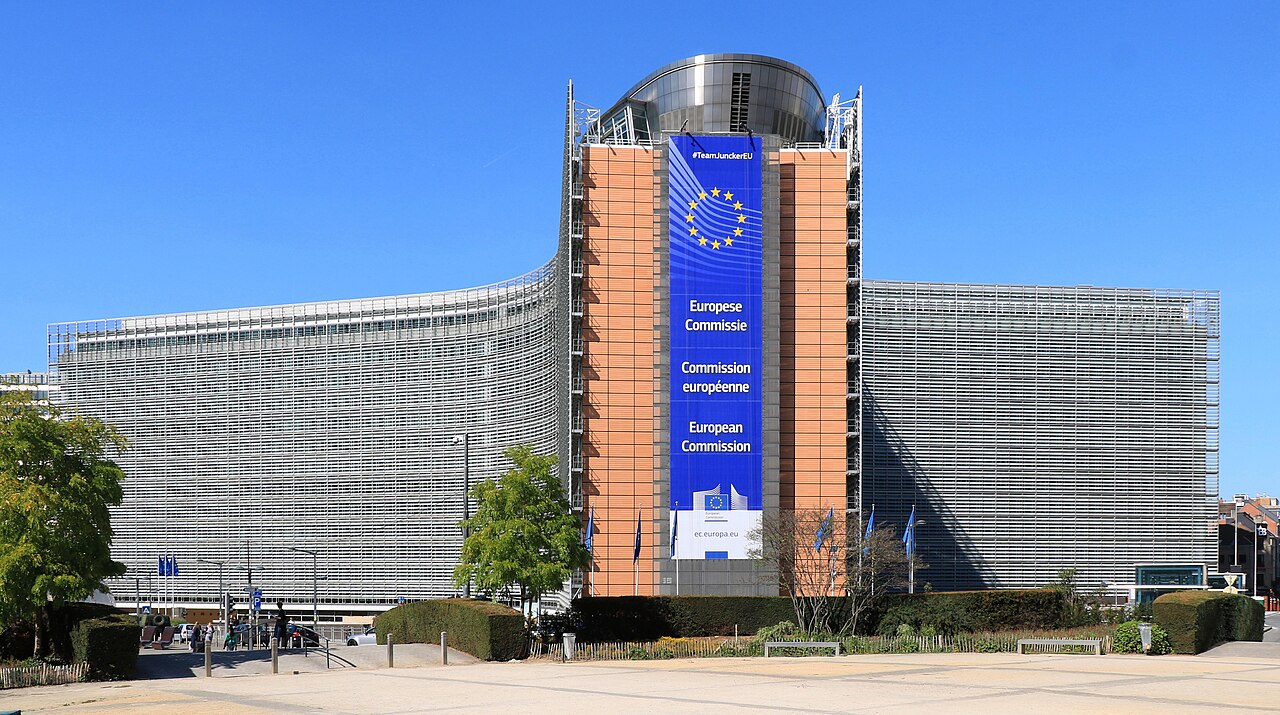
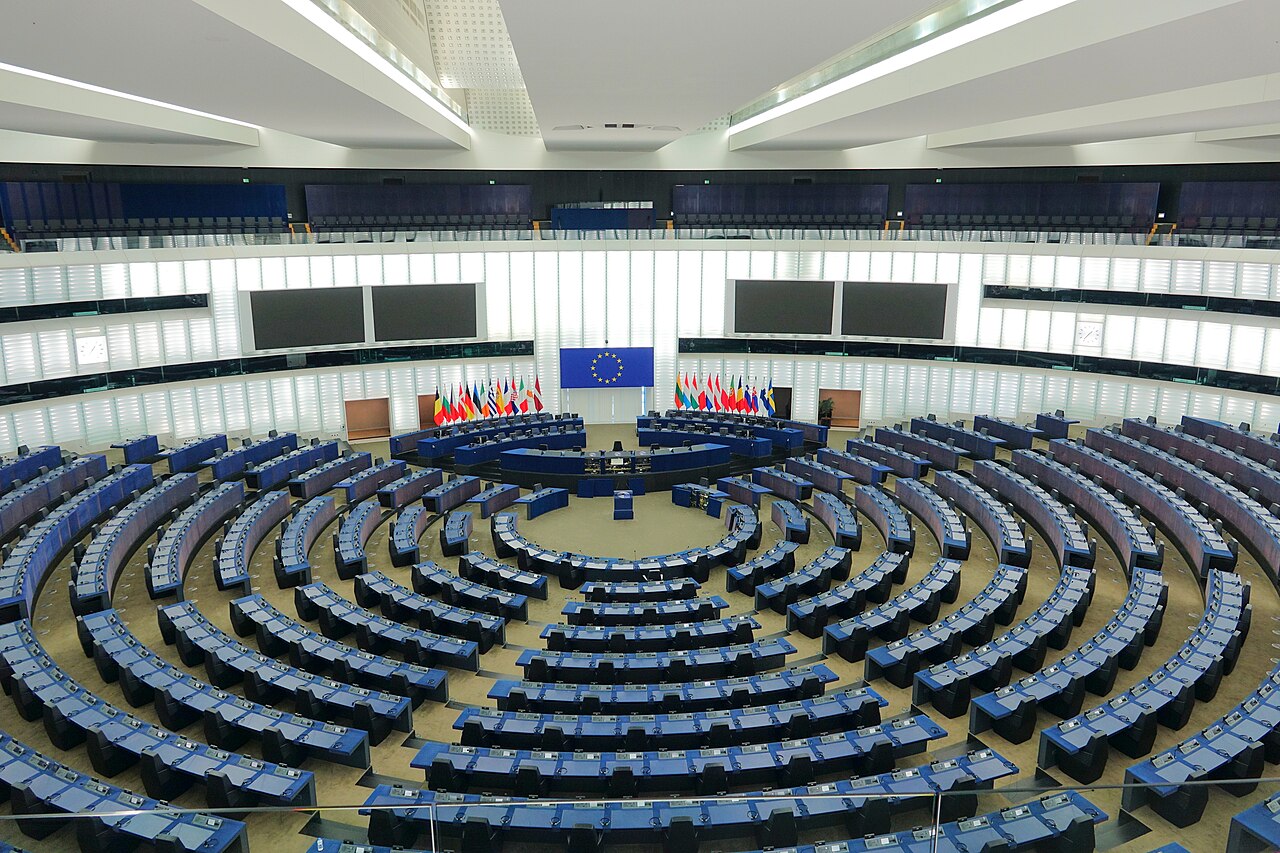
Header image: the Berlaymont building in Brussels, headquarters of the European Commission, by EmDee, CC BY-SA 4.0, via Wikimedia Commons. In-body image: the plenary hemicycle of the European Parliament in Strasbourg, by Gzen92, CC BY-SA 4.0, via Wikimedia Commons.