On October 16, 2026, Anthropic published "How employment is changing at Anthropic," an unusually detailed look at what AI agents have done to the workforce of an AI lab. The headline finding is that by August 2026, agents directed by employees in interactive sessions logged about six hours of work for every one human hour. That is a company describing itself, which makes it both a rare primary data source on AI and employment and a dataset with obvious limits. This piece sets out what the study measured, what changed in hiring, and how far the conclusions can travel.
 Anthropic
What Anthropic measured
The authors (Nathan Wilmers, Regina Catipon, Maxim Massenkoff and Peter McCrory) combined internal records, usage telemetry, surveys, calendar data, Slack patterns and hiring records with 17 employee interviews. Two measurement choices shape every number that follows. Human hours assume 40 hours per week per headcount, and agent time counts inference and active tool use, excludes waits longer than 30 minutes, and pools subagents.
Those definitions matter. Agent hours are not a measure of output or value; they are a measure of machine time, and the report itself notes that about 80% of interactive Claude session time is idle, waiting for human input. A ratio of six agent hours to one human hour therefore describes leverage in time, not a claim that six people's worth of finished work appeared.
The hiring shift
The most concrete labor-market result is about who gets hired. The junior share of technical hires fell from 27% to 9%, and the junior share of technical employees fell from 21% to 14% since early 2025. The technical departments' share of total employment fell from 61% to 56% over the past year, although technical hiring grew in absolute terms. The report adds that junior postings dropped sharply after December 2025.
Anthropic's workforce mix, before and after
Percent. Anthropic reports the change since early 2025 (junior shares) and over the past year (technical share).
Two readings are consistent with these figures. One is substitution: tasks that once justified a junior hire are now delegated to agents. The other is composition: a company growing quickly can change its hiring mix for reasons unrelated to AI, such as demand for senior researchers or infrastructure specialists. The report supports the first reading with manager survey data: in April 2026 a majority of managers said AI changed the skills they hire for, and about one-third of machine-learning managers and one-fifth of software-engineering managers reported hiring less because of AI. Self-reported intent is still not a controlled comparison.
Productivity: strong signal, honest caveat
On output, the study reports that code commits per engineer reached about five times their rate of six months earlier. The authors used a two-way fixed-effects design comparing 192 engineers who adopted coding agents with 74 who did not, with adoption defined as the first month with at least five agentic sessions. They also compared agent-written and human-written code by the same person, in the same month and directory, and found no difference in lines removed or reverted.
The authors flag the main limitation themselves: adoption was not random. Adopters of fully autonomous agents were already on a steeper output trajectory before adopting, so part of the measured gain may be selection rather than effect. Commits are also a volume measure; they do not capture whether the right things were built.
Tool adoption was not random, so results may be biased by selection.
Anthropic's own stated limitation
Work changes shape, not only size
Several findings concern how work is organized. Meta-work, meaning building agent skills, reviews and monitoring dashboards, rose from 10% of an average employee's interactive sessions in fall 2025 to 22% in spring 2026. Standing instructions for agents grew from a few hundred in July 2025 to about 8,500 a year later. Non-technical staff ran 90 coding-focused agent sessions per month by May 2026, up from 2 in August 2025. The median employee spends 20% more time in meetings than a year ago, and agents appear in nearly half of active public Slack channels, adding to human communication rather than replacing it.
Survey data points the same way. Agreement that work processes made employees as productive as possible rose from 44% in late 2024 to 58% in November 2025 and 75% in April 2026, though the report notes the April wording dropped "as possible." Employees expect AI to handle 75% of their work by 2030, compared with 28% for other Americans in an August survey.
What it can and cannot tell us
Anthropic is an extreme case: a company that builds the tools and has unusual freedom to use them. Its revenue per employee at five years old was 2 to 4 times that of Meta and Google at the same age, which suggests it is not a typical employer. The authors' own policy conclusion reflects that: internal protections such as redeployment do not help workers who are never hired, so they argue retraining and income-support policy remain necessary.
For organizations watching the trend, the practical questions are narrower than the headline. How much of an agent's time is productive versus idle? Which junior tasks are genuinely automated and which are simply postponed? And how are review and meta-work costs counted? Teams working across several model providers, including through platforms like Metir that let them compare models side by side, tend to hit these questions earlier, because the cost and quality of agent time varies by model.
The measured summary: one well-instrumented company reports large time leverage from agents, a steep fall in junior technical hiring, and rising meta-work, with an honest note that selection effects limit causal claims. Whether the pattern generalizes is the open question the study cannot answer by itself.
Sources:
- How employment is changing at Anthropic (Anthropic, Oct 16, 2026)
- AI News Today, October 17 (AI Weekly)
Image credits
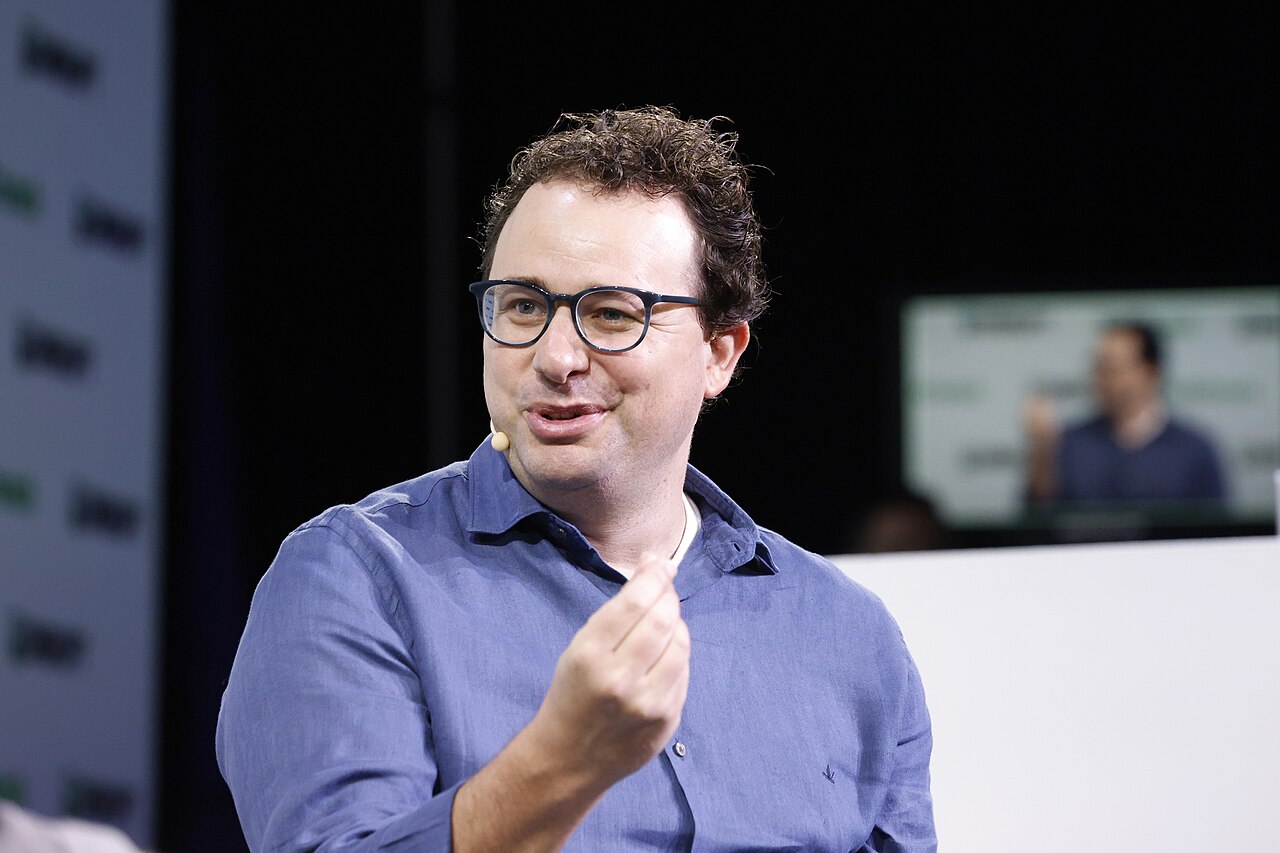
Header and in-body image: Dario Amodei at TechCrunch Disrupt 2023, by TechCrunch, Wikimedia Commons, CC BY 2.0 (source).