
On August 25, 2026, a two-year-old Washington, D.C. startup called Emerald AI announced a $150 million Series A at a $1.05 billion valuation, co-led by Energize Capital and DCVC, taking its total funding past $220 million. The round is notable less for its size, which is unremarkable in a year of billion-dollar AI raises, than for what it says about where the constraint on the AI buildout has moved. Emerald does not make chips, models, or cooling systems. It makes software that lets a data center turn its own power consumption up and down on command. The bet behind the valuation is that flexibility, not silicon, is now the scarce resource.
Why Power Became the Binding Constraint
For most of the AI era, the story was about accelerators: who could get enough of them, and how fast. That framing is now incomplete. A modern AI data center is a multi-hundred-megawatt electrical load, and connecting one to the grid can take years, because utilities size their systems for the rare peak hour when everyone's demand collides. New large loads sit in interconnection queues while transmission gets studied and, sometimes, built. The chips can be manufactured faster than the substations that feed them. That is the wall the industry is now hitting, and it is a slower wall to move than a fab.
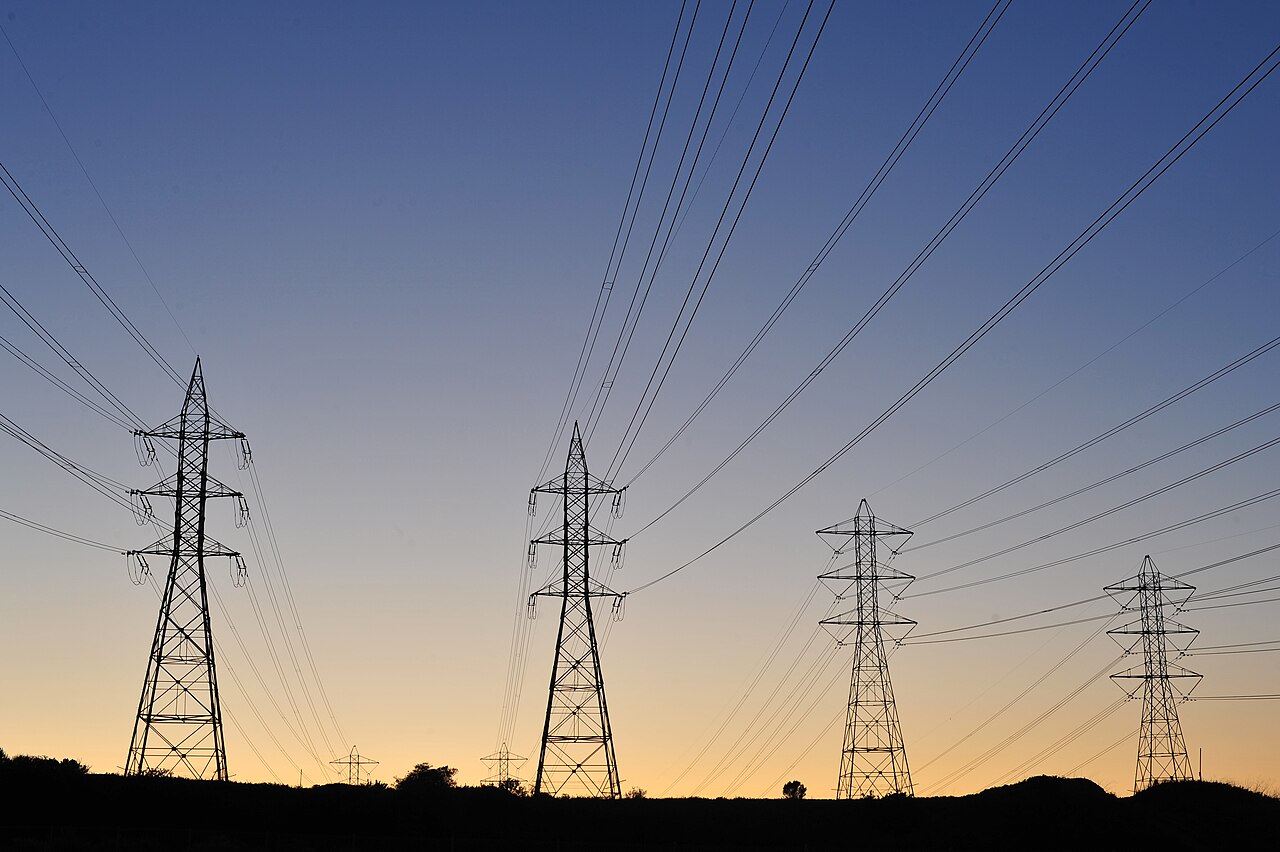
Emerald's founder, Varun Sivaram, a former U.S. energy official, built the company in late 2024 around a specific observation about that peak. The grid is sized for a demand spike that happens only a handful of hours a year. The rest of the time, there is unused headroom. If a large, controllable load could agree to back off during those few stressed hours, it could plug into the existing system without waiting for new generation to be built. The question was whether an AI data center, historically run flat out because idle GPUs are wasted money, could actually be made to flex without wrecking the workloads running on it.
The Phoenix Test
The company's answer is the Emerald Conductor, a control layer that sits between the grid and the data center and modulates real AI workloads in response to grid conditions. In a Phoenix proof of concept run with Oracle and NVIDIA, Emerald used a cluster of 256 NVIDIA GPUs to cut the site's power draw by 25% from its average base load and hold that reduction for three hours, ramping down and back up over fifteen-minute windows, while keeping the workloads performing. Across 33 experiments spanning three to six hours, the system managed 212 jobs and predicted its own power use to within about 4.5% of actual. In a separate emergency scenario, it shed roughly 30% of load within 30 seconds.
How far a data center can flex: the Phoenix demonstration
Power draw as a percentage of average base load, from Emerald AI's proof of concept run with Oracle and NVIDIA on a 256-GPU cluster.
Average base load
25% cut, held for 3 hours
~30% dropped within 30 seconds
A sustained cut taken during the few stressed hours a year is what lets a new load use existing grid headroom. Figures from the Phoenix proof of concept.
Those numbers are the whole argument in miniature. A sustained 25% reduction, taken during the few hours a year when the grid is strained, is exactly the concession a utility needs in order to say yes to a new load on existing wires. The 30-second emergency shed is the version that keeps the lights on during a genuine crisis. And the sub-5% prediction error matters because a flexible load is only useful to a grid operator if it is also a predictable one. The demonstration did not prove the model works everywhere, but it did convert a plausible idea into a measured result.
The grid is sized for a peak that lasts a few hours a year. A load that can step back during those hours can use the headroom that already exists.
The Emerald AI thesis, in one line
The Number Behind the Valuation
The figure investors are underwriting is a big one. Research that Emerald and its partners cite, originating in a widely discussed Duke University analysis, estimates that the existing U.S. grid could absorb on the order of 100 gigawatts of new load if large users agreed to curtail their demand for only a small fraction of the year. One hundred gigawatts is a vast amount of capacity, comparable to the output of roughly a hundred large power plants, available in principle without building any of them. That is the prize: not a marginal efficiency, but a way to sidestep the multi-year bottleneck entirely for a meaningful share of new AI capacity.
How the Conductor turns a data center into a grid asset
The control loop that lets an AI site trade a small amount of curtailment for faster access to the existing grid.
The utility or market flags a strained hour: high demand, tight supply, or an emergency.
Emerald’s control layer shifts, slows, or pauses flexible AI jobs and reallocates the rest.
Site power falls within seconds to minutes; the reduction is predictable enough for the grid to rely on.
The trade is small, occasional curtailment in exchange for connecting sooner to power that already exists.
It is worth being precise about what that 100 gigawatt figure is and is not. It is a modeled estimate of latent headroom, not a booked pipeline, and it assumes utilities, regulators, and data center operators all agree to a curtailment arrangement that is still uncommon today. The technology has been shown at the scale of hundreds of GPUs across a handful of demonstrations, not across a national fleet. Emerald's own next milestone is enforceable curtailment in the ERCOT market in Texas, which is a harder test than a voluntary proof of concept because the reduction becomes a contractual obligation rather than a demonstration. The thesis is credible and now partly evidenced. It is not yet proven at scale.
Why the Rest of the Stack Is Watching
The reason a power-flexibility startup drew a unicorn valuation is that its constraint sits underneath everyone else's. NVIDIA's latest quarter and its commitment of hundreds of billions of dollars to future supply assume that the data centers to house all those chips will actually get built and energized. Emerald is working with NVIDIA and Digital Realty on a nearly 100-megawatt power-flexible AI factory in Manassas, Virginia, slated to come online later this year, which is precisely the kind of site that would otherwise wait in a queue. If flexibility can shorten that wait, it raises the ceiling on how much compute the physical world can support in the near term, which is a variable that touches every model provider and every buyer of AI.
 NVIDIA
For teams building on top of that stack rather than energizing it, the practical takeaway is the same one that runs through the whole compute layer right now: the cost and availability of the underlying capacity are being renegotiated constantly, by the grid as much as by the chipmakers. Where a workload runs, and how much it costs to run there, will increasingly depend on power markets that vary by region and by hour. A platform that stays model-agnostic and portable, the way Metir AI routes across providers rather than binding to one, is one way to keep an application's economics attached to wherever the capacity is cheapest and cleanest, instead of to a single site's assumptions about power.
What to Watch Next
The signal to track is not Emerald's next funding round but its next result. Voluntary demonstrations show what is possible; enforceable curtailment contracts show what utilities will actually pay for. If the ERCOT work turns into binding, priced flexibility, and if the Manassas factory comes online on a shortened timeline because it can flex, the 100 gigawatt estimate starts to look like a roadmap rather than a slide. If it stalls on regulatory or economic friction, it stays an elegant idea. Either way, the reframing is durable: the AI conversation has quietly expanded from how many chips the industry can make to how much power the grid can actually deliver, and when.
Sources:
- Emerald AI Raises $150 Million Series A at $1.05 Billion Valuation | Business Wire
- Data Center Power Solutions Startup Emerald AI Raises $150 Million at Unicorn Valuation | ESG Today
- Emerald AI: How Grid-Flexible AI Factories Unlock 100 GW of Capacity | NVIDIA
- Nvidia and Oracle tapped this startup to flex a Phoenix data center | Latitude Media
- In perfect harmony: How Emerald AI is turning data centers into flexible grid assets | Data Center Dynamics
Image credits
Header image: a data center server hall, by BalticServers.com via Wikimedia Commons, licensed under CC BY-SA 3.0. In-body photograph of high-voltage transmission lines at dusk by Chris Hunkeler via Wikimedia Commons, licensed under CC BY-SA 2.0.