
DeepSeek V4 spent the spring in a preview state and the early summer in a limited grayscale rollout. In the week of July 21, 2026, it finished the transition to general availability, and on July 24 DeepSeek retired the legacy V3 model aliases that had pointed at the older generation. The quiet mechanics of that switch matter less than what is now generally available: an open-weight, MIT-licensed model family that independent testing places at the top of the open field and within a fraction of a point of the strongest closed systems on coding, priced far below either. This piece walks through what V4 actually is, why it is cheap to run, where it sits on the benchmarks, and what a downloadable frontier model changes for the people choosing what to build on.
 DeepSeek
What DeepSeek V4 is
V4 is not a single model but a family with two members. V4-Pro is the large one, with 1.6 trillion total parameters of which about 49 billion fire on any given token. V4-Flash is the smaller sibling at 284 billion total and 13 billion active. Both default to a 1 million token context window and can produce up to 384,000 tokens in a single response, and both ship as open weights on Hugging Face under the MIT license, which permits commercial use with minimal restriction. That combination, a very large sparse model that anyone can download and run, is the crux of why the release is worth attention rather than a routine version bump.
The headline architectural change is a replacement for the residual connections that almost every modern transformer relies on. DeepSeek calls its version Manifold-Constrained Hyper-Connections, a scheme that constrains how hidden states move through the network rather than simply adding each layer's output back to a running sum. The practical payoff the company emphasises is memory efficiency at long context: at the full 1 million token window, V4-Pro is reported to use roughly a tenth of the key-value cache its V3.2 predecessor needed. Key-value cache is the memory a model holds for every token it has already read, and it is often the binding constraint on how long a context you can serve and how many requests you can batch. Cutting it by an order of magnitude is the difference between a long context being a demo feature and a production one.
Why it is cheap to serve
The reason a 1.6 trillion parameter model can be priced like a small one is the same reason it can run at all: sparsity. Only a fraction of the network activates per token.
How sparse the mixture of experts is
Total parameters versus the parameters that actually fire on each token. Log scale, billions of parameters.
V4-Pro holds 1.6 trillion parameters but activates only 49 billion per token, so serving cost tracks the small active figure rather than the large total.
The gap between the two bars for each model is the whole economic story of a mixture of experts. The total parameter count sets the ceiling on what the model can know; the active count sets what it costs to run. V4-Pro carries 1.6 trillion parameters of knowledge but pays compute for only 49 billion of them on each token, and V4-Flash pays for just 13 billion. That is why the list prices land where they do.
Output price per million tokens
List output prices. DeepSeek V4 is open weights; the two reference models are hosted only.
DeepSeek V4-Pro lists at $0.87 per million output tokens, roughly a seventeenth of Kimi K3, and its weights can be downloaded and self-hosted.
V4-Pro lists at about $0.435 per million input tokens and $0.87 per million output tokens; V4-Flash comes in near $0.14 and $0.28. For comparison, Moonshot's Kimi K3, another capable Chinese open model released the same month, lists at $3.00 and $15.00, and Google's hosted Gemini 3.6 Flash sits at $7.50 on output. DeepSeek V4-Pro is therefore roughly a seventeenth of Kimi K3's output price while remaining downloadable, a reminder that the two Chinese labs have taken opposite pricing stances in the same generation. Where Moonshot bet that buyers will pay Western mid-tier prices for frontier capability, DeepSeek is holding to the rock-bottom pricing that first made its name.
Where it lands on the benchmarks
DeepSeek published the usual strong self-reported numbers, and as always the launch chart flatters the lab that draws it. The more useful signal is where independent and reproducible coding evaluations put the model.
On SWE-bench Verified, a test of whether a model can resolve real GitHub issues, the strongest configuration reported for the family, V4-Pro-Max, scores about 80.6 percent. That is the highest figure posted by any open-weights model to date, and it sits within roughly a fifth of a point of the leading closed frontier models, which cluster near 80.8 percent. The significance is not that V4 wins; it does not quite. It is that a model a developer can download now matches the closed frontier on a hard, practical coding benchmark rather than trailing it by a tier. On broad knowledge and reasoning tests the picture is more ordinary, with V4 competitive but not leading, which is the usual shape for a model tuned heavily toward code and agentic work.
A model a developer can download now matches the closed frontier on a hard coding benchmark rather than trailing it by a tier.
On SWE-bench Verified
Two caveats keep this honest. Benchmark configurations labelled Max often involve extra sampling or scaffolding that costs more tokens and time than a plain single-pass call, so the headline score is not the same as the out-of-the-box experience. And a strong SWE-bench number does not transfer automatically to every coding workflow; long-horizon agent runs, unfamiliar codebases and non-English tasks all diverge from what the benchmark measures. The safe reading is that V4 is a genuinely frontier-tier coding model, not that it is the best model for any particular job.
What an MIT-licensed frontier model changes
The license is doing quiet work here. MIT is about as permissive as open licensing gets: it allows commercial use, modification and redistribution with essentially only an attribution requirement, and unlike some open-weight releases it does not attach usage caps or field-of-use restrictions. Combined with published weights, that means an organisation can in principle run V4 entirely on its own infrastructure, inspect it, fine-tune it on private data, and never send a token to an external API.
The practical barrier is real. Serving a 1.6 trillion parameter model, even a sparse one, takes serious hardware and engineering, so most teams will consume V4 through a hosted endpoint rather than self-hosting. But the option existing at all changes the negotiating position. When a frontier-tier model is available under MIT, the price of any closed alternative has to be justified against a free-to-run floor, and the risk of being locked to a single vendor's roadmap, pricing or availability drops, because a capable fallback can be stood up in-house if it ever has to be.
What it means for people building on models
For a team deciding what to build on, V4 widens an already crowded menu in a specific direction: it adds a frontier-tier coding model that is open, extremely cheap to call, and strong at long-context and agentic work, at the cost of being large to self-host and unremarkable on some general reasoning tasks. It is an obvious candidate for high-volume code and agent workloads where price per task dominates, and a weaker default for tasks that need the very top of the reasoning charts or tight latency.
The recurring question underneath all of this is how to exploit a field where a cheap open Chinese model, an expensive open Chinese model, open US models and closed US frontier systems now trade blows on capability and diverge by more than an order of magnitude on price, all within a single month. Hard-wiring a product to any one of them is a bet that its particular trade-off will still be the right one next quarter. The more durable approach is to stay portable and route each job to whatever fits it, so a bulk coding task can run on something like V4 while a reasoning-heavy one goes to a closed frontier model. A model-agnostic workspace such as Metir AI, which exposes open and closed models side by side, is one way to hold that flexibility, so trying V4 on an agentic task is a routing choice rather than a migration.
The bigger picture
DeepSeek V4's general availability is a data point in a trend the whole of 2026 has been tracing: the gap between open and closed models is now narrow, and on some axes, price and long-context efficiency in particular, the open side is ahead. What makes V4 notable inside that trend is the combination of an MIT license, a frontier-tier coding score, and pricing that undercuts almost everything around it. It does not make the closed frontier obsolete, and it does not win every benchmark. It does make the decision to commit an entire stack to a single closed model look, increasingly, like a choice rather than a necessity.
Sources:
- DeepSeek V4: 1.6T MoE, 1M Context, Architecture, Benchmarks, Pricing | MorphLLM
- DeepSeek V4 Pro Complete Guide: 1.6T Parameters, 80.6% SWE-bench, Open Source | AI Made Tools
- DeepSeek V4 GA: Architecture, Inference Efficiency, and What the Grayscale Test Reveals | Hugging Face
- DeepSeek V4: Features, Benchmarks & Comparisons | DataCamp
- DeepSeek V4 Benchmarks: MMLU, HumanEval & SWE-bench | Macaron
Image credits
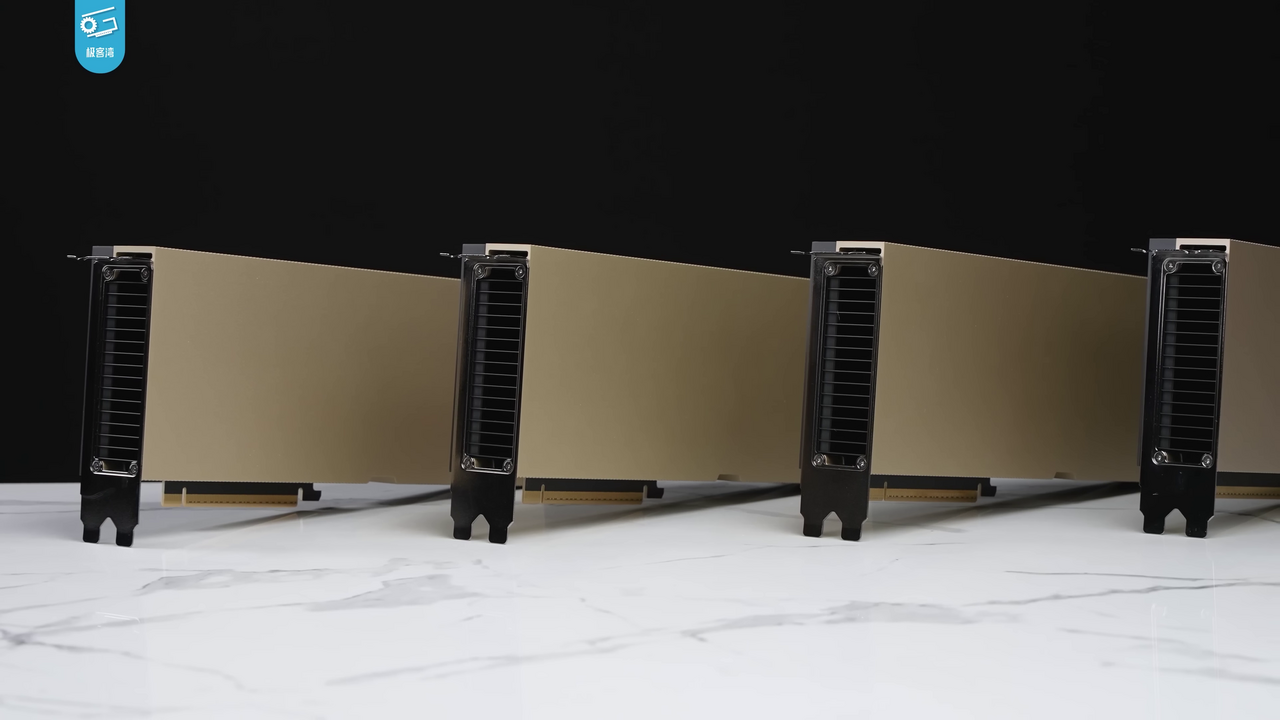
Header image: the Hangzhou skyline across West Lake, in the city that is home to DeepSeek and its parent High-Flyer, by Windmemories via Wikimedia Commons, licensed under CC BY-SA 4.0. In-body photograph of Nvidia H100 accelerators by Geekerwan via Wikimedia Commons, licensed under CC BY 3.0. The photograph shows general-purpose data-center GPUs, not DeepSeek's own hardware.