DeepSeek put its first multimodal model live on its API on August 21, 2026. DeepSeek-V4-Flash-Vision-Exp adds image understanding, screenshots, charts, scanned documents, photographs, to the company's cheap "Flash" line, while matching the text-only model on agent, reasoning, and coding benchmarks. The headline detail is pricing: DeepSeek is charging images at exactly the same per-token rate as text, rather than adding the premium that most multimodal APIs carry. This piece lays out what shipped, what it costs, how it benchmarks against DeepSeek's own text model and against Claude Opus 4.8, and where the "open" story around it gets more complicated than the V4 line's track record would suggest.
 DeepSeek
 Anthropic
 NVIDIA
What actually shipped
V4-Flash-Vision-Exp is an experimental vision-enabled build of DeepSeek-V4-Flash-0731, the post-trained update to DeepSeek's fast, cheap model tier that shipped July 31, 2026. According to DeepSeek's own release notes, the model accepts mixed text and image input, up to 600 images per request, images up to 8,192 pixels per side (4,096 when a request carries 15 or more images), delivered as base64, URLs, or through DeepSeek's Files API, and returns text output. Text-only performance is meant to match the base V4-Flash model: this is additive vision capability, not a smaller or repurposed model. Architecturally it inherits V4-Flash's sparse mixture-of-experts design, 13 billion active parameters drawn from 284 billion total, and DeepSeek shipped a compatible orchestration update, DeepSeek Harness 0.1.1, alongside it.
What "vision at text price" changes in an agent loop
Before this release, a DeepSeek-based agent that hit a screenshot or scanned document had to detour through a separate OCR step or a pricier multimodal model.
The ceiling is fixed per image (up to 384 tokens) regardless of resolution, so a large screenshot and a small one cost the same to read.
Pricing: no multimodal tax
The pricing detail is the part most coverage led with. Under DeepSeek's standard, off-peak rate card, V4-Flash-Vision-Exp costs $0.22 per million input tokens on a cache miss (or $0.007 per million on a cache hit) and $0.66 per million output tokens. Those rates double during DeepSeek's declared peak window, 01:00 to 04:00 and 06:00 to 10:00 UTC, to $0.44 and $1.32 respectively. Crucially, that is the identical rate card DeepSeek already charges for text-only V4-Flash. Images are tokenized for billing at up to 384 tokens each, capped regardless of resolution, so a 5,000-by-5,000-pixel screenshot and a 500-by-500 thumbnail cost the same to read. Most hosted multimodal APIs charge more for vision than for text, or price image tokens separately based on resolution tiers. DeepSeek folding image input into its existing Flash rate card, rather than introducing a new price point, is the more consequential decision here than the benchmark scores.
The pricing choice, not the benchmark score, is what actually changes an agent's economics: a screenshot now costs whatever a comparable stretch of text would have cost.
Reading on the release
Benchmarks: close to Opus 4.8, sometimes past it
On the Artificial Analysis Intelligence Index, an aggregate across nine evaluations including GPQA Diamond, Humanity's Last Exam, and Terminal-Bench 2.1, V4-Flash-Vision-Exp scores 51, roughly fifth among the 176 models the tracker covers and well above its comparison-class median of 18. On Terminal-Bench 2.1 specifically, a text agent benchmark, DeepSeek reports 83.9 for the vision build against 82.7 for text-only V4-Flash and 85.0 for Claude Opus 4.8, a gap of just 1.1 points to the closed frontier model. On multimodal-specific evaluations the picture is mixed but close: DeepSeek's own numbers put V4-Flash-Vision-Exp at 36.5 on ApexBench against 39.4 for Opus 4.8, but ahead of it on Agents' Last Exam (27.3 versus 25.7) and ZeroBench Pass@5 (35.0 versus 34.0). One important caveat: DeepSeek ran these comparisons under what it calls Harness Minimal Mode, and reviewers including eesel AI have flagged that these are not independently verified third-party numbers. Read them as DeepSeek's self-reported picture of where it stands, not as a settled result.
Adding vision did not cost agent performance
Terminal-Bench 2.1, a text agent benchmark. The vision variant edges out its own text-only base model and closes most of the gap to Claude Opus 4.8.
A 1.2-point gain over text-only V4-Flash on a text benchmark, despite the vision variant carrying the added burden of image understanding.
What "vision at text price" changes
The practical effect sits in agent workflows that already mix text and images, an agent scraping a webpage that returns a screenshot instead of clean HTML, a document pipeline that hits a scanned PDF page, a finance or research task that needs to read a chart rather than a data table. Before this release, a DeepSeek-based agent hitting one of those artifacts had to detour: run OCR, call a separate (usually pricier) vision-capable model, or drop the image and lose the information. Folding vision into the same rate-card model, in the same 1M-token context, removes that detour and the extra integration it requires. It does not, on its own, make an agent good at reading a messy screenshot or a low-resolution chart; that is still a capability question the benchmarks above only partially answer, and the 384-token cap per image means a genuinely dense or unusually detailed image is compressed the same amount as a simple one, a real ceiling on how much visual detail the model can actually extract from any single frame.
The open-weight question, and where it does not apply here
DeepSeek's V4 line has, so far, kept a consistent pattern: V4-Flash, its post-trained V4-Flash-0731 update, and the larger V4-Pro checkpoints are all published on Hugging Face under the permissive MIT license, downloadable and self-hostable by anyone with the hardware to run them. V4-Flash-Vision-Exp breaks that pattern, at least for now. As of this release it is API-only. DeepSeek has not published downloadable weights for the vision-enabled checkpoint, and the deepseek-ai organization's Hugging Face listings show no vision-exp entry alongside the text-only Flash and Pro models. The "experimental" tag appears to describe distribution as much as capability: this reads as DeepSeek testing multimodal demand and behavior through its own hosted API before deciding whether, or on what timeline, to release the checkpoint the way it has released every other model in the V4 family. Community observers on forums following the release expect an eventual open release given DeepSeek's history, but that is an expectation, not a confirmed fact.
That distinction matters because it is the openness of the V4 line, not any one model's pricing, that has been doing the real work of pushing down what capable multimodal inference costs across the industry. A self-hostable checkpoint sets a hard floor: anyone with sufficient GPU capacity can run it at cost, which puts a ceiling on what any hosted provider, DeepSeek included, can charge before a customer with the hardware budget simply runs it themselves. An API-only model does not carry that discipline; DeepSeek can, in principle, change V4-Flash-Vision-Exp's price at will. The gap-closing story between open and closed frontier multimodal models is real (Terminal-Bench 2.1's 1.1-point gap to Opus 4.8 is the smallest margin DeepSeek has published against a frontier closed model on that benchmark to date), but it is worth being precise about which part of that story is actually open right now.
The takeaway
What is verifiable: DeepSeek shipped its first multimodal model on August 21, 2026, priced image input at its existing text rate with no multimodal premium, and published benchmark numbers, DeepSeek's own, run under its own minimal harness, that put it within roughly a point of Claude Opus 4.8 on a text agent benchmark and ahead of it on two of three cited multimodal ones. What remains open: whether DeepSeek releases downloadable weights for this specific checkpoint, and how the self-reported benchmarks hold up under independent, third-party evaluation.
For teams building agents that need to read a screenshot one turn and a spreadsheet the next, the practical lesson is less about any single model's price sheet and more about not getting locked into one. Routing a task to whichever model, open or closed, handles it most cheaply and capably at that moment is the model-agnostic approach Metir AI takes across the providers it supports, so a pricing or capability change on any one vendor's roadmap does not become your product's problem to solve.
Sources:
- DeepSeek-V4-Flash-Vision-Exp Release: Multimodal API Now Live | DeepSeek API Docs
- DeepSeek V4 Flash Vision Exp - API Pricing & Providers | OpenRouter
- DeepSeek V4 Flash Vision Exp Review: Benchmarks & Price | Build Fast with AI
- DeepSeek V4 Flash Vision Exp review: the vision is the sideshow | eesel AI
- DeepSeek V4 Flash Vision Exp: same price, one big catch | eesel AI
- DeepSeek Releases V4-Flash-Vision-Exp, Matches Opus 4.8 On Some Multimodal Benchmarks | OfficeChai
- DeepSeek V4 Flash Vision: Images, Same Price, Two Clocks | Digital Applied
- DeepSeek-V4-Flash-Vision-Exp: New Multimodal AI Launch | Emergent
- DeepSeek V4 Flash Vision Exp | Artificial Analysis
- deepseek-ai/DeepSeek-V4-Flash-0731 | Hugging Face
- DeepSeek | Wikipedia
Image credits
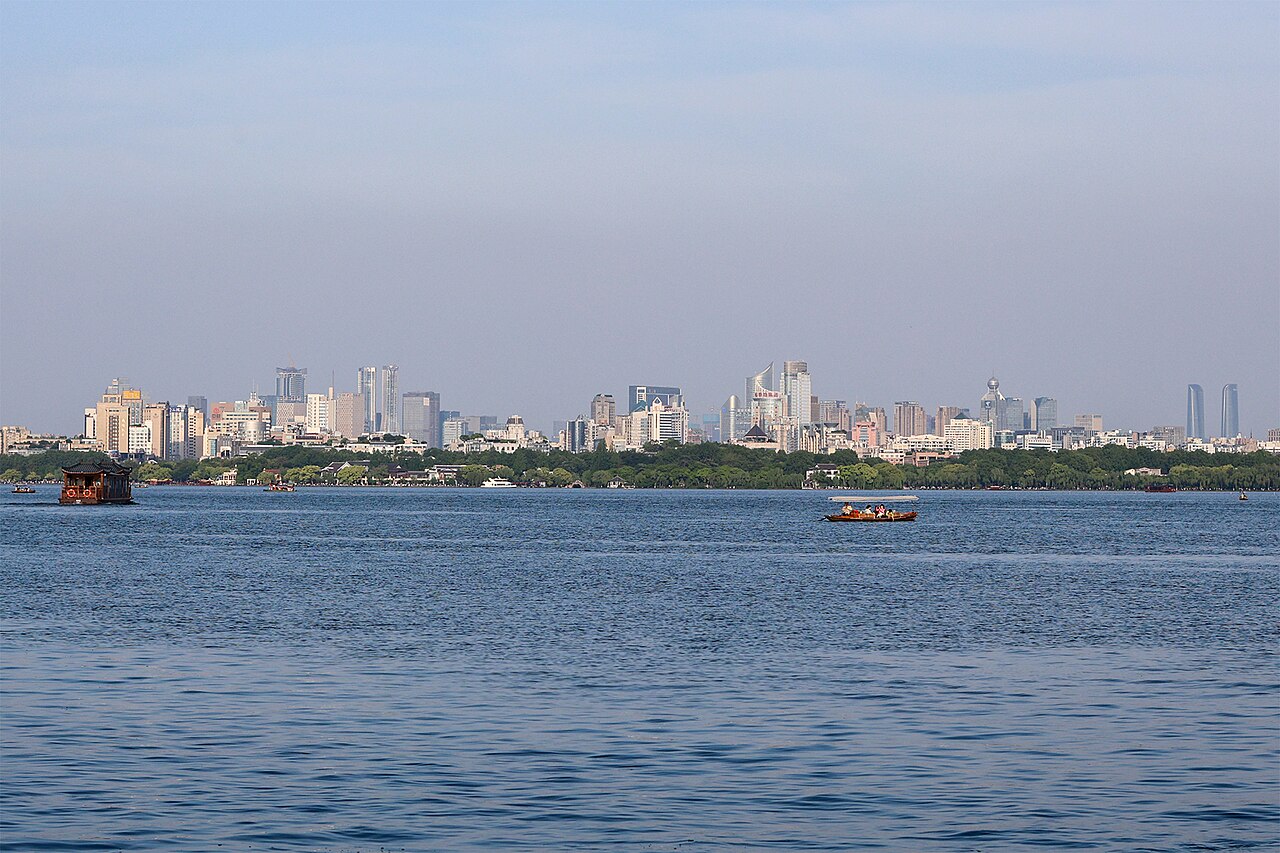
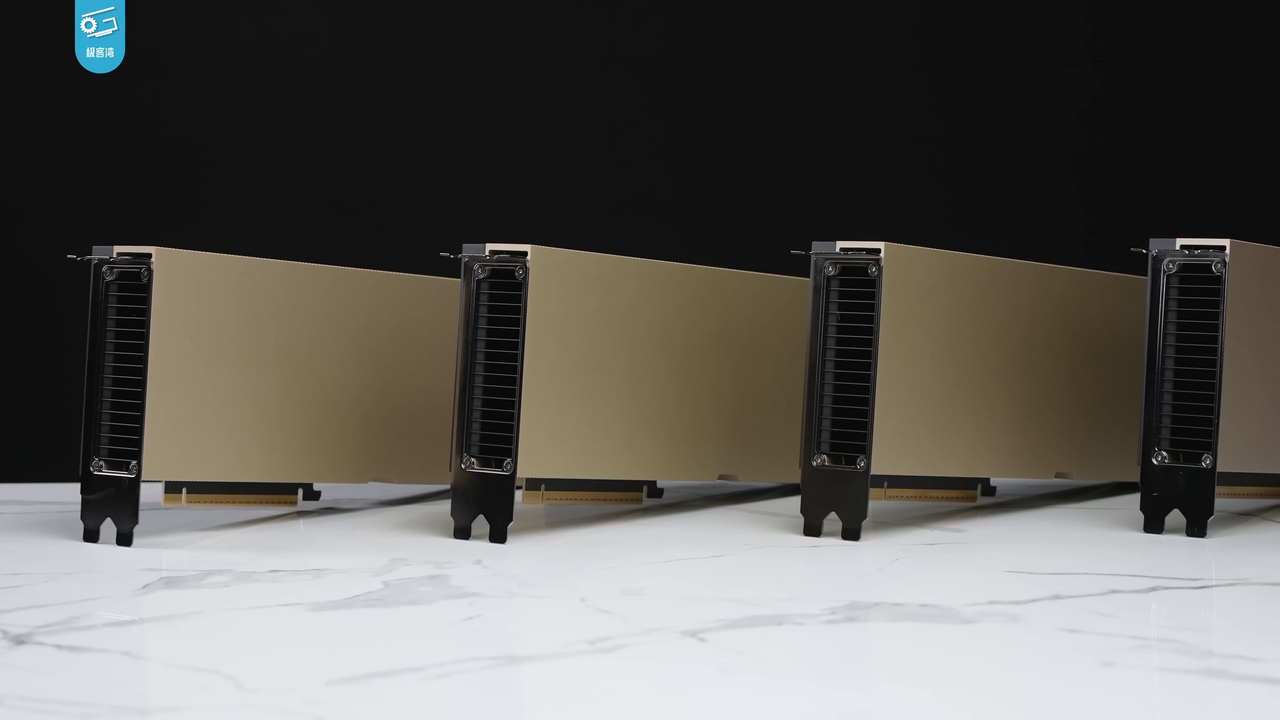
Header image: the skyline of Hangzhou, China, seen across West Lake. Hangzhou is DeepSeek's home city. By Windmemories, via Wikimedia Commons, licensed under CC BY-SA 4.0. In-body photograph of four Nvidia H100 data-center GPU accelerators, by 极客湾Geekerwan, via Wikimedia Commons, licensed under CC BY 3.0; general-purpose data-center hardware, not DeepSeek's own training cluster.