
On July 31, 2026, DeepSeek pushed DeepSeek-V4-Flash-0731 into public beta on its API and published the weights on Hugging Face. The release note is unusually blunt about what changed and what did not: the model keeps the exact same architecture and parameter count as the earlier V4-Flash-Preview from April. Nothing was made bigger. What changed was the post-training pipeline, and DeepSeek's own published numbers show that change alone was enough for the smaller, cheaper Flash model to outscore the company's own flagship, V4-Pro-Preview, on all nine agent and coding benchmarks it disclosed.
 DeepSeek
What actually shipped on July 31
DeepSeek-V4-Flash-0731 is a mixture-of-experts model with 284 billion total parameters, of which about 13 billion activate on any given token, the same specification as the Flash-Preview model DeepSeek shipped in April. The model card describes the update as a re-post-training pass: DeepSeek retrained the existing checkpoint using an improved pipeline focused on coding, tool use, and long-horizon agent tasks, rather than running a new pre-training job or scaling up the network. Pricing held at $0.14 per million input tokens and $0.28 per million output tokens, with cached input priced far lower still, putting the blended cost near $0.06 per million tokens at typical cache-hit ratios. For developers already calling the Flash endpoint, the upgrade required no code change: same model name, same API key, same interface.
The nine benchmarks, side by side
DeepSeek published scores on nine internal evaluations covering terminal use, repository-scale coding, cybersecurity tasks, tool-calling reliability, and full-stack software construction. Flash-0731 leads V4-Pro-Preview on every one of them.
V4-Flash-0731 versus its own flagship, all nine benchmarks
DeepSeek-reported scores. The retrained Flash model beats DeepSeek-V4-Pro-Preview on every published agent and coding benchmark, despite being the smaller model.
The largest gaps sit in Cybergym, DSBench-Hard, and DeepSWE: exactly the long-horizon, tool-using tasks that reward agent post-training over raw model size.
The pattern across the nine scores is not uniform. Some gaps are moderate, like NL2Repo (54.2 versus 39.4) or the newer Agents' Last Exam (25.2 versus 15.8). Others are enormous: Cybergym nearly doubles, from 38.7 to 76.7, and DSBench-Hard rises from 31.1 to 59.6. The single largest swing, by far, is DeepSWE.
Why the DeepSWE jump matters most
DeepSWE evaluates 113 real-world software-engineering tasks pulled from 91 GitHub repositories: a model has to plan across many steps, call tools, recover from its own errors, and produce a change that verifiably resolves the issue. It is the kind of long-horizon agentic work that punishes a model for compounding small mistakes over dozens of turns, rather than rewarding a single correct answer. On that benchmark, Flash-0731 jumped from 7.3 to 54.4, roughly a 645 percent increase, using an identical checkpoint architecture.
Same model, same size, one post-training pass
DeepSWE score for DeepSeek's Flash model before and after the July 31 update. No new pre-training, no added parameters.
A roughly 645% jump on one long-horizon coding benchmark, from re-post-training alone.
What this signals about where gains come from
For most of the last few years, the fastest way to a better benchmark score was a bigger model or a bigger pre-training run. V4-Flash-0731 is a clean natural experiment against that assumption: same architecture, same parameter count, same base pre-training, and a large jump in capability on exactly the tasks, agentic coding and tool use, that current post-training techniques such as reinforcement learning on verifiable rewards are best suited to improve. It does not show that pre-training scaling is finished; V4-Pro-Preview is still a substantially larger model with its own ceiling. It does show that on agentic benchmarks specifically, the post-training stage, not the base model's size, was the binding constraint for this checkpoint, and that constraint can be loosened without touching pre-training at all.
A smaller, cheaper model beat its own bigger sibling using no new pre-training and no additional parameters. The gain came entirely from how the existing weights were retrained.
Metir AI analysis
That is also why agentic benchmarks moved the most. Knowledge and reasoning tests tend to reward what a model already learned during pre-training. Agent benchmarks reward something else: whether a model plans well, calls the right tool at the right moment, and recovers gracefully when a step fails. Those are exactly the behaviors that reinforcement learning against a verifiable pass or fail signal, the core of modern post-training, is built to sharpen, which is consistent with DSBench-Hard and Cybergym showing some of the largest swings while broader knowledge benchmarks showed smaller movement.
The economics: cost per capability
The capability gain would matter less if it came with a price increase, and it did not. Plotting cost against measured intelligence makes the shift concrete.
Intelligence per dollar, five models
Blended cost per million tokens (weighted 3:1 input:output) against Artificial Analysis Intelligence Index. Toward the top-left is more capability for less money.
V4-Flash-0731 sits far to the left of its own flagship and of every hosted rival shown here, at roughly comparable intelligence.
At roughly $0.06 per million tokens blended, V4-Flash-0731 lands far to the left of every model shown, including DeepSeek's own V4-Pro-Preview, while scoring higher on Artificial Analysis's Intelligence Index (50 versus 44 for Pro-Preview) and landing close to GPT-5.6 Luna (51) and level with Gemini 3.6 Flash. That combination, a cost-per-task roughly 60 percent below a comparably capable hosted model according to Artificial Analysis's own estimate, is a direct result of not needing new pre-training to get the capability gain. Retraining an existing checkpoint's post-training stage is dramatically cheaper than training a new base model, and DeepSeek passed essentially none of that saved cost through to the API price.
The caveat: these are vendor benchmarks, not independent results
All nine scores come from DeepSeek's own evaluation harness, which as of release was not publicly documented in enough detail for outside groups to reproduce the numbers directly. Two of the nine, the DSBench pair, are described in DeepSeek's materials as internal test sets. Artificial Analysis's independent Intelligence Index score offers partial outside corroboration, a roughly ten-point rise versus the prior Flash release, but it measures a different, broader basket of tasks than the nine agent benchmarks DeepSeek highlighted. The honest read is that the direction of the claim, retraining alone produced a large agentic capability gain, is plausible and consistent with the broader industry shift toward post-training investment, but the specific magnitudes should be treated as DeepSeek's self-reported figures until third parties reproduce them on neutral infrastructure.
What it means for teams choosing models
The practical lesson is less about DeepSeek specifically and more about how fast the ranking of "which model to use for agent work" can now move without a new architecture ever shipping. Six months ago, choosing V4-Pro over V4-Flash for an agentic coding task was the obvious call. After one retraining pass, on DeepSeek's own numbers, that ranking flips, and it flips at a lower price. A team that hard-wired a product to V4-Pro-Preview would need to notice this release and manually re-evaluate; a model-agnostic setup does not need that step to happen on a fixed schedule. That is one of the arguments for a workspace like Metir AI, which routes tasks across models from multiple providers side by side, so a re-post-trained update like this one is available the day it ships rather than waiting on a migration decision.
Looking ahead
V4-Flash-0731 is a useful data point for a question the whole field is now asking: how much more capability is sitting latent in checkpoints labs have already trained, waiting on better post-training to unlock it. If a seven-times jump on a hard agentic benchmark is available from retraining alone, on a model that costs a fraction of a cent to run, the incentive to keep squeezing existing checkpoints before committing to another expensive pre-training run looks stronger than it did a year ago. Independent verification of DeepSeek's numbers will take time, as it always does, but the direction, cheap post-training gains rivaling the wins that used to require scale, is one worth watching across every lab, not just this one.
Sources:
- New DeepSeek-V4-Flash-0731 is Here !! | Data Science in Your Pocket (Medium)
- DeepSeek Retrained V4-Flash Beats Its Flagship Pro on Nine Agent Benchmarks | Tech Times
- DeepSeek Upgrades DeepSeek-V4-Flash-0731 with Major Agentic and Coding Gains | MarkTechPost
- DeepSeek V4 Flash 0731: Official Release, Agent Benchmarks | Digital Applied
- DeepSeek V4 Flash 0731 Launches Public Beta with Price Held at $0.14 | XenoSpectrum
- DeepSeek-v4-Flash-0731 Scores 50 On Artificial Analysis Intelligence Index, Creates Big Spike On Pareto Frontier | officechai
- DeepSeek V4 Flash 0731 scores 50 on the Artificial Analysis Intelligence Index, 10 points above previous DeepSeek V4 Flash | Artificial Analysis
- DeepSeek V4 Flash Review: Benchmarks, Pricing, And V4 Pro Comparison | binaryverseai
- DeepSeek-V4-Flash-0731: Codex Support, $0.14/$0.28 Pricing | explainx.ai
Image credits
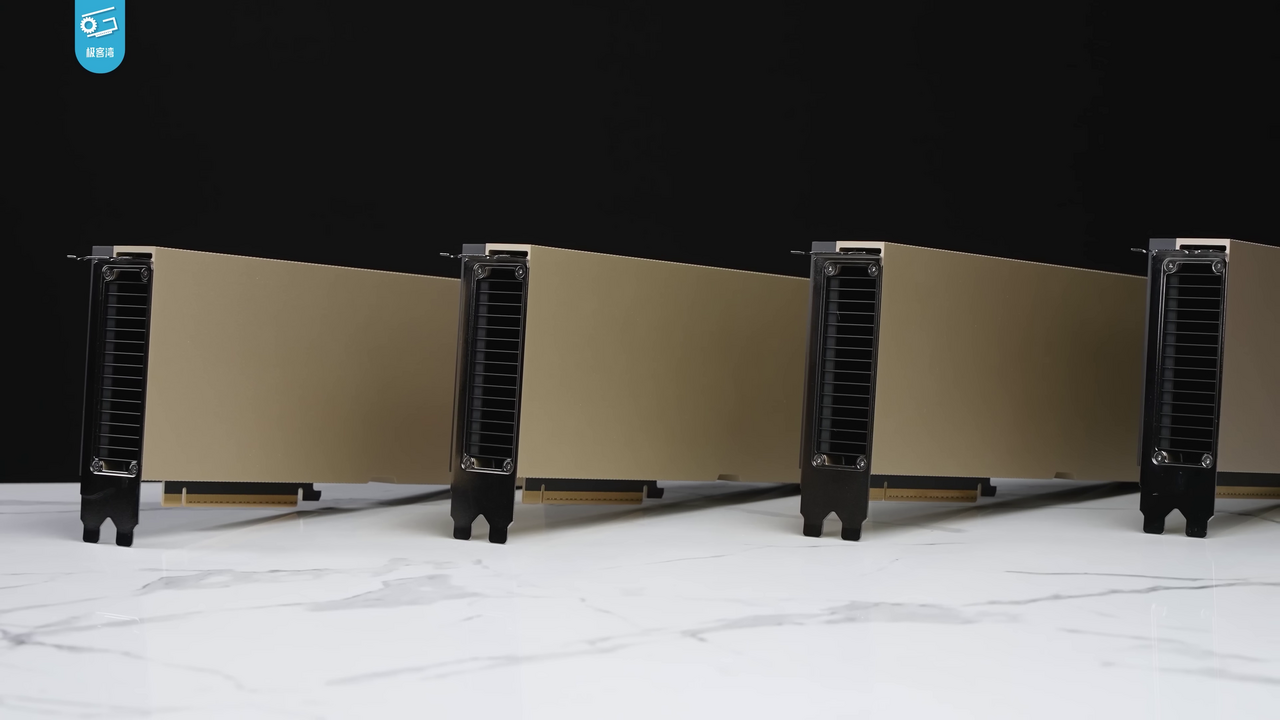
Header image: the Hangzhou skyline across West Lake, Zhejiang province, the home city of DeepSeek and its parent company High-Flyer, by Y Chen via Wikimedia Commons, licensed under CC BY-SA 4.0. In-body photograph of Nvidia H100 accelerators by Geekerwan via Wikimedia Commons, licensed under CC BY 3.0. Neither photo depicts DeepSeek's own facilities or the V4-Flash-0731 launch itself.