DeepSeek's annualized revenue run rate has more than doubled in the space of a few months to roughly $1 billion, according to reporting from The Information on September 24, 2026, with the figure said to have been shared by founder and CEO Liang Wenfeng directly with investors. The number surfaces as the Hangzhou-based lab finalizes a second funding round and prepares for a listing on the Shanghai Stock Exchange, and it gives the clearest look yet at the business behind a lab best known until now for its models rather than its balance sheet. Reuters has said it could not independently verify the figure, so it is best treated as a well-sourced report rather than an audited disclosure, but the details line up consistently across multiple outlets that cite the same reporting.
 DeepSeek
 OpenAI
 Anthropic
What a "run rate" actually measures, and why it matters here
An annualized revenue run rate is not annual revenue. It takes a recent, shorter period of income and multiplies it out as if that pace held for a full year. It is a forecast built from a snapshot, useful for showing momentum but sensitive to whatever drove the snapshot period, including one-off spikes. DeepSeek's own reported numbers make the distinction concrete: the company generated approximately 475 million yuan, or about $70.7 million, in the first seven months of 2026, itself roughly ten times its full 2025 revenue. Reaching a $1 billion run rate from that base implies the growth accelerated sharply and recently, rather than compounding steadily across the year, which is exactly the pattern a large, discrete price change would produce.
That price change is documented. DeepSeek raised its model API prices by a reported 2.3 to 4.5 times in August 2026, including new peak-hour pricing on its flagship V4 models that reportedly quadrupled prior peak levels. According to the same reporting, demand held up afterward rather than collapsing, which is the detail doing the real work in this story. A price increase that customers absorb without leaving says something about how replaceable DeepSeek's models are perceived to be at the margin, and how much of its usage was price-insensitive to begin with. It is also true, and worth stating plainly, that revenue growth driven by a price hike is mechanically different from growth driven by more customers or heavier usage. It can show up in the same run-rate number, but it does not carry the same evidence about the size of the underlying user base.
A price increase customers absorb without leaving says something about how replaceable a model is perceived to be at the margin.
On DeepSeek's August 2026 price hike
The margin story: cheap and profitable are not opposites here
The more distinctive number is gross margin. DeepSeek's API business is reported to have run at an 82.9% gross margin through the first seven months of 2026, a figure the same reporting places above OpenAI's roughly 39% in the first quarter of 2026 and above Anthropic's roughly 63% projected for the year. Gross margin on inference is simply revenue from serving a query minus the direct cost of the compute, electricity, and infrastructure to answer it. A lab can sit at either end of a spectrum: charge a lot and spend a lot serving each query, or charge a little and spend even less. DeepSeek's reported combination, prices still described as among the lowest of any major model even after the August increase, paired with the highest margin of the three, points to the second end of that spectrum. It is a story about serving efficiency, not about pricing power.
Low prices, high reported margin
Gross margin on API access, as reported. DeepSeek runs among the cheapest per-token prices in the industry and still reports the highest margin of the three, a combination that only volume and lean serving costs can produce.
Figures are third-party reported estimates for different measurement windows, not audited or company-disclosed financials, and should be read as directional rather than precisely comparable.
The other reported figure worth sitting with is where DeepSeek's compute goes. More than 70% of its computing capacity is reportedly dedicated to training, with the remainder split across serving live API and product traffic. For a company already generating meaningful revenue, that is an unusual allocation. It reads as a lab still treating model research as the primary use of its own infrastructure, and monetization as a byproduct it is willing to price efficiently rather than maximize.
Why a Shanghai listing, not a US one
DeepSeek has reportedly hired CITIC Securities, a major Chinese investment bank, to prepare a listing on the Shanghai Stock Exchange's STAR Market, the exchange's board for technology companies, with the underlying second funding round targeting about 50 billion yuan, roughly $7.5 billion, at a valuation near 500 billion yuan, or about $75 billion, with a close targeted by the end of October 2026. Reuters has confirmed the CITIC Securities engagement while noting that timing, valuation, and deal size remain undecided.
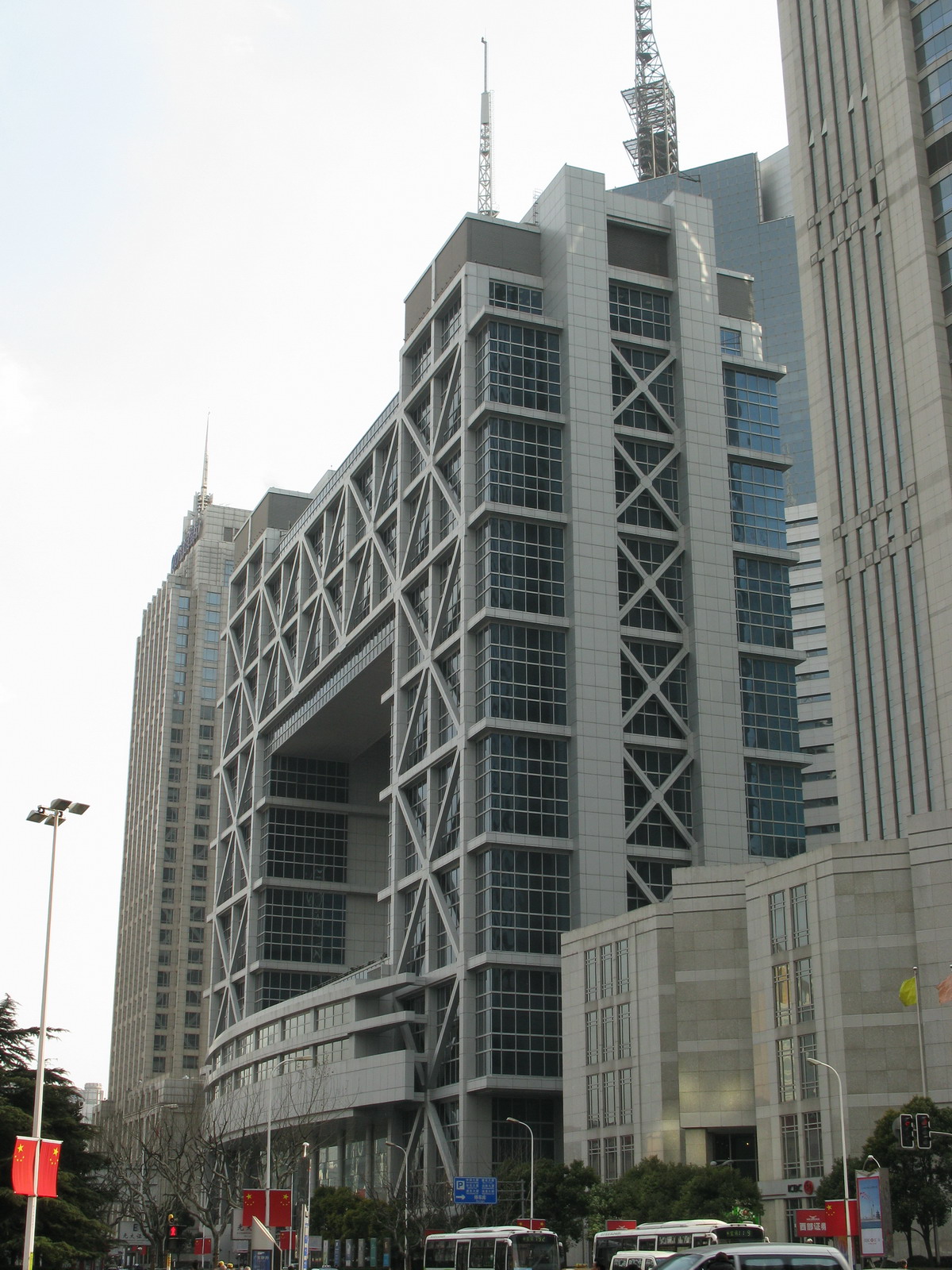
A domestic listing is a strategic choice, not a default. A US listing would put DeepSeek in front of the world's deepest pool of public tech capital, but it would also require navigating exactly the cross-border scrutiny, from export controls to data-governance concerns that have already led some jurisdictions to restrict its consumer app, that a Chinese frontier lab is trying to manage rather than add to. The STAR Market was built specifically to let Chinese technology companies, including ones not yet profitable, list domestically instead of routing to Hong Kong or New York, and a listing there keeps DeepSeek's capital raising, its shareholder base, and its regulatory relationship inside a system China already controls end to end. For Beijing, a successful STAR Market debut by a lab this prominent would also be a proof point that China's own capital markets can fund and price a frontier AI company without depending on US exchanges at all.
Two models of AI economics, side by side
DeepSeek's reported numbers sketch a business model that reads differently from the leading US labs. OpenAI and Anthropic are raising and spending at a scale where quarterly compute commitments alone run into the tens of billions of dollars, funded substantially by continued external capital, with margins that reporting places well below DeepSeek's reported API figure. DeepSeek's approach, publish open model weights, keep prices low relative to the market, run inference lean enough to post a high reported margin even at those prices, and pour most of its compute back into training rather than serving, is a smaller, more capital-efficient machine by design. A $1 billion run rate is a rounding error next to the revenue ambitions of the largest US labs, but efficiency and scale are different axes, and DeepSeek's numbers are an argument that a lab can be highly efficient at meaningfully smaller scale without that efficiency being fragile.
Neither model has been fully tested by public markets yet. DeepSeek's planned STAR Market debut would be the first real test of whether the open-weight, efficiency-first thesis prices well outside a private funding round, where growth expectations and revenue multiples are set by public investors rather than venture and state-linked backers alone.
What is still unconfirmed
Every figure above traces back to a single initial report from The Information, corroborated by DeepSeek's own investor communications but not by an independent audit or a company filing, and Reuters has explicitly said it could not verify the $1 billion run-rate number. The fundraising terms, size, valuation, and October close, are described consistently across outlets but are, by every account, still being finalized. None of that makes the numbers unreliable, but it does mean the details, particularly the exact valuation and raise size, could still move before signing.
For teams evaluating which models to build on, the practical takeaway from DeepSeek's reported economics is that low-cost, open-weight options are not a stopgap while waiting for frontier-lab prices to fall. They can be a durable, differently structured part of the market on their own terms. Metir AI is built to be model-agnostic for exactly that reason, so a task can route to a cost-efficient open-weight model like DeepSeek's alongside a closed frontier model, with the choice made on cost and quality rather than on which vendor a system happens to be locked into.
Sources:
- DeepSeek Doubles Annual Revenue Run Rate to $1 Billion Ahead of IPO | PYMNTS
- DeepSeek's Revenue Run Rate Hit $1 Billion As It Eyes An IPO | Finimize
- DeepSeek Revenue Hits $1B Run Rate, Eyes $7.5B Shanghai Raise | AI Weekly
- DeepSeek's Annualized Revenue Hits $1 Billion as Startup Finalizes $7.5 Billion Fundraising | Dealroom News
- China's DeepSeek annualised revenue run rate hits $1 billion, the Information reports | KSL.com
Image credits
Hero and in-body figure: "Shanghai Stock Exchange Building" by Baycrest, licensed under CC BY-SA 2.5. Source: Wikimedia Commons. Reviewed before publication; shows the Shanghai Stock Exchange Building itself in the Lujiazui district of Pudong, Shanghai, the exchange DeepSeek is reportedly preparing to list on, not a DeepSeek facility, as the caption states.