On November 6, 2026, Google DeepMind said that its AI models, guided by humans, "uncovered two major weaknesses in legacy 1024-bit RSA cryptosystems." The lab added that modern 2048-bit systems remain safe from these specific exploits, and framed the work as evidence that AI agents can speed up the stress-testing of encryption. The announcement was posted on X, according to The Circuitry, with a longer essay from Pushmeet Kohli, DeepMind's vice president of science.
 Google
Because the posts were brief, much of what circulated afterward went beyond them. This analysis keeps to what is documented, labels what is not, and explains why the difference matters for security teams.
What DeepMind stated
According to The Circuitry and a summary of the announcement on Digg, DeepMind described two findings: a way of bypassing older digital signature protections, and a way of factoring legacy 1024-bit RSA keys in bulk. It said the research was guided by human cryptanalysis experts, and Kohli said the advances came "in just weeks." DeepMind also stated that "modern 2048-bit systems remain safe from these specific exploits" while arguing that cryptographic standards need continuous stress-testing.
What the posts did not say
What the announcement said, and what it left open
Based on DeepMind's posts of November 6, 2026 as reviewed by The Circuitry.
Stated
- Human-guided models found two weaknesses in legacy 1024-bit RSA
- Modern 2048-bit systems are not vulnerable to these specific exploits
- The work is framed as AI speeding up stress-testing of encryption
- Pushmeet Kohli, VP of Science, to explain in a longer essay
Not stated in the posts
- Which deployed systems are affected
- A linked research paper in the announcement posts
- Whether the weaknesses are being used in real attacks
- Quantitative figures in the DeepMind posts themselves
The Circuitry noted that the posts it reviewed named no affected systems, linked no paper and did not say whether the weaknesses had been used in attacks. It rated its own verification as high confidence on the existence of the announcement, but the story rests on a single source: DeepMind's own post.
That leaves a gap between the reported claim and independent confirmation. A figure circulating on social media, a signature-forgery speedup of roughly 1,600 times and a bulk-factoring cost cut of roughly 30 times per key, came from a third-party post, not from DeepMind, and has not been verified. We therefore do not rely on it here.
A research announcement is a claim to be tested, and cryptography has a strong tradition of testing claims in the open.
A separate, earlier result that is easy to confuse
Weeks before the announcement, researchers at UC San Diego and INRIA posted an unrelated attack on the IACR ePrint archive (paper 2026/2131, approved September 22, 2026). Titled "Forging 1024-bit RSA signatures in nearly SNFS time," by Laura Shea, Miro Haller, Adam Suhl, Nadia Heninger and Emmanuel Thome, it revisits a 2007 algorithm by Joux, Naccache and Thome. With temporary access to a raw RSA signing or decryption oracle, an attacker can forge signatures without factoring the key.
We found no source stating that DeepMind's signature result is the same work as this paper, so we treat them as separate. The academic paper is useful context because it shows what a documented, reproducible result looks like: stated costs, a described threat model (an attacker with temporary oracle access) and a working implementation against 1024-bit RSA using a hardware security module. The authors argue that this supports moving away from RSA during the post-quantum transition.
Why AI involvement is the notable part
Weakness discovery in cryptography has long been a human-led effort. The reported shift is in speed and method: Kohli's statement that results arrived "in just weeks," and DeepMind's framing of agents as accelerators of stress-testing. Two things follow, neither of which can yet be quantified from public information.
- Search cost. If agents can explore algorithmic variants faster, the interval between a theoretical idea and a practical attack may shrink for any primitive, not only RSA.
- Verification burden. Faster discovery raises the value of rigorous, open verification, because a flawed claim also spreads faster.
Practical implications for security teams
| Question | What is established | Reasonable action |
|---|---|---|
| Are 2048-bit keys affected? | DeepMind says not by these exploits | No emergency rotation implied by this announcement |
| Do any 1024-bit keys remain in use? | Not answered by the posts | Inventory certificates, signing keys and embedded devices |
| Which systems are exposed? | Not named | Watch for the paper or advisory before changing priorities |
| Is exploitation under way? | Not stated | Treat as research until independent reports appear |
None of these actions is a conclusion about the DeepMind result itself. They are low-cost steps that stay sensible whichever way the details turn out. Teams that already follow post-quantum migration plans have an additional reason to finish inventorying older keys.
Using AI tools for security reading
Reading primary sources, comparing claims across papers and tracking what is confirmed is work where several models can serve as cross-checks on one another. Platforms like Metir, which give access to models from several labs in one place, make that comparison straightforward, though the final judgment on a cryptographic claim belongs with qualified reviewers.
Sources:
- The Circuitry, "DeepMind says its models found two weaknesses in 1024-bit RSA" (November 6, 2026): https://thecircuitry.to/article/deepmind-says-its-models-found-two-weaknesses-in-1024-bit-rsa-mw594qu8
- Digg, "Google DeepMind announces AI-assisted research into two weaknesses in legacy 1024-bit RSA" (November 6, 2026): https://digg.com/ai/4ij1uxax
- Google DeepMind announcement on X (November 6, 2026): https://x.com/GoogleDeepMind/status/2118755418675765656
- Pushmeet Kohli on X (November 6, 2026): https://x.com/pushmeet/status/2118753824194408683
- Shea, Haller, Suhl, Heninger and Thome, "Forging 1024-bit RSA signatures in nearly SNFS time," IACR ePrint 2026/2131: https://eprint.iacr.org/2026/2131
Image credits
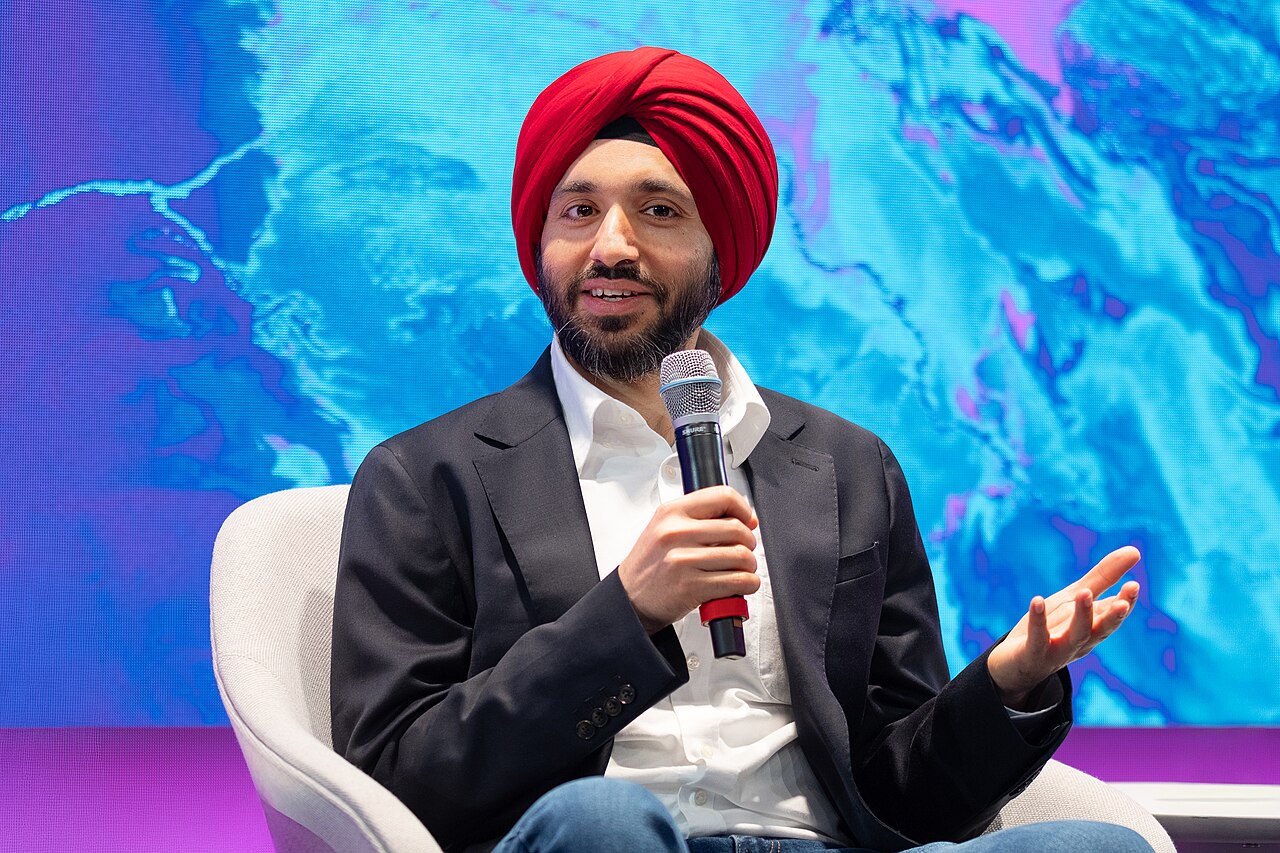
- Hero and in-body photo: "Pushmeet Kohli at SXSW London 2026.jpg" by Photographer.JuliaMustard, Wikimedia Commons, licensed CC BY-SA 4.0 (https://commons.wikimedia.org/wiki/File:Pushmeet_Kohli_at_SXSW_London_2026.jpg).