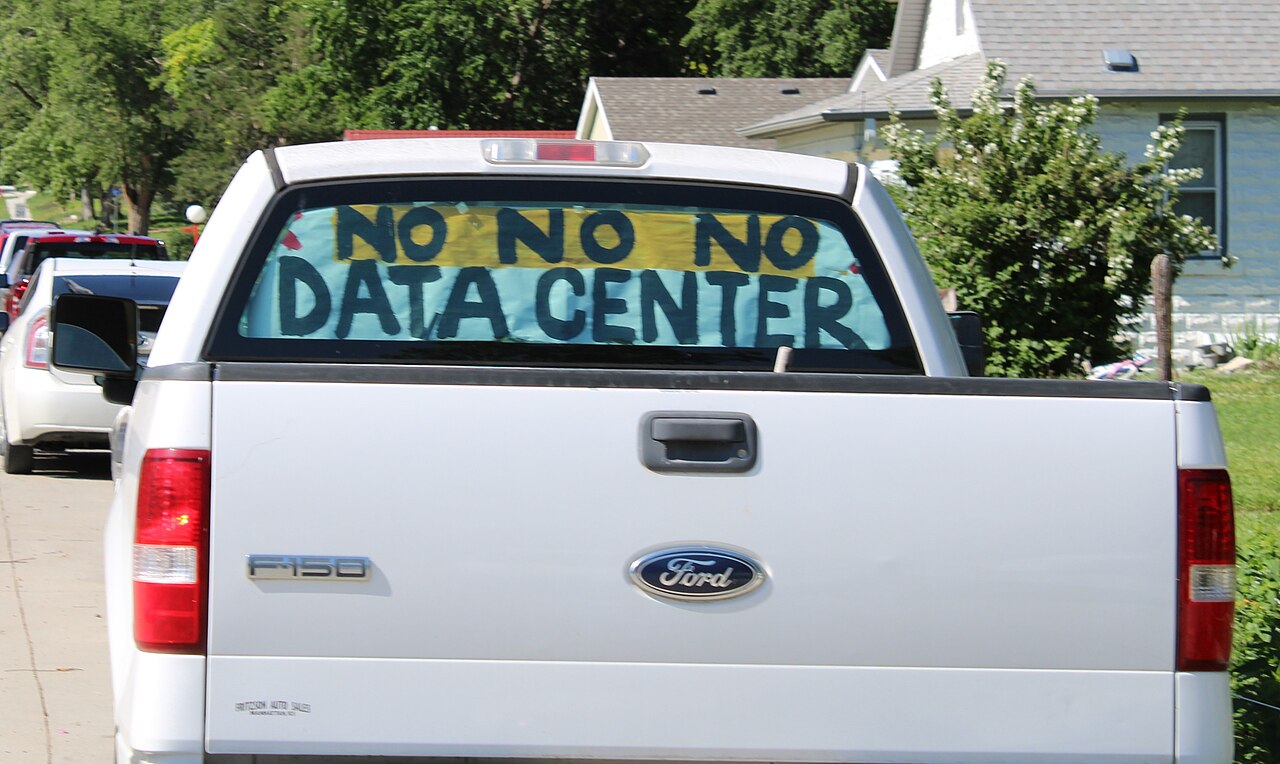
On November 3, 2026, voters in 10 US states decided 41 local ballot measures that touched data center construction. According to analyses by Ballotpedia cited by CNBC and Scientific American, voters sided against data centers, or in favor of limits on them, in every case but one. For the companies planning gigawatt-scale campuses, it is the first broad, direct test of local consent, and it arrived in the same week that chip stocks suffered one of their worst sessions in years.
This post sets out what was on the ballot, what the results do and do not show, and why the distinction matters for anyone modelling AI infrastructure supply.
What was actually on the ballot
The 41 measures were not a single question. Scientific American describes them as a mix of moratoriums, attempted rezonings and advisory votes for local officials. CNBC reports that Ohio alone accounted for 21 of the 41, with communities in California, Florida, Illinois, Kansas, Maine, New Jersey, Nevada and Wisconsin also voting, according to Ballotpedia.
41 local measures, 10 states, one exception
Data center measures on the November 3, 2026 ballot, by outcome and by where they were held.
By outcome (of 41)
By location (of 41)
Sources: CNBC and Scientific American, November 4, 2026, citing Ballotpedia. Counts differ across trackers because some results were still being counted.
Two examples show the range. In Wells, Maine, more than 80 percent of voters approved a retroactive 180-day moratorium on data center development, per Scientific American. In Emporia, Kansas, voters approved a prohibition on construction. The single exception came in Harwood, North Dakota, where voters rejected, by roughly three to one, a proposal that would have required extra review of industrial projects including data centers. A roughly $3 billion data center, Polaris Forge 2, is already under construction nearby, according to Scientific American.
The exception is instructive in its own right. Voters in Harwood did not vote for a data center in the abstract. They rejected an added layer of review. That is a narrower statement than "the build-out is popular", and it shows how much the result depends on how each question was worded.
The races above the local level
The measures landed alongside statewide results that candidates had tied to the same issue. CNBC reports that Democrat Sherrod Brown defeated Republican Sen. Jon Husted in Ohio, with Brown calling Husted "the face of data centers." Ohio's governor-elect, Democrat Amy Acton, supports a "conditional moratorium" on data centers, per CNBC. In Texas, Democrat Gina Hinojosa unseated Republican Gov. Greg Abbott after campaigning on restricting data centers. Scientific American adds that Hinojosa, Georgia's Keisha Lance Bottoms and Acton all made data center regulation a key campaign issue and are now governors-elect.
Texas matters beyond its politics. One analysis cited by Scientific American puts the state at about a quarter of US data center capacity in the works.
What the results do not show
Three cautions apply before drawing a national conclusion.
- Selection. The 41 measures were on ballots because organized local groups put them there, or because officials chose to ask. Places where residents are content with a project are less likely to generate a vote at all. The sample measures concentrated opposition, not national opinion.
- Cause. In a discussion reported by TechCrunch, the panelists said data centers probably were not the main driver of Democrats' wider gains but have become a growing grassroots issue, citing secretive approvals, nondisclosure agreements for officials, undisclosed project scale and water scarcity in the Southwest. CNBC's poll found 56 percent of voters called data centers a crucial or major factor in their decision, which is a stated reason rather than a measured cause.
- Counting. Trackers disagree on totals while ballots are still being counted. Other tallies report different numbers of passed restrictions than the 41-measure Ballotpedia set, so exact counts should be treated as provisional.
The votes are strong evidence about local consent. They are weak evidence about how many data centers will ultimately be built.
Why it matters for the build-out
The financial stakes are large. CNBC notes that OpenAI's planned PORTS-Pike campus in Ohio, which could cost more than $500 billion, may face resistance from the incoming governor's office. According to the TechCrunch discussion, OpenAI has published a "compute campus policy blueprint" under which it will no longer require nondisclosure agreements for officials and will share more of its plans. Reuters had separately reported on November 6 that OpenAI's CFO, Sarah Friar, said the company would keep expanding US data centers and pledged to stop requiring such agreements in site talks, as summarized by The Neuron.
The mechanism to watch is not an outright national ban. It is accumulated friction: moratoria that pause permitting for months, review requirements that lengthen timelines, and governors with leverage over utilities and tax incentives. Each adds time and cost to a project whose economics depend on bringing capacity online quickly. Investors have started to price that in, as covered in our analysis of the November 5 chip selloff.
Three scenarios to watch
| Scenario | What would have to be true | Likely effect on supply |
|---|---|---|
| Friction, not a freeze | Moratoria are temporary; developers adapt with transparency and community terms | Delays and higher soft costs; most projects proceed later |
| Geographic shift | Developers move to jurisdictions that did not vote or that welcome projects | Capacity relocates; local prices and grid stress follow |
| Policy escalation | Governors and legislatures turn local sentiment into statewide limits | Slower and more costly build-out in the largest markets |
These are our scenarios for framing, not forecasts, and none is established by the votes alone. The next data points are permitting decisions, utility filings and whether state officials act on the campaign positions described above.
Why this matters for people who use AI tools
Most users will never see a county ballot, but compute supply sets the price and availability of the models they use. Teams that depend on a single provider inherit that provider's capacity risk. Platforms such as Metir that let people switch between models from several labs are one way to keep working if any one provider's capacity or pricing shifts.
Sources:
- CNBC, "Voters rebuff data centers in every ballot measure except one during the 2026 midterms" (November 4, 2026): https://www.cnbc.com/2026/11/04/data-center-ballot-measures-2026-midterm.html
- Scientific American, "2026 election results show widespread opposition to AI data centers" (November 4, 2026): https://www.scientificamerican.com/article/2026-election-results-show-widespread-opposition-to-ai-data-centers/
- TechCrunch, "After the midterms, things are looking rocky for Elon Musk and data centers" (November 7, 2026): https://techcrunch.com/2026/11/07/after-the-midterms-things-are-looking-rocky-for-elon-musk-and-data-centers/
- The Neuron, "Everything That Happened in AI Today, Monday, November 9" (summarizing Reuters, November 6): https://www.theneuron.ai/digest/everything-that-happened-in-ai-today-monday-november-9-2026/
Image credits
- Hero and in-body photo: "Anti ai data center sign 2.jpg" by Catboy69, Wikimedia Commons, licensed CC BY 4.0 (https://commons.wikimedia.org/wiki/File:Anti_ai_data_center_sign_2.jpg).