In July 2026, ChangXin Memory Technologies, better known as CXMT, priced an initial public offering on Shanghai's STAR Market that raised roughly 57.9 billion yuan, about $8.6 billion. Retail and institutional demand ran 212 times the shares on offer, and more than nine million investor accounts applied. It is the largest semiconductor listing in mainland China's history, and it lands at the intersection of two of the biggest forces in technology today: the memory shortage driving the AI boom, and China's drive to build a domestic chip industry insulated from export controls. This piece explains who CXMT is, why the raise was this large, and what it genuinely signals versus what it does not.
Why memory is the AI story you hear least about
When people picture the AI boom they picture GPUs. But a processor is only as fast as its ability to feed data in and out, and that job belongs to memory. DRAM, dynamic random-access memory, is the working memory that every server relies on, and a specialized, stacked form of it called high bandwidth memory sits right beside AI accelerators to keep their thousands of cores supplied. As AI infrastructure spending has exploded, demand for memory has surged with it, turning a historically cyclical, low-margin commodity into one of the tightest links in the entire supply chain.
That is the backdrop for CXMT's raise. Investors are not simply buying a Chinese chipmaker; they are buying exposure to a memory supercycle that the AI buildout has created. When the underlying commodity is scarce and strategically vital, the companies that make it become far more valuable than their history would suggest.
Who CXMT actually is
CXMT is China's leading producer of DRAM. For most of the last decade the global DRAM market has been effectively a three-company business, dominated by Samsung, SK Hynix and Micron, which together hold the overwhelming majority of production. CXMT is the first Chinese firm to break into that group at meaningful scale. According to the research firm Omdia, it held about 7.67 percent of global DRAM revenue in the fourth quarter of 2025, ranking fourth in the world and first in China.
That number is the whole significance in one figure. Single digits of market share might sound modest, but for a domestic Chinese entrant in a market long controlled by three incumbents, reaching fourth place is a structural shift. It is why Beijing and Chinese investors treat CXMT as a national champion, and why the listing drew such extraordinary demand.
Single-digit market share sounds modest, but for a Chinese entrant in a market long controlled by three incumbents, fourth place is a structural shift.
The scale of the raise, in context
The clearest way to grasp the significance is to compare it to the prior record. The previous largest semiconductor IPO on China's A-share market was SMIC in 2020.
The largest A-share chip listing on record
Gross proceeds in billions of yuan. CXMT's raise edges past the 2020 SMIC listing to become the biggest semiconductor IPO in mainland China's history.
CXMT priced at ¥8.66 per share to raise roughly ¥57.9 billion (about $8.6 billion) before any over-allotment, valuing the company near $85 billion. Trading begins July 27.
CXMT's roughly 57.9 billion yuan edges past SMIC's 53.2 billion yuan to set a new record. The 212-times oversubscription, with valid applications for hundreds of billions of shares, reflects a wall of domestic capital eager for exposure to the chip sector. Some of that is genuine belief in the memory cycle; some of it is the reality that Chinese investors have limited access to foreign chip stocks and channel that appetite into domestic listings. Both readings are true at once, and it is worth holding them together rather than picking one.
The export-control subtext
CXMT's rise cannot be separated from geopolitics. For several years, US-led export controls have restricted China's access to the most advanced chipmaking tools and, at times, to leading-edge processors themselves. The strategic response from Beijing has been to build domestic alternatives across the chip stack so that Chinese AI development is less exposed to foreign supply decisions.
A signal of that pressure appeared the same week as the IPO news: Moonshot AI, one of China's leading model developers, paused new subscriptions to its Kimi K3 model, citing infrastructure capacity constrained in part by limited access to advanced Nvidia chips. That is the exact vulnerability a domestic memory champion is meant to reduce. CXMT does not make AI accelerators, but a self-sufficient supply of the memory those accelerators need is one piece of the same strategy.
| SMIC (2020) | CXMT (2026) | |
|---|---|---|
| What it makes | Logic chips (foundry) | DRAM memory |
| Amount raised | About 53.2 billion yuan | About 57.9 billion yuan |
| Significance then | China's foundry champion goes public | China's memory champion goes public |
| Shared theme | Domestic capacity amid rising export controls | Domestic capacity amid rising export controls |
What the raise does not prove
Discipline requires separating the financing event from the technology reality. A record IPO proves that capital is available and that appetite is high. It does not by itself prove that CXMT has closed the technology gap with the market leaders on the most advanced memory, particularly high bandwidth memory, where the incumbents remain well ahead. Raising money buys time, capacity and talent; it does not instantly deliver leading-edge yields, which take years of manufacturing experience to perfect.
There is also a timing caveat worth stating. Reporting around the listing noted that demand, while enormous, came amid signs of a broader wobble in Chinese tech shares and questions about how long the memory rally can run. Memory is cyclical by nature. Today's tightness is real, but assuming today's conditions are permanent is precisely the mistake that has burned memory investors in every prior cycle.
Why a software audience should care
Memory economics roll all the way up to the price of AI. When DRAM and high bandwidth memory are scarce and expensive, accelerators are scarce and expensive, and that cost eventually shows up in what teams pay to run models. A new large-scale supplier, even one still climbing the technology curve, adds capacity to a constrained system over time, and capacity is what eventually eases prices.
For teams building on AI, the practical takeaway is not to trade chip stocks. It is that the cost of the models you depend on rides on hardware supply chains you cannot control, and those chains are increasingly shaped by geopolitics. The sensible hedge is the same one that applies to model choice generally: avoid wiring your stack to a single provider whose pricing depends on constraints you cannot see, and keep the freedom to move work to whoever passes on lower costs. A model-agnostic workspace such as Metir AI keeps that flexibility, so a shift in the underlying supply becomes a routing decision rather than a rebuild.
The bigger picture
CXMT's record listing is a clean marker of how deep the AI supply chain now runs and how thoroughly it has become entangled with national strategy. The demand says the memory cycle is real and that China is determined to own a piece of it. The open question, the one no IPO can answer, is whether capital can buy the years of manufacturing know-how that separate a fast-rising challenger from the established leaders. The money has arrived. Whether it closes the gap is the story of the next several years.
Sources:
- Chinese memory giant CXMT oversubscribed 212 times in mega Shanghai IPO | South China Morning Post
- CXMT's $8.6B Shanghai IPO Targets Samsung's DRAM Market | Eastern Herald
- China's CXMT Prices an $8.6 Billion IPO Just as the Memory Chip Rally Cracks | Startup Fortune
- ChangXin Memory Technologies Launches 29.5 Billion Yuan IPO Amid Storage Chip Super Cycle | BigGo Finance
- CXMT's Shanghai IPO draws less frenzied demand amid China tech selloff | Yahoo Finance
Image credits
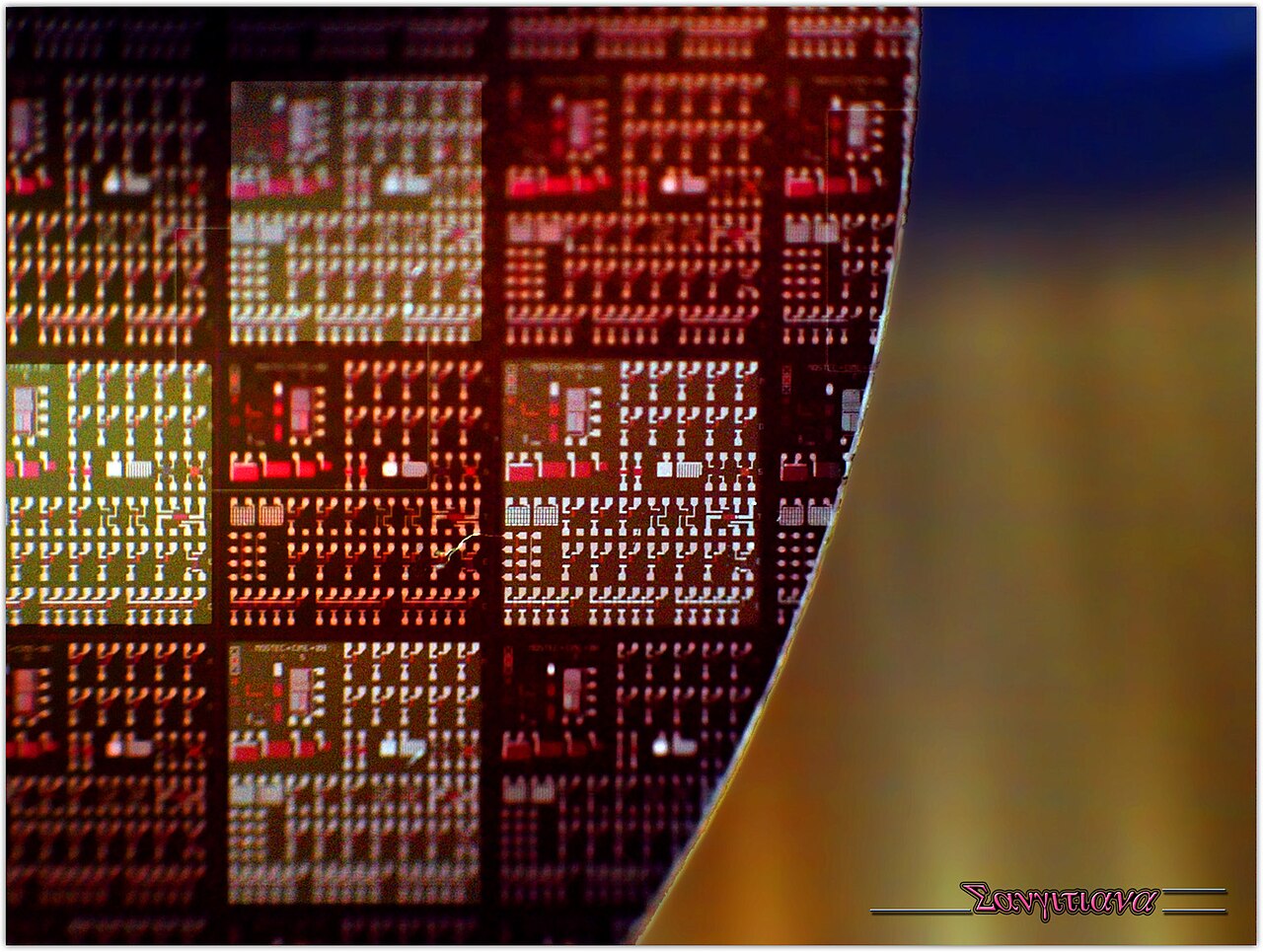
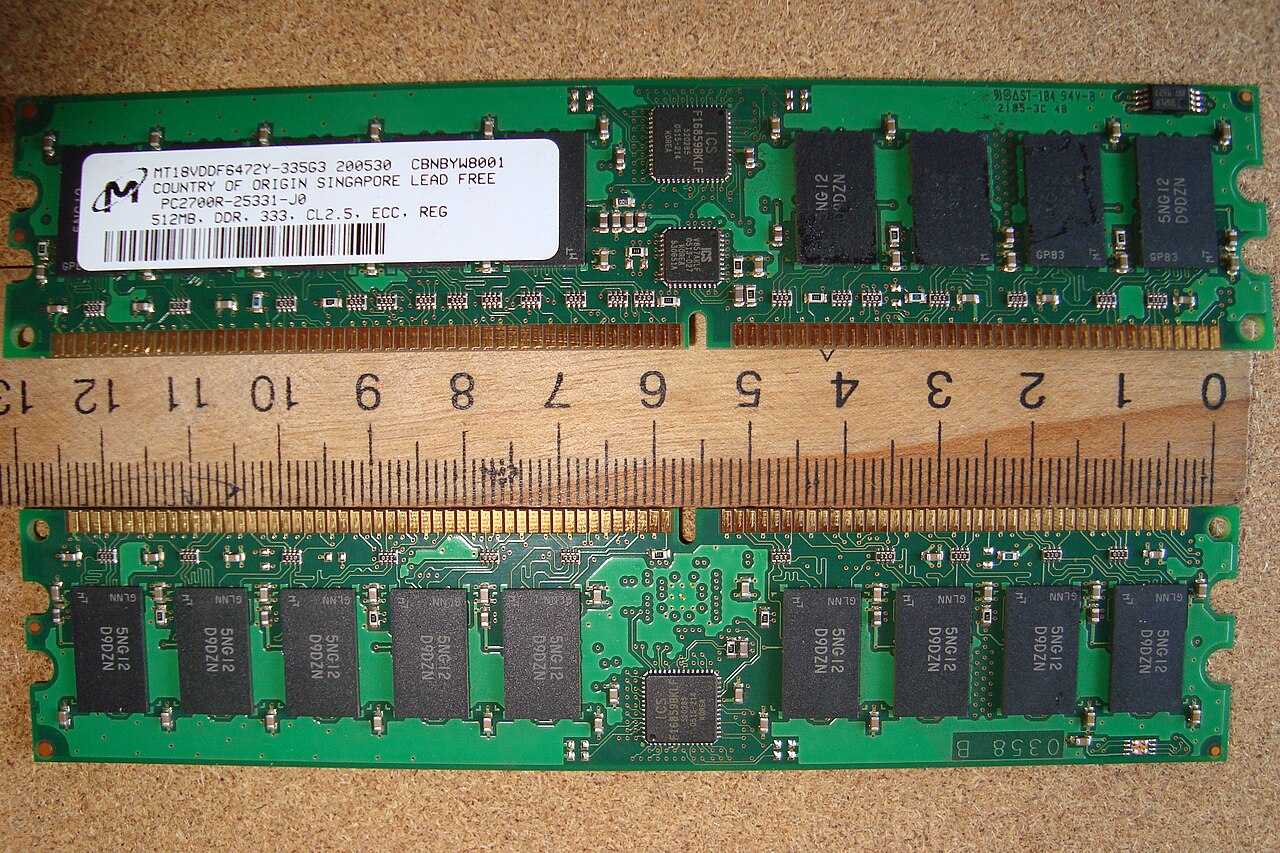
Header image: a processed silicon wafer showing integrated-circuit dies, via Wikimedia Commons, licensed under CC BY-SA 2.0. In-body photograph of registered ECC DRAM server memory modules via Wikimedia Commons, released into the public domain.