
The two largest funding rounds of the week of August 29 to September 4, 2026, both went to companies that do not build AI models at all. Crusoe closed more than $3 billion at a roughly $30 billion valuation, and Fluidstack raised $1.5 billion at a valuation reported above $18 billion. Neither company trains a chatbot or ships an app. Both rent out Nvidia GPUs by the hour. As Crunchbase News put it in its weekly roundup, AI infrastructure dominated the largest venture rounds of the week, with these two multibillion-dollar deals taking the top spots ahead of every other sector combined.
That is the story worth unpacking: not which model is smartest this week, but who is getting paid to run it, and how fast the price tag on that business is moving.
What happened this week
Crusoe, a Denver-based AI cloud and data center developer, closed a Series F of more than $3 billion, co-led by Atreides Management and Valor Equity Partners with participation from Mubadala Capital. The round values the company at about $30 billion. Bloomberg and Crunchbase News both described that figure as roughly triple Crusoe's valuation from less than a year earlier. The same week, Crusoe was reported to have signed a roughly $13 billion, five-year cloud deal with the trading firm Jane Street, and Meta has separately signed contracts to use two Crusoe data centers under construction in Texas and Missouri. Crusoe's customer list also includes OpenAI and Microsoft.
Fluidstack, based in New York, raised $1.5 billion in a private equity round led by Jane Street Capital, according to Crunchbase News, bringing the company's total funding to just over $2.6 billion. Forbes reported the round values Fluidstack above $18 billion, up from talks reported in April 2026 at the same $18 billion figure and, before that, a valuation around $7.5 billion only months earlier. Fluidstack's business is building custom data centers for AI labs: it signed a $50 billion data center partnership with Anthropic in November 2025 for facilities in Texas and New York, and Forbes reported the company also builds data center capacity for Google.
The week's two biggest funding rounds, both neoclouds
Crusoe and Fluidstack were the largest venture and private financing rounds tracked for the week of August 29 to September 4, 2026.
Source: Crunchbase News, "The Week's 10 Biggest Funding Rounds: Crusoe And Fluidstack Lead Multibillion-Dollar AI Infrastructure Haul."
What a "neocloud" actually is
A neocloud is a cloud provider built around a single asset: Nvidia GPUs, rented out to companies that train or run AI models. That distinguishes it from Amazon, Microsoft or Google's general-purpose clouds, which run everything from email servers to databases and treat AI compute as one product line among many. Crusoe, Fluidstack, CoreWeave, Nebius and Lambda are the names that come up most often in this category. A neocloud's entire balance sheet is exposed to one thing: chips that cost billions of dollars per cluster and that a new hardware generation from Nvidia can make less competitive within a couple of years.
 Nvidia
Crusoe's own history illustrates how recent this business is. The company was founded in 2018 around Digital Flare Mitigation, a technology that captures natural gas that oil and gas operations would otherwise burn off, or "flare," at the wellhead and uses it to generate electricity for on-site data centers. Crusoe originally ran that stranded power through bitcoin mining rigs before selling its bitcoin mining operation to the digital asset firm NYDIG and redirecting the same energy-sourcing model toward GPU clusters for AI. The pitch has not changed much: find power quickly, wherever it is, and put compute next to it.
Why the valuations are tripling
Crusoe's own numbers show the pace. In October 2025, the company closed a $1.375 billion Series E at a valuation above $10 billion, with Nvidia itself among the investors. Eleven months later, the Series F puts Crusoe at about $30 billion, roughly triple that mark.
Crusoe's valuation roughly tripled in under a year
Crusoe's reported private-market valuation across its two most recent rounds.
Sources: Crusoe Series E announcement, October 2025; Bloomberg and Crunchbase News reporting on the September 2026 round.
A neocloud's valuation is really a bet on how long the current gap between GPU demand and GPU supply holds open.
Metir AI analysis
Three forces are doing most of the work behind that kind of jump. First, demand for GPU capacity has outpaced supply for most of the past two years, so a neocloud with signed, multi-year lease commitments from credible customers, an offtaker in industry language, can point investors to contracted future revenue rather than a hopeful forecast. Second, debt now funds a large share of the actual buildout: neoclouds increasingly borrow against the GPUs themselves or against a hyperscaler's lease commitment rather than paying for every cluster out of new equity, so a given round of venture capital supports a larger physical footprint than the dollar figure alone suggests. A companion piece on this site walks through that debt structure using Lambda's own GPU-backed financing as the example. Third, each new round resets the reference price for the next one, so once one neocloud prices at a given multiple of contracted revenue, the next round in the category tends to be benchmarked against it.
The circularity question
The financing web around neoclouds is dense. Nvidia has invested directly in Crusoe, sells it the chips that Nvidia investment helps fund, and separately has commercial and investment relationships with the hyperscalers who end up leasing that same capacity. Jane Street is both a large customer, through its roughly $13 billion cloud deal with Crusoe, and now the lead investor in Fluidstack's own round. None of these individual transactions is improper on its own. Stacked together, they raise a question that has followed the AI infrastructure buildout through 2026: whether the same underlying dollar of AI demand gets counted more than once as it passes between a chipmaker, its customers, and its investments in those same customers.
Crusoe and Fluidstack's rounds this week do not answer that question either way. They are simply the newest, largest data point in a pattern that includes Lambda's own billion-dollar-scale debt raises earlier this year and CoreWeave and Nebius's similar structures. Regulators, including bodies that have begun asking about opaque private-credit valuations tied to a small number of technology issuers, have flagged the concentration as worth watching without characterizing it as a problem that has already materialized.
Power is the constraint money cannot buy directly
Behind the balance-sheet story is a physical one. A GPU cluster is only as useful as the electricity available to run and cool it, and grid interconnection in much of the United States now takes years, not months. Crusoe's founding business, sourcing power from stranded and flared natural gas rather than waiting on a utility interconnection queue, was a direct response to that bottleneck, and it is part of why investors describe the company's fundraising as buying speed to power as much as buying chips. Fluidstack's pitch to Anthropic and Google follows the same logic: purpose-built facilities sited and powered fast enough to matter before the next hardware generation ships.
Two readings, both defensible
The bull case. Two sophisticated investor groups, Atreides Management and Valor Equity Partners for Crusoe, and Jane Street for Fluidstack, priced billions of dollars against contracted, multi-year customer commitments from Meta, Microsoft, OpenAI, Anthropic and Google. That is real underwriting against real signed demand, not speculation on a narrative, and it argues that the current AI compute buildout still has real capacity gaps for well-run neoclouds to fill profitably.
The bear case. A neocloud's valuation rests on the assumption that today's GPU scarcity, and the lease rates it supports, persists long enough to justify the price. If new data center capacity comes online faster than model training and inference demand grows, or if the debt financing propping up much of this buildout tightens, the same contracted leases that look like a moat today could reprice quickly. The tripling of Crusoe's valuation in under a year is either evidence of a durable, still-scarce asset class, or evidence of how fast private AI infrastructure valuations can move in either direction once the story changes.
Both readings describe the same set of facts. Nothing about this week's rounds resolves which one dominates; they simply add to a financing pattern that keeps scaling faster than anyone's ability to say with confidence how it ends.
What it means one layer up
For anyone building on top of AI infrastructure rather than inside it, the practical takeaway is that the price and availability of GPU compute is being set by financing decisions as much as by chip supply, and those decisions are being made in cycles of months, not years. That argues for the same caution that applies to any single-vendor dependency: teams building AI products benefit from cheaper, more abundant compute regardless of which neocloud or hyperscaler ends up winning the current round, which is one reason platforms like Metir AI route across model providers rather than locking into one, so a shift in the infrastructure layer underneath does not force a rebuild of the application layer on top.
Sources:
- The Week's 10 Biggest Funding Rounds: Crusoe And Fluidstack Lead Multibillion-Dollar AI Infrastructure Haul | Crunchbase News
- Crusoe Raises Over $3 Billion in Funding at $30 Billion Valuation | Bloomberg
- Crusoe reportedly raises $3B at a $30B valuation | TechCrunch
- Fluidstack Hit A $18 Billion Valuation By Helping Build Google and Anthropic's Data Centers | Forbes
- AI datacenter startup Fluidstack in talks for $1B round at $18B valuation months after hitting $7.5B | TechCrunch
- Crusoe raises $1.375B at $10B valuation to power AI | Crusoe
- Crusoe Announces $1.375 Billion Oversubscribed Series E | Cooley
- NYDIG to acquire Crusoe's bitcoin mining operation | Crusoe
- AI Startups Capture Over Half of All VC Money for First Time | TechBuzz
- Sector Snapshot: Venture Funding To Foundational AI Startups In Q1 Was Double All Of 2025 | Crunchbase News
Image credits
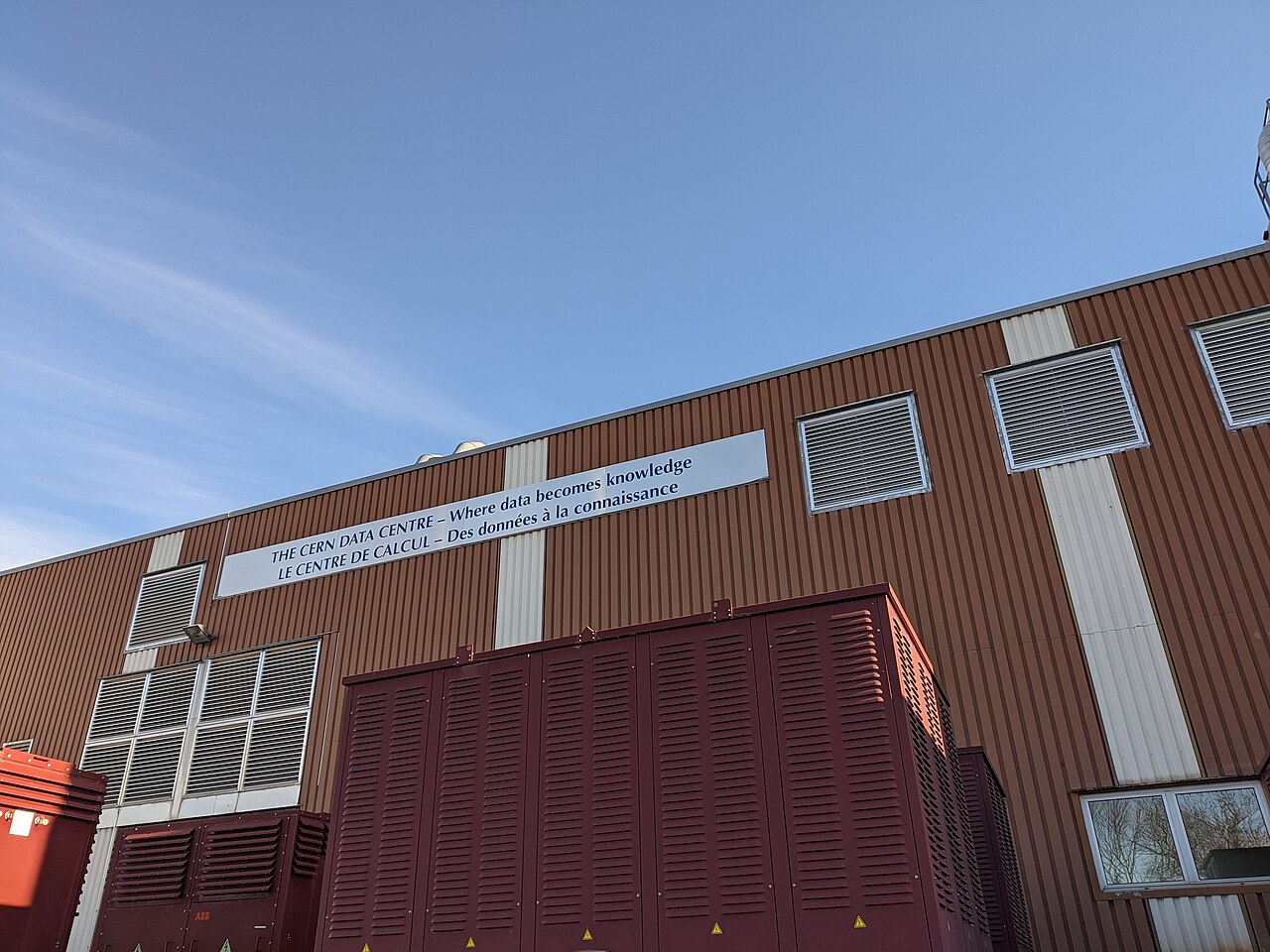
Header image: a natural gas flare burning at an oil well site in the Bakken shale formation, North Dakota, at night, by Joshua Doubek, via Wikimedia Commons, licensed under CC BY-SA 3.0. It illustrates the kind of stranded, flared natural gas that Crusoe's business originally converted into electricity for computing; it is not a photograph of a Crusoe facility. In-body photograph: the exterior of the CERN Data Centre building near Geneva, Switzerland, by Unnerving duck, via Wikimedia Commons, licensed under CC BY-SA 4.0. It is used as a generic, honest illustration of a large-scale data center building and does not depict a Crusoe or Fluidstack facility.