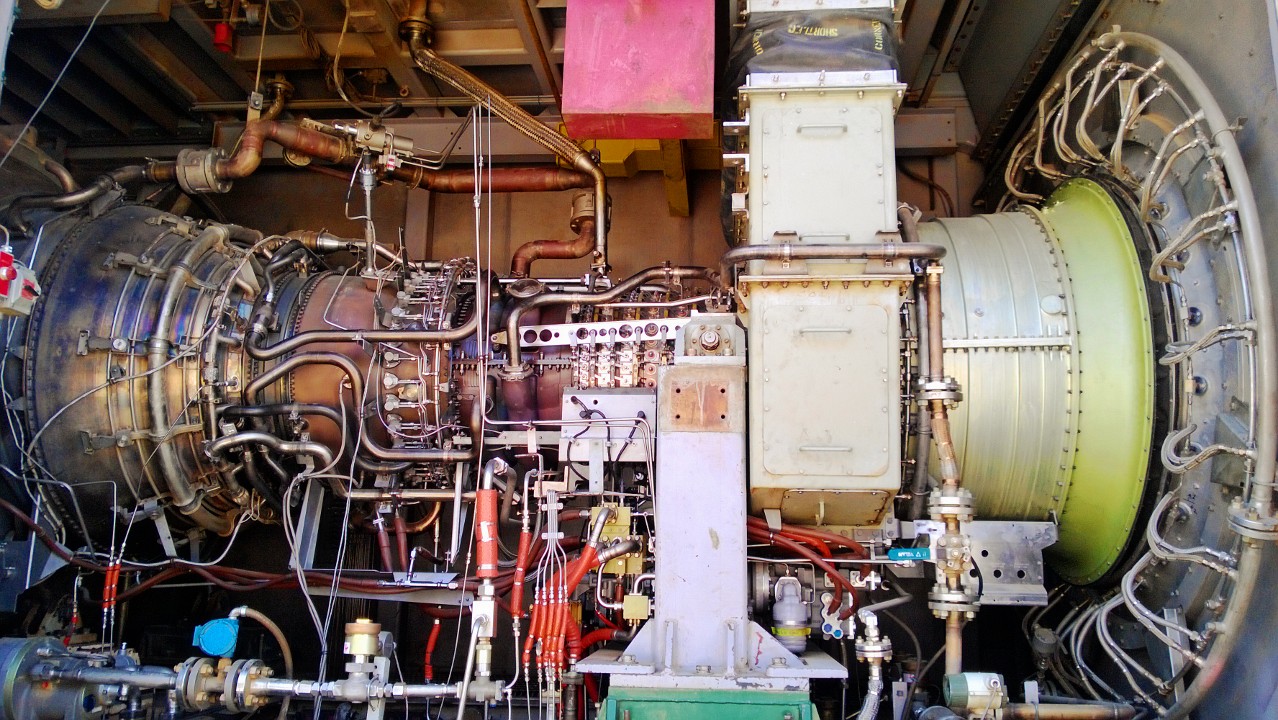
On September 25, 2026, Boom Supersonic founder Blake Scholl confirmed that his company and the AI data center developer Crusoe were no longer building the Superpower stationary gas turbine together. The partnership, announced in December 2025, had made Crusoe the launch customer for 29 of Boom's 42 megawatt turbines in a deal reported at $1.25 billion, with first units due in 2027. The reversal is small next to the numbers now routine in AI infrastructure, but it is unusually revealing, because it came days after Crusoe closed one of the year's largest private raises and because it turns on a question every AI builder is now quietly asking: how do you actually power a data center, and how much of that answer should you lock in years ahead of time.
This piece is a neutral read of what happened and why it matters. Both companies describe the split as amicable, and the more interesting story is not who was right but what the decision says about the economics of AI power in late 2026.
What was cancelled, in plain terms
Boom Supersonic is best known for supersonic passenger aircraft, but its Superpower line is a stationary power product: gas turbines derived from jet-engine technology, sold to generate electricity on site. Crusoe had signed on as the launch buyer, a commitment that would have anchored Boom's entry into the fast-growing market for behind-the-meter data center power. Boom says it still plans to deliver roughly 250 megawatts of Superpower turbines to other sites in 2027 and targets 1 gigawatt in 2028, so the technology is not going away. What changed is Crusoe's role as the first and largest customer.
The cancelled order was larger than everything Boom plans to ship next year
Boom Superpower stationary gas turbine capacity, in megawatts. The single Crusoe order that fell through was worth more nameplate capacity than Boom now expects to deliver to all other sites in 2027, which is why the cancellation matters beyond one contract.
Nameplate megawatts, not delivered or contracted energy. Sources: TechCrunch and Unite.AI, September 2026.
The chart makes the awkward part visible. The single cancelled order carried more nameplate capacity, around 1,218 megawatts across 29 units, than Boom now expects to deliver to every other site combined in 2027. Losing a launch customer of that size is not fatal, but it removes the volume that would have proven the product at scale, which is exactly what a launch partnership is for.
The reasons each side gave
Crusoe's explanation was procurement language, not a repudiation of the technology. A company spokesperson said that while Boom had been a great partner, the partnership was not the right fit today. Scholl framed it the same way from his side, noting that turbines were no longer part of Crusoe's near-term primary power mix at its flagship sites.
The substance sits underneath those statements. Crusoe has stepped back from a planned large-scale campus in Wyoming and signaled a shift toward more modular, flexible facilities rather than committing years ahead to fixed gigawatt-scale power hardware. In its own framing, the company wants to build AI factories from the power up using turbines alongside wind, solar, batteries and the grid, sourced as conditions dictate rather than pre-bought in a single bet. A launch commitment to one turbine line, delivered starting in 2027, is the opposite of that flexibility.
A launch commitment to one turbine line, delivered starting in 2027, is the opposite of the flexibility Crusoe now says it wants.
On why the timing mattered
Why the timing is the real story
The detail that makes this more than a routine contract change is the calendar. On September 17, 2026, Crusoe announced the initial close of a $3.9 billion Series F at a $30.9 billion post-money valuation, co-led by Atreides Management, Mubadala Capital and Valor Equity Partners, with backers including NVIDIA, Founders Fund, GIC and the Qatar Investment Authority. The company reported more than $140 billion in total contracted value. Barely a week after raising at roughly triple its late-2025 mark, it unwound a signature power deal.
 NVIDIA
Crusoe's valuation roughly tripled in under a year
Crusoe's reported private-market valuation across its two most recent rounds.
Sources: Crusoe Series E announcement, October 2025; Bloomberg and Crunchbase News reporting on the September 2026 round.
Read one way, that is a company with fresh capital exercising the freedom to change course, which is what a well-funded developer should do when its site plans shift. Read another way, it is a reminder that even the best-funded AI infrastructure firms are revising commitments made less than a year earlier, because the ground under data center power keeps moving. Both readings are defensible, and the honest position is that a single cancellation cannot settle which is closer to the truth.
The strategic question underneath: lock in, or stay liquid
Strip away the specifics and the episode is a clean example of a decision every hyperscaler and neocloud now faces. Power, not chips, is increasingly the binding constraint on AI buildout, and there are two broad ways to secure it.
- Lock it in. Sign long-dated commitments for dedicated generation, whether turbines, nuclear restarts or power-purchase agreements, and accept the rigidity in exchange for certainty and, often, a better price. This is the logic behind multi-year energy deals across the sector.
- Stay liquid. Assemble a flexible portfolio of grid power, on-site backup, renewables and storage that can be resized as demand, siting and technology change, and accept a less certain cost curve in exchange for the option to pivot.
Crusoe's own footprint shows both instincts coexisting. Its 1.2 gigawatt Abilene, Texas campus, built for the Oracle and OpenAI Stargate effort, runs primarily on grid power with gas turbines as backup, while a separate roughly 900 megawatt facility associated with Microsoft is designed around on-site gas generation. The Boom cancellation is best understood not as a rejection of turbines but as a decision about where on the lock-in-versus-liquidity spectrum a launch commitment should sit when a developer is still deciding what its next sites look like.
 OpenAI
 Microsoft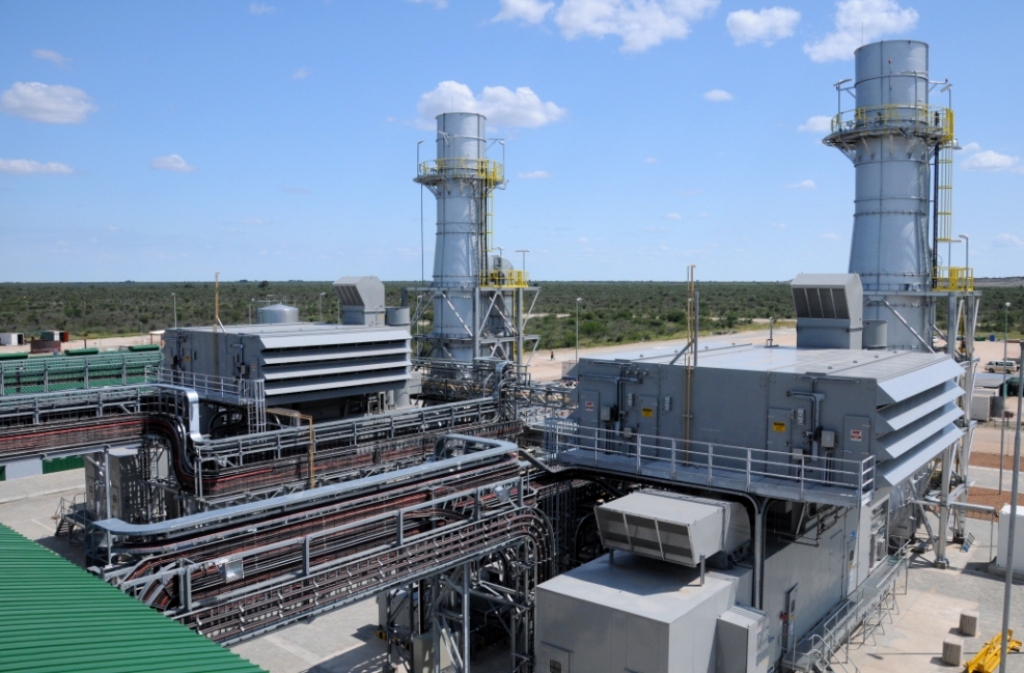
What it means for everyone downstream
Most companies using AI will never sign a turbine contract, but the volatility this episode illustrates reaches them anyway, through the cost and availability of compute. When a developer with $140 billion in contracted value and a fresh $3.9 billion in the bank is still rearranging its power strategy, it is a sign that the underlying supply of AI capacity is being built on shifting foundations. Capacity that looks committed can be reshaped, and the timeline on which power, and therefore compute, comes online is less fixed than the announcements suggest.
The practical lesson for builders mirrors the one Crusoe is applying to itself: avoid over-committing to a single source of a scarce input when the market is still finding its shape. For an infrastructure developer that means power. For a company building products on top of AI, the equivalent scarce input is model capacity, and the same preference for flexibility applies. A model-agnostic approach, keeping work portable across providers rather than hard-wired to one, is the software-layer version of Crusoe's turbines-plus-grid-plus-batteries portfolio. Tools such as Metir AI, which let teams work across the leading models in one place, apply that logic where most users actually feel supply shocks: not in the power plant, but in which models they can reach on any given day.
The takeaway
Crusoe cancelling a $1.25 billion turbine order days after a $3.9 billion raise is not a crisis, and it is not evidence that gas turbines have no place in AI power. It is a data point about posture. In a market where power is the constraint and the technology and siting are both still evolving, even the best-capitalized players are choosing optionality over early lock-in. Whether that caution looks prudent or costly will depend on where power prices and turbine supply land in 2027 and 2028, which is exactly the uncertainty the decision was made to preserve room around.
Keep your AI stack as flexible as the infrastructure beneath it
The lesson from AI power planning applies one layer up: do not hard-wire your work to a single provider when supply is still shifting. Metir AI keeps your projects portable across the leading models in one workspace, so a change at any one lab never stalls your day. Try Metir AI free and build on a foundation that can pivot.
Sources:
- Crusoe abandons $1.25B plan to use Boom turbines at AI data centers | TechCrunch
- Boom and Crusoe End Superpower Turbine Launch Partnership | Unite.AI
- Crusoe Raises $3.9 Billion Series F for its Vertically-Integrated AI Infrastructure Platform | GlobeNewswire
- Crusoe Secures $3.9B Series F at $30.9B Valuation to Build AI Factories | Unite.AI
- Crusoe raises over $3 billion at $30 billion valuation | Bloomberg
Image credits
Header image: gas turbine power plant, by Wikimedia Commons contributor, licensed CC BY-SA 4.0, via Wikimedia Commons. In-body image: gas turbine power plant, CC BY-SA 4.0, via Wikimedia Commons.