On October 16, 2026, China's Ministry of Commerce and Ministry of Science and Technology published a draft that would add 40 technologies to the country's catalogue of technologies prohibited or restricted from export. Twenty-three of them are artificial intelligence technologies. Reporting from The Next Web, citing Bloomberg and AP, says the draft would place China's own advanced AI models, agents and chip design know-how under export management. Public comment is open until November 15.
 Alibaba
 Moonshot AI
What the draft actually contains
The draft is Announcement No. 48 of 2026. Across AI, biomedicine and solar it proposes 14 prohibitions and 26 restrictions. The 23 AI items include large models, AI agents, computing clusters and information processing, along with chip design know-how, according to The Next Web. The other 17 items are 12 solar technologies and five biomedicine items such as gene therapy.
What the 40 proposed catalogue additions cover
Number of technologies in the October 16, 2026 draft, by sector. Across all 40 the draft proposes 14 prohibitions and 26 restrictions.
For large models, the controls would reach model weights, source code and other core components. Press reports say the threshold is models with at least 2 trillion parameters, or models ranking in the world's top 10 on tests such as performance and safety. On chips, the draft would limit design know-how for AI chips made at 14 nanometres or below, or built by stacking chips with 2.5D or 3D packaging, and lists some memory chip designs. One important caveat: the technical parameters sit in an attachment that the ministry's notice page does not render, so these thresholds come from news reports rather than the attachment text.
What is spared
The carve-outs matter as much as the controls. According to the ministry's Q&A as summarized by a developer analysis on DEV Community, offering a restricted model through API calls, apps, web interaction, SaaS or lightweight on-device deployment falls outside large-model export management. Technology already in the public domain through open-source release or academic papers is not covered. The ministry also says most AI technologies can still be exported freely.
The test is whether a restricted technology moves from mainland China to another country. That makes a Chinese vendor installing a restricted model on servers abroad an in-scope export, described as an overseas local deployment. A vendor running its model on its own cloud overseas may qualify for automatic licensing. For future open-source releases of restricted models, the draft proposes automatic licensing with a filing before release, and says the process should not delay publication.
The line is drawn at where the model runs, not who uses it. Serving the world from Chinese servers stays open; moving the weights abroad is what gets registered.
Analysis of the draft's scope, based on reporting by The Next Web and DEV Community
The interim rule is already live
The draft catalogue is not yet law, but a temporary pre-export registration rule took effect on October 16 and runs until the revised catalogue takes effect. It applies to four situations: transferring ownership of a listed technology abroad, licensing it for overseas use, a domestic owner coming under foreign control, and any other case the ministry specifies. It also covers exports that began before October 16 but have not finished. In practice, that means cross-border deals involving listed technology need to be registered even while the catalogue itself is still under consultation.
How to read it
Three readings are consistent with the public text, and the draft does not settle between them.
- A narrow transfer control. Because API access, apps and published open-source releases are carved out, the practical effect may fall mostly on licensing deals, overseas deployments and acquisitions of Chinese AI firms.
- A hedge on future releases. The proposed filing-before-release path for open-source models of restricted size suggests Beijing wants visibility into frontier-scale releases without stopping them.
- A mirror of Western controls. The ministry said the rules aim to "prevent misuse and abuse" and to "ensure that AI remains under human control", and that the plan does not target any country or firm. Analysts quoted in coverage note it resembles US export restrictions, applied to China's own technology.
Each reading has open questions. The parameter thresholds, the definition of the top 10 ranking test, and how "lightweight on-device deployment" is measured will determine how many current and future models are caught. Those details are likely to move during the comment period.
What it means for people who build on models
For developers and companies choosing models, the draft is a reminder that the legal status of a model can change independently of its quality. Teams that depend on a single provider's weights for self-hosting face a different risk profile from teams that call hosted APIs. Keeping workloads portable across providers, the approach behind model-agnostic tools such as Metir AI, reduces the cost of any single supplier's licensing status changing. Until the final text lands, the sensible stance is to watch the comment period and the thresholds rather than assume the draft's current wording.
Sources:
- China proposes export controls on its advanced AI models and chip designs | The Next Web
- China's AI Export Draft Spares API Calls and Public Weights. Overseas Deploys Aren't | DEV Community
- China Proposes Export Controls on 23 AI Technologies | af.net (Tech Insider)
Image credits
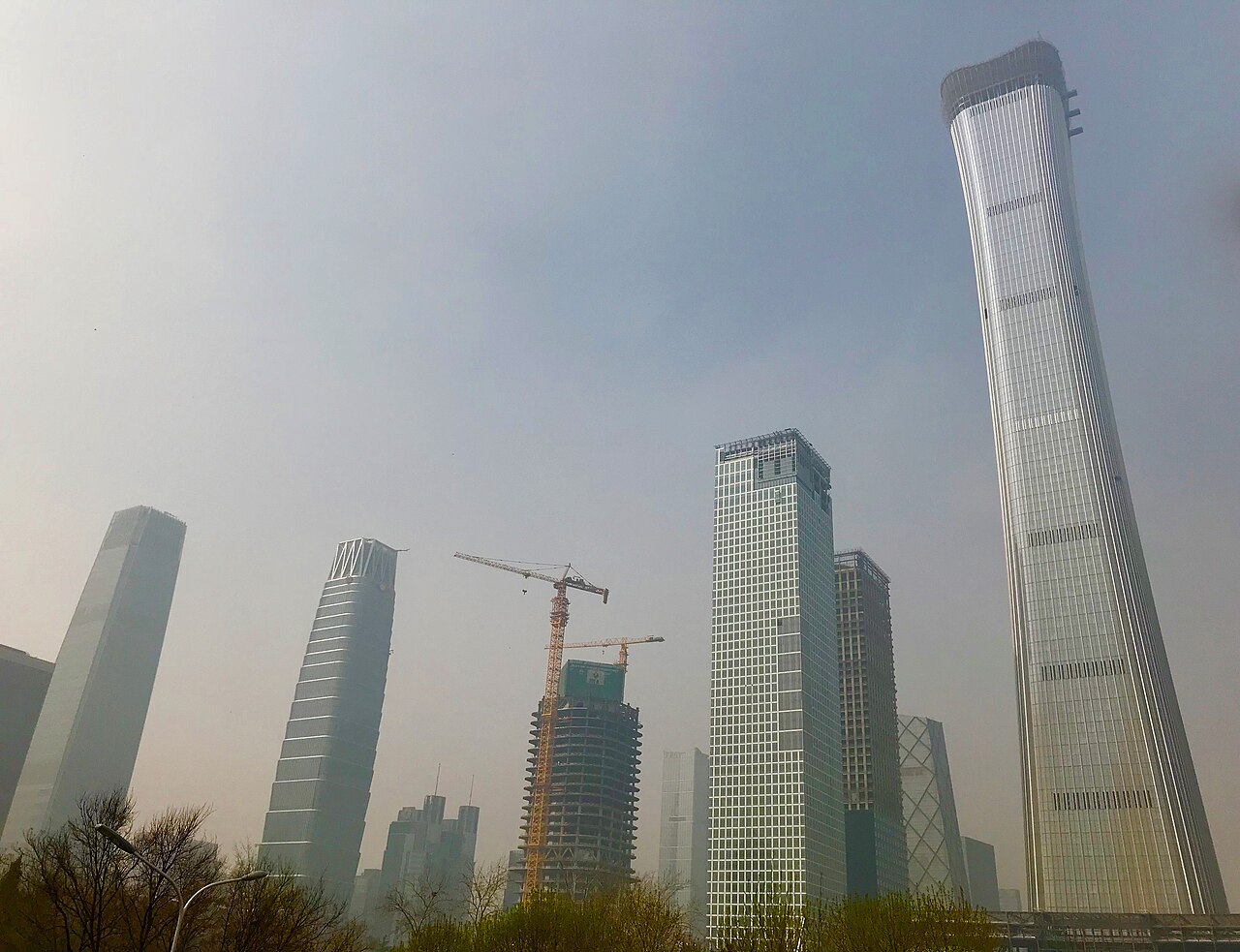
Header image: Beijing's central business district, by Fzhenan1, via Wikimedia Commons, licensed under CC BY-SA 4.0. In-body photograph: a server installation by NASA, public domain, via Wikimedia Commons. Both are illustrative and do not depict the ministries or any specific facility.