On July 14, 2026, Chai Discovery, a San Francisco company founded only in 2024, announced a $400 million Series C at a $3.8 billion valuation, roughly tripling its worth in about seven months. The round is notable for its size, but the more important detail sits underneath it: some of the world's largest pharmaceutical companies are reported to be using Chai's AI models in their actual drug-discovery work. That combination, a very young company, a very large valuation, and real adoption by conservative buyers, makes this a useful moment to look at where generative AI genuinely stands in medicine. This piece explains what Chai does, why the science is a meaningful shift rather than hype, and the parts of the story that remain unproven, because both need stating plainly.
What Chai Discovery does
Chai builds AI models that predict and design how molecules interact, aimed at the earliest and one of the hardest stages of making a drug: pre-clinical discovery. A large share of modern medicines are antibodies, proteins engineered to bind to a specific target in the body, such as a receptor on a cancer cell. Designing an antibody that binds tightly and precisely to the intended target, and not to anything else, has traditionally been a slow, largely experimental process of generating candidates and testing them in the lab, iteration after iteration.
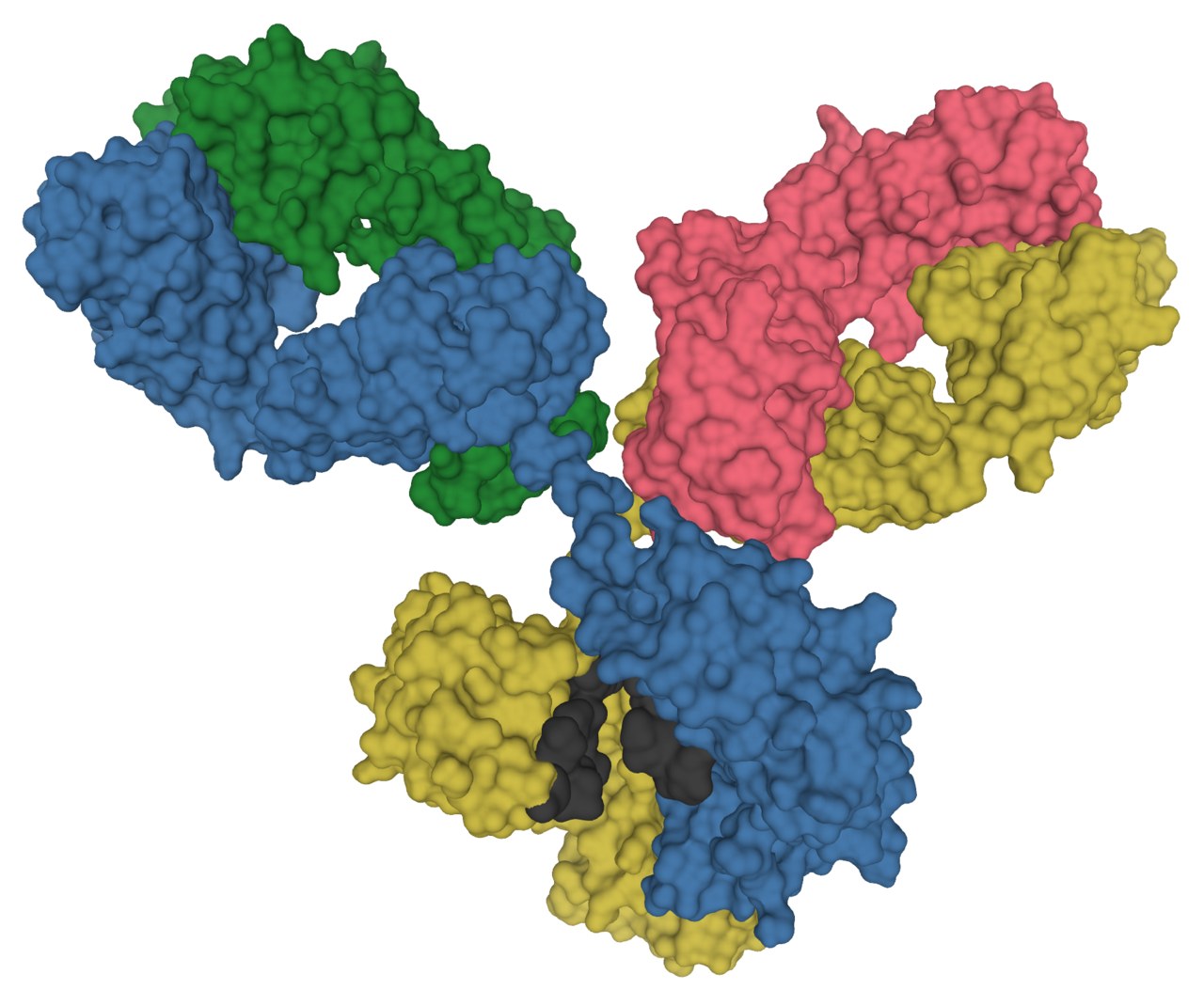
Chai's approach is to use generative AI to design candidate antibodies computationally, before the lab work begins, predicting which designs are most likely to bind well. If the model is good, it narrows an enormous search space down to a small set of high-probability candidates, so scientists spend their expensive lab time validating promising designs rather than screening long-shots. The company's latest model, Chai-3, is reported to materially improve target success rates and to produce antibodies that bind more tightly to their intended targets than its predecessor did.
From research models to big-pharma pipelines
Chai Discovery's model releases and commercial traction. The funding follows measurable improvements in antibody design, not just model announcements.
- 2024Company foundedChai Discovery starts in San Francisco, building AI models to predict and design molecular interactions.
- 2025Chai-2Described as the first zero-shot generative platform for fully de novo antibody design to reach double-digit experimental success rates in the lab.
- 2026Chai-3Latest model; reported to materially improve target success rates and produce antibodies that bind more tightly to intended targets.
- 2026Big-pharma adoptionLarge pharmaceutical companies including Pfizer and Eli Lilly are reported to be using Chai’s models.
Why the science is a real shift
The reason this is more than a funding headline is that the underlying capability appears to have crossed a threshold that matters. Chai's earlier model, Chai-2, was described as the first zero-shot generative platform for fully de novo antibody design to reach double-digit experimental success rates in the lab. The jargon is worth unpacking, because it is where the significance lives.
"De novo" means designing an antibody from scratch rather than tweaking a known one. "Zero-shot" means the model designs candidates for a new target without having been specifically trained on examples for it. And "double-digit experimental success rates" means that when the lab actually built and tested the model's designs, a meaningful fraction worked, not one in a thousand, but a materially useful hit rate. For a fully computational, from-scratch design process, that is a step-change over prior methods, which is the concrete reason serious investors and serious drugmakers are paying attention.
The signal is not the valuation. It is that conservative buyers are putting these models into real pipelines.
The adoption signal
Valuations in AI can run ahead of substance, so the most reliable evidence in Chai's story is not the $3.8 billion figure but who is using the product.
A tripled valuation in about seven months
Chai Discovery's valuation at its two most recent rounds. The $400M Series C lifted it from $1.3B to $3.8B.
Valuations as reported at each round. The Series C was led by Index Ventures with Kleiner Perkins, Sequoia and Dimension.
Large pharmaceutical companies, including Pfizer and Eli Lilly, two of the biggest drugmakers in the world by revenue, are reported to be using Chai's models. That matters because big pharma is a demanding, skeptical customer. These are organizations with deep internal computational-biology expertise, rigorous validation standards, and every incentive to be cautious about tools that touch their pipelines. When buyers like that adopt an external AI model, it is a stronger signal of real utility than any benchmark a startup publishes about itself. Their involvement does not prove the models will ultimately produce approved drugs, but it does indicate the technology is useful enough, today, to earn a place in their earliest-stage work.
What remains unproven
A neutral analysis has to be just as clear about the limits, and in drug discovery the gap between a promising early stage and a finished medicine is enormous.
Designing a better antibody candidate is genuinely valuable, but it addresses the very front of a long pipeline. After discovery come pre-clinical safety work, and then multiple phases of human clinical trials that take years and where the overwhelming majority of candidates fail, often for reasons of safety or efficacy that no design model can fully anticipate. AI that improves the hit rate at discovery can make the funnel more efficient and cheaper at the top, but it does not shorten or de-risk the clinical trials that dominate a drug's timeline and cost. The industry has not yet seen an AI-designed medicine travel the full distance to approval and widespread use, and until it does, the ultimate payoff of these tools remains a well-founded expectation rather than a demonstrated fact.
There is also a valuation question layered on top. A $3.8 billion valuation for a company founded in 2024 prices in years of expected success across a pipeline that has not yet delivered a marketed drug. That can be entirely rational and still carry real risk; both things are true. The science is advancing quickly, and the commercial validation is real, but the distance from here to approved therapies is long, and the valuation assumes much of it will be covered.
The pattern beyond biology
Chai's round is part of a broader movement worth naming: capital and talent flowing into companies that apply AI deeply to a specific, high-value domain rather than building general-purpose models. In the same period, large rounds went to AI-first defense, AI video, and edge-agent companies. The shared thesis is that a durable advantage comes from combining domain expertise, proprietary data and workflow integration with AI capability, not from the general model alone.
For biology specifically, this points to a division of labor that is likely to persist. The frontier general-model labs advance the underlying capability; specialists like Chai translate it into the deep, domain-specific tooling that a drugmaker can actually use, wrapping it in the biological knowledge and validation infrastructure that a general model does not have. The value accrues at the point where a broad capability meets a hard, particular problem.
That has a familiar implication for how any organization should think about building with AI. The lasting investment is in the domain, the data and the workflow; the underlying model is a fast-moving input that should stay swappable so a team can adopt whatever is best without re-platforming. A model-agnostic workspace such as Metir AI applies the same logic to everyday knowledge work: keep the model a flexible choice and concentrate effort on the problem you actually understand, because that is where the defensible value sits.
The bigger picture
Chai Discovery's $400 million round captures a genuine inflection in AI for medicine. The science has reached a point where generative models can design useful drug candidates from scratch, and the clearest proof is that the world's largest drugmakers are putting those models to work. That is real, and it is new. It sits alongside an equally real caution: the hardest, most expensive part of making a medicine happens after discovery, in the clinical trials that AI does not yet meaningfully de-risk, and no AI-designed drug has yet completed that journey. The accurate read is that AI has measurably improved the front of the pipeline while the rest of it remains as demanding as ever, and the companies, and valuations, riding this wave are betting that the early gains will eventually carry all the way through.
Sources:
- Chai Discovery Announces $400M Series C to Advance AI-Driven Molecular Design | Yahoo Finance
- Chai Discovery nabs $400M Series C as AI-designed antibodies reach Big Pharma | SiliconANGLE
- Chai brews up $400M series C to fuel AI molecule models used by Lilly, Novartis and Pfizer | FierceBiotech
- Chai Discovery raises $400M Series C at $3.8B valuation for AI drug discovery | Dealroom
- Chai Discovery Raises $400M in Series C Funding | FinSMEs
Image credits
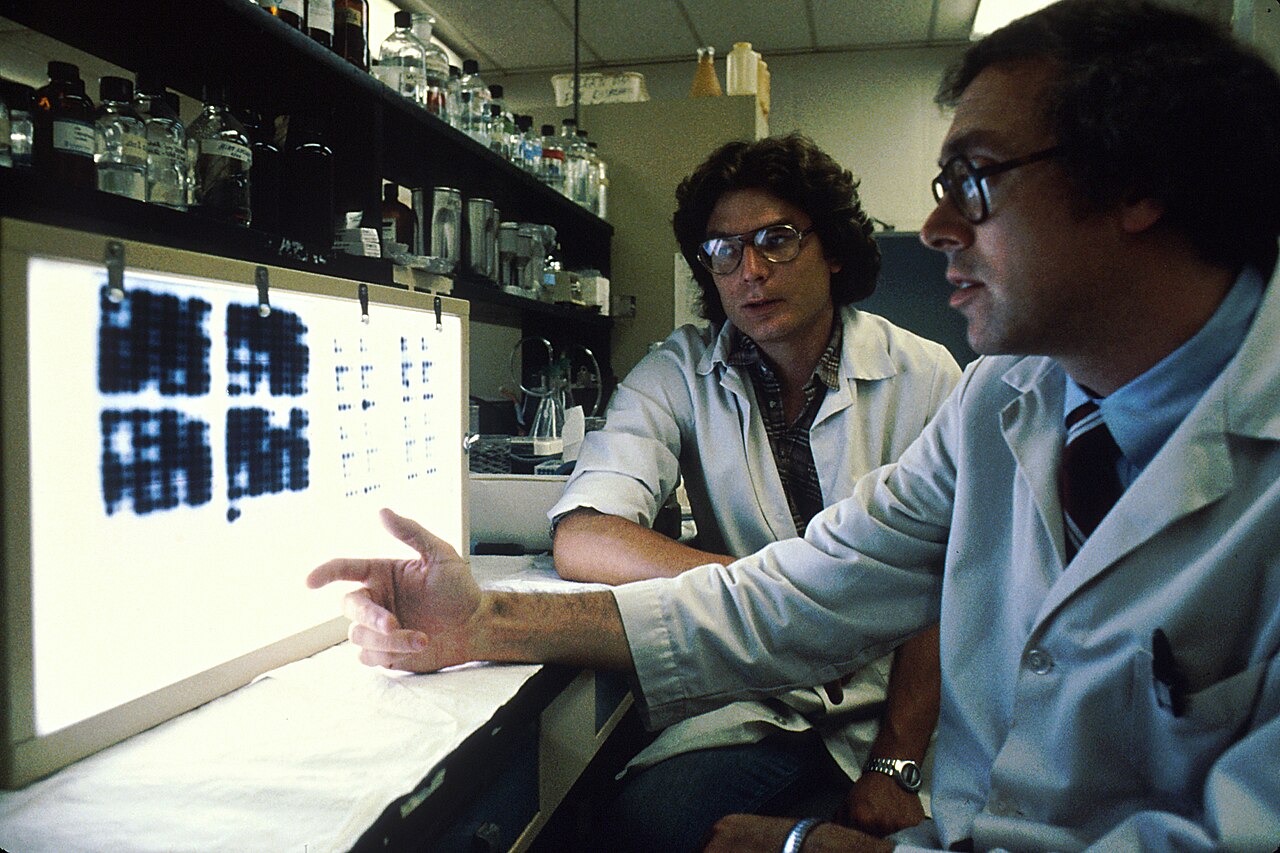
Header image: researchers examining cultures of cells producing monoclonal antibodies, an archival photograph from the US National Cancer Institute illustrating the laboratory screening step that computational design aims to narrow. Photo by Linda Bartlett for the National Cancer Institute Visuals Online, public domain. In-body antibody structure rendering by Tokenzero via Wikimedia Commons, licensed under CC BY-SA 4.0.