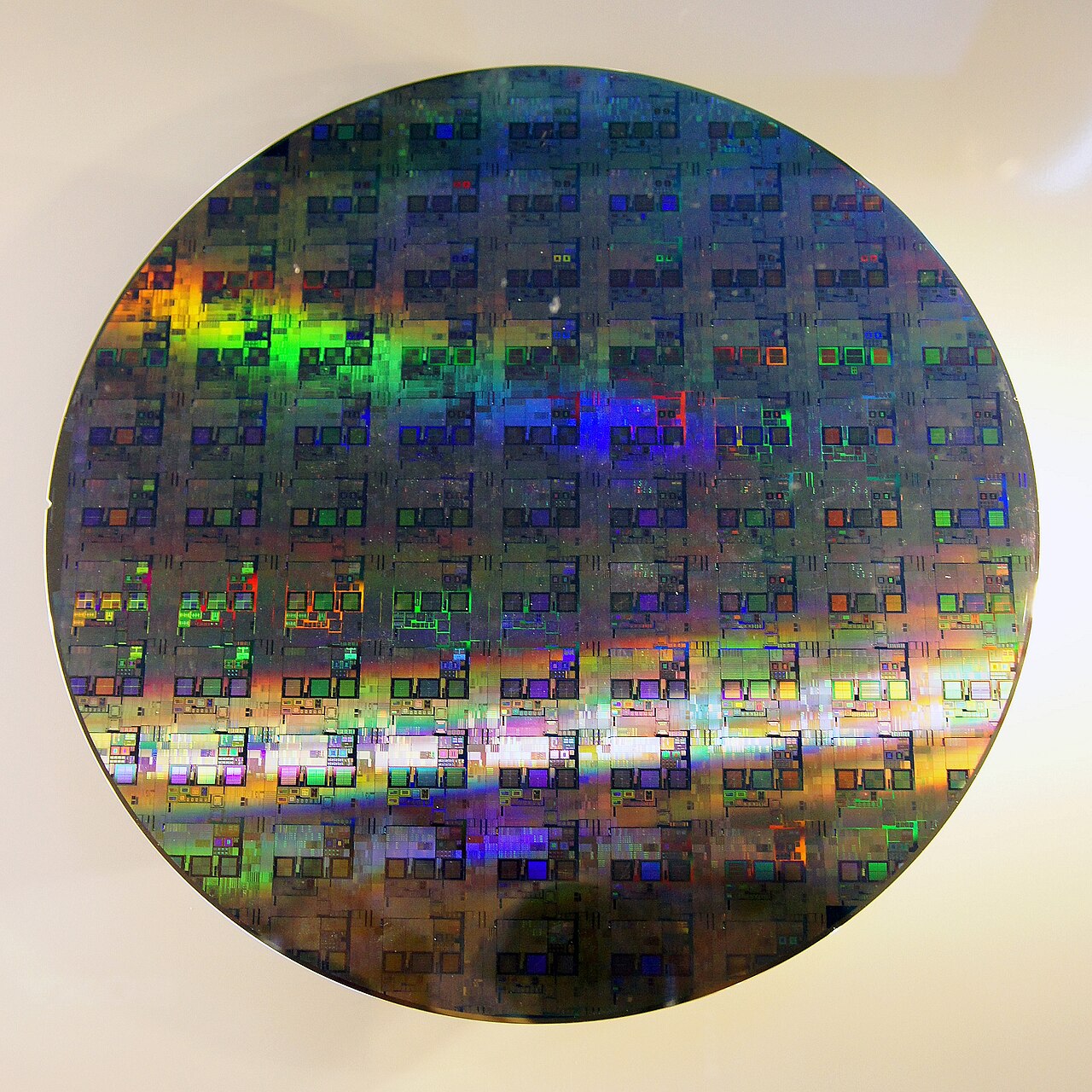
Cerebras Systems used its "Supernova" event in San Francisco on August 19, 2026 to unveil the CS-4, a rack-scale AI inference system the company says runs open-weight language models up to 30 times faster than GPU-based solutions. The announcement, made public a day earlier via press release on August 18, is Cerebras' most direct challenge yet to Nvidia's dominance of the AI compute market, aimed squarely at the part of the AI stack where the company believes GPUs are structurally weakest: serving already-trained models back to users, one token at a time.
 Nvidia
What Cerebras Announced at Supernova
The CS-4 is Cerebras' next-generation rack-scale inference system, built around three of the company's new WSE-3 Turbo processors connected inside a single rack. Each WSE-3 Turbo delivers roughly 250 petaFLOPS of AI compute and about 43.2 petabytes per second of memory bandwidth, and is built from roughly 4 trillion transistors. Combined, the three-chip CS-4 system totals approximately 750 petaFLOPS of AI compute. Cerebras says first shipments of the CS-4 begin later this quarter.
The centerpiece performance claim is throughput on GPT-OSS-120B, an open-weight model released by OpenAI. Cerebras reports the CS-4 generating more than 4,400 tokens per second for a single user on that model, compared with roughly 350 tokens per second on what it describes as the fastest GPU-based inference service available. Cerebras frames the gap succinctly: the CS-4 generates in about one second what it says a comparable GPU rack needs roughly 30 seconds to produce.
 OpenAI
Inside Wafer-Scale: Why One Giant Chip Behaves Differently
Cerebras' architecture is built around a genuinely unusual idea: instead of cutting a silicon wafer into hundreds of individual chip dies the way every other chipmaker does, Cerebras uses an entire wafer as a single processor. That single design choice is the reason the company's inference numbers look the way they do, and it is worth understanding mechanically rather than just taking on faith.
Why wafer-scale chips report higher per-user token throughput
Inference speed for a single user is mostly a memory-bandwidth problem: how fast the chip can read model weights for each new token. Keeping the whole model on one piece of silicon removes the inter-chip hop that a GPU cluster relies on.
One uncut wafer is the chip
Model weights sit in on-wafer SRAM next to the compute, so there is no chip-to-chip network hop to fetch the next layer.
Many separate chips networked together
Weights and activations move between chips over an interconnect, and each hop adds latency that compounds across a model’s layers.
Specs shown are Cerebras' own published figures for the WSE-3 Turbo and CS-4. The GPU cluster column describes the general architecture pattern rather than any single competing product.
In a conventional GPU cluster, a large language model's weights are spread across many discrete chips, each with its own on-package memory. Generating each new token requires reading enormous amounts of weight data from that memory, and when a model is too large for one GPU, weights and intermediate results also have to move across a chip-to-chip network, adding latency at every hop. That is why GPU inference speed for a single user is typically bound less by raw compute and more by memory bandwidth and interconnect overhead.
A wafer-scale chip sidesteps much of that. Because the WSE-3 Turbo keeps the compute and a very large pool of on-wafer SRAM on the same piece of silicon, there is no separate memory chip to reach across a bus, and far less need to shuttle data between physically separate chips to serve a single model. Cerebras has published on-chip memory bandwidth figures around 43.2 petabytes per second per WSE-3 Turbo, an order of magnitude beyond what off-chip high-bandwidth memory on a discrete GPU typically provides. That bandwidth advantage is the direct mechanical explanation for the tokens-per-second gap Cerebras is advertising.
Why Tokens per Second Increasingly Matters
Raw training throughput dominated AI chip marketing for years, but the workloads running today have shifted the bottleneck. Reasoning models generate long chains of intermediate tokens before producing a final answer, and agentic systems chain together many sequential model calls, each waiting on the output of the last, as part of a single tool-use loop. In both cases, the per-token latency of a single inference pass compounds across the whole task, so a model that is merely accurate but slow to respond can make an agentic workflow feel sluggish even when the underlying reasoning is sound.
Per-user output speed on GPT-OSS-120B, as reported by Cerebras
Tokens generated per second for a single user querying the open GPT-OSS-120B model. All three figures come from Cerebras' own launch materials; independent, third-party benchmarking of the CS-4 has not yet been published.
Cerebras frames the gap as generating in 1 second what a GPU rack needs roughly 30 seconds for. Figures are vendor-reported, single-model, batch-size-1 results and should be read as a best-case comparison rather than an industry average.
Cerebras frames the CS-4 as generating in one second what a GPU rack needs roughly thirty seconds for, a claim that rests on a single open model, measured for one user at a time, under Cerebras' own test conditions.
Framing drawn from Cerebras' CS-4 launch materials
That context is part of why inference speed, not just training FLOPs, has become a genuine point of competitive differentiation. If a task requires dozens of sequential agent steps, a chip that returns each step's output in under a second rather than several seconds can change what feels usable for real-time or interactive agentic products, independent of any change to model quality.
The Caveats Worth Weighing
Cerebras' numbers are compelling, but they come with the caveats that apply to any vendor-published benchmark, and they are worth stating plainly rather than glossing over.
First, the headline comparison is vendor-reported and has not yet been reproduced by an independent third party. Second, it is a single-model result: GPT-OSS-120B is one open-weight model at one particular size, and Cerebras has not published equivalent CS-4 numbers across a broad range of model architectures and sizes. Third, the 4,400 tokens-per-second figure is a per-user, batch-size-one measurement, the scenario that most favors an architecture built around eliminating memory-bandwidth bottlenecks; GPU inference services are frequently optimized instead for serving many concurrent users at once, a different tradeoff that this comparison does not directly address.
There are also questions the launch materials do not answer. Wafer-scale manufacturing carries its own yield and cost challenges, since a defect anywhere on a full wafer can affect the single chip built from it, unlike conventional dies where a defective chip can simply be discarded from the batch. Cerebras has not disclosed CS-4 pricing, so total cost of ownership per token relative to GPU-based inference remains unclear. And because the WSE-3 Turbo's very large on-chip memory pool is the source of its advantage, questions about how the architecture handles model sizes well beyond what fits on a wafer's SRAM are not addressed by this launch.
Cerebras in the Broader Inference-Silicon Race
Cerebras is not the only company betting that inference speed, not just training scale, is where the next round of AI hardware competition plays out. Groq has built its own custom inference chips around a similar low-latency philosophy, and SambaNova has pursued reconfigurable dataflow architectures aimed at the same problem. Nvidia itself is not standing still on inference either, continuing to optimize its GPU software stack and newer chip generations specifically for serving workloads rather than only training.
What makes the CS-4 launch notable is less that Cerebras is entering this race and more how directly it has chosen to frame its numbers against Nvidia's installed base, positioning wafer-scale silicon as a distinct architectural bet rather than an incremental GPU alternative. Whether that bet pays off commercially will depend on factors this launch alone cannot settle: real-world pricing, availability at scale, and independent verification across a wider set of models.
What This Means Going Forward
The honest read of the CS-4 launch is that it demonstrates a real architectural advantage for a specific, important workload, single-user inference latency on a specific open model, while leaving unanswered the questions that matter for anyone deciding whether to actually build on it: cost, availability, and whether the advantage holds across the diverse model landscape teams actually rely on. Both readings, that wafer-scale inference represents a genuine architectural edge and that today's numbers are a narrow, vendor-chosen showcase, remain defensible until independent benchmarks and real customer deployments arrive.
That uncertainty is itself a reason teams increasingly want to avoid locking into any single chip architecture or model provider while this competition plays out. A model-agnostic platform like Metir AI, which routes across models from multiple providers rather than committing to one underlying stack, gives teams room to adopt whichever inference hardware or model ends up winning a given workload, without rearchitecting an application around it.
Sources:
- Cerebras Unveils CS-4, 30 Times Faster Than GPU-Based Solutions | Cerebras Investor Relations
- Cerebras Introduces CS-4 With 750 PFLOPS of AI Compute | HPCwire
- Cerebras Intros Faster WSE-3 Turbo Processor and First Rack-Scale CS-4 System | ServeTheHome
- Cerebras Launches CS-4 AI Accelerator Boasting 30x Speed | Dataconomy
Image credits
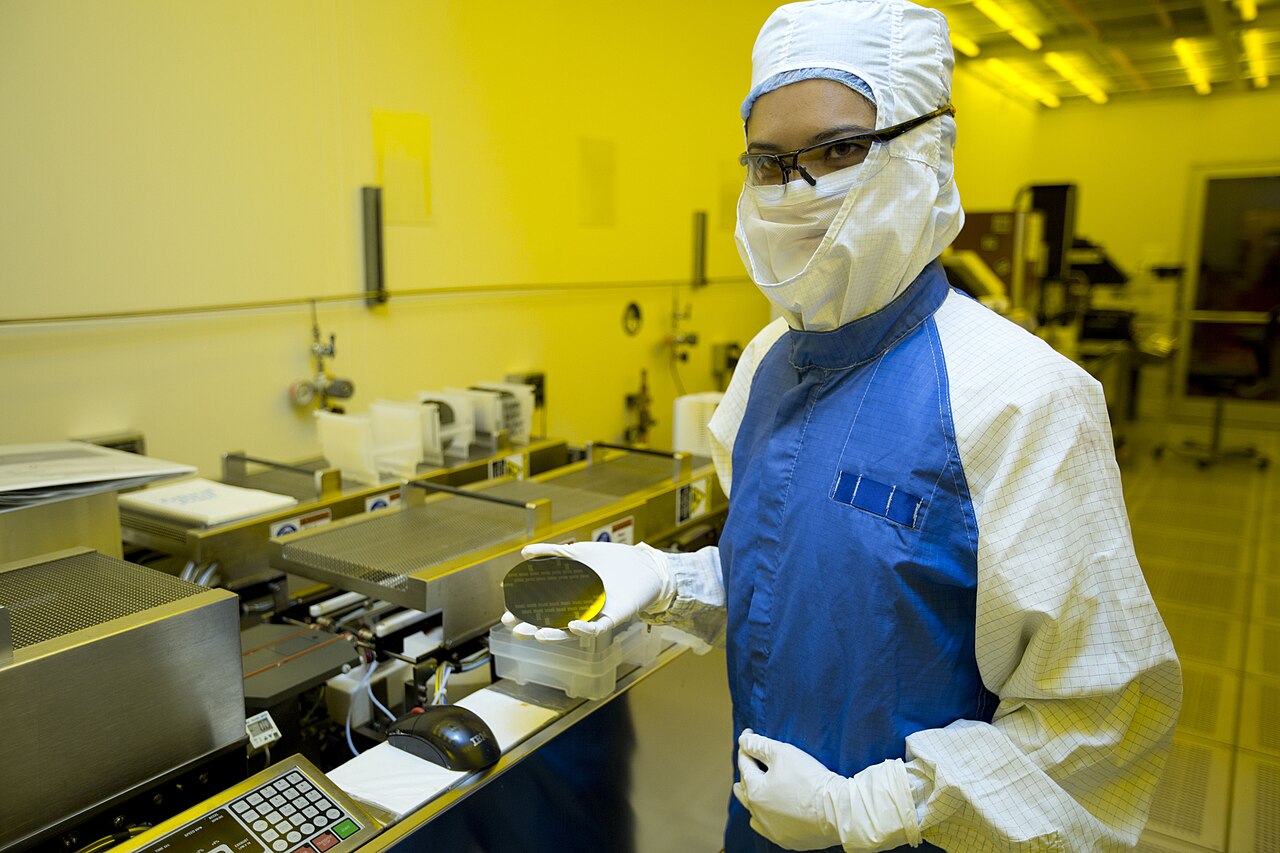
Header image: a 12-inch (300mm) silicon wafer patterned with a grid of chip dies, photographed under light showing iridescent interference colors. A generic wafer used to illustrate the physical medium Cerebras builds its wafer-scale processors from, not a photograph of a Cerebras product. By Peellden via Wikimedia Commons, licensed under CC BY-SA 3.0. In-body photograph of a cleanroom researcher holding a silicon wafer during processing, U.S. Department of Energy, public domain, via Wikimedia Commons.