On July 29, 2026, NextEra Energy and Brookfield announced a more-than-$100 billion, privately funded plan to build a Kentucky AI data center campus on the site of a decommissioned Cold War uranium-enrichment plant in Paducah. It is one of the largest single-site infrastructure commitments of the current AI buildout, and it is a useful case study in where that buildout is actually straining: not chips, but power, land, and the transmission and water infrastructure that a data center of this scale needs on day one.
The basic split is straightforward. Brookfield will develop and operate the 1.8-gigawatt data center campus itself. NextEra, the largest electric utility in the United States, will build and own dedicated generation to serve it: as much as 2 gigawatts of new natural gas-fired power plus as much as 2.6 gigawatts of battery energy storage. The U.S. Department of Energy has also announced a partnership to expand energy access supporting the project. Operations are expected to begin in 2028, with the full campus targeted for completion by 2032.
From uranium enrichment to AI compute
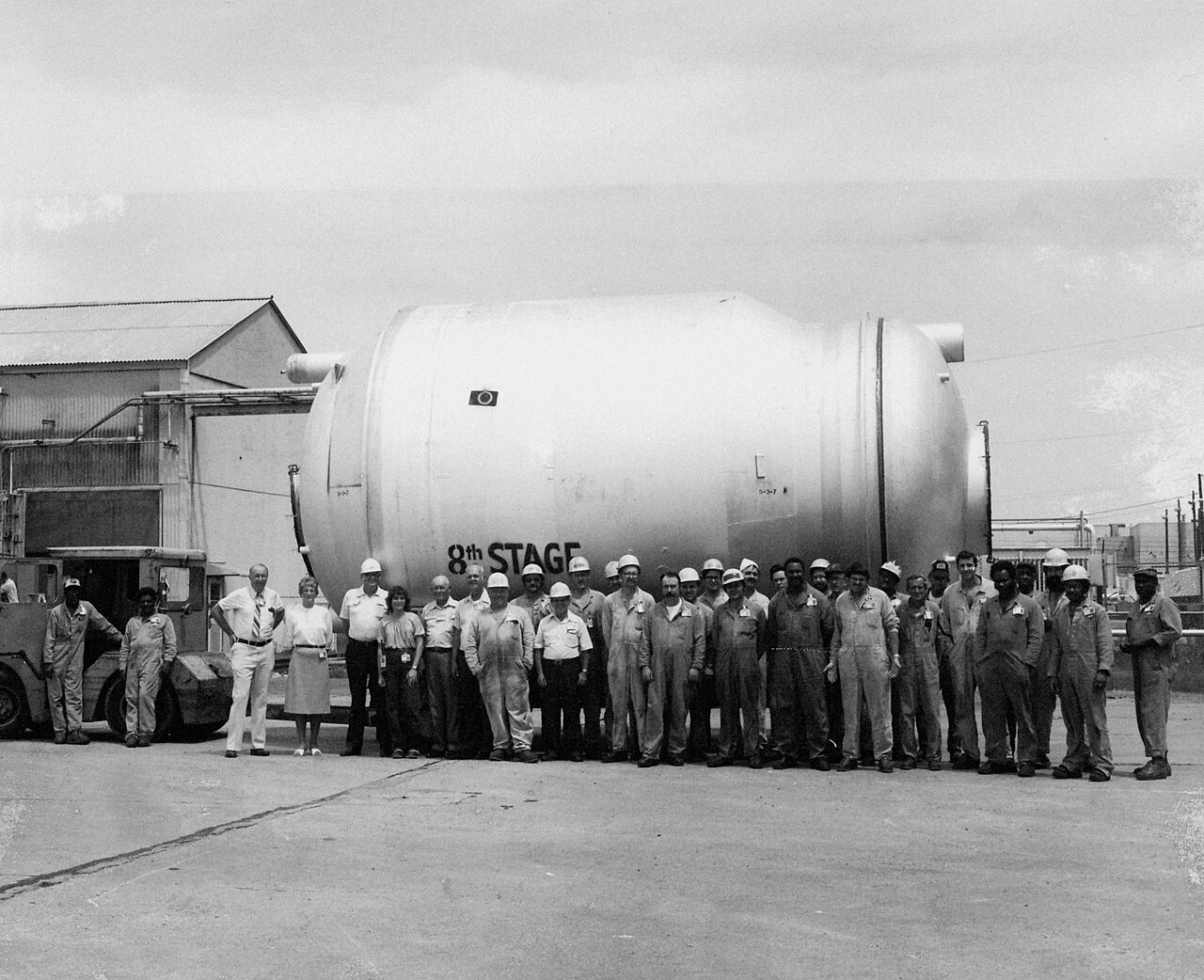
The Paducah Site has been federal land since 1952, when it was built to enrich uranium for Cold War weapons and reactor fuel. The Department of Energy still owns and manages the roughly 3,556-acre site, which has spent recent decades in cleanup and decommissioning rather than active production. That history is exactly what makes it attractive for a data center campus today. A brownfield federal site of this size typically comes with existing high-capacity transmission connections, established security and site-access infrastructure, water rights, and a workforce and surrounding community already accustomed to large industrial and federal operations. Redeveloping land like this is, in effect, a shortcut through several of the slowest steps in building a data center campus from scratch.
Why the power comes with the campus
The most telling number in the deal is not the $100 billion price tag, it is that NextEra is building 4.6 gigawatts of new generation and storage capacity to serve a 1.8-gigawatt data center. That is more than double the campus's own compute load, and it points to a structural shift in how AI infrastructure gets built.
The power build-out dwarfs the compute it serves
Planned capacity at the Paducah site, in gigawatts. NextEra's new gas and battery capacity together total more than double the campus's own compute load.
Gas and storage figures are described as "as much as," the ceiling NextEra has permitted itself to build, not a committed final mix.
For most of the last decade, a data center developer's job was to find a site and a grid connection, then wait for a regional utility to deliver power over time. That queue-based model has broken down under AI-scale demand: interconnection queues in many U.S. regions now run years long, and utilities are wary of committing existing grid capacity to any single, enormous new load. The response, visible across the largest 2026 AI infrastructure deals, is for the data center developer to bring or build its own power rather than wait in line for someone else's. Pairing a utility as large as NextEra directly with the campus developer, rather than routing the project through the regional grid operator's standard queue, is a way of buying speed and certainty on the one input that has become the actual bottleneck to bringing AI compute online.
The most telling number in the deal is not the price tag, it is that NextEra is building more than double the new generation and storage capacity the campus itself will draw.
Gas and batteries, not nuclear or wind
The generation mix NextEra is building, natural gas paired with batteries rather than new nuclear or wind and solar, is itself a signal. Gas turbines can be built and brought online faster than a new reactor, and they provide the steady, dispatchable output a data center needs around the clock, something intermittent renewables cannot do alone without far larger storage buildouts. Batteries fill in behind the gas plants, smoothing short-term swings in demand and letting the fixed gas capacity run more efficiently rather than being sized for peak load. NextEra is also one of the country's largest renewable energy developers, so the choice to lean on gas plus storage here, rather than wind, solar, or nuclear, reflects speed and reliability requirements specific to serving a data center campus on this timeline, not a retreat from renewables as a category.
One site in a much larger cycle
Paducah is a single project, but it sits inside a 2026 AI infrastructure cycle that analysts have described as approaching roughly $700 billion in combined capital spending by the largest technology companies this year alone, according to CNBC's reporting on hyperscaler capex trends. Individually, a handful of multi-billion and now multi-hundred-billion-dollar data center announcements can each look like an outlier. Collectively, they describe an industry that has concluded compute capacity, and the power to run it, is worth committing capital to years ahead of confirmed demand. Kentucky's governor has called the Paducah project one of the largest private investments in the state's history, and the roughly 8,000 construction jobs and 600 permanent positions it is expected to create are a real, local counterpart to that much larger, more abstract national spending figure.
Whatever compute eventually comes online at Paducah will, like nearly all large-scale AI infrastructure, end up running a mix of models from different providers rather than a single vendor's stack. That is the layer Metir AI operates in: giving teams model-agnostic access to leading AI systems from one workspace, so the value created by projects like this flows to whichever model actually does the best job on a given task, rather than being locked to one provider by default.
What to watch next
The most useful signals to track between now and 2028 are permitting and interconnection approvals for the new gas and battery capacity, whether Brookfield begins securing anchor tenants for the compute itself, and how the Department of Energy's role in expanding energy access to the site evolves as construction proceeds. A project of this size, on federal land, moving from a former weapons-production site to commercial AI infrastructure is a genuinely novel use case, and its pace over the next two years will say a good deal about how repeatable this brownfield model is for the rest of the industry.
Sources:
- NextEra, Brookfield to Build $100 Billion Data Center Campus | Bloomberg
- NextEra, Brookfield to Build $100 Billion Kentucky Data Campus | Yahoo Finance
- NextEra and Brookfield are building a $100 billion AI data center campus on a Cold War uranium site | Quartz
- NextEra, Brookfield plan US$100-billion data centre at U.S. uranium site in Kentucky | BNN Bloomberg
- Brookfield and NextEra plan $100 bn Kentucky AI data center campus with 4.6 GW of new power and storage | InfoTech Lead
- Energy Department Announces Partnership to Expand Reliable, Affordable Energy Access and Power the Paducah Site | U.S. Department of Energy
- Tech AI spending approaches $700 billion in 2026, cash taking big hit | CNBC
Image credits
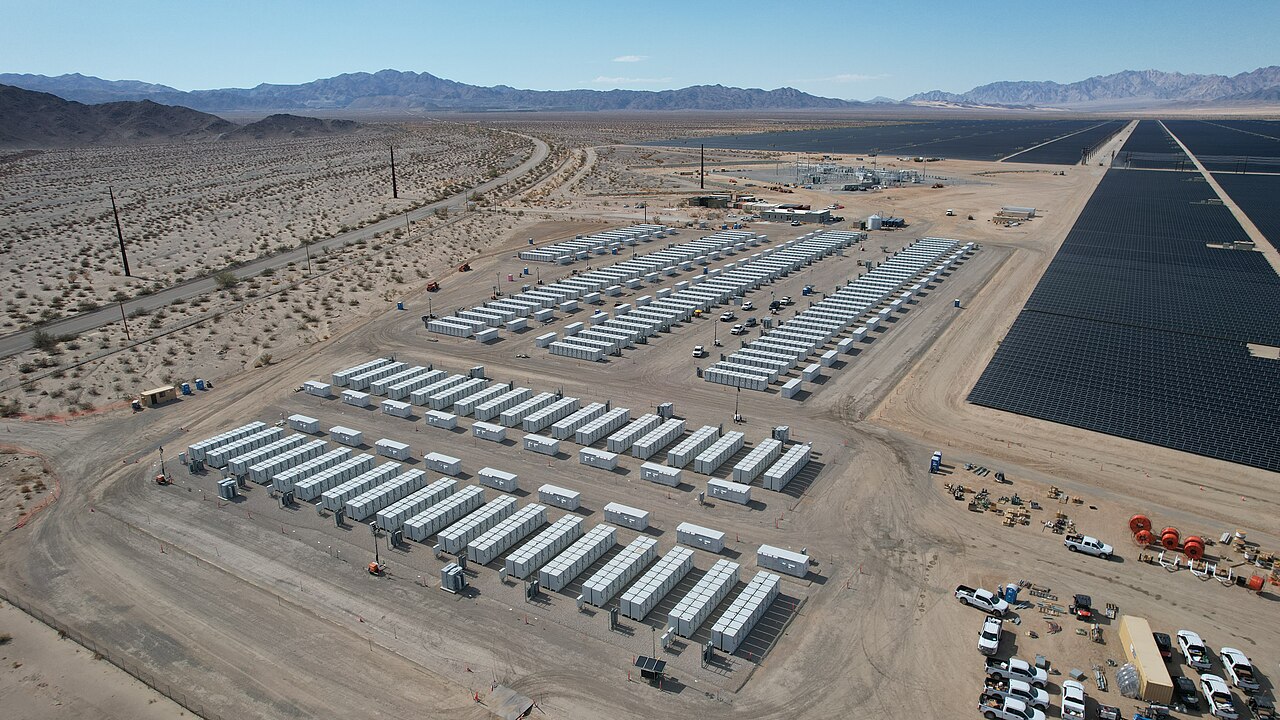
Header image: an aerial view of NextEra's Sunlight Storage II battery energy storage system at the Desert Sunlight complex in Riverside County, California, an existing NextEra battery storage project of the same kind planned for Paducah (not the Kentucky site itself). Photo courtesy of NextEra via the Bureau of Land Management California, via Wikimedia Commons, public domain. In-body photograph: an "8th Stage" converter and plant workers at the Paducah Gaseous Diffusion Plant, by the Nuclear Regulatory Commission courtesy of the Kentucky Research Consortium for Energy and Environment, via Wikimedia Commons, public domain.