Black Forest Labs is the German company that made its name in 2024 with FLUX.1, a set of open-weight image models that quickly became a default for developers who wanted to generate pictures without renting a closed API. On July 23, 2026, it announced something considerably more ambitious: FLUX 3, which the lab describes not as a better image model but as a multimodal frontier model for visual intelligence, trained jointly on images, video and audio in one architecture and extensible to predicting actions. It is a large bet, and like most large bets it is worth separating from the marketing. This piece looks at what FLUX 3 is claimed to be, what has actually shipped, and why a still-image lab is reframing itself around video, audio and robotics.
From still images to one shared model
The core technical claim is architectural. Rather than bolting a video generator and an audio generator onto an image model, FLUX 3 is trained across modalities at the same time, so that images, video and audio are learned within a single set of weights. Black Forest Labs credits an approach it calls Self-Flow, which it describes as a way to align multimodal generation and understanding inside the same underlying architecture, then scaled up with more compute and data. The lab also says the same architecture can be extended to predict actions, which is the bridge from generating media to controlling machines.
From still images to visual intelligence
Black Forest Labs' public model lineage, showing the jump from single-modality image models to a unified multimodal system.
- 2024FLUX.1 launches with the companyOpen-weight text-to-image models put the new German lab on the map, with weights anyone could download and run.
- 2025FLUX.1 Kontext adds in-context editingThe line moves from generating images to editing them from instructions, keeping the open-weight release model.
- Jul 23, 2026FLUX 3 goes multimodalOne architecture jointly trained on images, video and audio, extensible to actions. The lab reframes itself around "visual intelligence" rather than still images.
The strategic logic is easier to state than the engineering. An image-only lab competes in a crowded, fast-commoditising market where open weights and falling prices squeeze margins every quarter. A lab that owns a unified model for image, video and audio, and can point it at robotics, is playing for a much larger prize and a more defensible position. Whether the single-architecture approach actually produces better results than specialised models is the open technical question, and it is not one an announcement can settle.
What has actually shipped, and what has not
This is where a careful reading matters, because the gap between the announcement and the available product is unusually wide.
One model, four modalities
What FLUX 3 is designed to generate, and how far along each part was at announcement. Video, audio and action lead; the image release trails.
The headline capability, text-to-video of up to 20 seconds with native audio generated in sync rather than dubbed on afterward, is in early access through an API, with private weights shared to a set of selected partners. The action and robotics side is likewise early access to a small group. But FLUX 3 Image, the part closest to the lab's existing business and the thing most of its users actually want, is described only as expected in the coming weeks. The fully open-weight release, FLUX 3 Dev, is planned for later in 2026. In other words, the lab announced a multimodal frontier model whose most in-demand component and whose open weights are both still to come.
The lab announced a multimodal frontier model whose most in-demand component, and whose open weights, are both still to come.
None of that makes the claims false, but it does change how they should be read. An announcement with a video demo and a coming-soon image model is a statement of direction and a bid for attention and partners, not a shipped product a developer can benchmark today. The honest position is that FLUX 3's capabilities are, for now, mostly demonstrated rather than generally available, and the real test is whether the shipped models match the reel when the weights arrive.
The physical AI turn
The most striking part of the announcement is the least expected from an image lab. Black Forest Labs says FLUX 3 marks its first move into physical AI, with a robotics variant already being tested on Audi production lines. The connective idea is that a model which has learned how the visual world moves, by training on video, has learned something reusable about physics and cause and effect, and that predicting a robot's next action is not so different from predicting the next frame of a video.
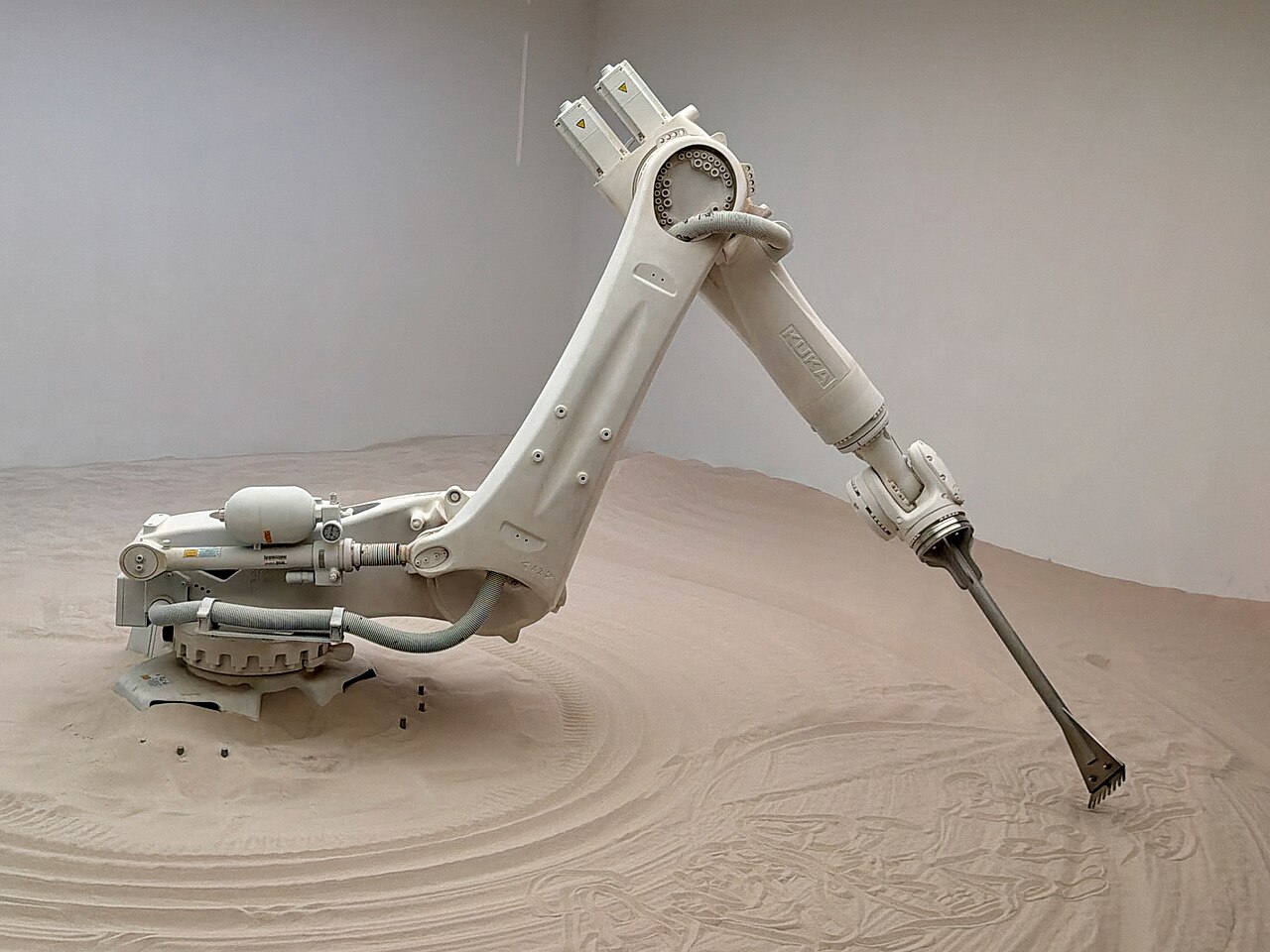
This puts Black Forest Labs on the same road that several larger players are already travelling, from Nvidia's world-model work to the embodied-AI efforts at the big labs. The company arrives with a real asset, a strong track record in visual generation, and a real disadvantage, none of the robotics deployment experience the incumbents have. A test on an automotive line is a meaningful signal of intent and access, but it is a pilot, not a product, and physical AI has a long history of impressive demos that struggle to generalise beyond the exact station they were tuned for.
Why it matters beyond one lab
Strip away the specifics and FLUX 3 is a clean example of two patterns shaping the year. The first is convergence: separate model categories, image generation, video, audio, and now action, are collapsing into single multimodal systems, because the same underlying representation of the visual world can in principle serve all of them. The second is the pressure that convergence puts on specialists. A lab that does one modality well is exposed if the general multimodal models become good enough, so the rational move, even for a company as identified with images as this one, is to widen out before the ground shifts underneath it.
For anyone building products on top of generative media, the takeaway is not to pick a winner today. It is that the set of usable models for any given visual or multimodal task is going to keep expanding and reshuffling, as image specialists move into video, video labs move into audio, and general labs move into all of it. The teams that benefit are the ones set up to swap in whichever model is best for a given job as the field churns, rather than wiring a pipeline to a single provider's current lineup. A model-agnostic workspace such as Metir AI reflects the same principle on the language side: treat the model as a component you can route around, not a foundation you are locked to.
The bigger picture
FLUX 3 is best understood as a well-executed announcement of intent from a lab that has earned the right to be taken seriously in visual generation and is now reaching well beyond it. The multimodal architecture, the in-sync audio, and the robotics pilot are all genuine and all early. The image model everyone actually wants, and the open weights that made the company's name, are still ahead. That combination, real ambition paired with a product that is mostly still in early access, is the fair summary. The reel is impressive; the meaningful verdict waits for the weights.
Sources:
- Black Forest Labs Unveils FLUX 3, A New Multimodal Frontier Model For Visual Intelligence | GlobeNewswire
- Black Forest Labs Unveils FLUX 3 | The Manila Times
- Black Forest Labs Unveils FLUX 3, a Multimodal Image, Video, Audio and Action Model | NYU Shanghai RITS
- FLUX 3: Black Forest Labs Goes Multimodal Frontier | Digital Applied
Image credits
Header image: the Schwabentor gate tower in Freiburg im Breisgau, the German city on the edge of the Black Forest where Black Forest Labs is based, by Jorge Franganillo via Wikimedia Commons, licensed under CC BY 2.0. In-body photograph of a KUKA industrial robotic arm executing an artwork by Oleg Yunakov via Wikimedia Commons, licensed under CC BY-SA 4.0. The arm shown illustrates the action modality and is not FLUX 3 hardware.