In August 2026, a Wall Street Journal analysis of the footnotes in the most recent securities filings of nine large technology companies found roughly $3 trillion of off-balance-sheet commitments, most of them tied to artificial intelligence. That figure compares with about $600 billion of capital expenditure the same companies actually spent over the trailing 12 months. The gap between the two numbers is the story, and it is a story about accounting definitions as much as about AI. This piece explains what "off-balance-sheet" means in plain terms, where the $3 trillion comes from, and why analysts watch these disclosures without treating them as debt in the ordinary sense.
The companies covered in the WSJ analysis include the largest cloud and chip names in the market.
 Google
 Meta
Meta AWS
AWS Microsoft
What "off-balance-sheet" actually means
A balance sheet records what a company owns and what it owes right now. A liability lands on it when an obligation is both incurred and measurable under accounting rules. Many future obligations do not meet that test yet, so they are disclosed in the footnotes of a filing rather than booked as debt. That is the ordinary, rule-following meaning of "off-balance-sheet": not hidden, not improper, but disclosed in a different place and under a different heading than the balance-sheet debt total.
Two categories of AI-related obligation sit in that footnote territory. The first is unstarted leases, which are agreements to lease data-center space that has been locked in contractually but is not yet in use. Under lease accounting, a lease generally moves onto the balance sheet when the asset becomes available for use, so a signed lease for capacity that will not come online for a year or two is a real commitment that has not yet been capitalized. The second is purchase commitments, which are long-term agreements to buy chips, pay for data-center construction, or procure energy. A purchase commitment is an obligation to spend, disclosed as a contractual commitment, but it is not recorded as a liability until the goods or services are actually delivered.
Committed but not yet spent dwarfs the spending on the books
Realized capital spending over the trailing 12 months, set against the two off-balance-sheet commitment buckets. The two committed buckets together total roughly $3 trillion, about five times the capex actually spent.
Committed bars use the midpoint of the reported ranges: unstarted leases roughly $904B to $1.2T, purchase commitments roughly $1.52T to $1.9T. A commitment is a contractual obligation disclosed in filing footnotes, not spending that has occurred.
The distinction that matters throughout this topic is the difference between a commitment and realized spending. Capital expenditure is money that has already gone out the door and shows up in the cash-flow statement and, as assets, on the balance sheet. A commitment is a contractual promise to spend in the future. The $600 billion of trailing capex is the former. The $3 trillion is the latter. They are not the same kind of number, and comparing them is useful precisely because it shows how much spending has been contracted for relative to how much has been executed.
The two buckets, sized
The WSJ analysis put the split at roughly two parts. Reporting on the analysis described about $1.2 trillion in obligations from leases that have not started, and about $1.9 trillion in purchase commitments. Other coverage of the same disclosures cited somewhat lower figures, on the order of $904 billion for unstarted leases and $1.52 trillion for purchase commitments, depending on how the footnotes were aggregated and which companies were included. Presented as ranges, unstarted leases run roughly $904 billion to $1.2 trillion, and purchase commitments run roughly $1.52 trillion to $1.9 trillion. Both buckets are large relative to the reported debt and leases already on these companies' books.
Within the purchase-commitment bucket, one company stands out. Alphabet disclosed about $811 billion in purchase and contractual obligations as of June 30, 2026, the single largest such figure among the group. Reporting on the same filings placed Meta next, followed by Microsoft and Amazon, each with progressively smaller disclosed purchase commitments.

Alphabet carries the largest disclosed purchase commitment
Disclosed purchase commitments by company, covering long-term agreements for chips, data-center construction, and energy. Alphabet alone accounts for $811 billion of the combined total.
Purchase-commitment bucket only, from filings mostly current through June 30, 2026. Meta's total off-balance-sheet obligation, including unstarted leases, is reported separately at about $420 billion.
Meta is also cited separately for the scale of its total off-balance-sheet obligation. Secondary coverage reported Meta's off-balance-sheet total at about $420 billion, described as nearly three times the debt on its reported balance sheet, and noted that Meta's own auditor flagged one of its large data-center financing structures in its disclosures. That auditor detail comes from that secondary reporting rather than from a company statement, and is worth attributing rather than treating as an independent fact.
A commitment is a contractual promise to spend in the future. Capex is money that has already gone out the door. The two are not the same kind of number.
On reading AI infrastructure disclosures
Why analysts watch these disclosures
None of this is off the record. Purchase commitments and lease obligations are standard footnote disclosures, and any reader of a 10-Q or 10-K can find them. Analysts watch them for a specific reason: they are a forward-looking measure of how much future spending a company has already contracted for, which the headline capex figure does not capture. A company can report a given quarter of capex while having committed to multiples of that amount in future periods. Reading only the balance-sheet debt total, or only the trailing capex, understates the scale of what has been contractually locked in.
The obligations also convert over time. When a leased data center becomes available for use, the lease is capitalized and moves onto the balance sheet. When chips are delivered against a purchase commitment, the spending becomes realized capex and the commitment is drawn down. So the footnote figures are, in part, a preview of balance-sheet items and cash outflows that have not arrived yet. That is why the comparison to trailing capex is informative rather than alarming on its own: it frames how much of the contracted spend is still ahead.
Context and contested figures
The WSJ analysis is not the first look at this. In July 2026, a Nikkei analysis estimated roughly $1.65 trillion in off-balance-sheet AI obligations across just five companies, Alphabet, Amazon, Meta, Microsoft, and Oracle. The WSJ's nine-company figure is larger, both because it covers more companies and because the underlying commitments had grown between the two analyses. The two studies are best read as consistent snapshots at different dates and scopes rather than as competing claims.
Some secondary outlets have gone further, characterizing the total as "growing $1.2 trillion per quarter." That specific growth framing appears in commentary such as ZeroHedge's coverage rather than in the WSJ analysis itself, and it should be treated as an outlet's characterization, not as an established fact. The verifiable point is narrower and enough on its own: the contracted obligations are large relative to reported debt, and they have been growing quickly as data-center buildouts are locked in.
It is also worth stating what these figures are not. Off-balance-sheet, in this context, does not mean concealed or non-GAAP. The obligations are disclosed under the applicable accounting standards, and the treatment of unstarted leases and undelivered purchase commitments follows ordinary rules. The analytical question is not whether the numbers are hidden, but whether a reader who looks only at balance-sheet debt is seeing the full extent of what has been committed. The answer, clearly, is no, which is why the footnotes matter.
The through-line for everyone else
The reason this matters beyond the nine companies is what it says about the shape of AI spending. A very large share of the industry's future cost is being committed now, in the form of data-center leases, chip orders, and energy contracts, by a small number of firms building the underlying capacity. That is a capital-intensive bet on owning the stack, and it is visible in exactly these footnotes.
Most organizations are on the other side of that build-out. They consume AI as a service rather than committing capital to a single hardware or model stack, which keeps the obligation an operating expense that scales with use rather than a multi-year commitment to specific infrastructure. Staying model-agnostic is part of the same posture: a workspace such as Metir AI lets a team route work across many models and change that choice as a setting, rather than pouring a foundation around one provider's stack. The contrast with the companies carrying trillions in contracted capacity is instructive. One side is committing capital years ahead; the other is buying capability on demand and keeping it portable.
The bigger picture
The $3 trillion figure is a useful lens precisely because it forces the distinction between what has been spent and what has been promised. The trailing $600 billion of capex is real money already deployed. The $3 trillion is contracted spending still ahead, disclosed in footnotes because accounting rules keep it off the balance sheet until leases begin and goods arrive. Reading the two together gives a fuller picture of the AI build-out than either number alone. It shows an industry that has committed to spending on a scale its current outlays only begin to reflect, and it is a reminder that on this topic the footnotes carry as much of the story as the headline.
Sources:
- Why Big Tech's AI Spending Is $3 Trillion Higher Than It Seems (Wall Street Journal, via MSN)
- Big Tech Has $3 Trillion in AI Commitments Hidden Off the Balance Sheet | TipRanks
- Big Tech holds $3T in off-balance-sheet AI commitments, dwarfing reported spending | Crypto Briefing
- Hyperscaler Purchase Commitments Surge Past $1.5 Trillion, Led by Alphabet | BigGo Finance
- Meta's Balance Sheet Hides $420B in Off-Balance-Sheet AI Debt: EY Flagged Largest Structure | Tech Times
- Off-Balance-Sheet AI Debt Approaches $3 Trillion Across Tech Giants | Stratton Journal
- Five US tech giants' hidden debts soar to $1.65tn on opaque AI funding | Nikkei Asia
- WSJ Catches Up, Discovers AI's Off-Balance Sheet Liabilities Are $3 Trillion | ZeroHedge
Image credits
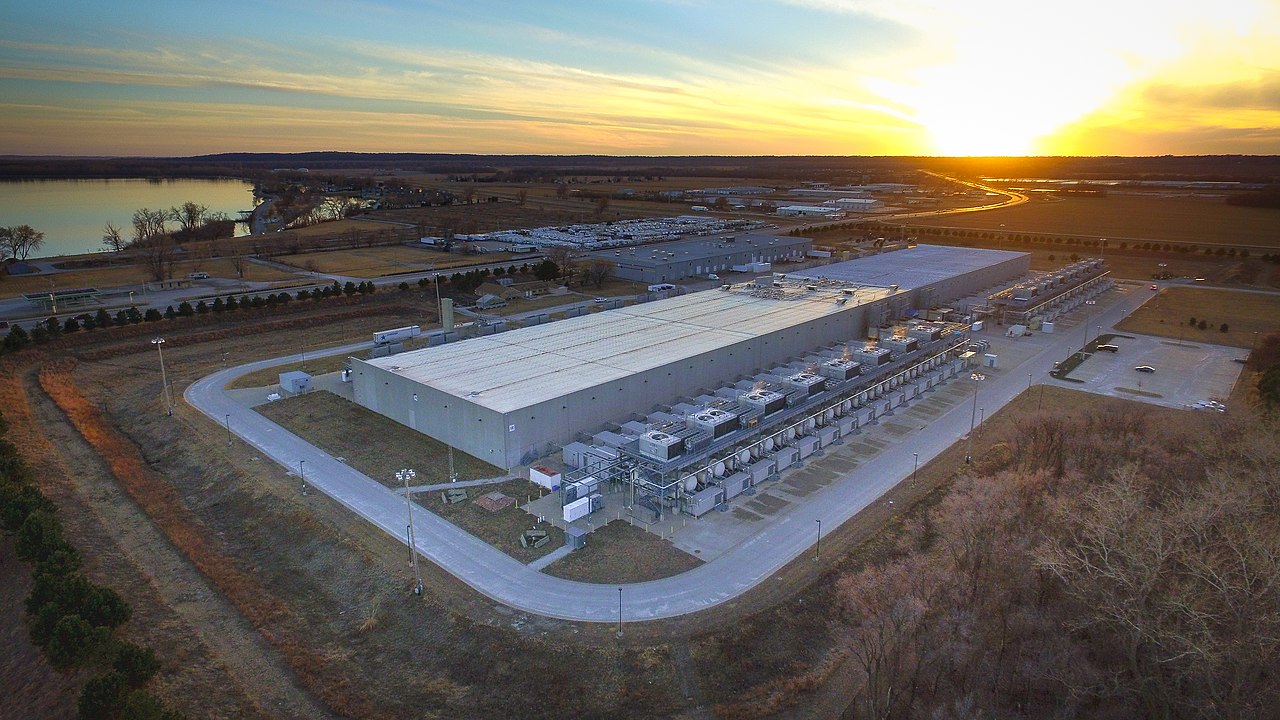
Header image: Google data center in Council Bluffs, Iowa at sunset, via Wikimedia Commons, licensed under CC BY 2.0. In-body photograph of a data-center campus with wind turbines via Wikimedia Commons, licensed under CC BY-SA 4.0. Both images reviewed before use.