Bain & Company says the global AI industry must earn roughly $6 trillion in annual revenue by 2031 to justify the data centers being planned today. The figure comes from the firm's Global Technology Report, published on September 29, 2026, and it puts a number on the most debated question in AI infrastructure economics: can revenue grow fast enough to pay for the buildout (Bloomberg; Japan Times).
This is a projection, not a verdict. It describes what has to be true for the spending to earn an acceptable return, and it leaves open whether it will be.
What Bain's $6 trillion AI revenue figure actually says
Bain projects $5 trillion to $6.5 trillion of data center spending by 2030, adding at least 150 gigawatts of capacity. To justify that outlay, it says the industry needs about $6 trillion in annual revenue by 2031 (Bloomberg; Business Standard). Annual AI infrastructure spending alone, covering data centers, compute, accelerators and memory upgrades, could reach about $1.5 trillion by 2031 (Qz).
It is also a moving target. Bain's 2025 report flagged an annual revenue shortfall of roughly $800 billion, and the gap in this year's analysis is far larger (Bloomberg).
 NVIDIA
 AMD
AMD Microsoft
 Google
 AWS
AWS Meta
MetaWhere the money would have to come from
Bain estimates that existing consumer and enterprise AI products, such as chatbots, coding tools and workplace assistants, could generate up to about $1.8 trillion a year. That leaves roughly $4.2 trillion that would need to come from newer categories: robotics, autonomous machines, drug discovery and energy (Qz; The Next Web).
The $6 trillion test: what existing products cover and what is left
Annual AI revenue Bain says is needed by 2031, versus the most existing products could supply. Source: Bain & Company Global Technology Report, as reported by Qz and Bloomberg.
By simple division, existing products would cover about 30% of the target and unproven categories about 70%. That ratio is the core of the debate: the target is not out of reach of AI as a technology, but most of it depends on markets that are still early.
What the industry needs is a wave of innovation that will dwarf what mobile and cloud unlocked.
David Crawford, lead author of the report and chair of Bain's Global Technology, Media and Telecommunications practice (via Bloomberg)
How capex turns into a revenue requirement
The logic follows a standard chain, and the steps below are general infrastructure economics rather than figures from the report:
- Capital spending buys land, buildings, power equipment, accelerators, memory and networking.
- Depreciation spreads that cost over each asset's useful life. Shells and electrical systems last for many years, while accelerators and memory are replaced far sooner, so a hardware-heavy buildout depreciates faster.
- Operating costs, mainly electricity and cooling, are added on top.
- Required revenue is whatever covers depreciation, operating costs and a return on the capital invested.
This is why the mix of spending matters as much as the total. Bain's spending figure includes accelerators and memory upgrades, the short-lived part of the stack, so a dollar spent there has to be earned back faster than a dollar spent on a building (Qz). Power is the physical constraint behind the same math. The 150 gigawatts Bain projects is a measure of how much electricity-hungry hardware would have to be built, connected and kept running.
Spend versus revenue: the assumptions side by side
| Item | Figure | Source |
|---|---|---|
| Data center spend by 2030 | $5 trillion to $6.5 trillion | Bloomberg, Japan Times |
| New capacity added | At least 150 GW | Bloomberg, Japan Times |
| Annual infrastructure spend by 2031 | About $1.5 trillion | Qz |
| Annual revenue needed by 2031 | About $6 trillion | Bloomberg, Qz |
| Revenue from existing products | Up to about $1.8 trillion | Qz |
| Unfilled gap | About $4.2 trillion | Qz |
| 2025 shortfall estimate | About $800 billion | Bloomberg (2025) |
The bull case and the bear case
Both readings are consistent with the same numbers.
The supercycle reading. Under this view, AI-driven robotics, autonomous machines, drug discovery and energy optimization are the new markets that could close the $4.2 trillion gap, and infrastructure built ahead of demand is a bet that demand follows. Crawford's own framing is that the industry needs a wave of innovation larger than what mobile and cloud unlocked, which describes the scale required.
The caution reading. Productivity gains in existing software and services, on their own, may not add up to a $6 trillion annual revenue pool. Under this view, the gap depends on categories that have not yet proven their economics, and spending committed now is exposed if those categories arrive later or smaller than hoped. The widening from $800 billion to a far larger gap year over year is the data point this reading emphasizes.
A third consideration is that the hurdle is not fixed. Cheaper, more efficient inference lowers the cost of each unit of useful AI work, so the revenue needed to justify a given amount of capacity depends partly on efficiency gains, and tools that let teams switch between models, Metir among them, help keep that cost flexible.
What to watch next
Three indicators will show which reading is gaining ground: revenue from existing AI products relative to the roughly $1.8 trillion ceiling, evidence of paying customers in robotics, autonomous systems and drug discovery, and whether new capacity is constrained more by power availability or by demand. Bain's report is best read as a scoreboard defined in advance. It tells readers what the industry has to deliver by 2031, and the next few years of results will show how close it gets.
Sources:
- Bloomberg: AI Faces $6 Trillion Test to Justify Data Centers, Bain Says
- Japan Times: AI needs $6 trillion to justify data centers, Bain says
- Qz: Bain on AI revenue and the data center buildout
- The Next Web: Bain on AI revenue by 2031
- Business Standard: Global AI industry needs to earn $6 trillion to justify data centres
Image credits
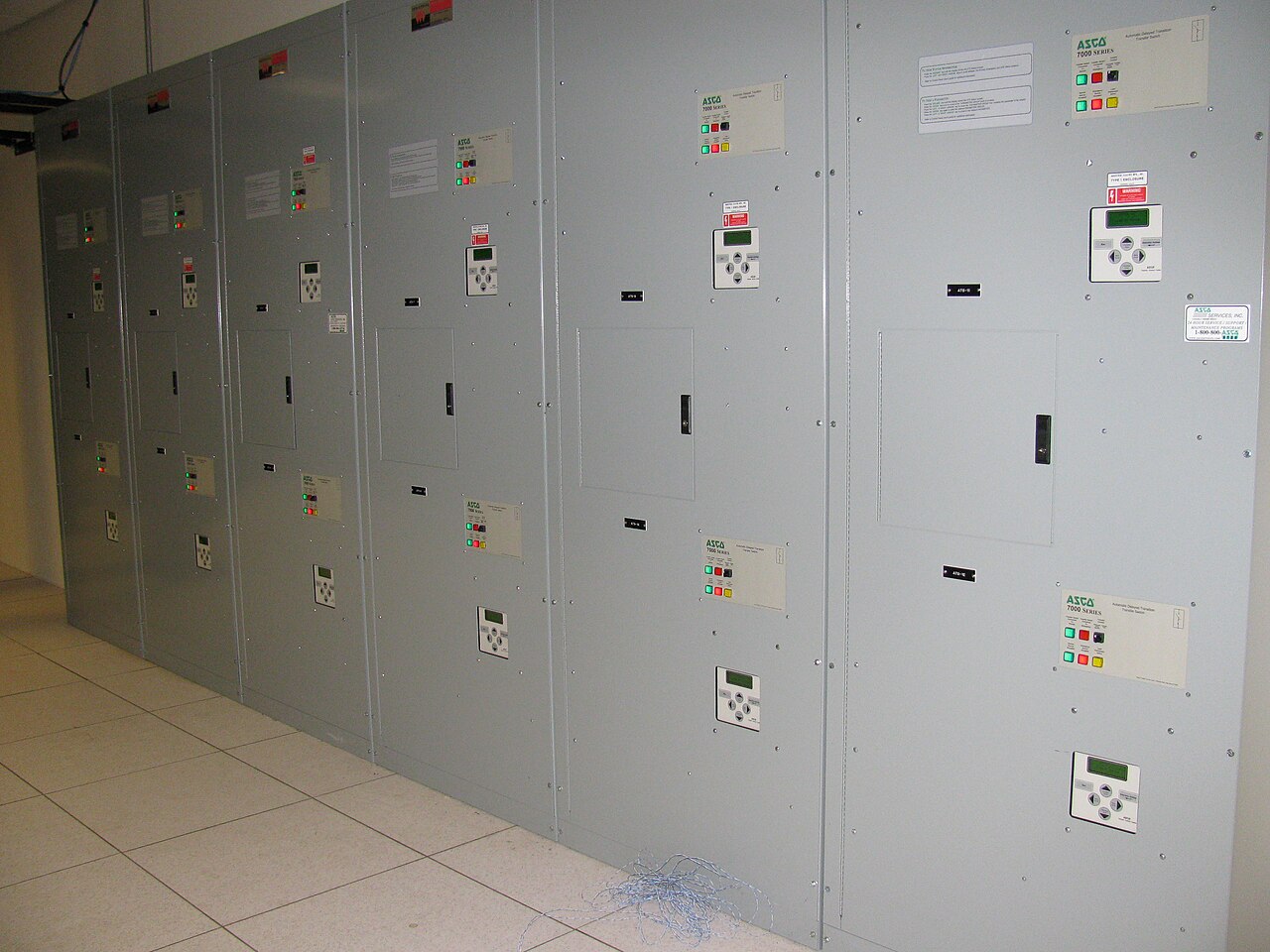
- Hero: a bank of automatic transfer switches in a data center power room. Source: Wikimedia Commons, photo by Robert.Harker, licensed CC BY-SA 3.0. Generic data center power equipment, not a site named in the report.
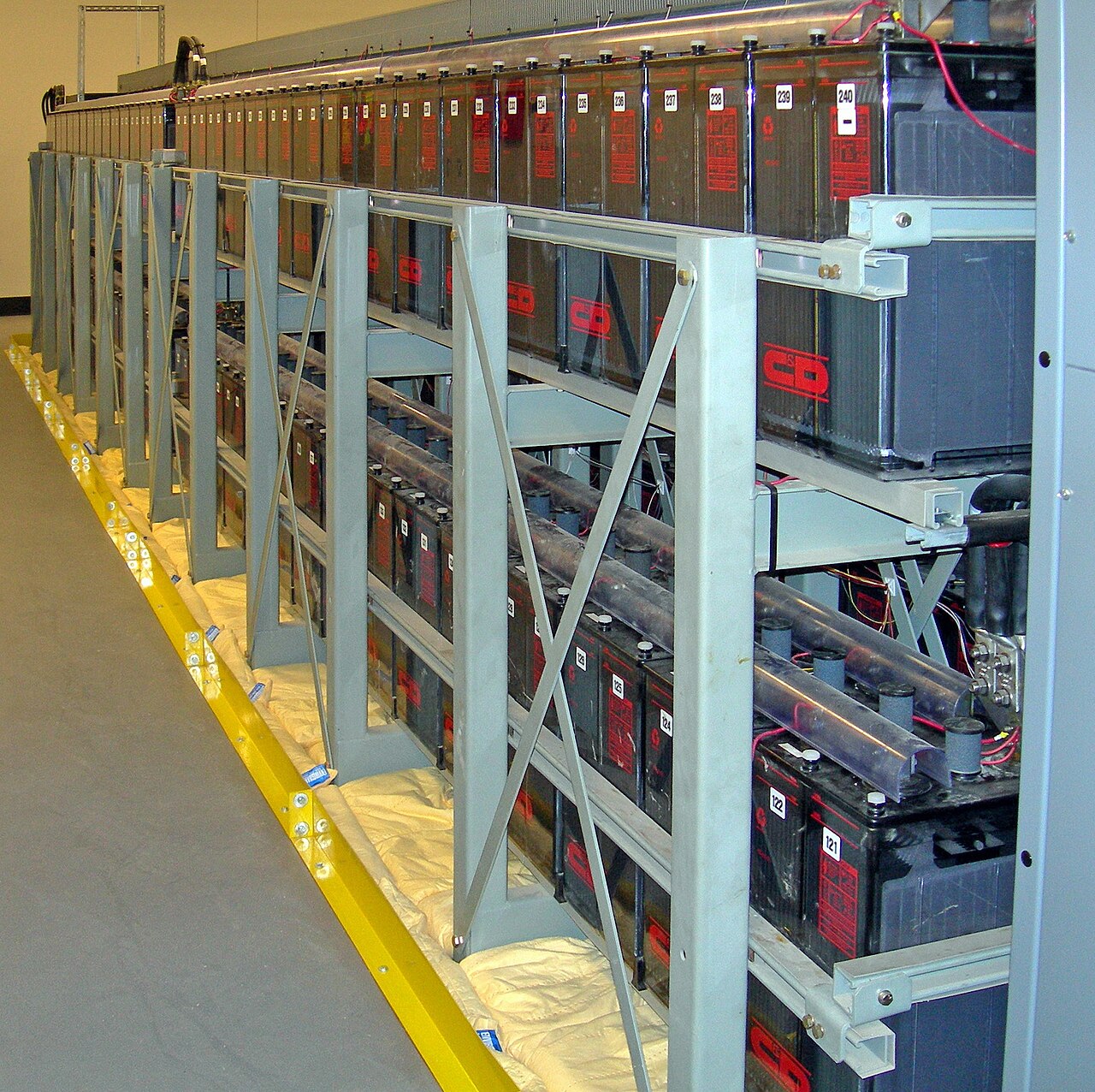
- In-body: backup batteries in a large data center. Source: Wikimedia Commons, photo by Jelson25, licensed CC BY 3.0.