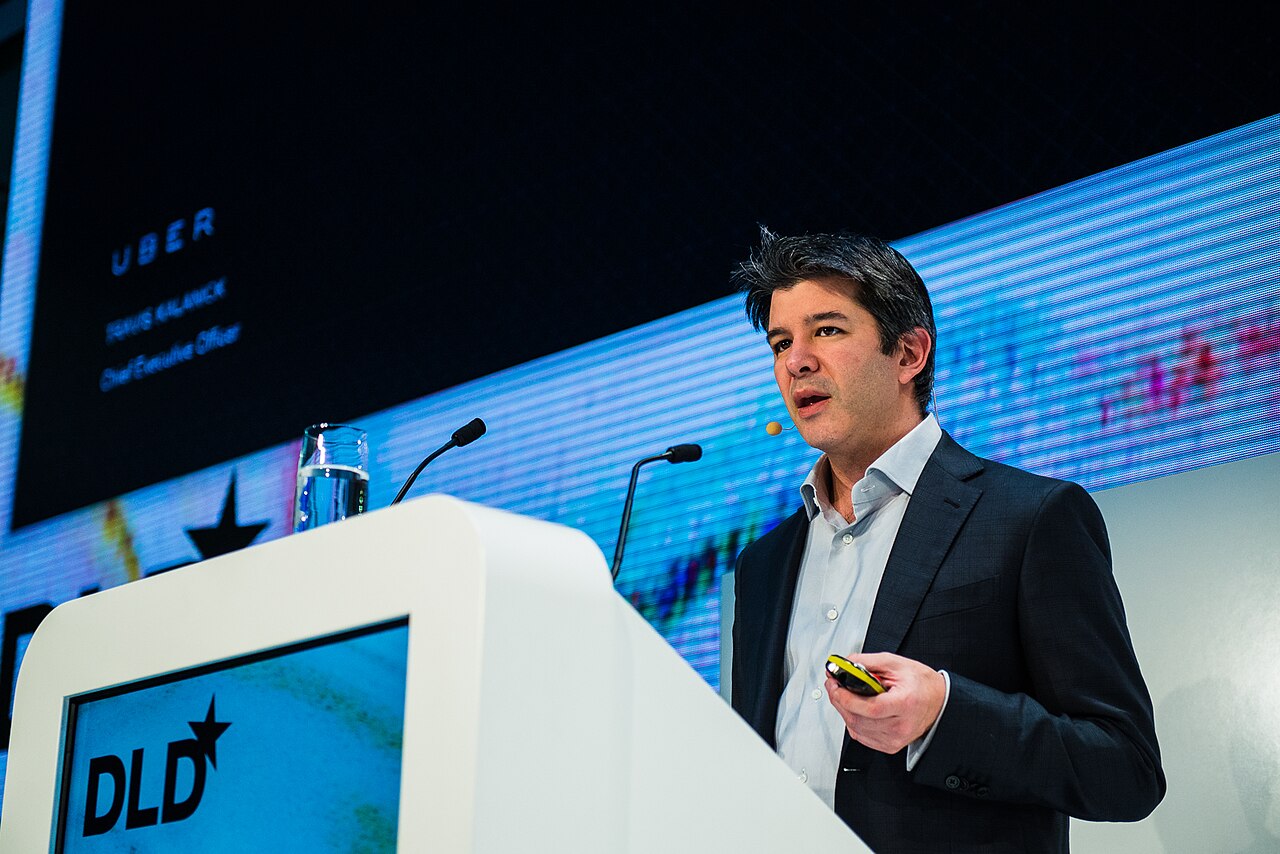
On July 22, 2026, Atoms, the industrial-automation company built by Uber co-founder Travis Kalanick, announced a $1.7 billion equity round led by Andreessen Horowitz (a16z), with a16z general partner Ben Horowitz joining the board. It is one of the largest physical AI deals of the year, and it arrives inside a broader wave of capital moving out of pure software AI and into robots, sensors and the operations that run on them. This piece looks at what Atoms actually is, places the round inside that wider 2026 trend, and works through, neutrally, the business-model logic and the execution risk that a check this size does not resolve on its own.
What Atoms actually builds
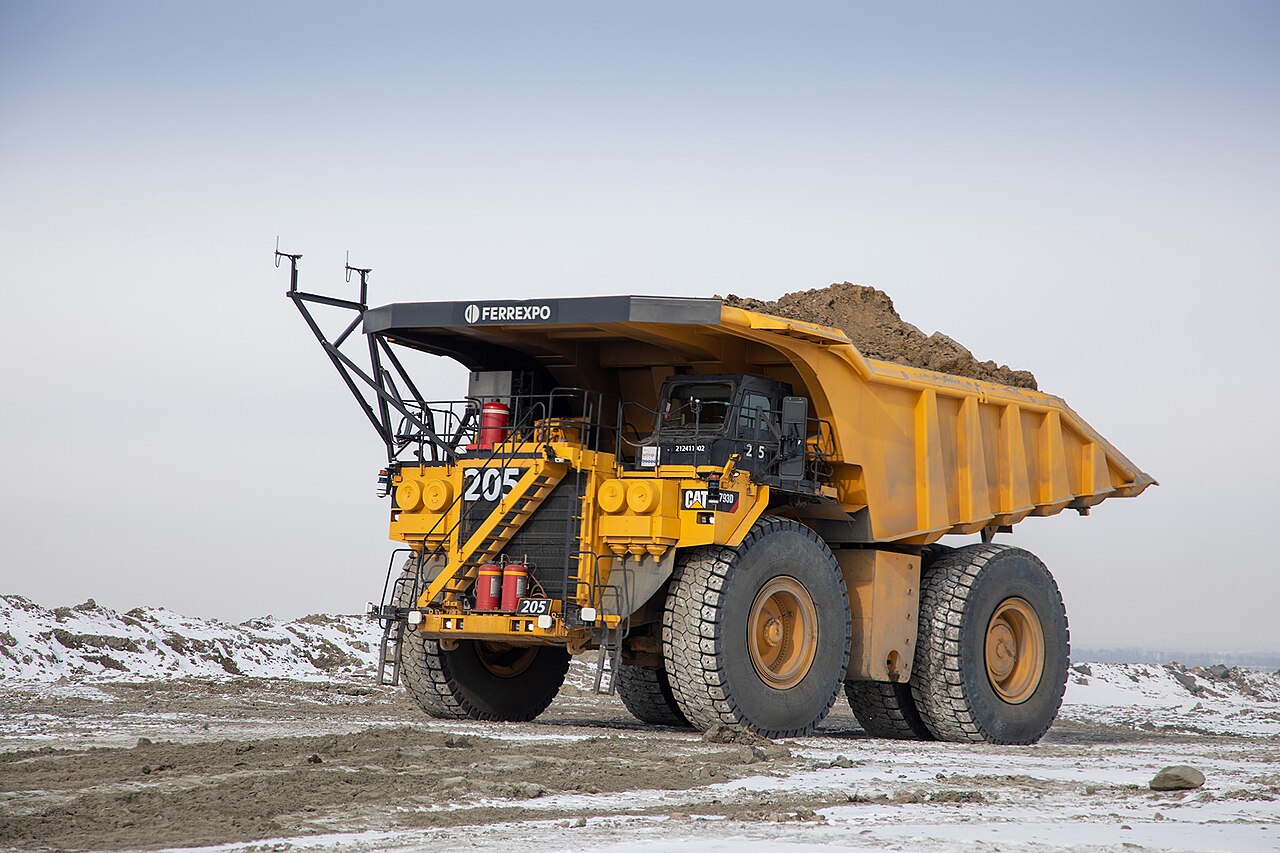
Atoms is not a robotics lab that started from a blank sheet of paper. It is a holding company that Kalanick has run in relative stealth since 2018, assembled around businesses he already controlled or acquired, and it now organizes that work into three divisions. Atoms Food sits on top of CloudKitchens, the ghost-kitchen business Kalanick built after leaving Uber, along with related properties including City Storage Systems, Otter, Lab37 and Picnic. Atoms Mining is built around Pronto, the autonomous-haulage company founded by former Uber and Google engineer Anthony Levandowski, which Atoms acquired in March 2026; Pronto's camera-first driverless system already operates more than 100 trucks across a dozen-plus sites for customers including Heidelberg Materials. Atoms Transport is the newest and least detailed of the three, aimed at extending the same automation stack into freight and logistics.
One holding company, three atoms-heavy industries
Atoms describes itself as an OEM for "atoms-based computers." Each division sits on top of an existing operating business rather than a clean-sheet robotics lab.
All three divisions report into Atoms, the holding company Travis Kalanick has led since 2018; the $1.7B round is Atoms-level equity, not allocated to a single division.
Kalanick has described the combined entity as an original equipment manufacturer for what he calls "atoms-based computers," industrial operations where manufacturing plays the role of a processor, real estate functions as storage, and transport is the network layer. "Mining, construction, heavy transport, food production are just a few examples of atoms-heavy industries awaiting massive digital transformation," he said in announcing the round. Ben Horowitz's framing of the bet leans on the same comparison in the other direction: "I think the most valuable thing someone could do with AI and robotics is to repeat the same thing Uber did for transportation, or that computers did for the digital world."
The 2026 physical AI funding wave
Atoms' round did not happen in isolation. Robotics and physical-AI startups had already raised roughly $18.8 billion globally through the first half of 2026, according to Crunchbase's sector tracking, surpassing the $15 billion raised across all of 2025 and the prior 2021 peak of $14.1 billion, with half the year still to run. Skild AI raised $1.4 billion in January for a general-purpose robot foundation model. Saronic, an autonomous-ship maker, closed a $1.75 billion Series D in April. Neura Robotics, a German humanoid-robotics firm, raised $1.4 billion in June. Atoms' $1.7 billion in July is the fourth mega-round in that specific run, and it lands in a year where "physical AI" has become a standing category on investors' term sheets rather than an occasional outlier.
Atoms lands inside a run of billion-dollar physical-AI rounds
Selected disclosed mega-rounds ($900M+) in physical AI and embodied robotics, January through July 2026. Atoms (highlighted) is the fourth in seven months.
Disclosed round sizes by announcement month, 2026. Not exhaustive; selected to show scale and pace, not to rank the companies.
The capital rotation has a fairly direct logic behind it. Software-only AI has scaled fast, but the productivity gains from a model that only manipulates text or pixels stop at the point where work actually has to happen in the physical world, on a factory floor, in a mine, in a kitchen. As perception, planning and control systems have matured enough to operate machinery with less human intervention, investors have followed the same reasoning that took capital into defense-AI and autonomy startups earlier in 2026: the technology curve looks increasingly real, and the market it points at, physical labor, dwarfs the market for software subscriptions.
Owning the machine instead of selling it
The detail that distinguishes Atoms from a typical robotics vendor is who ends up owning the equipment. A company that licenses a robot-control model earns a fee per deployment. A company that manufactures robot arms earns a hardware margin once, at the point of sale. Atoms, through CloudKitchens' ghost kitchens and Pronto's mine-site trucking, has instead built a pattern of owning and operating the physical facility itself, capturing the ongoing difference between what labor used to cost and what it costs after automation, for as long as the site keeps running. That is a materially different bet than the one underlying most robotics IPO and venture narratives, which tend to price a company on its software or hardware margin rather than on operating income from real assets.
Atoms is not trying to sell the brain. It is buying the body.
Framing used in coverage of the round's own-the-asset model
It is also a capital-intensive bet, and the investor list reflects that. Alongside a16z, Bain Capital, Fifth Wall, Chemistry, A*, K5 Global, Abstract, SV Angel and Alpha Square Group, Atoms reportedly lined up debt facilities from Bank of America, Goldman Sachs, Wells Fargo, JPMorgan and Barclays, a detail that fits an operator buying and running physical infrastructure more than a typical software-first venture raise. Uber itself is also an investor, a detail with its own resonance: Kalanick was forced out as Uber's CEO in 2017, and he has called this round "a bit of unfinished business," pointing to an a16z partnership that nearly happened at Uber roughly sixteen years earlier.
What the round does not settle
Owning atoms-heavy operations means owning atoms-heavy risk. Food spoilage, machinery damage and workplace injury carry consequences that a failed software deployment does not, and food service, mining and freight are all businesses that run on thin, cyclical margins even before automation costs are added in. Robots remain reliably worse than humans at the soft, variable handling tasks that make up a large share of real physical work, which is precisely the gap Atoms is betting it can close. And as of this round, Atoms has not disclosed a valuation or published evidence that automation has meaningfully changed unit economics at any of its operating sites, so the thesis is, for now, a bet rather than a demonstrated result.
The founder-comeback framing is worth naming and setting aside with equal weight. A high-profile founder returning with a former backer and a former employer both writing checks is a good story, and it is also not, by itself, evidence that the underlying industrial-automation thesis is correct. Pronto's leadership carries its own complicated history, too: Levandowski was convicted of trade-secret theft in the Waymo-Uber self-driving dispute and later received a presidential pardon, a detail that is part of the public record around Atoms Mining without being a judgment on the mining technology itself. The honest read is that the capital, the operating history and the open questions all deserve equal attention, and which one ends up defining Atoms is still unresolved.
The takeaway
Atoms' $1.7 billion is a real, well-documented number sitting inside a real 2026 trend: physical AI funding has already cleared $18.8 billion for the year, and Atoms is the fourth billion-dollar-plus round in that category since January. What makes the deal distinct is the ownership structure behind it, a bet that the money in automating physical work accrues to whoever operates the kitchen, the mine or the truck fleet, not only to whoever sells the software or the machine. That is a genuinely different wager from most of the AI industry's other headline rounds, and it comes with genuinely different risks attached. As physical AI moves from pilot projects to funded operating businesses, the software layer coordinating that work still benefits from staying flexible rather than locked to one vendor's roadmap, which is the same model-agnostic principle behind how Metir AI lets teams work across AI systems rather than commit to a single one.
Sources:
- Travis Kalanick's robotics company raises $1.7B, led by a16z | TechCrunch
- Uber Co-Founder Kalanick's Atoms Secures $1.7 Billion To Build Physical AI | PYMNTS
- Kalanick's Atoms raises $1.7B in a16z-led round for industrial AI | Yahoo Finance
- Andreessen Horowitz Declares 'Travis Is Back' With $1.7B Robotics Bet | Benzinga
- Travis Kalanick's Physical AI Startup Atoms Raises $1.7B in Funding, Led by a16z | The AI Insider
- Travis Kalanick's Atoms Raises $1.7B Led by a16z, With Uber as Investor | MLQ News
- Kalanick's Atoms Raised $1.7B to Own the Machines, Not Sell Them | TECHi
- Travis Kalanick just raised $1.7B for Atoms, and now he's hiring hundreds of people | a16z Build
- Engineer who stole 14,000 Google files and got a Trump pardon just landed a piece of Travis Kalanick's $1.7B robotics empire Atoms | MoneyWise
- Pronto Has Officially Been Acquired by Atoms | Pronto
- Physical autonomy startup Atoms lands $1.7B fillip | Mining Magazine
- Sector Snapshot: Robotics Startups On Fire As Venture Funding Surges To Record Numbers In 2026 | Crunchbase News
- Robotics Startups Have Already Raised $18.8B in 2026, Smashing Every Prior Annual Record | Value Add Pulse
Image credits
Header image: Travis Kalanick, then CEO of Uber, speaking on stage at DLD Munich, January 18, 2015. Photo by Dan Taylor / Heisenberg Media, via Wikimedia Commons, CC BY-SA 4.0. Predates Atoms; used to depict Kalanick, not the current company. In-body photograph: an autonomous CAT 793D mining haul truck operated by Ferrexpo at its Yeristovo mine in Ukraine, not affiliated with Atoms or Pronto. Photo by RobSimmons223311, via Wikimedia Commons, CC BY-SA 4.0.