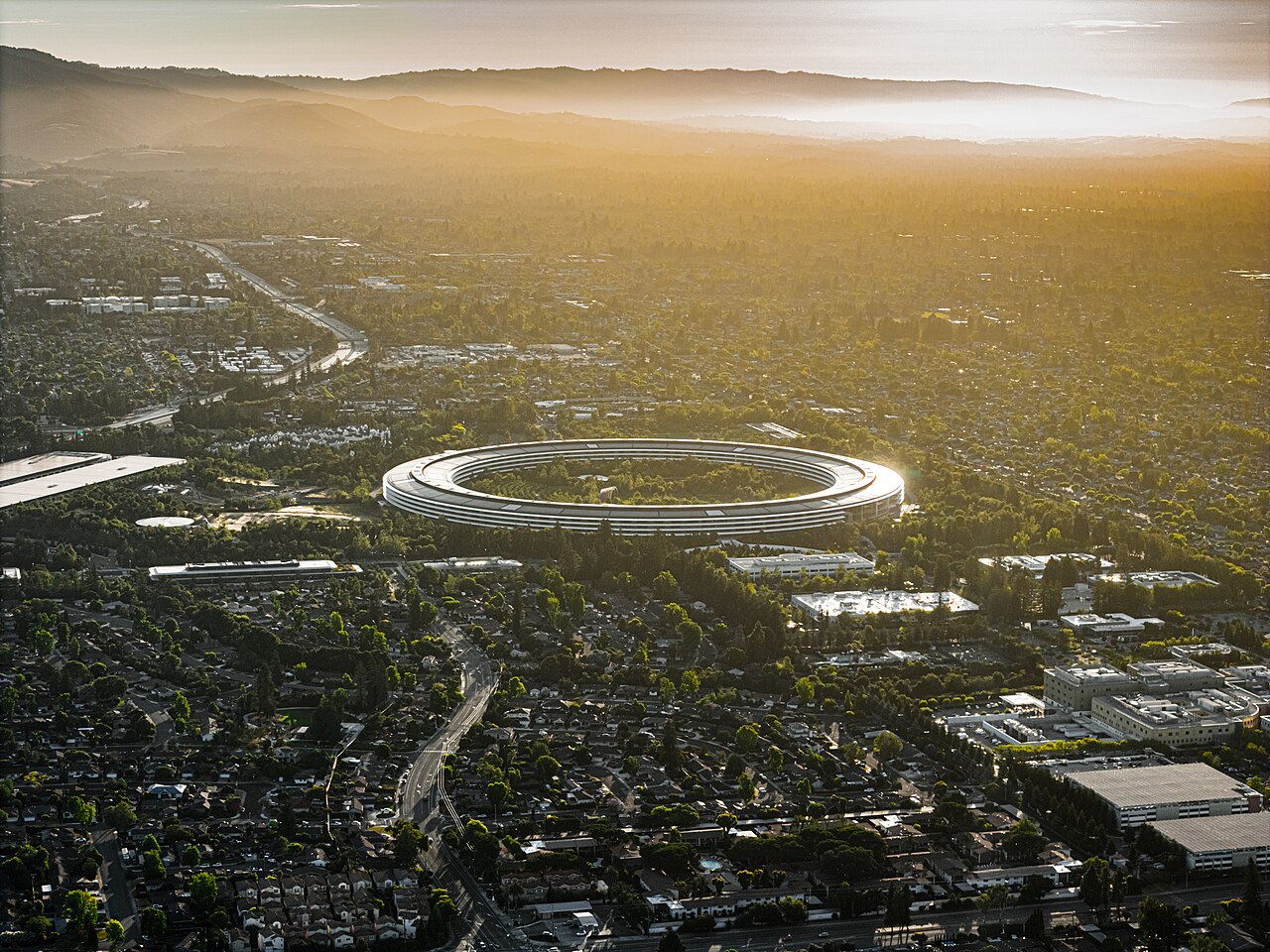
On July 10, 2026, Apple filed a lawsuit against OpenAI in the US District Court for the Northern District of California, alleging trade-secret theft. The complaint does not describe a single leaked file. It describes what Apple calls a pattern reaching "every level, from members of its Technical Staff to its Chief Hardware Officer, and in coordination with business partners." Whatever a court eventually decides, the filing is a useful window into how the AI industry actually competes in 2026: not only on model quality, but on hardware roadmaps and the people who know them.
What Apple alleges
The complaint names four defendants: OpenAI itself; io Products, the hardware startup co-founded by former Apple design chief Jony Ive that OpenAI absorbed; Tang Tan, OpenAI's Chief Hardware Officer and a former Apple vice president; and Chang Liu, a former Apple senior electrical engineer who later joined OpenAI. Apple's filing states that more than 400 former Apple employees now work at OpenAI, a figure the company uses to frame the scale of the movement between the two organizations.
Two individual allegations anchor the complaint. Apple says Chang Liu kept a work-issued Apple laptop after leaving the company and, through a bug in Apple's systems, accessed Apple's cloud file storage while employed at OpenAI, downloading dozens of confidential files. Separately, Apple accuses Tang Tan of using Apple's confidential project code names during OpenAI's recruiting efforts, asking candidates to bring Apple hardware components to interviews, coaching departing Apple employees on how to evade Apple's security procedures, and requesting details about unannounced Apple products. Apple is seeking damages, injunctions, and an order requiring OpenAI to stop using any trade secrets found to have been misappropriated.
None of this has been proven. These are allegations in a civil complaint, and OpenAI has not yet had its response tested in court. The specific claims, a kept laptop, a security bug, recruiting language, are the kind of detail that trade-secret cases live or die on, and a court will need to weigh them individually rather than as a general narrative about hiring.
How OpenAI got into hardware in the first place
From io Products to a courtroom: OpenAI's hardware push
A timeline of the acquisition and hiring that Apple's complaint now puts at issue.
Jony Ive, Scott Cannon, Evans Hankey and Tang Tan found io Products.
OpenAI announces its acquisition of io for $6.5 billion, its largest deal to date.
The io merger completes; all 55 io employees join OpenAI.
More than 400 former Apple employees are now at OpenAI, according to Apple’s complaint.
Apple files a trade-secret suit against OpenAI, io Products, Tang Tan and Chang Liu in the Northern District of California.
Figures come from Apple's complaint (N.D. Cal., filed July 10, 2026) and public deal announcements, not from OpenAI.
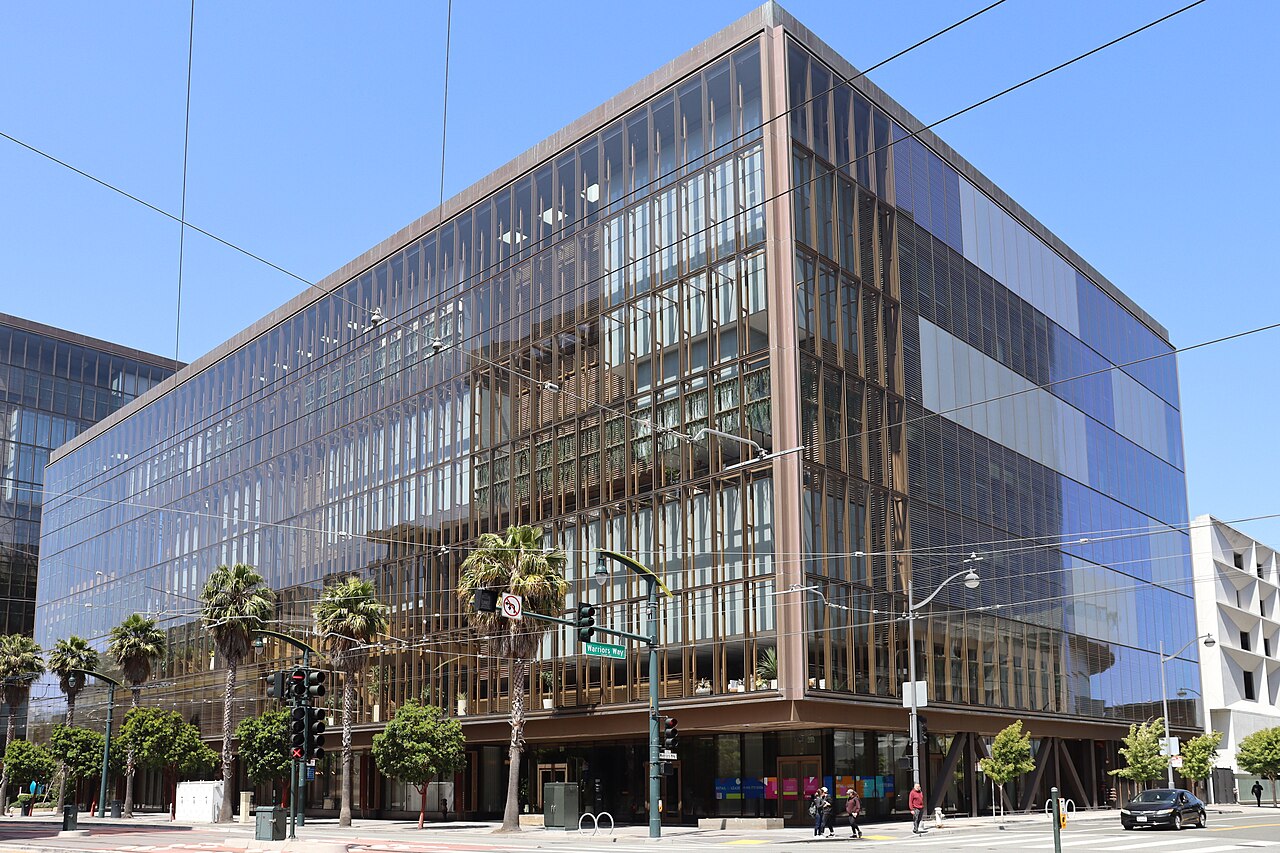
The backdrop to the lawsuit is OpenAI's move into consumer hardware. Jony Ive, Scott Cannon, Evans Hankey and Tang Tan founded io Products in 2024. On May 21, 2025, OpenAI announced it was acquiring io for $6.5 billion, its largest acquisition to date. The merger completed on July 9, 2025, and all 55 io employees joined OpenAI at that point. Ive and his independent design firm, LoveFrom, remained separate from OpenAI and continue to handle design work under a different arrangement. OpenAI has said publicly that it is building a family of consumer AI hardware devices, and the io deal is the clearest evidence of how seriously it is investing in that ambition.
 OpenAI
Read against that backdrop, Apple's complaint is not really a story about one rogue engineer. It is a claim that an entire hiring and acquisition strategy, aimed squarely at building consumer hardware, has crossed from lawful competition into misappropriation. That is a much bigger claim, and a much harder one to prove.
A lawsuit built on 400 hires and two individuals asks a court to draw a line between aggressive recruiting and theft, and that line is exactly what trade-secret law struggles to define in the abstract.
Analysis
Why this is a hardware and talent war, not just a model war
For most of the last few years, competition among frontier AI labs was framed almost entirely around model benchmarks: who has the best reasoning, the best coding, the cheapest inference. Apple's suit is a reminder that the next battleground is different. Building a consumer AI device, something with a screen or without one, with its own silicon, its own supply chain, its own industrial design language, requires exactly the kind of institutional knowledge that only comes from people who have already shipped hardware at scale. OpenAI did not build that knowledge from scratch. It bought a company that had it, and it has continued to hire people who have it.
This is not unique to OpenAI. Frontier AI labs across the industry have spent the past two years recruiting aggressively from incumbents in adjacent fields, chips, cameras, batteries, industrial design, because model capability alone does not get a product into someone's pocket or onto their desk. What makes the Apple complaint notable is that it puts a number on the practice: over 400 people is a meaningful fraction of a hardware division's institutional memory, whatever the individual legality of each hire.
California's mobility law meets trade-secret law
The legal terrain here is genuinely tangled, and it is worth being precise about it. California does not enforce non-compete agreements, and the state has a strong, long-standing policy favoring employee mobility: people are generally free to leave one employer for a competitor and use the general skills and knowledge they built along the way. That policy is a large part of why the state's tech industry has historically thrived on employee movement between companies.
Trade-secret law is the exception carved into that policy, not a contradiction of it. It does not stop someone from taking a job at a competitor. It stops someone from taking specific, identifiable confidential information, such as a source code repository, a codenamed product roadmap, or documents pulled from a company's cloud storage, and using it at the new employer. The distinction the law draws is between what a person knows in their head, which they can take anywhere, and what they took in a file, a document, or a device, which they generally cannot. Apple's complaint tries to allege the latter, not merely the former: a laptop that was not returned, a storage bug that was allegedly exploited, and specific codenames allegedly used in recruiting. OpenAI's likely defense, based on how these cases typically unfold, would center on disputing that any specific trade secret was actually taken or used, and on the argument that hiring hundreds of people is lawful competition for talent, not evidence of theft in itself.
What an injunction could and could not do
If Apple ultimately prevails on some or all of its claims, the available remedies are narrower than the scale of the complaint might suggest. A court could award damages tied to specific misappropriated secrets, and it could order OpenAI to stop using material found to have been improperly taken. What a trade-secret ruling generally cannot do is unwind a hiring pattern or claw back people who left one company for another; individual mobility is not itself the wrong being litigated. That gap, between the sweeping narrative in the complaint and the narrower remedies trade-secret law actually provides, is likely to shape how this case is argued from here.
A portability angle worth naming
One quieter implication of this fight is what it means to build a product that depends entirely on a single lab's hardware and model roadmap. When a company's product is tightly coupled to one vendor's device strategy, disputes like this one become existential risk, not just headline risk. Tools built to stay model-agnostic, moving across providers rather than betting on one company's hardware future, are insulated from exactly this kind of dispute. Metir AI is built on that premise: the application layer should not have to take sides in a fight between labs over hardware and talent.
The takeaway
Apple's lawsuit is a serious allegation, not a finding. It also captures something real about where AI competition has moved: from benchmarks to bodies, from model weights to the people who know how to put those models into a physical product. Whether a court finds that OpenAI's hiring and its io acquisition crossed a legal line, or whether this settles as a dispute over a handful of specific documents and a forgotten laptop, the case is a marker of how contested the hardware layer of AI has become. The honest position in July 2026 is that both readings, aggressive but lawful competition for talent, and targeted misappropriation of specific secrets, remain open until the evidence is tested in court.
Sources:
- Apple sues OpenAI over alleged trade secret theft | CNBC
- Apple sues OpenAI over alleged trade secret theft | TechCrunch
- Apple-OpenAI lawsuit: trade secrets theft allegations | Fortune
- Apple sues OpenAI over trade secret theft | Axios
- io (company) | Wikipedia
- OpenAI buys iPhone designer Jony Ive's device startup for $6.5 billion | CNBC
Image credits
Header image: aerial view of Apple Park in Cupertino, California, June 2024, by Nils Huenerfuerst via Wikimedia Commons, released under CC0. In-body photograph of OpenAI's headquarters at 1515 Third Street, San Francisco, by Coolcaesar via Wikimedia Commons, licensed under CC BY 4.0.