On September 14, 2026, at around 10am Pacific, Apple pushed iOS 27 to compatible iPhones worldwide. The headline is Siri AI, a rebuilt version of Apple's assistant that behaves less like a set of voice commands and more like a conversational chatbot, drawing on personal context, reading what is on a user's screen, and taking actions across apps. It is also, by Apple's own design, not something every iOS 27 user gets on day one. Siri AI ships as an opt-in beta, gated behind a waitlist, available first only in English, and unavailable at launch in the European Union and China. That combination, a genuinely new assistant and a deliberately staged rollout, is the actual story of the day, and it followed roughly two years of delay after Apple first showed the idea off.
 Apple
Apple Google
 OpenAI
The numbers behind the launch
A two-year road to launch day
Apple first showed a next-generation Siri at WWDC in June 2024, promising on-screen awareness, personal context retrieval, and hundreds of new actions powered by its App Intents framework. That version never shipped. In March 2025, Apple acknowledged the advanced features needed more time and pushed the target into 2026. A further delay followed: TechCrunch reported on February 11, 2026, citing Bloomberg's Mark Gurman, that Apple had run into trouble during testing and would push some features from an originally planned iOS 26.4 release toward May or, eventually, iOS 27 in September. The assistant Apple unveiled again at WWDC26 on June 8, 2026, and shipped on September 14, is the product of that repeated slippage, not a single unbroken development track.
Two years from preview to ship
The rebuilt Siri was shown once, delayed twice, then shipped in a gated beta rather than a single finished release.
- Jun 2024First previewedAt WWDC 2024, Apple shows a next-generation Siri with on-screen awareness, personal context and hundreds of new app actions, originally expected in 2025.
- Mar 2025First delayApple acknowledges the advanced Siri features need more time and pushes the rollout into 2026.
- Feb 11, 2026Delayed againBloomberg reports Apple hit trouble in testing; the iOS 26.4 target slips further, with some features pushed toward May or September.
- Jun 8, 2026Unveiled at WWDC26Apple formally shows the rebuilt Siri, now built around a licensed Google Gemini model, and opens a developer beta.
- Jul 13-14, 2026Public beta opensiOS 27 public beta brings the new Siri to a much wider pool of testers ahead of general release.
- Sep 14, 2026iOS 27 shipsSiri AI reaches compatible devices as an opt-in beta, gated by a waitlist, roughly two years after it was first shown.
The gap between the 2024 preview and the 2026 ship date is worth sitting with. Two years is a long time in an industry where rival assistants and chatbots have shipped multiple model generations in the same window. Apple's own explanation, echoed across its public statements, is that Siri's task is structurally harder than most chat products: it has to interpret ambiguous requests, hold real permissions across a user's messages and photos, and execute actions inside other apps correctly, not just generate a plausible-sounding reply. A wrong answer from a chatbot is an inconvenience; a wrong action taken inside Mail or Messages is a different category of failure. That does not fully explain a two-year slip, but it is a real difference between the two products.
What the new Siri actually does
Apple describes Siri AI as able to hold "more natural conversations," including follow-up questions, rather than treating each request as an isolated command. It can draw on personal context, searching a user's Messages, Mail and Photos when relevant to a query, and it has "onscreen awareness," meaning it can answer questions about whatever is currently displayed on the screen rather than requiring the content to be described. It can take actions across supported apps, pull current information from the web for questions Apple's own models cannot answer from training data alone, and it comes packaged with Visual Intelligence for camera-based queries and Writing Tools for text generation and editing. A dedicated Siri app keeps conversation history synced privately across a user's devices.
A wrong answer from a chatbot is an inconvenience. A wrong action taken inside a user's Mail or Messages is a different category of failure.
On why Siri's task is structurally harder than a chat product's
Each of those capabilities requires access to data a generic chatbot does not have and would not need. Reading on-screen content means the assistant needs some visibility into whatever app is currently in the foreground. Personal context means indexing or querying a user's messages and photo library. Cross-app actions mean Siri has to call into other apps' functionality reliably enough that a misfire does not send the wrong message or delete the wrong file. That is a materially larger integration surface than a standalone assistant app has to manage, and it is one reason Apple has leaned so heavily on staged rollout rather than a single flip of a switch.
Getting access is not automatic
Installing iOS 27 does not, by itself, turn on the new Siri. Apple built the launch around an explicit opt-in and waitlist system. A user goes to Settings, taps Siri, and selects "Try Siri AI (Beta)," then completes voice enrollment and a privacy review. Finishing that flow adds the device to a queue rather than granting immediate access. Apple says it will notify users when the new Siri becomes available on their device, and it is showing dynamic wait-time estimates that it can adjust server-side based on demand and capacity.
Installing iOS 27 does not itself grant access
Getting the new Siri means clearing four steps, then clearing whichever language or regional gate applies.
English only at launch; French, Japanese, Korean, Portuguese and Spanish follow in October.
Not available on iPhone, iPad or Apple Watch at launch; Mac and Vision Pro are unaffected.
Not available; Apple has not set a timeline for regulatory clearance of Siri AI specifically.
Staging access this way is a fairly standard way to manage a compute-heavy launch: it lets Apple control how many devices are drawing on server capacity at once, rather than exposing every eligible iPhone to Siri AI's Private Cloud Compute infrastructure simultaneously on day one. It also functions as a beta in the literal sense, Apple has labeled the feature "Beta" in the settings toggle itself, which sets user expectations that the assistant may still misfire or improve materially over the coming months, in a way a fully general-release feature would not signal.
Where it runs, and why that shapes the rollout
Apple has said Siri AI processes requests either on-device or through what it calls Private Cloud Compute, a system Apple describes as encrypted and non-retained, running on Apple-controlled infrastructure rather than being handed to a general-purpose cloud provider. That privacy architecture is also a capacity constraint: every cloud-routed Siri AI query consumes compute on servers Apple has to provision and secure itself, unlike a feature that could simply scale on whichever public cloud has spare capacity that week. Apple has also said certain server-based Apple Intelligence features, Siri AI among them, will face daily usage limits for some users, which points at the same underlying constraint from a different angle: a genuinely private processing path is more expensive to scale than an ordinary API call.
Language and region: not one launch, several
Siri AI launches in English only. Apple has committed to adding French, Japanese, Korean, Portuguese and Spanish in October, an unusually short list for a company that ships iOS in dozens of languages. In the European Union, Siri AI is not available at launch on iPhone, iPad or Apple Watch, though it does reach Mac and Vision Pro, which are not classified as gatekeeper platforms under the EU's Digital Markets Act. Apple's own account is that it could not reach agreement with the European Commission on the interoperability terms the DMA requires for a feature this deeply integrated into iOS. In China, Siri AI is not available at all yet, separate from the narrower set of on-device Apple Intelligence features China's regulators cleared earlier in 2026.
That split is not really an engineering choice. A feature that reads on-screen content and personal messages is exactly the kind of data-handling capability regulators scrutinize most closely, so the regions where Apple faces the strictest data and platform-access rules are the same regions where the assistant is arriving last, or not yet at all. A company shipping a standalone chatbot app can often push an update globally in one motion; an assistant this tightly integrated into the operating system runs into gatekeeper designations and data rules that differ by jurisdiction, which is a cost of Apple's hardware-and-OS distribution advantage as much as a constraint on it.
The model stack underneath, briefly
Siri AI's harder queries run on a custom Gemini model that Google built for Apple, reported at roughly 1.2 trillion parameters, for a licence Bloomberg reported at around $1 billion a year. Apple's own on-device model handles lighter tasks locally, and Siri separately offers an optional hand-off to OpenAI's ChatGPT for questions Apple's own models decline to answer, a narrower integration that predates the new Gemini-powered core. None of that architecture is new information as of this launch; what changed on September 14 is that the assistant built on top of it became available to real users rather than beta testers alone.
What this means for anyone choosing an assistant
Judged purely as a product decision, Apple's approach treats capability and rollout discipline as separable problems: ship the model, then ration and stage who gets to use it, rather than treating general availability as the finish line. Whether that produces a better experience than a faster, less gated release is not yet answerable from the outside; it depends on how reliably Siri AI performs once the waitlist clears for most users, which will not be visible for weeks or months. What is already visible is that Apple, like most of the industry, is no longer building on a single model. Its own local model, a licensed frontier model from Google, and an optional path to OpenAI's assistant all sit inside one product. That same pattern, no single model covering every task well, is why the question of which assistant a person uses is increasingly separable from which model answers any given request.
The takeaway
Siri AI's arrival closes a two-year gap between announcement and delivery, but "arrival" undersells how staged the September 14 release actually is: an opt-in toggle, a waitlist, one language at launch, and two major markets excluded for now. That is a defensible way to manage a feature this dependent on personal data, cloud capacity and cross-jurisdiction regulation, but it also means the real test of whether the rebuilt Siri closes the gap with faster-moving competitors will not be visible on launch day. It will be visible once the waitlist empties out and ordinary users, not developers or public-beta volunteers, are the ones judging it.
Sources:
- Apple releases iOS 27, redesigned Siri AI - CNBC
- Major updates for Apple's software platforms are now available - Apple Newsroom
- iOS 27: new iPhone features, release date, beta, compatibility, Apple Intelligence, Siri - Macworld
- Apple's iOS 27 Siri AI update - Dataconomy
- Apple's Siri revamp reportedly delayed again - TechCrunch
- IOS 27 - Wikipedia
- Apple's upgraded Siri is late but not lost, the real story is timing - AppleInsider
- iOS 27 beta 1 has a waitlist for accessing new Siri AI - 9to5Mac
- Siri AI will have a waitlist when iOS 27 launches - MacRumors
- How to join the Siri AI waitlist before you can use it - AppleInsider
- Apple opens its new Siri AI to everyone with the iOS 27 public beta - TechCrunch
- Due to DMA, Siri AI delayed in EU for iOS 27 and iPadOS 27 - Apple Newsroom
- Apple Plans to Use 1.2 Trillion Parameter Google Gemini Model to Power New Siri - Bloomberg
- Apple picks Google's Gemini to run AI-powered Siri coming this year - CNBC
- Introducing the Third Generation of Apple's Foundation Models - Apple Machine Learning Research
Image credits
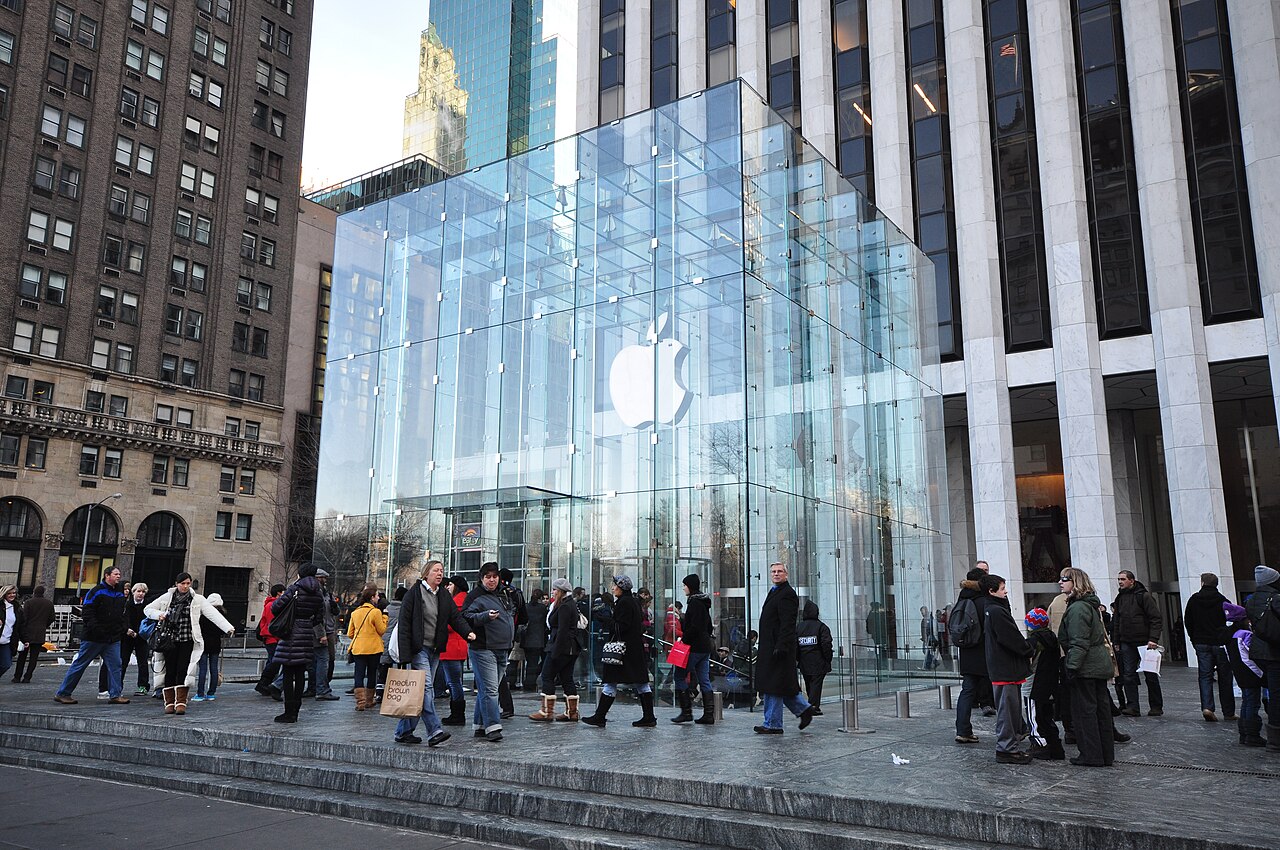
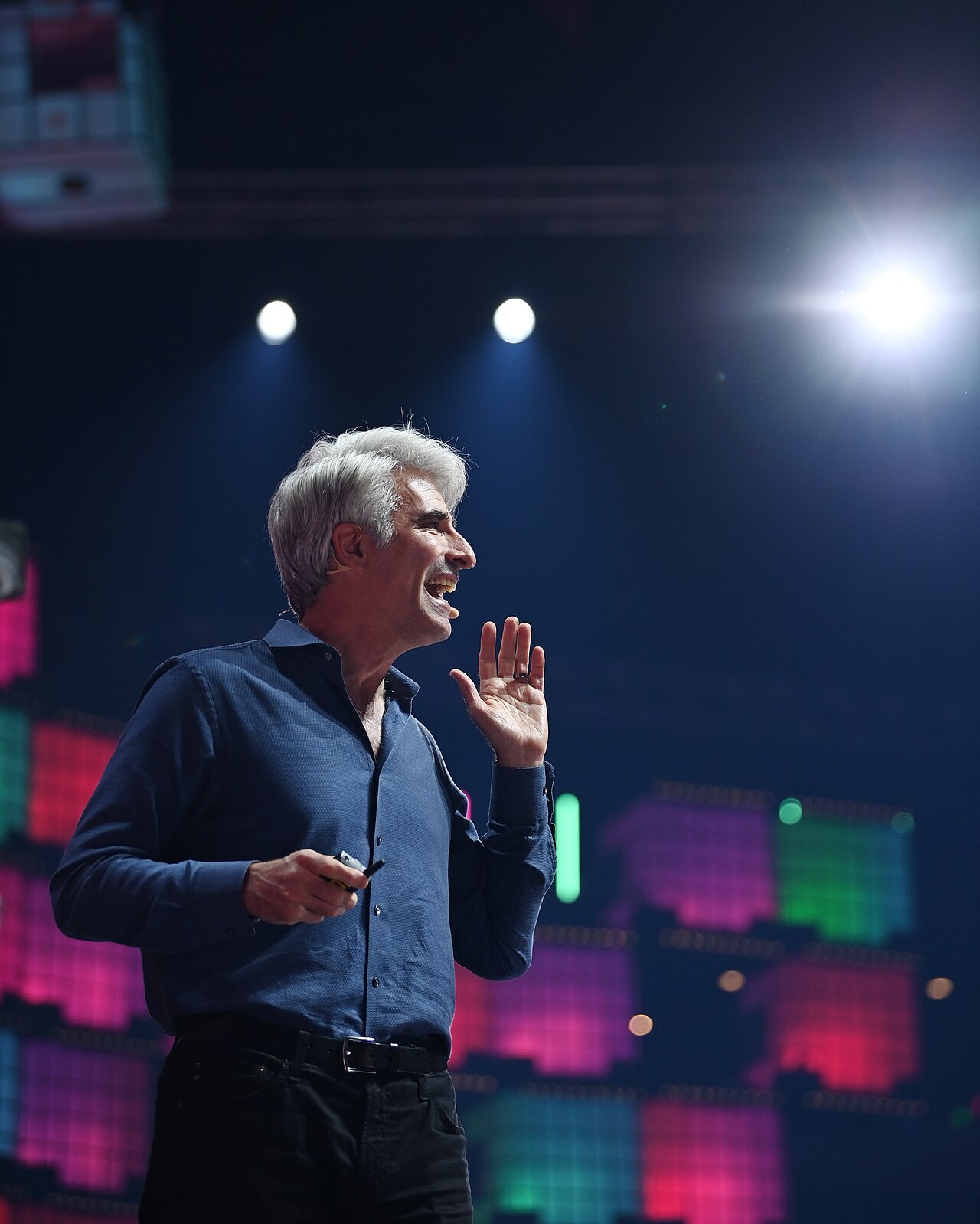
Header image: the Apple Store Fifth Avenue glass-cube entrance in New York City, photographed by Sam Valadi via Wikimedia Commons, licensed under CC BY 2.0. Used as a generic, honest Apple-retail image, not a photo of iOS 27 launch day itself. In-body photograph: Craig Federighi, Apple's SVP of Software Engineering, speaking at Web Summit 2021 in Lisbon, photographed by Harry Murphy/Web Summit via Wikimedia Commons, licensed under CC BY 2.0. The photo predates Siri AI and is captioned to make that clear.