On Friday, July 17, 2026, Apple closed as the world's most valuable company at roughly $4.88 trillion, edging past Nvidia at about $4.86 trillion after the chipmaker's shares fell around 3.5 percent. The lead was about $20 billion, a fraction of a percent, so the milestone is symbolic more than decisive. But symbols on this scale carry information, because a change at the very top of the market reflects how investors are re-weighting the AI trade. This piece looks at what the rotation signals, and, just as importantly, what it does not.
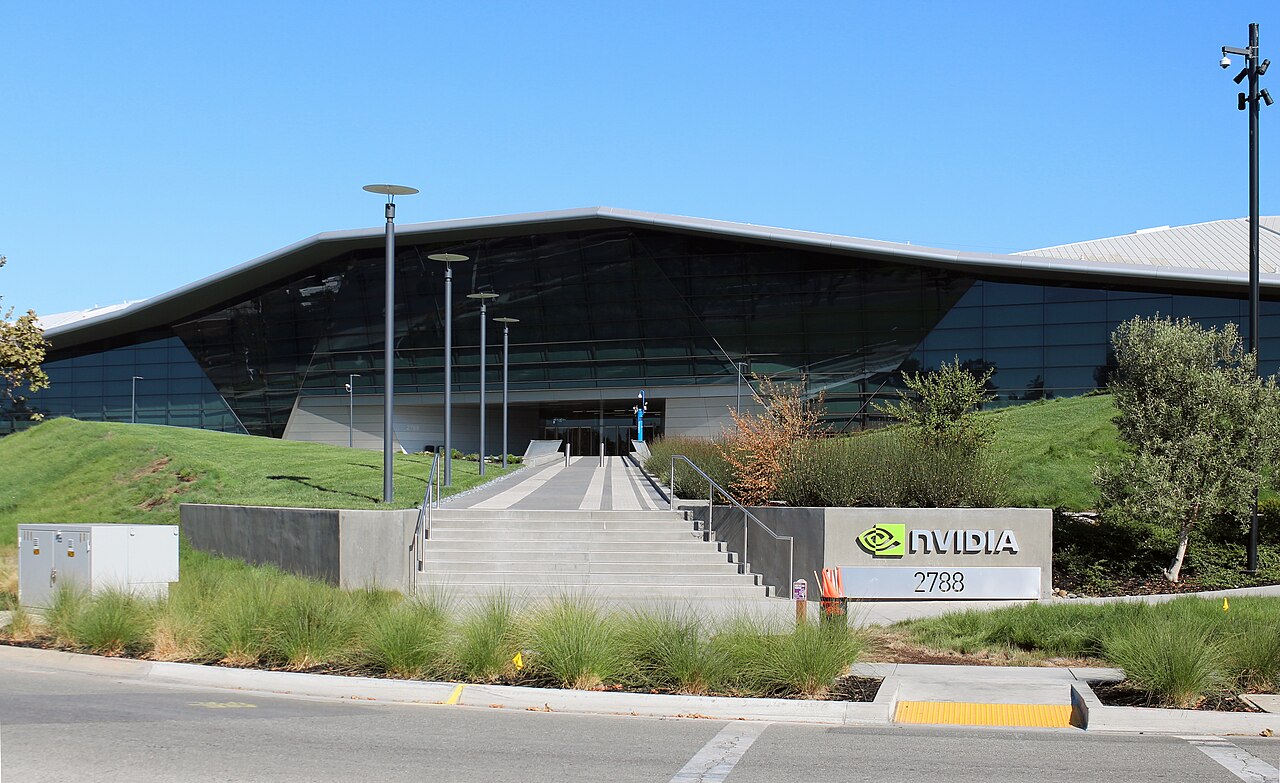
 Nvidia
What actually happened
For more than a year, Nvidia sat at the top. It passed Microsoft in June 2025 to become the most valuable company in the world, and in October 2025 it became the first company in history to cross a $5 trillion market capitalisation. That reign reflected a simple truth of the AI build-out: when everyone is racing to train and serve larger models, the company selling the essential compute captures an outsized share of the spending.
The July 17 change did not reverse that truth so much as reprice it. Nvidia's business did not shrink on Friday. Its stock moved a few percent, and Apple's steady climb toward $5 trillion did the rest. What the market registered was a shift in relative conviction, not a collapse. Nvidia remains one of the two most valuable companies on earth, and its position depends on data-centre demand that is still enormous.
A razor-thin change at the top
Market capitalisation at the close on July 17, 2026, the day Apple reclaimed the most-valuable-company title from Nvidia. The gap was roughly $20 billion, a fraction of a percent.
Nvidia was the first company to cross $5 trillion, in October 2025, and held the top spot from June 2025. The July 2026 change reflects a rotation in the AI trade, not a collapse in either business.
The thesis behind the rotation
The reasoning investors were pricing is straightforward to state. Through the first phase of the AI cycle, the clearest way to profit was to own the infrastructure layer, the chips and the data centres that every model depends on. As the cycle matures, a second question grows louder: which companies will actually convert AI capability into durable, recurring earnings from real customers.
That question favours the layer closest to the user. Apple's argument to investors is distribution: billions of devices, an installed base with deep switching costs, a services business, and direct consumer relationships through which AI features reach people whether or not Apple builds the underlying models itself. The bet is that companies positioned to monetise AI at scale, through distribution, services, and customer relationships, may produce more durable earnings than the infrastructure layer alone, whose revenue is tied to a capital-spending wave that cannot compound forever at its current pace.
The market did not decide chips matter less. It decided that owning the customer may matter more over time.
What the move does not prove
It is worth being disciplined about the limits of a single day's market-cap ranking. It does not prove that AI infrastructure demand is peaking; Nvidia's order book and the hyperscalers' capital-spending guidance are the evidence on that question, and they point at continued heavy investment. It does not prove Apple has won in AI, since much of Apple's model strategy still leans on partners and its own foundation-model efforts have drawn mixed reviews. And it does not prove the rotation is permanent, because a razor-thin lead can change back on any given week.
The move also sat inside a noisier week for the AI trade. Alphabet shares fell about 4 percent after Google again delayed its Gemini 3.5 Pro model, a reminder that execution stumbles at the model layer feed the same reassessment. Read together, the week looked less like a verdict on any one company and more like investors spreading their bets across the AI stack rather than concentrating them at the chip layer.
The pattern worth taking away
Strip out the horse-race framing and a more useful pattern remains. In a maturing platform shift, value tends to migrate over time from the picks-and-shovels layer toward whoever ends up owning the customer relationship and the workflow. That migration is rarely clean or monotonic, and the infrastructure layer can stay enormously valuable for years while it happens. But the direction is familiar from earlier technology cycles, and the July 17 change is an early, symbolic marker of it in the AI cycle.
For the businesses that will ultimately buy and use AI rather than trade the shares, the takeaway is less about who tops the leaderboard and more about where the leverage sits. The returns from AI increasingly show up not in owning the fastest chips but in applying models well to real work, and in staying free to adopt whatever model is best for a given job as the leaders keep changing. Keeping that flexibility, rather than hard-wiring a workflow to one provider whose fortunes swing week to week, is the practical version of the same lesson the market was pricing. A model-agnostic layer such as Metir AI reflects that view without needing to bet on which name sits at the top of the market on any given Friday.
The bigger picture
Apple overtaking Nvidia is a genuine milestone and a modest one at the same time. It marks the moment the market's single most valuable company changed hands after more than a year, and it captures a real shift in how investors weigh the AI stack, from the layer that supplies compute toward the layer that reaches customers. It does not settle who wins AI, and it does not diminish how central Nvidia's chips remain to everything being built. The durable signal is directional: as the cycle matures, attention and value are beginning to move toward where AI meets real use, which is exactly where the technology has to prove itself.
Sources:
- Apple overtakes Nvidia as world's most valuable company as it barrels toward $5T | 9to5Mac
- Apple Briefly Unseats Nvidia As World's Largest Company | Forbes
- Apple unseats Nvidia to become world's most valuable company as AI bets shift | BNN Bloomberg
- Apple reclaims title as world's most valuable company, overtaking Nvidia | Invezz
Image credits
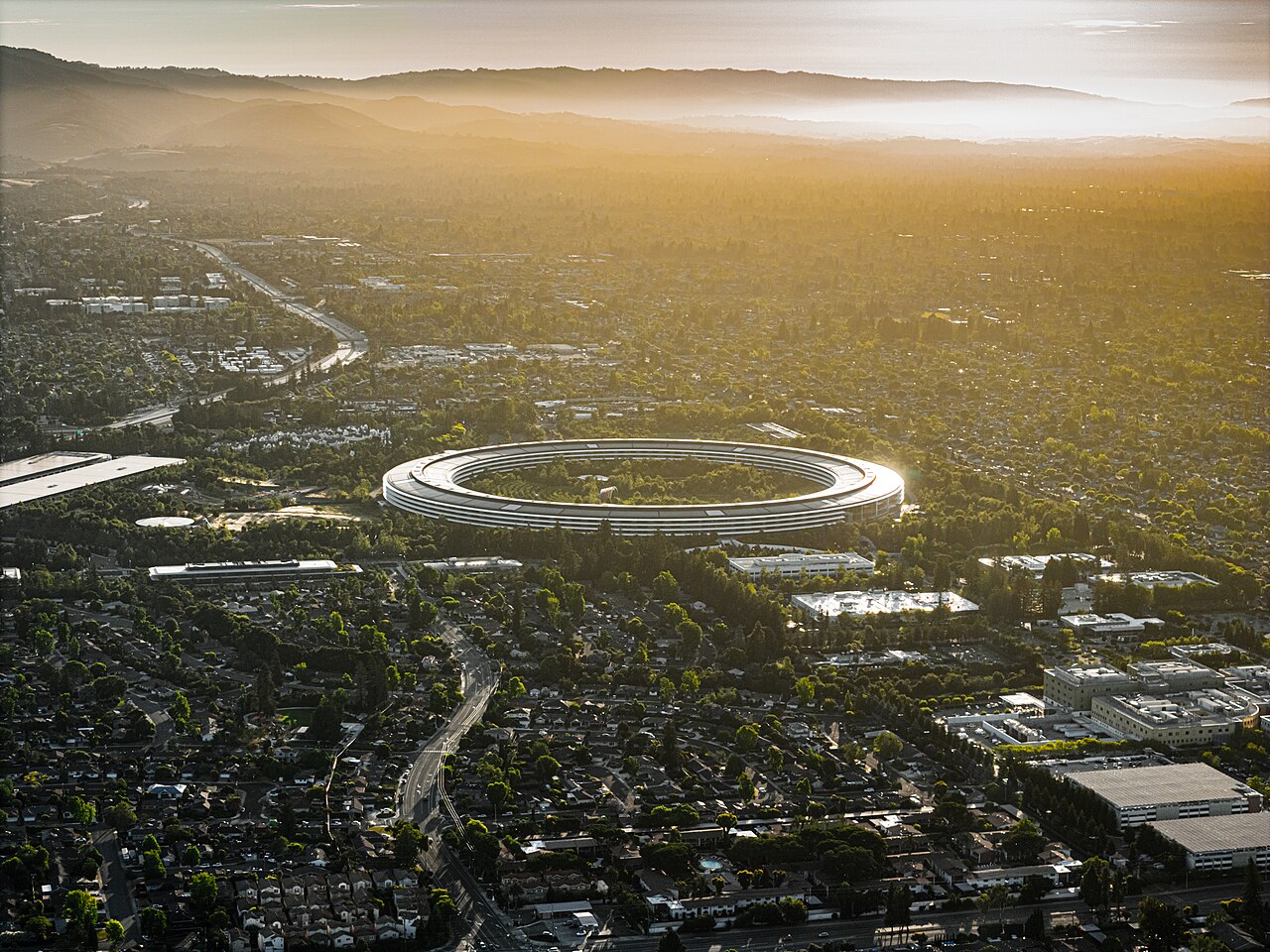
Header image: aerial view of Apple Park in Cupertino, California, June 2024, by Nils Huenerfuerst via Wikimedia Commons, released under CC0. In-body photograph of Nvidia's Santa Clara headquarters by Coolcaesar via Wikimedia Commons, licensed under CC BY-SA 4.0.