
On August 25, 2026, Apple introduced two processors that mark process and packaging firsts for the company: the M6, which Apple calls its "first state-of-the-art 2-nanometer chip," and the M5 Ultra, its first quad-die design and, by Apple's account, its most powerful chip ever. The M6 debuts in a new Mac mini and the M5 Ultra in a new Mac Studio. The launch is worth reading less as a product announcement and more as a statement about where Apple thinks a meaningful share of AI work is heading: onto the device in your hand or on your desk, rather than only into a distant data center.
 Apple
Apple NVIDIA
 Google
 Microsoft
This piece walks through what Apple actually claimed, sets those claims against the previous generation, and then steps back to ask the more useful question: what does a 2nm laptop-class chip change, and what does it not?
What Apple announced
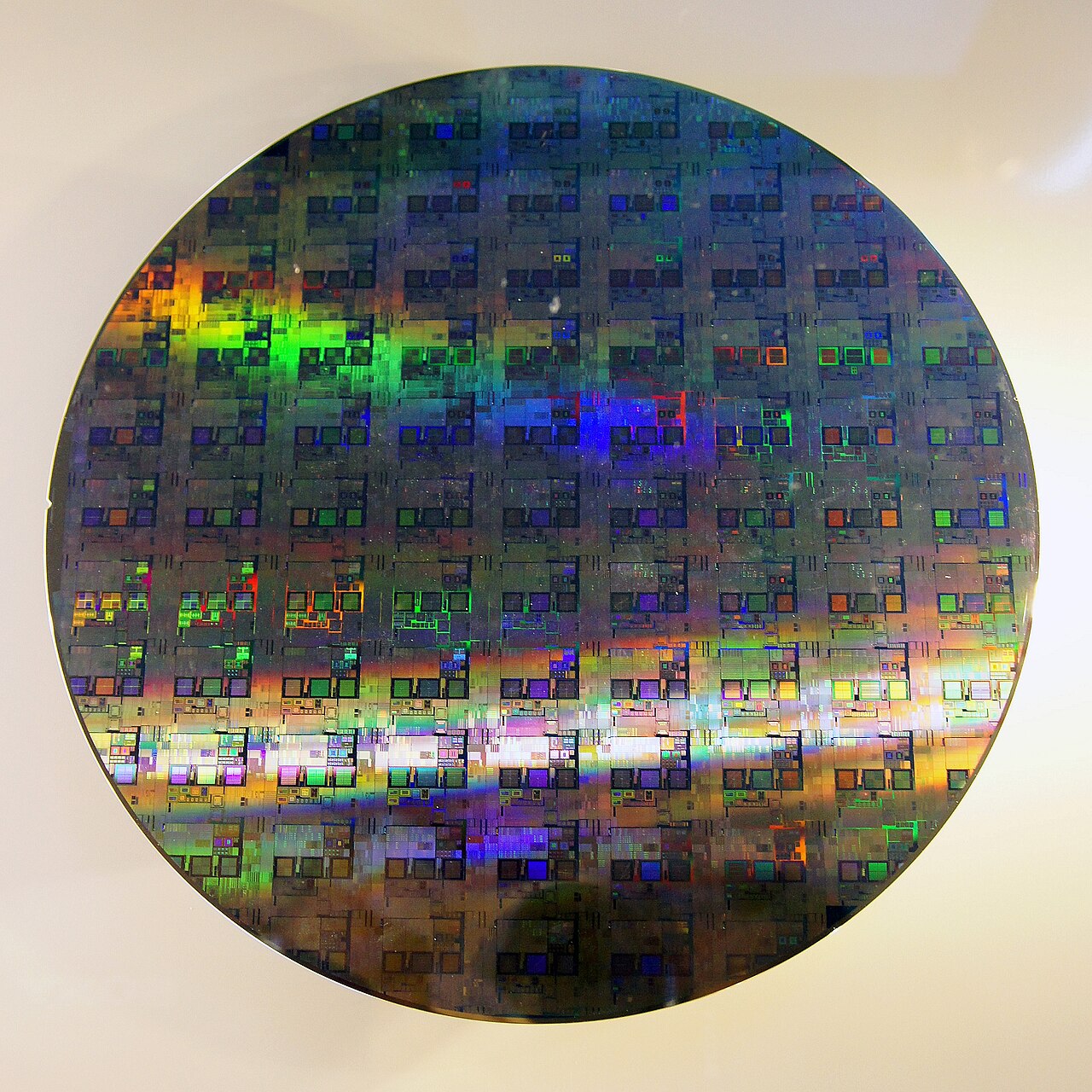
The M6 moves Apple to a 2-nanometer manufacturing process, the current leading edge, fabricated by Apple's long-time foundry partner TSMC. Apple describes a 12-core CPU built from 2 "super cores," 4 performance cores, and 6 efficiency cores, paired with a 12-core GPU that places a Neural Accelerator in each graphics core, and a dual 16-core Neural Engine. Against the M5, Apple cites up to 1.2x faster multithreaded CPU performance, a "nearly 30 percent" increase in peak GPU compute for AI, and memory bandwidth of up to 170GB/s, itself a roughly 10 percent step up. Maximum unified memory on the M6 is 32GB.
The M5 Ultra is the more architecturally novel of the two. Rather than a single large die, it uses Apple's UltraFusion packaging to connect two dual-die M5 Max chips into one logical processor, a quad-die arrangement Apple says it has not shipped before, with more than 4.4TB/s of bandwidth between the dies. The result, in its top configuration, is a 36-core CPU (12 super cores plus 24 performance cores), an 80-core GPU, and a 32-core Neural Engine. It supports up to 512GB of unified memory at 1.2TB/s, which Apple frames as 50 percent more bandwidth than the M3 Ultra, and claims up to 4.5x the peak GPU compute for AI compared with that earlier chip.
Reading the numbers carefully
Two things are easy to misread here, and both are worth slowing down on.
The first is the "2-nanometer" label. Process-node names stopped being literal physical measurements years ago; "2nm" is a marketing generation, not a transistor dimension. What it reliably signals is a denser, more power-efficient generation of transistors than the prior node, which tends to translate into either more performance at the same power or the same performance at lower power. Apple's own comparisons reflect that: the largest gains it advertises are in GPU compute for AI and in efficiency, not in raw single-threaded speed, where the generation-over-generation step is more modest.
The second is that Apple's AI-compute claims are stated as GPU compute, benchmarked against Apple's own earlier chips, not against the data-center accelerators that dominate AI headlines. A 4.5x jump in peak GPU AI compute over the M3 Ultra is a large intra-family improvement. It is not a claim that a Mac Studio rivals a rack of dedicated AI accelerators, and Apple did not make that claim. The comparisons that matter for a buyer are the ones Apple actually drew: this generation against the last.
Apple's claimed peak GPU compute for AI
Relative gains Apple advertised for the M6 and M5 Ultra. Each bar is measured against a different earlier chip, so the baselines are not the same.
The M6 vs M5 figure is Apple's "nearly 30 percent" peak-GPU-AI-compute claim; the 8x and 4.5x figures are against the older M1 and M3 Ultra respectively.
Where the numbers become genuinely interesting is memory. Large language models are frequently constrained not by raw compute but by how much fast memory sits next to the processor, because the model's weights have to live somewhere the chip can reach quickly. Apple's unified-memory architecture lets the CPU and GPU share one pool, and 512GB at 1.2TB/s on the M5 Ultra is a large pool by workstation standards. That is the specification most relevant to running bigger models locally, and it is the one that most cleanly separates Apple's desktop silicon from a typical consumer GPU.
The interesting number is not the process node. It is 512GB of unified memory a local model can actually use.
On what separates Apple's desktop silicon from a consumer GPU
Why on-device AI is the real story
Apple's strategic bet, visible across several generations of Apple Silicon, is that a growing share of AI inference should happen on the device. The appeal is straightforward: work that runs locally does not incur network latency, does not depend on a data-center's availability, and keeps the underlying data on the machine rather than sending it to a third party. For a laptop or desktop, that is a real product advantage, and each generation of Neural Engine and unified memory pushes the ceiling on what can run locally a little higher.
The limits are equally real. On-device models are bounded by the memory and power envelope of a personal computer, which is why the largest frontier models still run in data centers. The practical pattern that is emerging is a split: smaller, latency-sensitive, or privacy-sensitive tasks run locally, while the heaviest reasoning is sent to a hosted model. The line between the two moves with each hardware generation, and chips like the M6 and M5 Ultra move it.
This is also where the hardware choice stops being the whole decision. A faster local chip widens the set of models a user could run, but which model actually answers a given request, a small local one or a large hosted one, is a software question. The tools most ready for this world treat the model as a swappable component rather than a fixed dependency, routing a quick request to something cheap and local and a hard one to a frontier system. Metir is built around exactly that model-agnostic posture, which is one reason better on-device silicon and better hosted models are complements rather than competitors: more capable endpoints on both ends give a router more room to make a good call. The hardware sets the floor for what is possible locally; the routing decides how often that floor is worth standing on.
What to watch next
Three questions will tell us more than the launch-day specifications.
First, real-world model performance. Peak-compute figures are a ceiling, and the useful measure is how large a model runs comfortably within the M5 Ultra's memory and thermal envelope, and how fast it generates tokens in practice. Independent benchmarks, not vendor slides, will settle that.
Second, developer tooling. The value of local AI compute depends on frameworks that make it easy to target the Neural Engine and unified memory. Hardware headroom that software cannot address stays theoretical.
Third, the efficiency dividend. A 2nm node's clearest benefit is performance per watt. For laptops that has obvious appeal, and it is worth watching whether the same efficiency reshapes how much AI work Apple is willing to keep on-device by default across its lineup.
Apple's M6 and M5 Ultra do not upend the AI-compute landscape, and Apple did not present them as if they did. What they do is advance a specific, patient thesis: that the device in front of you should carry more of the AI load over time. The 2nm node and the quad-die package are the means. The unified-memory pool is the part worth watching.
Sources:
- Apple introduces M6 and M5 Ultra for a big leap in performance and AI compute (Apple Newsroom, Aug 25, 2026)
- Apple Reveals M6 as First-Ever 2nm Chip (MacRumors, Aug 25, 2026)
- Apple Debuts M5 Ultra as Most Powerful Chip Ever (MacRumors, Aug 25, 2026)
- Apple launches next-gen Apple Silicon chips: M6 and M5 Ultra (9to5Mac, Aug 25, 2026)
- Apple Launches The M6 2nm 12-core CPU, Quad-Die M5 Ultra (Phoronix, Aug 25, 2026)
Image credits
- Hero: "Apple Park 2022" by InvadingInvader (via Wikimedia Commons), licensed CC BY-SA 4.0. Retrieved August 25, 2026.
- In-body wafer photo: "12-inch silicon wafer" (via Wikimedia Commons), licensed CC BY-SA 3.0. Retrieved August 25, 2026.