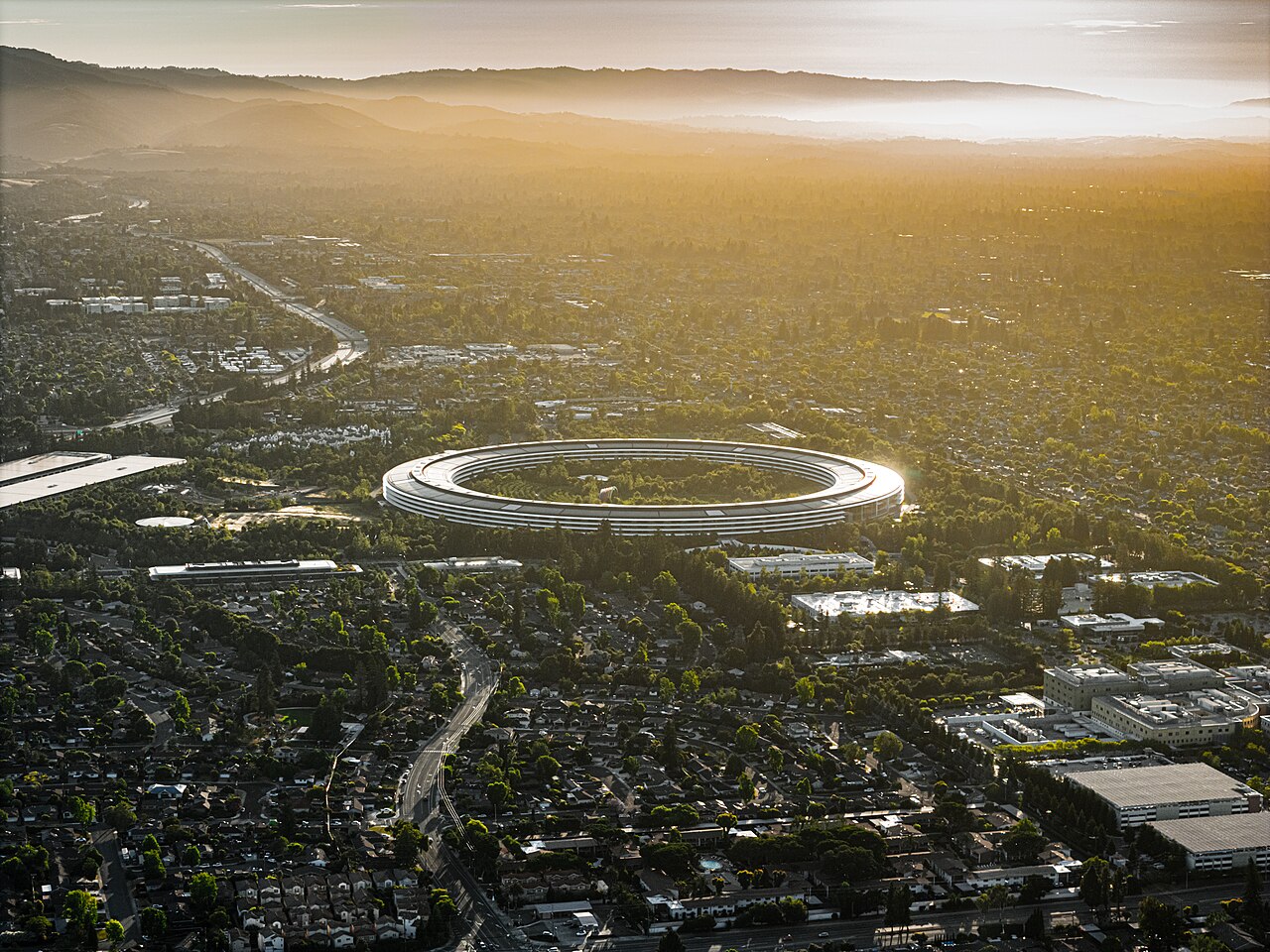
Apple changed chief executives on September 1, 2026. John Ternus, the hardware engineering leader who has run the teams behind the iPhone, iPad, and Apple silicon transition, became chief executive officer. Tim Cook, who led the company for 15 years, moved to executive chairman of the board. Apple announced the plan back on April 20, so the date itself surprised no one. What makes this handover worth studying is not the ceremony. It is the timing. Ternus takes the seat in the same week Apple prepares to show a rebuilt Siri that leans on a model it did not build, and eight days before a product event that will be his first as CEO. The transition and the company's most scrutinized AI bet arrive together.
 Apple
Apple Google
 OpenAI
A Long-Planned Handover, Not a Shock
Apple framed the change as the output of a deliberate succession process rather than a reaction to any single event. On April 20, the company said Cook would become executive chairman and Ternus would take over as CEO, with Arthur Levinson, the long-serving board chair, moving to lead independent director. Cook has not left the building. As executive chairman he keeps a formal role and a seat at the table, which is the pattern Apple has used before to make a leadership change feel like continuity rather than rupture.
Apple's 2026 CEO handover, in sequence
From the April announcement to the September 9 event. A date-ordered timeline of publicly reported milestones.
The orderly choreography matters because Apple's transitions are rare and closely watched. Steve Jobs handed the company to Cook in 2011, and Cook then ran it for a decade and a half through the iPhone's maturation, the services build-out, and the move to in-house silicon. A handover this size is not just a personnel note. It resets who owns the company's biggest open question, and for the first time in years that question is about software intelligence rather than hardware.
The Engineer's CEO
Ternus is an unusually operational choice. He joined Apple in 2001 on the product design team, became vice president of hardware engineering in 2013, and joined the executive team in 2021 as senior vice president of hardware engineering. His public identity is the person who stands on stage to explain how the newest chip or the thinnest chassis was built. In announcing the change, Cook described him as having "the mind of an engineer, the soul of an innovator, and the heart to lead with integrity and with honor."
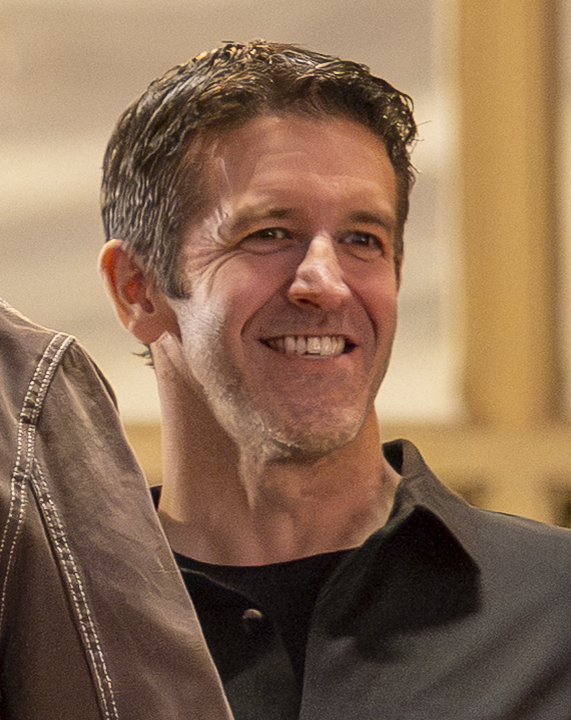
That background is the interesting tension. Apple's competitive advantage for the past decade has been the tight fusion of custom silicon and hardware, exactly Ternus's domain. The frontier the company is now judged on is generative AI, which is a software and model problem where Apple has been seen as behind. Handing the company to its hardware chief is a statement that Apple still believes the durable moat is the device, and that AI will be won by making models run well on Apple hardware rather than by out-training the labs. Whether that thesis holds is the substance of his tenure.
AI Is the First Real Test
The immediate test is Siri. Apple has spent two years absorbing criticism that its assistant lagged the conversational quality of ChatGPT and Gemini, and an internal reorganization of its AI leadership followed. The fix Apple settled on is telling. Rather than ship a purely in-house frontier model to power the assistant, the company agreed to license a custom version of Google's Gemini to serve as the foundation for a rebuilt Siri, with reporting putting the arrangement at around a billion dollars a year. A full deployment of the new assistant is set for September, and Ternus's first event as CEO on September 9 in Cupertino is expected to feature it alongside a foldable iPhone and new Apple Watches.
Apple's answer to the assistant gap was not to win the model race outright. It was to license the model and keep the surface.
Analysis of Apple's Siri strategy
Reading this well means separating two claims Apple is making at once. The first is that the model layer is becoming a component you can source, much like Apple sources displays or modems, and integrate behind your own interface. The second is that the assistant experience, the privacy posture, and the on-device processing are where Apple still differentiates. On his final earnings call, Cook leaned on the second point, arguing that Apple's ability to run AI workloads directly on the device is a strategic advantage over cloud-dependent rivals. Ternus inherits the job of proving both claims are true at the same time.
The Build-and-Borrow Strategy
The cleanest way to understand Apple's position is as a hybrid. Some intelligence runs on the device using Apple's own smaller models, chosen for privacy and latency. The heavier conversational work is handed to a licensed frontier model in the cloud. That is neither the pure in-house path that Google and OpenAI walk nor a full surrender of the assistant to a third party. It is a deliberate split that keeps the interface, the data boundary, and the hardware under Apple's control while renting the capability that is hardest to build from scratch.
Three ways to power an AI assistant
Apple's choice sits in the middle: own the parts that compound, and treat the frontier model as a sourced component.
- •Train the frontier model in house
- •Full control of capability and roadmap
- •Carries the training and compute bill
- •Product moves at the pace of your own lab
- •Own the interface, silicon, and data boundary
- •Small models on device for privacy and latency
- •License a frontier model for heavy conversation
- •Swap the sourced model as the field moves
- •Wrap a third-party assistant with light branding
- •Fastest path to a capable assistant
- •Least differentiation at the experience layer
- •Most exposed to a single vendor’s terms
Illustrative framing of publicly described strategies, not a quantitative ranking.
There is a strategic logic here that goes beyond Apple. The frontier model has become the fastest-moving and most capital-intensive layer in the stack, and the labs are re-releasing better models every few months. A company that hard-wires its product to a single model it trained itself takes on both the cost and the risk of keeping that model at the frontier. A company that treats the model as a sourced component can follow the capability curve without owning the training bill. Apple, the most vertically integrated hardware company in the world, choosing to borrow at the model layer is a strong signal about where the durable value is thought to sit.
What This Means Beyond Cupertino
For anyone building AI products, the Apple handover is a live example of a choice every team now faces: how much of the intelligence to own and how much to source. Apple concluded that the assistant surface, the privacy model, and the silicon were worth owning, and that the frontier model underneath was worth licensing so it could change as the field changes. The specific vendor matters less than the shape of the decision. Keeping the model layer swappable is what lets a product follow the frontier instead of freezing at the moment it committed to one stack.
That is the same reasoning behind model-agnostic tooling more broadly. A platform like Metir AI that routes across models from OpenAI, Anthropic, Google, and others treats the model as a component to be chosen per task rather than a permanent dependency. Apple arrived at a version of the same conclusion at the scale of a company valued near four trillion dollars: own the parts that compound, and stay flexible about the part that is being reinvented every quarter.
What to Watch Next
The September 9 event is the first data point. Watch whether the rebuilt Siri actually closes the perceived quality gap in daily use, because a licensed model only helps if the integration around it is good. Watch how Apple talks about the split between on-device and cloud processing, since that framing is the core of its differentiation argument. And watch whether Ternus, a hardware leader by training, reshapes the AI organization or lets the current borrow-the-model approach run. The handover was smooth by design. The verdict on it will be written by whether Apple's device-first thesis survives contact with a software-defined frontier.
Sources:
- Tim Cook to Become Apple Executive Chairman, John Ternus to Become Apple CEO | Apple Newsroom
- Apple's New CEO, John Ternus, Takes Over From Tim Cook After 15 Years | U.S. News
- John Ternus becomes Apple CEO, with AI as first big challenge | Quartz via Yahoo Finance
- Apple incoming CEO John Ternus faces a defining challenge: Fixing AI strategy | CNBC
- Apple's John Ternus era: Can a low-key engineer win the AI race? | Fortune
- Today is Tim Cook's last day as Apple CEO, Ternus takes over | 9to5Mac
Image credits
Header image: aerial view of Apple Park in Cupertino, California, by Daniel L. Lu via Wikimedia Commons, released under CC0 1.0. In-body photograph of John Ternus at the Apple 50th Anniversary Kickoff via Wikimedia Commons, licensed under CC BY 4.0.